The air war over Vietnam represents one of the most dynamic, evolutionary periods of airpower innovation. The U.S. entered the conflict optimized to execute strikes against the Soviet Union, defend the homeland as part of Air Defense Command, and a host of other roles. Few of these missions matched the operational demands of what unfolded over Vietnam. Airmen had to rapidly adapt and innovate. This impacted tactics, operational concepts, training, and technological developments. Some of the most important lessons from Vietnam didn’t take hold in the Air Force until the conflict’s conclusion, when a generation of combat-proven airmen pushed for enhanced training via concepts like an enhanced Fighter Weapons School, Red Flag, and the Adversary prorgam. They also pushed for an entirely new generation of aircraft that took form in types like the F-15, F-16, A-10, E-3, KC-10, B-1, F-117, and more. This episode seeks to learn more about this era by speaking to two legendary Vietnam veteran airmen: Col Leonard “Lucky” Ekman, USAF (Ret) and ace Col Chuck DeBellevue, USAF (Ret).
Guests
 John VenableSenior Fellow for Airpower Studies, The Mitchell Institute for Aerospace Studies
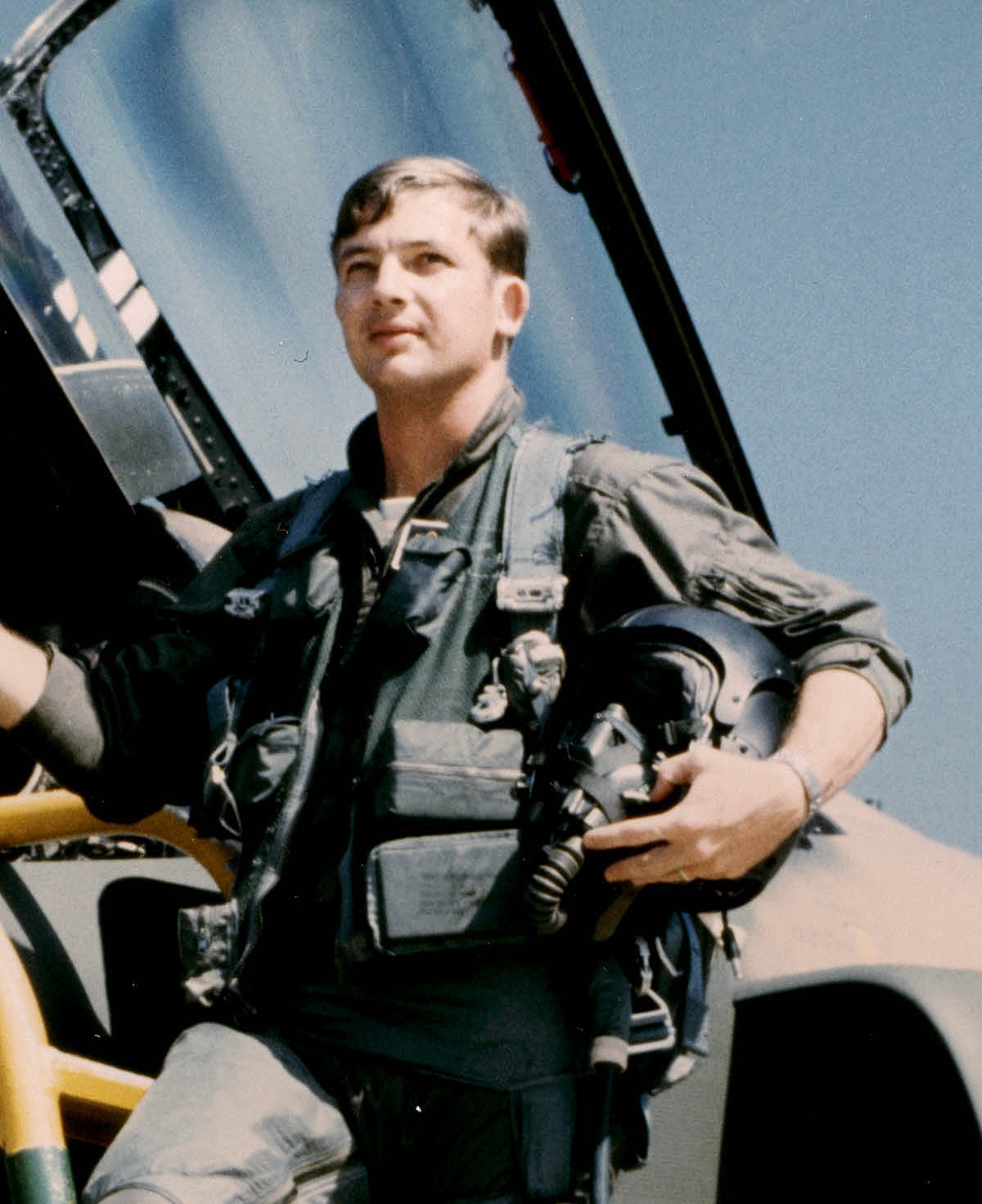 Col Charles Barbin DeBellevue, USAF (Ret.)Flying Ace
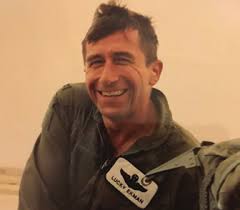 Col. Leonard Ekman, USAF (Ret.)
Host
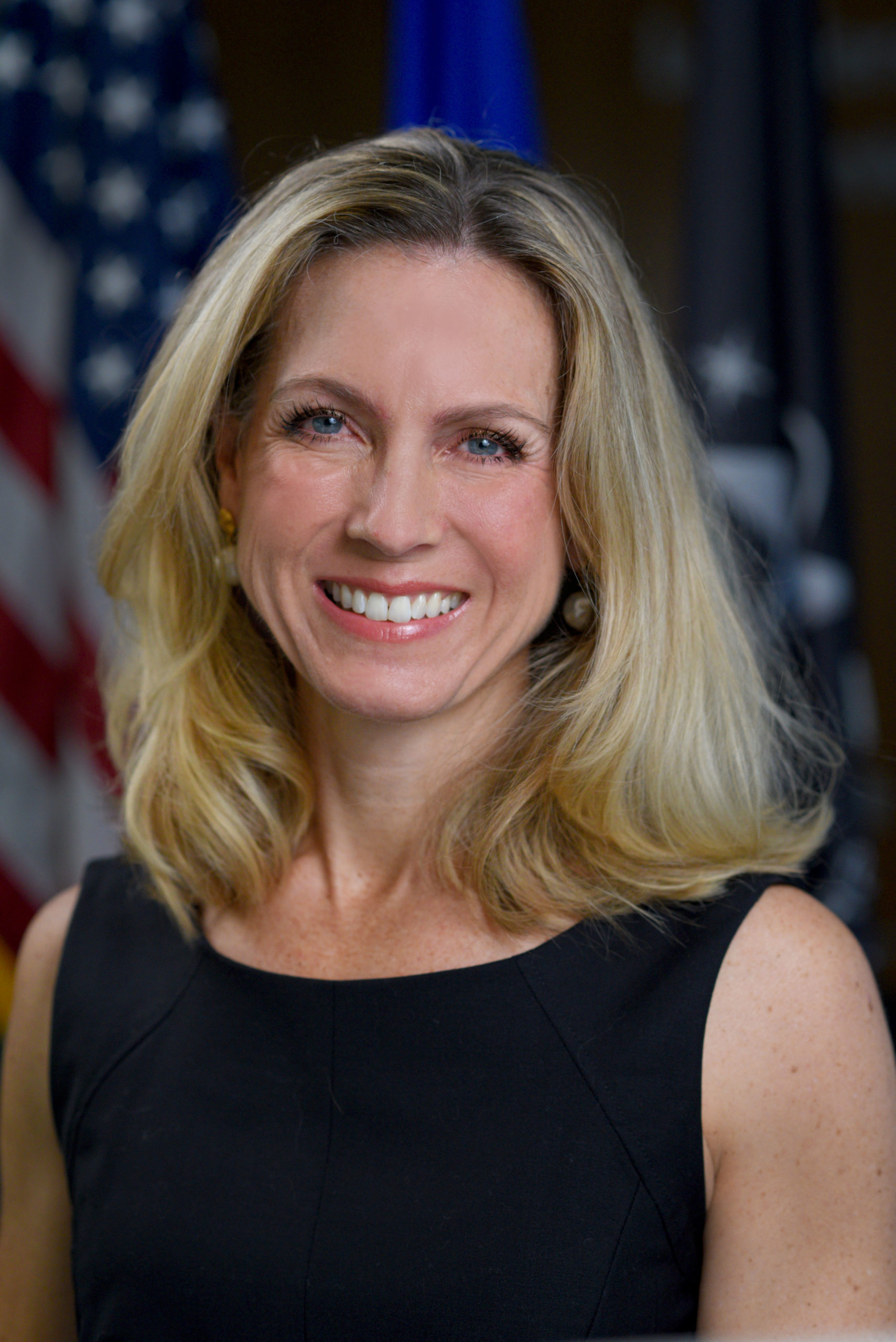 Heather PenneyDirector of Studies and Research, The Mitchell Institute for Aerospace Studies
Transcript
Heather “Lucky” Penney: [00:00:00] Welcome to the Aerospace Advantage Podcast, brought to you by PenFed. I’m your host, Heather “Lucky” Penney, here on the Aerospace Advantage. We speak with leaders in the DOD industry and other subject matter experts to explore the intersection of strategy, operational concepts, technology and policy when it comes to air and space power.
Air Force air power isn’t a fixed thing. It’s constantly evolving. It’s an ecosystem defined by those who have fought, flown and innovated. And of course, we enter each war with doctrine, preconceived notions, and ideas of how we will fly and fight. But let’s face it, things get real when you strap into the jet light, the burner on the takeoff roll and cross into enemy territory. And what works and what doesn’t, gets sorted out pretty fast admist the demands of combat.
And nowhere has that been truer than over the skies of Vietnam. The Air War over Southeast Asia is often overlooked because people think about the negative platitudes surrounding the war, and they fail to recognize that it’s one of the most dynamic periods [00:01:00] in air power history. We entered the conflict optimized for a fight for a nuclear conflict, the Soviet Union, and when we departed a radically different Air Force existed, one that helped lay the groundwork for the Air Force that would win the Cold War.
This touched upon everything, the tactics, the operational concepts, training and technology, and think about it. Weapons school, the wild weasels, precision guided munitions, air battle management, the Jolly Green Combat Search and Rescue. All of these things resulted from the Air War over Vietnam, and that’s why we’re so honored to introduce our two guests for today.
Colonel Leonard “Lucky” Ekman. Sir, welcome. Thank you for joining us.
Col. Leonard Ekman, USAF (ret.): Thank you so much for having me. It’s an honor to be here with you folks, with my old friend JV from Torrejón, and my fellow warrior from our war, Chuck DeBellevue and nice to meet you, Lucky.
Heather “Lucky” Penney: Two Luckys.
Col. Leonard Ekman, USAF (ret.): Two Luckys. Yeah.
Heather “Lucky” Penney: Yeah. Truly sir. The privilege is ours. And sir, welcome. Thank you for joining us.
Col. Charles DeBellevue, USAF (Ret.): Well, it’s a pleasure to be here. [00:02:00] And with two Luckys, does that mean that we’re the unlucky ones?
John “JV” Venable: Yes. It must mean that.
Heather “Lucky” Penney: And of course, you heard JV Venable, our very own. And he and Lucky Ekman also served together, as you heard at Torrejón.
John “JV” Venable: It’s great to be with you Heather and sir, it’s so good to see you again. It’s been 35 years. Hard to believe that.
Col. Leonard Ekman, USAF (ret.): It has some hard times and some good times there at Torrejón.
John “JV” Venable: Yes sir.
Col. Leonard Ekman, USAF (ret.): And flying a great jet.
John “JV” Venable: The real sports car. The best that was ever built. This far as I know.
Col. Leonard Ekman, USAF (ret.): Yeah. Oh yeah. What a sports car.
Col. Charles DeBellevue, USAF (Ret.): That’s a personal opinion.
John “JV” Venable: Yes, but a very qualified one.
Heather “Lucky” Penney: Alright, so gentlemen, I tried to explain the dynamic environment in which you both came of age. The flying, the fighting over Vietnam. And JV and I have read about it, but you both lived it. So could you help our listeners get a better understanding about the rate of change that existed in this era? Because we now live in a world where Air Force pilots begin and end their careers in a single jet and sometimes not a whole lot of changes to that modernization or even to the fleet [00:03:00] inventory happens, but you grew up in very different circumstances.
Col. Leonard Ekman, USAF (ret.): Yeah, things were changing really fast. I flew my first two strike tours and ended it before August of 66. I never flew with a radar homing and warning gear because it wasn’t available for the wingman. I never flew with a pod, and by the time I got back to McConnell to instruct both of those were key features of our survival over North Vietnam, and I had to teach it, even though I hadn’t gotten to fly with it in combat.
Heather “Lucky” Penney: That’s fascinating. Because the problems that you saw in Vietnam that really spurred the development of the technology.
Col. Leonard Ekman, USAF (ret.): Made it move really fast. Most of the things we got were not just your standard issue from Systems Command, but they were quick reaction contracts, QRCs. That brought things to us very quickly, essentially from the lab to the war.
John “JV” Venable: Well, and Lucky when you got to Vietnam, the first time, 65, you were flying the thud.
Col. Leonard Ekman, USAF (ret.): Yeah.
John “JV” Venable: And you had [00:04:00] a group of folks that were just entering the fight with weasels, the F100s. Did they have raw gear? Did they have pods?
Col. Leonard Ekman, USAF (ret.): They didn’t have pods, but they had the raw gear and the weasels actually came into Korat and I was at Dac Lee and they came in about September, if I recall correctly, 65 and lasted through about November or so. And then when it was full bore on to bring in the F 1 0 5. ’cause the problem with the F 100 was, the F 100 would lead a bunch of F 105s into an attack on a SAM site, and then watch in from behind as the F 105s. Exited the area supersonic. And in the case of the F 100 Wild Weasel, he was truly the first in and the last out leading those F 105s, because once they dropped their bombs, they were gone.
Col. Charles DeBellevue, USAF (Ret.): Oh yeah.
John “JV” Venable: When I was a kid in college, I got to watch a film called, There Is a Way, and it’s [00:05:00] Carl Richter and and Ed Rasmus was the stars of that as lieutenants. And thinking about that as a kid, I go, wow, these F 105s, these thuds are the most marvelous platforms. And they were obviously designed for this fight in Southeast Asia, but as I got a little older I learned that was different. Could you talk a bit about that?
Col. Leonard Ekman, USAF (ret.): Not so fast. They weren’t designed for that fight at all. They were, when I went through thud school, I had 13 rides called combat profile missions to develop, to drop nuclear weapons to clear the way for B 52s going into the Warsaw Treaty organization targets, just like we were at Torrejón, but that was our mission because that was the only way you could get money out of the Congress to buy fighters, was to protect the big birds going in, hauling the big nukes. And so we were hauling small nukes. Trained to do that. I must say I was fortunate never to sit a day of nuclear alert. I didn’t have to do that.
And my first [00:06:00] tour after training was to go to Southeast Asia as a wingman and to be watched over by a bunch of thousand hour thud pilots. I had all of about 250 hours having doubled my time between the schoolhouse and going to war. They plused me up by 40 hours a month for three months, and then sent me over with basically a bunch of male mother hens who were trying to keep me and my two classmates in the squadron alive, and they did a great job of it. We both, we all three came back.
John “JV” Venable: What was that evolution like? So you were trained for strike lines in the thud, fast, low, going in and hitting targets with small nukes. And then you get over to Vietnam and you’re basically learning how to fly in a low threat contingency operation with people shooting at you. What was that evolution like for you and your squadron mates?
Col. Leonard Ekman, USAF (ret.): It was pretty abrupt. My first combat mission was a [00:07:00] roll in from 18,000 feet with a full load of 750s. In training, I never flew with 750s, in training I never rolled in from 18,000 feet, in a 45 degree dive. I never did that in training because that was too dangerous. 30 degrees was all we were allowed to do, and so I plugged the burner in to get the bird around the corner and the nose pointed down. Forgot to pull out the burner. And so, I’m heading at the ground in a 45 degree dive and I pickled off my bombs and as I pulled off, the flight leader says, “oh my God!” ‘Cause my bombs went so far, unscorable at 12. But no, nobody could find the holes.
Heather “Lucky” Penney: That brings up an interesting question about the quality of training, the training that had been institutionalized and set up versus what you were actually required to do in combat. So we had Gene Smith on earlier and he identified some of these breaks, some of these breakdowns, between how you had been trained and then how you [00:08:00] had to actually fly in combat. Would you both speak a little bit to that, what you observed, what you experienced in lessons learned that we should take forward?
Col. Charles DeBellevue, USAF (Ret.): Let me start. I came out of NAB training with an F 4 assignment. So I go to Davis Monthan. Turns out that most of the instructors there had come outta Southeast Asia. They’d all worked for Olds. And so that we were getting, we had a standard syllabus, but they were adding things into it. The guy I was crude with, George Bonface, had spent three and a half years as a pilot in the backseat of the F 4 in Europe. So I had to learn everything George knew because that’s how he flew, and I had to learn the book answers to pass the test. So I’ve got my bag of tricks outta that. So I’m supposed to go graduate from training and go to Southeast Asia. So we got married over Christmas, get back from Christmas leave and we get our assignments. [00:09:00] The only guys that went to Southeast Asia were the captain back seaters.
All of us lieutenants went stateside. But that gave me a good start ’cause we were doing nuke strike, we were doing conventional. We were doing everything at Seymour. And 18 months later I go to Udorn and I show up at the squadron and who’s the most important person in a fighter squadron? Scheduler. He controls, who flies.
So I walked into Dick Stam and he goes, “what do you want? You’re bothering me.” And and I said I just showed up. I’m the new guy. I’ve got 15 months, 18 months at Seymour. I got 550 hours in the backseat of the F 4 operationally I can do anything the F 4 can do. He looked at his watch and said, “damn, the afternoon goers have already stepped. You can’t fly today.” I said, okay. I said, you’re on tomorrow mornings, Dawn Patrol. That’s how it started. I was [00:10:00] supposed to get four fam rides. I got one. I was supposed to take a check ride to, to prove that I could fly combat on my 10th mission. I did it on my 25th mission. By the time I had been weighed for everything I could do, anything that Squadron could do.
John “JV” Venable: It sounds like you, you went through a process during that time where lieutenants were held back and you sent the experienced people forward. The lieutenants got seasoning, and then you moved the lieutenants forward. Is that fair?
Col. Charles DeBellevue, USAF (Ret.): It was probably an accident, because we were getting a lot of lieutenants in the Nickel and being an experienced guy getting over there at the same time, they just turned me loose. I could, I was cleared to do everything. And it was almost like going to the gunnery range in the States. Except every once in a while somebody got shot down.
John “JV” Venable: Yeah.
Heather “Lucky” Penney: You went over with this experience. How did you observe new guys coming in? Did they have the training? Did they, had they been appropriately prepared to fly the kind of missions you needed?
Col. Charles DeBellevue, USAF (Ret.): [00:11:00] They had what, 60 hours in the airplane? You had to step ’em through the process because they were brand new to the airplane. Whatever they thought they were gonna be doing, it was, we had to have a training program to get people stepped through to where they could fly.
Some of ’em were pretty decent. The ones we, the Lieutenant backseaters we took with us were all good. And we had a couple lieutenant pilots that flew with us. On our missions into Hanoi, if we had to replace a guy. The new guy got one ride and we had a colonel flying with us in blue four that wanted to be part of the team. His backseater was the second lieutenant at the end of the ride, the second lieutenant says, I won’t fly with him again. Thanks, Colonel.
John “JV” Venable: So the you had a bit of a different experience. You went over with 200 plus hours in the thud, but still That was young, but over the course of the war, the thud took a lot of [00:12:00] hits and we lost almost half of the inventory of thuds that we had at the time over Vietnam. You flew your first tour and then you came back as an instructor. Were we able to give those folks a good spin up before they came into the combat situation in the thud?
Col. Leonard Ekman, USAF (ret.): I think we were, we at McConnell were teaching the lessons that we had learned. We were all instructors who had been to the war, and so we were teaching the war we knew. Rather than the war we feared might never come or might come. And so we taught what we knew as the way they, as the way they were gonna have to fight in Vietnam. And the people that we got initially, they were all air defense fighter pilots. And if you’ve ever met an air defense fighter pilot, he knows he knows everything about being a fighter pilot, but nothing about being a tactical. Pointing his pink [00:13:00] body at the ground. And so some of those guys were so set in their ways they were hard to teach.
Col. Charles DeBellevue, USAF (Ret.): Yeah.
Col. Leonard Ekman, USAF (ret.): And then towards the end of the two years we started getting bomber pilots and people from military airlift command, people from all over because there was the concept that if you had a set of pilots wings, you could fly anything in the Air Force. We had some bad experience and some amazing experiences. I remember Eddie Deck and John (inaudible) two guys who came from very unlikely backgrounds who were real tigers in the F 1 0 5, and they turned onto it and they did great in combat. There were others who who quite frankly died in combat because of their negative transfer from the airplanes, they’d flown all their lives going into war.
My flight commander was hit in the middle of a pod roll in mid-air collision over the target because of a, somebody who had come from a bomber.
John “JV” Venable: Yeah.
Col. Leonard Ekman, USAF (ret.): And and they had a mid-air collision. The pod rolling [00:14:00] was an interesting innovation that saved a lot of lives. Probably didn’t hit a lot of targets ’cause it was the whole big gaggle all podded up together. Three, four ships. Four, four ships in pod formation, which was stacked up at or down 300 feet, not about 1500 feet. And from that formation, everybody rolled in at the same time. Oh. It’s like all the kids on the soccer field going after the soccer ball at the same time. And their aim points were right there together. So do the math and the geometry. That’s a good recipe for a midair. And we had a few, and my flight commander, was my flight commander going through F 1 0 5 School got hit and basically his airplane was disabled and he made it out over the water, punched out. Big mother, the Navy Rescue Bird, picked him up and then taking him back to the carrier. They did an intermediate stop at the destroyer and they dropped him from 12 feet. So he was uninjured through his [00:15:00] ejection and his pickup. But when I saw him last, he was in the hospital at Nellis. Not very happy about the guy who hit him in the roll, in the pod, rolling. But it was really a very chaotic kind of thing, and how we ever hit anything.
That’s where the bombing tables were wrong and how many bombs it took to take out a target because they were scattered all over the landscape as people tried as much to avoid the mid-air collisions as they were to hit the target.
John “JV” Venable: So when you got to RTU you had the experience and training of combat. In your first combat tour, I know it’s a silly question, but did you get shot at by a SAMs and how many times and when did you guys learn the right response to it? How to basically deceive the missile and then be able to escape its trajectory?
Col. Leonard Ekman, USAF (ret.): I don’t recall on my first mission, my first two tours there [00:16:00] in 65 and 66 ever seeing a SAM or a MiG. I saw lots of flak, lots of evidence of lots of small arms. And so those were the threats that we faced. And during those first two tours I got some very obvious evidence that they were shooting at us ’cause I got shot down. And that kind of awakened you. It was 85 millimeters over Yen Bay North Vietnam, taking out a big military area there in Ho Chi Min’s, hometown. Anyhow, I came off the target on fire, having destroyed my target ’cause I always check my bombs pulled off, the target left and as soon as the burner lit, I’d hit the pickle button and the burner at the same time ’cause the F 1 0 5 burner took five seconds to light and I’d have the nose above the horizon by the time it lit. I was off to the races, but I was off to the races to the left. Everybody else came off a target, right. ‘Cause it’s easier to pull on a pole than it is to push on a [00:17:00] pole. And I came off on fire with all the lights on and so I knew I was being shot at then, but I had never encountered a SAM. I never knew whether the SAMs were up or not because as a wingman I didn’t get to fly with the radar homing and warning gear, and the flight leads I flew with on occasion would turn that off because it, the noise bothered them.
Heather “Lucky” Penney: So talk us through that CSAR. That was pretty new at the time, right?
Col. Leonard Ekman, USAF (ret.): It was a matter of fact, I think I was among the first to be picked up by a Jolly Green Giant ’cause the thing about the Jolly Green Giant was it had the range and had the drop tanks to go deep into North Vietnam. And I was probably, three miles south of the Red River and about 10 miles west of the target at Yen Bay. So I was well above Hanoi in the high country between the Black and the Red River. And my my ops officer got me there before the airplane went out of control and told me to get out. And so I was, the only thing I encountered were some communist mosquitoes [00:18:00] who were doing a pretty good job on me.
But it was a very normal, if there is such a thing, very normal rescue cap. They came over, spotted my position. I hit ’em with my mirror, the flash from my mirror and then the Jolly Green came in, hit the hover. And as he hit the hover, he found out that he couldn’t hover ’cause he had full fuel and I was about five or 6,000 feet high up in the hills there. And so I had to pull off, punch his tanks, came back, hit the hover, picked me up, and we went off over to pick up the other guy who had been shot down, who was nowhere to be found. And they never did find him, but it was a very normal rescue cap mission done by the Jolly Green Giant, the HH 3 on one of its earliest rescue missions in the theater.
And the guy who picked me up was a guy named Baylor Haynes, who had 11 saves from Korea, but I was his first from Vietnam.
John “JV” Venable: How about that?
Col. Leonard Ekman, USAF (ret.): So it was quite an experience. That was one of those things [00:19:00] that I’ll never forget and never regret because some really brave folks went far further north than they should have been a helicopter to get my worthless hide out of the jungle.
Heather “Lucky” Penney: Thank goodness for their courage and their bravery and their sense of mission. Right? Service before self.
Col. Leonard Ekman, USAF (ret.): Absolutely. That was how those guys lived and thought, and they were a blessing. And by the way, there’s not nobody in the fighter business who isn’t brave. You know about that. Lucky you know about that jv, but we were a little bit braver because we knew that those guys would make the try to come get us if we ever went down, and they did.
Heather “Lucky” Penney: So how did you see the Csar mission evolve over time through the course of Vietnam?
Col. Leonard Ekman, USAF (ret.): It seemed to me that we we developed the capability, we figured out how it would work, and then we started prescribing areas where we didn’t wanna risk those very vulnerable assets going into places where they were simply [00:20:00] likely to add to the population of the Hanoi Hilton to get themselves shot down. And so by the time 72 rolled around and Bob Lodge and Roger Locher got shot down, it was well established that no rescues would be attempted north of the Red River or in the valley, in, in the delta of the Red River. And so that’s what made that whole experience for Roger and for Bob so critical.
Bob vowed never to punch out of the airplane where he couldn’t be rescued ’cause we knew he knew that rescue would not be attempted. Roger, a good old Kansas farm boy, didn’t know what he didn’t know. And therefore when he bailed out in that area, he started walking and he walked for 23 days on the wrong side of the Red River. His plan was to get to the Red River, float down to the Gulf of Tonkin and be rescued by the Navy. Now that was not a plan that was, had any chance of working, but that was the way he was thinking. And they did rescue him just north of the [00:21:00] Red River. But that took a special command from General Vaught, the four star there at Seventh Air Force to go in and get him out, among other things, because it was likely.
Or Vaught thought it was likely that he knew a lot of what Bob knew and what Bob knew was something that could, things that could not be compromised. And so Vaught shut down the war and they went after Roger Locker and got him out. He was your friend Chuck.
Col. Charles DeBellevue, USAF (Ret.): He was my roommate.
Col. Leonard Ekman, USAF (ret.): Yeah.
Col. Charles DeBellevue, USAF (Ret.): When he got down to the ridge line. Into the ridge line, he hadn’t eaten in three weeks. So his idea to float down the red was not a good one. ’cause he was partway down the ridge line when he came up on a village and there was a water buffalo that a kid was herding that went by him and he smelled different. So the buffalo was not sure what he was smelling, but he stopped. Luckily the kid didn’t have to call his parents [00:22:00] to get the buffalo. Finally, he walked on ’cause he had covered himself with grass, but his legs weren’t covered. We knew where we were going. We knew that there was no rescue. It was part of the mission. And we flew form four ships. So once you were on the team, you were on the team. Even the lieutenants knew that there was no rescue in that area. We still went. Why? We were the blocking force for the strikers. If we failed, they got killed.
John “JV” Venable: Right.
Col. Charles DeBellevue, USAF (Ret.): And we knew that they were more important than we were. They only had so many laser systems. It forms your thinking as to how you’re gonna handle this war.
Col. Leonard Ekman, USAF (ret.): We had, I had an interesting experience. I had been an instructor there at McConnell, and so one day I’m going north as a wild weasel to protect the force against SAMs. [00:23:00] There’s a MiG cap flight that’s going north from Udorn, and there’s a laser guided bomb flight going north from Ubon. And the flight leads in all three cases were fellow instructors from McConnell. And so my friend who was the commander of the laser bombers, I said, “Rod, is that you?” And he says, “yeah, that you, Lucky?” Yep. And Ivy McCoy chimed in and said, “Hey, I’m here too!” And so we had three former McConnell instructors in the F 1 0 5 going north as F 4 drivers or as a wild weasel.
It was a, it was reassuring to know that these were your friends and you were going to war with them. But our job, as Chuck says, our job as weasels was to keep the SAMs off the bombers until bomb release. After that, they could dodge SAMs better than we could. They had better energy maneuverability capabilities than we did in the big F 1 0 5.
But if we could get [00:24:00] them to the target unmolested by the SAMs, if he could get them to the target unmolested by the MiGs then we had helped them do their job without loss, and then they were defensive and moving fast, heading out of the area.
Col. Charles DeBellevue, USAF (Ret.): He owed the government to bomb release. After that you’re on your own because, you come off target dropping bombs, you’re heading out. And for us, we’re the, in that case, would be the rear guard. So we’re going in.
John “JV” Venable: Chuck, we talked a little bit about the threat earlier. So when you got there, AAA was obviously intense over select target areas. And then you had SAMs, and then you had the MiG threat and you obviously did well against the MiG threat. But we think that in large measure that were always smarter than the enemy. And when you and I were talking this last summer, we talked about the tactics that the MiGs had and how very [00:25:00] effective those became. Could you talk about those a bit?
Col. Charles DeBellevue, USAF (Ret.): Well, the North Vietnamese were trained in the Soviet Union. They used Soviet tactics. We met two guys on the 8th of July that had trained every day for a month to meet us, but they were using Soviet tactics. We’re maneuvering northwest of Hanoi. We have disco controlling us, but they’re so far away. The radar bins were huge. So all of a sudden the controller says Paula, which was our call sign, Paula you merged.
There’s nobody else in our airspace but us, so he’s useless now, and there was fear in his voice. So we start heading North, north East in a weave. You never went anywhere in a straight line in therefore, ’cause the black smoke was a good pointer. So after going northeast for a minute or so, we did a reverse and came back [00:26:00] Southwest.
As soon as we rolled out Southwest, I picked up a black fly speck on a white cloud. Fights on. Our signal to the wingman that we were getting ready to fight was when Steve blew the tanks off the airplane, went to full afterburner. Catch me if you can. And very shortly thereafter, there was a brand new shiny MiG 21 going line abreast to us opposite directions, close aboard. And he turns away, an American fighter pilot would’ve turned into us. So, we weren’t flying an F 16. It’s not a nine G airplane. If you read the book, the F 4 is an eight and a half G airplane. If you don’t read the book, it’s a 12 G airplane.
So how do you get it turned around at 480 knots? You roll it to 135 degrees a bank stick in your lap, pull it through. Well, we started that. So you rolled the airplane up and waited. They never flew singles. Here comes the shooter, comes close [00:27:00] aboard, turns away, follows his wingman. There’s nothing to shoot. Then we pulled and ended up about 6,000 feet behind him and it’s an analog radar, analog missiles. What’s important? Time. Once you lock onto the MiG, it takes two seconds for the radar to have good data. It takes another two seconds for the missiles to have good data. If you fire the missile at three and a half seconds from lock, it’s ballistic. It’s stupid, it has no brain. So as soon as we locked on a start to counting a thousand, thousand-one, thousand-two, thousand-4, and I screamed a thousand fire. Squeeze the trigger that commits the first missile, release it, squeeze it again, that commits the second missile in turn. So the first missile gets kicked off the airplane does its thing under the airplane, the missile modal lights, the autopilot has already set the wings. It’s headed for the target, and shortly [00:28:00] thereafter, the second missile hits for the target. The first missile hit, the guy was pulling about six Gs or so. So what the radar saw was the top of the airplane. The center to the radar energy was right behind the canopy. It cut the airplane in two and burned both ends. The second missile went through the fireball. So we come off target, unload to get our speed back.
Number four calls out that the MiG is on him. Come back into the fight. We’re 4,000 feet behind the MiG. Fire one missile. It comes in, the guys pulling five to six Gs or whatever, and it cuts him in two and burn both ends. At that point, they would not commit two MiGs coming outta the north to help out, and two MiGs coming up from the south to help out. That’s later on intel told us that these guys had flown every day for a month to meet us.
John “JV” Venable: Wow.
Col. Charles DeBellevue, USAF (Ret.): That fight took a minute and 29 seconds.
Heather “Lucky” Penney: How did you see the [00:29:00] development of air-to-air missile technology over the course of Vietnam? Whether or not that’s radar or heat seeking?
Col. Charles DeBellevue, USAF (Ret.): When I first got there, the D Model F 4 was designed to carry the AIM 4, which is a worthless missile in a dog fight. It’s got a radar controlled seeker head. But the field of view of the seeker hit is so big. You can’t use it in a close fight. It’s a hit to kill missile. The warhead is 2.5 pounds. So if it doesn’t come up the middle of the engine and blow up and destroy the engine from the inside, it’s not gonna do much damage. It was designed for a bomber. It had a cool seeker head. Who arms a missile in the middle of a dog fight? Nobody! If you haven’t armed it before that. You come back with the missiles. Well, the cooling bottle was good for two minutes. We finally got rid of all of ’em. We found out that the, if you cool the missile, they had to go back to the states to get the cooling bottle replaced.
John “JV” Venable: You got one shot. [00:30:00]
Col. Charles DeBellevue, USAF (Ret.): So we got rid of ’em all. We got in AIM 9 E and then later on when the AIM 9 Js come out of developmental test, we got those. So we had a better heat seeking and missiles. The AIM 7 was the AIM 7, but the old AIM 7s we had were boltons for ballast. We carried two AIM 7s in the rear missile wells to balance out the airplane.
Heather “Lucky” Penney: Because they were so useless?
Col. Charles DeBellevue, USAF (Ret.): Yes.
Heather “Lucky” Penney: And why was that?
Col. Charles DeBellevue, USAF (Ret.): Well, if you don’t use them, well, the Navy wouldn’t use them because when you slam those missiles on the boat every day. The tube, it’s a tube set. The tubes break. And so it was half the time that if, when you fired them, they just fell off the airplane.
So we got rid of those. We got in missiles with improved fusing in them in a dogfight mode so it could turn better. I guess they had to clip the wings a little bit. And same thing with the AIM 9. They were dogfight missiles.
John “JV” Venable: So you were flying with Js [00:31:00] then?
Col. Charles DeBellevue, USAF (Ret.): Yeah, we put the Js on the lead birds.
John “JV” Venable: And what kind of field have you, how you had to get into a aspect, a tail aspect?
Col. Charles DeBellevue, USAF (Ret.): Well, we had no we had missiles and a tech rep, no tech data. So we asked the tech rep, how do you know you arranged with this missile? He said, if you are have less than six Gs on the airplane, he is, and you’re tracking him. He’s in range.
John “JV” Venable: Ah.
Col. Charles DeBellevue, USAF (Ret.): Somewhere in that fight on ninth September, we had nine and a half Gs. They worked fine.
John “JV” Venable: And you didn’t have to have a 35 or a 25 degree aspect on the on…?
Col. Charles DeBellevue, USAF (Ret.): If you were tracking the enemy, the MiG would take care of everything. The missile, I mean that the missile would take care of everything. When we fired the missile at the, lead MiG 19 he was, he had a handful of Gs and he was turning, you could watch him on the back canopy, moving down the back canopy. I go, 15 seconds, he’s gonna be putting golf balls my way. When we fired the missile, it immediately [00:32:00] went for the sun. And we go o this is not good. If you hunt bird, you don’t shoot the bird, you shoot in front of the bird. Right? So the missile was just hunting bird.
John “JV” Venable: Yeah.
Col. Charles DeBellevue, USAF (Ret.): It got pulled a bunch of Gs, got enough turning room, did a high arch, and ended up in the guy’s after burner.
John “JV” Venable: Chuck, when I got Torrejón with lucky we had Papa’s and New Limas, right?
And the Papa’s, we were told that you had to have a 45 degree max aspect on it. And so that’s the experience you had was it was an all aspect missile?
Col. Charles DeBellevue, USAF (Ret.): Just about, we were shooting the tail. We were in the back of the MiG 19. We saw them before they saw us, so we had a slight advantage. But that’s a dog fighter. That’s a close end dog fighter with 30 millimeter cannons so you gotta be careful.
John “JV” Venable: Right.
Col. Charles DeBellevue, USAF (Ret.): And we didn’t have the tech data that we really needed to understand the missile other than six Gs or less than he’s in range.
John “JV” Venable: So you [00:33:00] had the MiG threat. That up high, you had the SAM threat that you faced and you faced in your second tour and also up high. And then if you actually had to maneuver and got into the low altitude structure, you were hit by AAA. When you came into the war the second time, Lucky you were a weasel. Talk to us about that.
Col. Leonard Ekman, USAF (ret.): Well, the nice thing about being a weasel is every weasel is a leader. When I was flying my strike tours, I was a wingman and so I had to sit through as a very experienced wingman. I had to sit through a lot of engagements and trips to the target and bombing passes with other very experienced leaders whose experience came from sitting on the alert pads of Europe and Korea for most of their careers. So they had thousand plus hours in the F 1 0 5, but no sense of what it took to survive in the skies over North Vietnam.
So those guys [00:34:00] were always, it was a good thing it was a single seat airplane because I was saying things to them that I could not say in person that I’d banging my head off the canopy. Coming back as a weasel I got to lead. And so I was the old head. That was causing the young guys to bounce their heads off the canopy and say things about me.
But there were two of us in each airplane. Being a weasel was very different. Being a weasel was supporting the main event, which was getting bombs on target, being a weasel, was being basically the taxi driver that got the brains of the operation. The electronic warfare officer with all his gear in the backseat.
To the target area so that he could gather real time intelligence so that we could attack what was relevant for that day. Because they had wheels on all their SAM sites, wheels on all their guns.
Col. Charles DeBellevue, USAF (Ret.): Yeah.
Col. Leonard Ekman, USAF (ret.): And they would play the p and shell game and shuffle everything around on us. And so you never knew what it was gonna be. They had Russian advisors who I [00:35:00] think were probably mostly advising from the security of the GCI radar vans, and that’s why I like to shoot at the GCI radar vans with my big Sunday Punch Missile that would go 60 miles and had a 400 pound warhead. The AGM 78 was a wonderful weapon to disrupt the Soviet IADs that we were just becoming acquainted with because that was a new feature of Linebacker that we had not seen during Rolling Thunder.
Because it was still very much the goal of the weasels to just go in and fight the SAMs sites one-on-one, mano mano. But by the time we got back to the war, and three and a half years later in, in linebacker, they had the, Soviets had brought the IADs concept into the theater and we had to break the IADs.
And the way to break the IADs was to take out the glue that held the whole thing together. Which [00:36:00] was the GCI sites. And I didn’t invent that. Bob Lodge figured that out early on, and he’s the one who put me on to shooting the GCI sites because he knew everything about the enemy and he knew how they thought and he knew how they worked and he knew about the IADs. And so our job was to crack the IADs SAM defenses to crack the IADs MiG defenses. So the strikers could get to the targets, and rather than running in at low altitude at the speed of heat and popping up to bomb the targets as we did on my strike tour, now everybody’s going in at 18,000 feet, above the flak, down a chaff corridor, with ECM pods blasting and filling their radar scopes with white noise. And so they were pretty well protected going down that chaff trail. But the SAM operators would just shoot at the middle of the noise and the MiGs knew where [00:37:00] they were going ’cause they were going in a straight line ’cause they had to stay in the chaff corridor.
So the way I survived and did the job as a Weasel was I’d be unpredictable, stay fast, above 550 knots that that may the MiG-17s, couldn’t touch me, and always turning, always, changing my flight path. And so that meant the ’21s couldn’t be vectored on me by the GCI. So I didn’t worry about the MiGs. I just went in there fast, stayed unpredictable, and kinda lit up the skies. We were taught at Nellis, when I went through a weasel school, stand off over the hills and chuck your missiles in. I tried that one day. We were supporting a Navy strike that was coming in from the east and we were over the hills to the west. The navy lost two airplanes to SAMs that day, and my back seater could see nothing because of the jamming from the, electric A6s. And so I said, to hell with this is not working. And so my tactic became one that my fellow [00:38:00] Weasels didn’t relish much, but it seemed to work for me. And that was go in there and sit right on top of them. And so when I graduated and finished my tour, they gave me a map. Of the center of Bullseye and Hanoi, and they labeled a main prominent avenue in Hanoi “Lucky Avenue,” because that’s, if you flew with me and on a Weasel mission, that’s where you were gonna go to sit on top of them, because in the end result, after we’d expended our missiles, or even before and when they started operating multiple SAM sites against us about, the only thing we could do was be SAM magnets, which wasn’t a bad thing because the SA 2 was designed to shoot down non maneuvering bombers. And so any fighter, fighter pilot worth his salt could out BFM, the missiles. And by then we knew how to do that. We knew to the orthogonal role, we knew putting them on the wing tip, we knew turning into ’em at the end game to [00:39:00] roll over the top as the missile went by.
You’d get a pretty good look at a SAM that way, but you weren’t gonna get hurt by it. And so we got very used to basically being the SAM Magnets. One of my, one of my good captains and my weasel squadron back at George said, and it was the time of the Olympics and he said, if war was the Olympics, the weasels would be the javelin catchers.
Heather “Lucky” Penney: So it’s interesting, in, in your explanation, your story, it sounds like there’s a lot of electronic fratricide, if you will from the protective jammers that were blinding you. So you ended up having to go in closer, not only just so you could respond, but so you could go get to burn through range, right?
Col. Leonard Ekman, USAF (ret.): Exactly. Get through, burn through range and get between the emitters and the SAM sites so that the emitters are on one side. And.
Heather “Lucky” Penney: Give you a clear view.
Col. Leonard Ekman, USAF (ret.): And give us a clear view, exactly right. Now, that was one of the problems, by the way, for the weasels in Linebacker II, and I was not there, but the B 52 jamming was so intense [00:40:00] that nobody saw anything.
The weasels didn’t see the SAM sites. The SAM sites didn’t see anything until the B 52s went into that ridiculous 135 degree turnoff target that pointed all of their jamming packages up into China. And that’s when the SAMs would they would preemptively launch and then pick up the missile in flight and guide it in the final seconds to knock down those 15 or 17 B 52s that we lost.
As I was finishing up my tour, I went down to (inaudible) and I talked to the B 52 crews about how we’re gonna get you guys into Hanoi. First of all, they were laughing at me. “We aren’t going to a Hanoi. That’ll never happen.” This was late October, and they said this. Th this is interesting, but this isn’t gonna happen.
It happened as it happened. Turned out that the B 52s used World War III tactics and nuclear weapons rather than smart tactics for a very dense SAM and MiG [00:41:00] environment. And so the North Vietnamese, they fired 2000 SAMs during Linebacker II and they got 15 or 17 B 52s for their pains. They were Winchester. And so by the end of it, we could have basically gone anywhere North Vietnam and not worried about the SAMs, but they were wedded to what they knew and how they trained back to that again. And it was not appropriate for the war over North Vietnam and especially over Hanoi.
Heather “Lucky” Penney: So how did you see the technology and the Weasel community evolve?
Col. Leonard Ekman, USAF (ret.): Yeah, that was interesting because in the beginning, the anti SAM technology was very unsophisticated and very inappropriate. When the first SAM sites came up and shot down that first F 4 in July of 65, McNamara beat his chest and said, we’re gonna take out those SAM sites. He he said that about three days before they went.
So guess what? What they found when they got to the SAM sites flack traps, and guess what? They had to drop on the SAM sites, unfinned [00:42:00] napalm, and CBU 2s. Both of those munitions have to be delivered below 500 feet and below 500 knots, and the North Vietnamese had loaded up those former SAM sites with AAA, and every kid above 12 years old had a gun that was shooting straight up in the air. And so we sent 46 F 105s against those two SAM sites and we lost six of them.
John “JV” Venable: Wow.
Col. Leonard Ekman, USAF (ret.): Two of them to midair, but we lost six of them. So we didn’t have our act together. We didn’t have the munitions, we didn’t have the right tactics, and it took a while to get there. Then we started chasing the hunter killer missions with basically someone who had electronic intelligence from either raw gear or a weasel.
We had a guy come over from the carrier Oriskany a guy named Skip Holm. Really good guy. A 4 pilot with the snake eye and he had raw gear and [00:43:00] so he led a flight of eight thuds against two SAM sites. This was in September or so of 65, and he made his snake eye pass and snake eyes had to be delivered below 500 knots below 500 feet, and he went right across the SAM site. The AAA defending the SAM site shredded him and our guys bombed and took out the first two SAM sites. So that was one evolution. At least they were bombing out of a popup maneuver. And then later on we flew hunter killer teams of just pure F 105s and the killers would go after any firing SAM side or one marked by the anti radiation missiles.
And then by the time I got there as a weasel in 72, we were had, we had the Sunday punch of the AGM 78, which was new. We had integral jamming pods on the F 105Gs so we didn’t have to use stations to carry jamming pods as they had [00:44:00] earlier in the war. And so we had three missiles, we had two strikes and one AGM 78.
And we were able to go in and address the threat, but we weren’t able satisfactorily to kill the threat. So that’s when I was trapped in the tower one night as a SOF, and I finally had enough of that and I, so I wrote up a war plan of how we’re gonna go kill the valley. Just kill the valley, be done with it. Quit messing with these guys. They wouldn’t let us kill the valley ’cause they were afraid that might alarm somebody.
Col. Charles DeBellevue, USAF (Ret.): Yeah.
Col. Leonard Ekman, USAF (ret.): We were allowed to form up a hunter killer teams with two F 105s and two F 4s. The F 4 guys loved it because the F 105 were MiG magnets. The North Vietnamese reacted by to the F 1 0 5 threat against their SAM sites by sending their MiGs trying to catch the F 105s and we had F 4s toting four by four right behind us who loved that. And a couple of them shot MIGS off the tails of, of F 105s But then [00:45:00] we had the ability to haul CBUs, which were also new. CBU didn’t come into the theater until probably late 66, early 67. CBU 24s.
By that time we had CBU 52 58s. And combination of incendiary and high velocity frag. We loaded our F 4s that way, which is, by the way, the configuration of our F 4 on display there in little old Alamogordo, but we loaded them up and then we would go in and when a SAM site fired, or when we marked one with a strike or with an AGM 78 impact, we’d stick the F 4 element on the SAM sites and just basically wipe it out. If you’ve ever seen CBUs operate, it’s really cool. They kill every, they kill everything within about, in a 800 by 300 foot pattern. Everything inside that pattern dies. That’s above ground. And so that’s how our tactics evolved. The munitions evolved. The weapons [00:46:00] evolved and our tactics evolved, and the bad guys countered that by simply playing the P and show game with us and moving the SAM sites around all the time.
John “JV” Venable: That to me is one of the big eye-opening things. We think of, my generation thinks of SA 2s, SA 3s, as fixed sites. They don’t move. But you said early on they’re on wheels and they move ’em and then they would play the cat and mouse game. Fire the SAMs the next day they would set up a AAA trap for you.
Col. Leonard Ekman, USAF (ret.): Yeah, they call it, we call it shoot and scoot. Anytime a fire a SAM site gave away its position by shooting the next day that SAM Battalion would be somewhere else. They had 200 pre-prepared sites up there for about 30 SAM battalions. And they would move. From one to the other as soon as they’d fired and given away their position.
John “JV” Venable: A smart enemy thing is something that we are very prone to forget. They’re always thinking, they’re always moving. And the technology you were talking about going into the Weasel [00:47:00] is really fascinating if you go back into the chaff corridor. But many listeners who haven’t gone back, that dates back to World War II but setting up a chaff corridor and then going in this evolution of how you start dismantling the SA 2s and then the IADs that follow is, it’s a great process. The same thing is true with the MiGs and how we were actually able to detect MiGs outside of the radar range of the F 4 combat tree. Could you talk to us about that, Chuck?
Col. Charles DeBellevue, USAF (Ret.): Well, Bob Lodge had knowledge of that. The birds were in Korea, so he brought, there were 10 of them. He brought 10 of ’em down. We had modified F 4s and Combat tree is a IFF interrogator for the sided 57 in the MIG 21. So we had 10 airplanes or a tested a test navigator that was a project manager for the system. And no tech data. So the [00:48:00] upgrade was sitting with the right engine, running the test navigators on a y card, sitting on the in left intake going, you do this and this is what it come, if it comes back this, you’re cleared to shoot. That was your upgrade. So it’s all OGT. The unclassified code, dame combat tree was classified.
We didn’t want them to even have a hint that we had this, because if they, now, they couldn’t afford to shut it down. They did shut it down during the summer for a little bit, but when they shut it down, when they quit squawking, they can’t control ’em. So they had to go back to squawking. So it gave us a great intel of what was going on in front.
And, on the 10th of May, the first day of Linebacker, it’s this is a big mission. We’re heading in, we’re leading the fleet. I have a tree bird, I’m number three with Richie, Lodge and Locker they have a tree bird. We know that they’re there. [00:49:00] We get two returns. We figured four airplanes, two laid, alternate laid, two wingmen. The element is behind a little bit, and as we’re coming in, we’re behind a little bit. Locker and Lodge lock on. And when the MiG came in the heart of the envelope, they started shooting as soon as they could. They get a kill number two locks on to the wingman, gets a kill. About 10 seconds later or so, we lock on the missile fires off and it smokes bad.
The bad thing about the AIM 7. It was a smoke bad. The good thing about the AIM seven is a smoke bad. Depends on the situation. If he’s just outside of range and you fire the missile at him, he’s, instead of being 1v2 it’s 2v1. He was head on to us and he’s looking out of his cockpit. The front of the glass in the MIG 21 is about yay thick, [00:50:00] bulletproof. Not missile proof but bulletproof. And he saw the smoke pointing at him. He was high enough in the air to get a leave a con trail. And the contra trail did an omega.
His wingman didn’t see that. He goes by us, we’re still supersonic in the turn. We’re about 6,000 feet behind the guy and we fired two missiles, one of ’em either went up the tailpipe and blew up from the inside of the engine and cut the shreds. Or it went up next to the airplane, blew up and cut it to shreds. By the time we got up to where the pilot was in his chute, it was just parts, I’m not sure. I think that was a, we did take a hit one time from a MiG. When it blew up, we got a part of it came through the wing the leading edge flap. We didn’t even know it until we got down. The crew chiefs said, “what’d you do to my airplane?” Anyway, that pilot, I think had to go see the flight surgeon ’cause we were supersonic when we passed him.[00:51:00]
John “JV” Venable: Absolutely.
Col. Charles DeBellevue, USAF (Ret.): As soon as we came and we got the two elements had gotten split up. So we come around to the north again and. That’s where Lodge and Lockett were getting shot down.
Col. Leonard Ekman, USAF (ret.): And the reason they were getting shot down this is Chuck’s story, but the part that I picked up from working the Lodge Medal of Honor for so long with Chuck was it the mid nineteens popped up from Yen Bay Airport, which is only about 10 miles away, but the MiG 19s were not squawking.
Col. Charles DeBellevue, USAF (Ret.): No.
Col. Leonard Ekman, USAF (ret.): Red Crown and out in the Gulf, did not see them. Nobody saw them. The first time we knew those M nineteens were airborne was when they were firing on Bob Lodge, who was in the process of guiding an AIM 7. Towards his fourth mig kill second of the day, and he had called padlock, which meant he was concentrating on keeping that illumination on the target for the time of flight of that missile. So he was [00:52:00] basically locked into a flight path. His wingman was unable to help him as the MiG 19s went high to low and attacked him because his wingman did one, didn’t have a gun, two had AIM 4 missiles.
So, John Marco was completely helpless to help Bob. He just said Bob break, but it was too late. The 30 millimeter cannon of the MIG 19 had already essentially destroyed Bob’s airplane.
Col. Charles DeBellevue, USAF (Ret.): And Locher just like I did. When Richie and I are attacking MiGs, nothing outside the cockpit is important. Everything’s inside Lodge was padlocked, Richie’s, padlocked. I don’t want him looking in. He gets all the information he needs because I’m rattling it off to him. Wingman, okay, press whatever. If we lock on, I’m counting whatever it takes to get to go to end game. And that was Locher. So the [00:53:00] engine, the right engine blows. Take select engines, hydraulics with it. Now the airplane is flopping around. It’s you got no control. The stick is you can do anything you want with it. And the flames came back behind the back canopy. It finally, it turns brown, so it’s getting hot. And Locher says, I think I need to get out. And Lodge looked over his shoulder and said, well, why don’t you then?
Col. Leonard Ekman, USAF (ret.): A word on that. One of my tactics survival tactics that I used after having seen my leader shot down and rolling over him as his airplane was on fire and he had fire in the cockpit, was I said, okay, from now on, anytime I go into the high threat area I’m gonna turn off the air conditioner, basically shut down any airflow from the engine to the cockpit.
That meant it really got hot in there. But we lived with the hot rather than living with the fire, should we get hit? That was one of my survival techniques that I use and I talk to the students at [00:54:00] McConnell. When you, before you go into the target area, depressurize go to a hundred percent oxygen.
That’ll give you greater alertness and you won’t get fire in the cockpit if you get a hit in the engine.
John “JV” Venable: Amazing thought process and a hard one, right? Hard learned one.
Col. Leonard Ekman, USAF (ret.): Oh yeah. And it, it made going into combat miserable because that cockpit heated up really fast and got really hot, but it was preferable to having immediate fire in the cockpit if you took a hit.
Heather “Lucky” Penney: Ladies and gentlemen, thank you again for joining us this week. Now this is part one of two, so make sure that you come back next Saturday when Chuck and Lucky talk more about their time flying and fighting over Vietnam. With that, I’d like to extend a big thank you to our guests for joining in today’s conversation.
I’d also like to extend a big thank you to you, our listeners, for your continued support and for tuning into today’s show. If you like what you heard today, don’t forget to hit that like button or follow or subscribe to the Aerospace Advantage. You can also leave a comment to let us know what [00:55:00] you think about our show or areas that you would like us to explore further.
As always, you can join in on the conversation by following the Mitchell Institute on X, Instagram, Facebook, or LinkedIn, and you can always find us@mitchellaerospacepower.org. Thanks again for joining us and have a great aerospace power kind of day. See you next time.