This week we’re talking about space launch. 2026 marks the 100th anniversary of liquid-fueled rockets, when Dr. Robert Goddard successfully pioneered the first launch from his aunt’s farm in Auburn, MA. Like the Wright Brothers before him, Goddard’s breakthrough opened the door to a new domain and the exploration, operations, and economic development that have evolved ever since. Mitchell Institute experts and John Reed, the Chief Rocket Scientist at United Launch Alliance, discuss this milestone event, launch advancements over the past 100 years, the future of this technology, and why it all matters.
Note regarding ISP:
Isp or “Specific Impulse”, as we talked about, is a measure of a rocket efficiency. It is calculated as the Thrust force divided by the product of the mass flowrate of propellants times the gravitational acceleration in a 1 g field – (F/(mdot * g0). If we think about force in Newtons second law, with F=ma, we can see that we have mass divided by flowrate (or mass/sec) and acceleration divided by acceleration. These units resolve to what we term seconds of impulse. As we discussed, the acceleration of the fuel is a function of the exhaust velocity of the combustion products. This efficiency is driven by the combustion chamber design and chemical process as well as the nozzle design. These elements were all developed for rockets by Robert Goddard in his laboratory and field demonstrations.
Guests
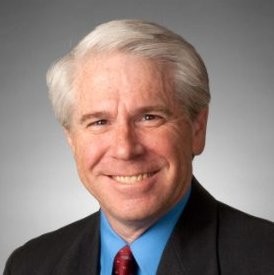 John ReedChief Rocket Scientist, United Launch Alliance
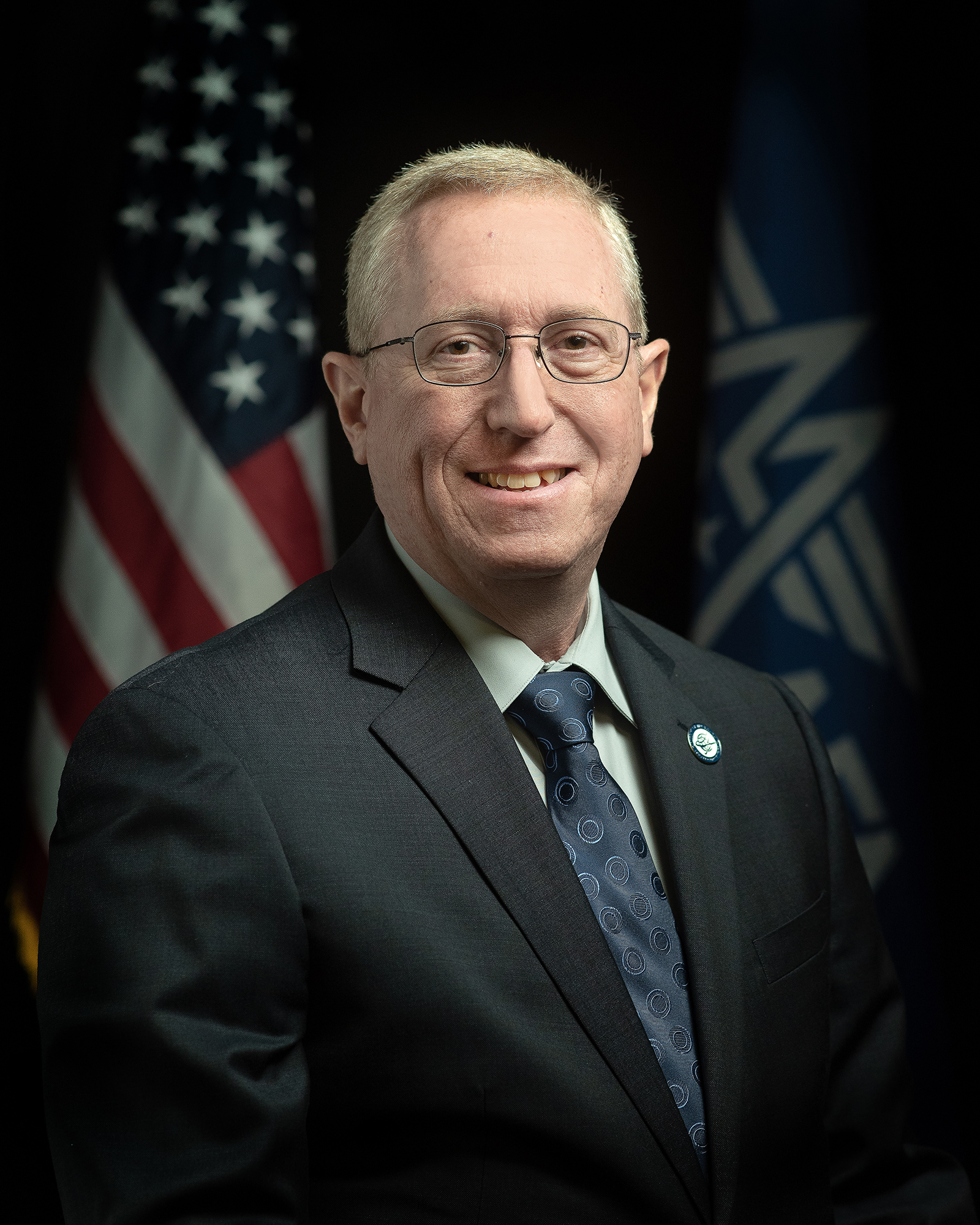 Charles GalbreathDirector and Senior Resident Fellow for Spacepower Studies, The Mitchell Institute Spacepower Advantage Center of Excellence
Host
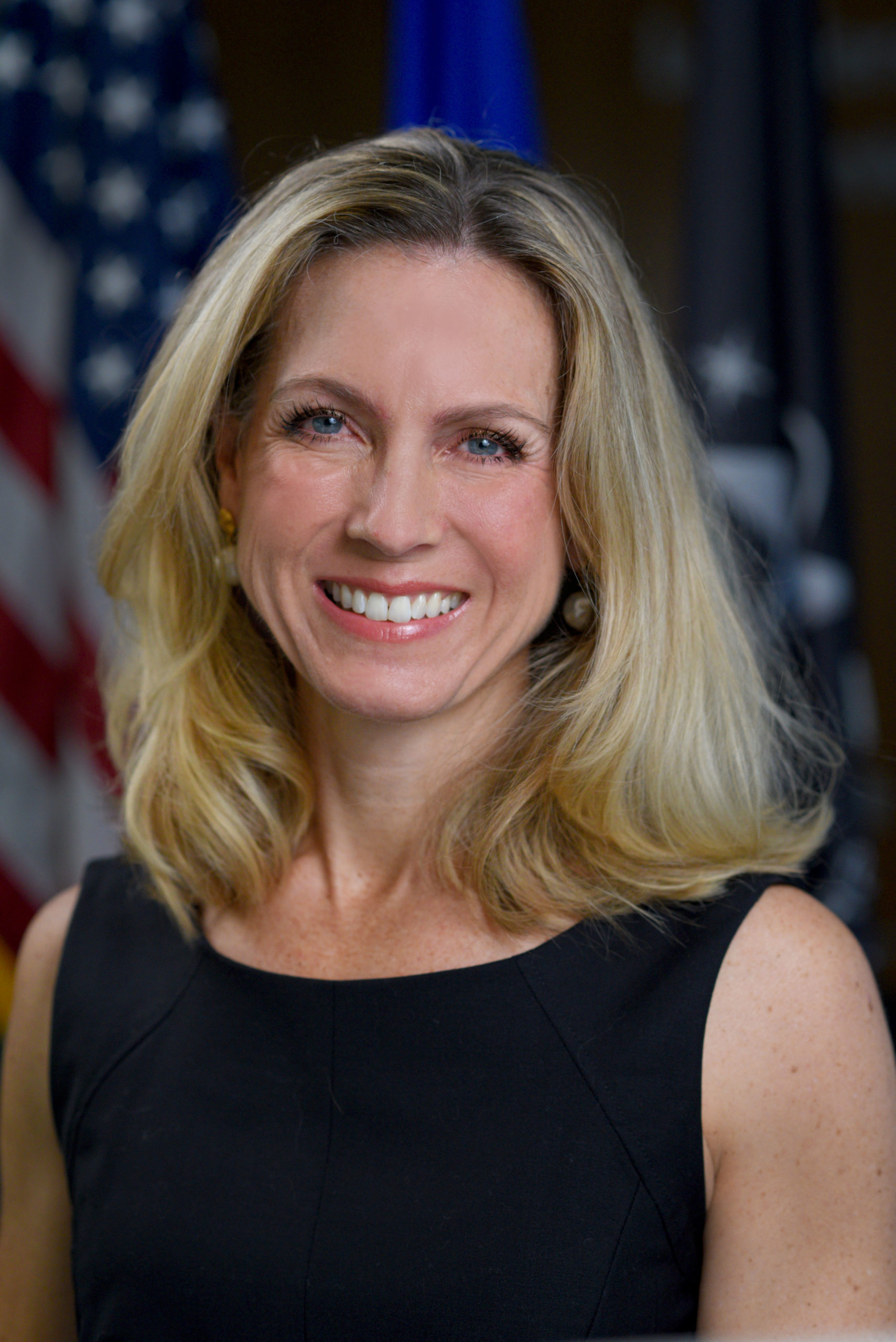 Heather PenneyDirector of Studies and Research, The Mitchell Institute for Aerospace Studies
Transcript
Heather “Lucky” Penney: [00:00:00] Welcome to the Aerospace Advantage Podcast, brought to you by PenFed. I’m your host, Heather “Lucky” Penney. Here on the Aerospace Advantage, we speak with leaders in the DOD, industry, and other subject matter experts to explore the intersection of strategy, operational concepts, technology and policy when it comes to air and space power.
This week we’re talking about launch. 2026 isn’t just the 250th birthday of our nation. It’s also the hundredth anniversary of the first flight of the liquid fueled rocket. On March 16th, 1926, in a field in Massachusetts, Dr. Robert Goddard successfully launched the world’s first liquid rocket. And like the Wright brothers before him, Goddard’s breakthrough opened the door to a new domain and the exploration operations and economic development that have evolved ever since in space.
So today we’ll discuss that milestone event, the advancements over the last a hundred years, the future of launch, and of course, why this all matters. And to help guide us through that discussion, I can think of none better than John Reed, the chief rocket [00:01:00] scientist at United Launch Alliance. John, it’s great to have you here.
John Reed: Oh, it’s a real pleasure to be here with all of you today.
Heather “Lucky” Penney: And of course we also have Charles Galbrath. Socks, good to have you. Socks is the director of Mitchell Institute, Spacepower Advantage, Center of Excellence, MI Space.
Charles Galbreath: MI Space, yeah. Thanks. Lucky. Great to be with you and John. Thank you so much for agreeing to chat with us about this. It’s really cool to think that, the Space Force is still really young, but space heritage goes back quite a ways and so the ability to talk about that, today I think is really exciting for us.
Heather “Lucky” Penney: And when you think of 1903 to 1926, that’s only 23 years, right? That’s a really rapid advancement from powered lift to powered flight to space.
Charles Galbreath: I think we have to put in context, right? So Goddard didn’t reach space with his first flight, right? And the Wright brothers didn’t do a transatlantic crossing on their first flight either.
Heather “Lucky” Penney: Yeah, I know.
Charles Galbreath: We gotta put that in context, but the analogy between the two I think is certainly. Fair to make.
Heather “Lucky” Penney: Yeah. Yeah. Alright. So, John, thank you for being here. But I have to say, chief Rocket Scientist, that is the coolest job [00:02:00] title ever. So what kind of background do you need to get that title? And also what are your responsibilities? What does that entail at ULA?
John Reed: So I’d say first. I honestly don’t know what it takes to have the job of Chief Rocket Scientist. I’m the first I’ve ever known with that title, so it’s hard to say
Heather “Lucky” Penney: in general. So you’re the, are you the first and only?
John Reed: At the moment. Someone will replace me, I’m sure. But as far as my background, I have a bachelor’s in aerospace engineering and a master’s in computer science. And I’ve been doing rockets since the eighties.
Heather “Lucky” Penney: Practitioner yeah.
John Reed: But it’s also having that crossing of hardware and software as well as analysis and design to be able to understand the breadth.
I’d say another facet of the job is understanding ecosystems and economics. So that you can basically recognize where things are gonna fall short of a good business idea, good business plan to help mature everything and get it come to market successfully.
As far as a background, I actually started my [00:03:00] career on space shuttle back in the early eighties, doing ascent abort design, so trying to keep the crew safe if something went wrong.
After Challenger, I went to work for Martin Marietta doing Titan IV development. So then it was trying to make sure the billion dollar payloads made it to space.
Charles Galbreath: Right.
John Reed: But the focus in my roles was from a GN&C perspective and trying to make sure that we were getting the customer where they needed to go and in the condition they needed to go. So from there I pivoted with Atlas V development I think the focus I had there was more on both the GN&C part, but understanding the implications to the entire system. And so it broadened my understanding of rockets and everything that was going on. One of the fun jobs I got was with the LCROSS mission that discovered water at the moon. We were gonna use the Centaur upper stage as an impactor.
You are sending a hydrogen oxygen fueled to upper stage to look for water. What are the odds you’re finding? So [00:04:00] we had, first I had to solve how we emptied the tank, but then I got asked to go system wide and look at how do we deplete the batteries in a manner that, sure, that there’s nothing left there.
How do we bake out the salt water, air that was in the foam insulation, so that by the time we got to the moon, there wouldn’t be anything left there either. And so with that, that really kind of gave me the breadth to understand and start heading into a technologist type role and eventually get the role that I have today.
As far as my duties, a lot of it is looking five to 50 years in the future. How we align the market evolution and our own evolution, both in terms of the products and the people that we have. So I lead the Tech Fellows program to help expand our understanding of what we can do, how we can be more efficient, more effective.
I also tend to be the voice of the customer for future projects to figure out how do we evolve the systems that we have and capabilities we have.
Heather “Lucky” Penney: I love the fact that, you’re future looking and we’re definitely gonna get there. But before we [00:05:00] do that, let’s go back in time, right? So we can start at the beginning because black powder rockets, had been around for centuries, but we’re talking about liquid field rockets.
Why was that development so crucial?
John Reed: I think first and foremost that opened a whole new door to efficiency. Even Goddard was doing black powder work to begin with and found that he couldn’t get enough thrust to weight ratio to be able to get the masses that he wanted to get lifted.
So with liquids, you get a much higher ISP. More specific impulse, more efficiency.
Heather “Lucky” Penney: Yeah. ISP What’s that? What is that for folks that aren’t into that acronym?
John Reed: it’s specific impulse for the-.
Heather “Lucky” Penney: Okay. And what does that mean?
John Reed: It’s basically, I can get into that a little bit more later.
Heather “Lucky” Penney: Okay.
John Reed: As I work through that. But the other aspects that I wanted to make sure we touched on were the fact that you can now have different control and throttle ability, we have had steerable, solid rocket nozzles, but it’s much easier to do with liquid nozzles. You also then have the ability to throttle up and down so you [00:06:00] can have more or less thrust out of it.
That was something critical for space shuttle work as well. and then you have eventually we got to the point where you could do restarts and have multiple burns out of the same system. A lot of the heritage GEO transfers were done. We would do a transfer and then use a solid rocket kick stage at Apogee. With having a liquid that could carry you all the way up, you get better control, better efficiency and better insertion accuracy.
Charles Galbreath: And that’s, I think important because anytime you conduct a burn, it never goes exactly like you want it to.
John Reed: Yep.
Charles Galbreath: And so the ability to fine tune on your subsequent burns so that you’re doing smaller and smaller burns to get to where you need to be, and so that the payload gets to where its mission needs to be, is absolutely critical and that fine tuning, I think is best achieved with liquid rockets.
John Reed: Exactly.
Heather “Lucky” Penney: That’s, you know, that’s fascinating. I hadn’t really thought about the liquid rocket being essential to the steerability or the, I mean, it sort of makes sense when you go stop start, you go, oh yeah, [00:07:00] I get that.
Because once you start a solid rocket motor, like it’s gone. It’s going till it’s done.
Charles Galbreath: Exactly. And another aspect of this, you know, I think a lot of people look at a launch and they cheer, right? When it lifts, which you know that it’s exciting. And then you can tell the amateurs versus the professionals, ’cause after the rocket leaves view, the amateurs walk away.
The professionals stick around for another hour or more until the payload is actually separated from the booster. And it’s not until then that the launch team goes, ah, we did it. We put it where it needs to be. And so there’s a lot involved there. There’s the big thrust at launch. At liftoff, but then there’s a lot of other little thrusts to get things exactly where they need to be.
Heather “Lucky” Penney: That’s fascinating and I hope that we talk more about that. But you know, in the intro, I compared the accomplishment of Dr. Goddard to what the Wright Brothers had achieved a Kitty Hawk. Why is that a fair comparison or is it?
Charles Galbreath: I absolutely [00:08:00] think it is.
So first of all the Wright brothers did the first powered flight. It wasn’t, exceptionally high. It wasn’t exceptionally long, it wasn’t very fast, you know, it was pretty slow, right? They also had a design that, put the tail in the front, a canard, right? And so there were elements of the aircraft design that then had to evolve to be the aircraft that we recognize today. In very many ways, Goddard’s first liquid fueled rocket had some similar things. If you look at it, it’s like a wire frame. It almost doesn’t look quite like a rocket. He also had if I remember right where the-
John Reed: Yeah, the thrust structure was up top..
Charles Galbreath: where the thrust structure was up top right?
Heather “Lucky” Penney: Really?
Charles Galbreath: And the propellant was down below
John Reed: blast shield over the propellant tanks at the bottom.
Charles Galbreath: Right, which, you know, from a fire safety perspective, maybe not the best design.
John Reed: Well, I think that was best, but for simple control.
Charles Galbreath: Yeah.
John Reed: Right?
Heather “Lucky” Penney: Okay.
John Reed: ‘Cause you guaranteed the thrust was pulling you up.
Charles Galbreath: Pulling you up.
John Reed: You weren’t trying to [00:09:00] balance the pencil on your
finger, right?
Heather “Lucky” Penney: Okay. That makes sense.
Charles Galbreath: But then over time, the evolution of the rocket design and the ability to maintain, guidance and attitude control was absolutely essential to putting the propellant where it needed to be.
John Reed: Yeah, I do think where the comparison breaks down is the complexity of what Goddard had to solve versus the Wright brothers. Wright brothers, you had to have propulsive, you knew how to make a fan, so that wasn’t too big a challenge. You then had to create a structure that would give you enough lift. And so it was designing a wing. For Goddard, you ended up pulling together liquid oxygen, which had only come into production in the 1890s, so it was a relatively new commodity that you could now buy and do things with. You had to figure out how you atomized gasoline to create a mixture and a injection system and a thrust chamber where you could do the combustion and control it.
You then had to also have the nozzle [00:10:00] technologies to figure out nozzles were new creation by, who was it? De Laval? And they were using those for steam turbines to get turbine efficiency out of a steam engine spinning a rotor. You also had to have gyroscopes in some way of controlling the thrust vector.
And so all of those were the things that he was focused on in the lab before you got the first engine built, before you did the first rocket.
Heather “Lucky” Penney: Yeah, the flight controllability actually is something that Wright brothers also had to deal with. Like, how did you control the aircraft once you got it airborne?
And then also the fantic, like they had to experiment with a number of different propellers, but the flight controllability for the rocket, to me, especially with the gyroscopes, as you mentioned, regardless of the fact that he was pulling the rocket as opposed to balancing on the tip of the pencil. That’s still very real time stabilization, which is a complex task.
Charles Galbreath: Yeah, absolutely.
Heather “Lucky” Penney: So I mean, really what he did was a monumental feat. But back in his time, not everyone was supportive of Goddard. Right? Especially his goal of [00:11:00] reaching the moon. That was complete science fiction. And this is just a fascinating tidbit of history, but the New York Times published an opinion piece in 1920, basically stating that Goddard’s goal of reaching the moon was fanciful and then the rocket would not work if there was no air to press against.
John Reed: Yeah. We tend to think linearly and it’s based on our experience. And so while the math side and physicists knew about about nozzles, the public was used to thinking about boats and cars and to some extent propellers, but they’re all using friction and resistance, right? To transfer the energy.
And so it was hard for the public mind to grasp that you could have a nozzle. That was how you were reacting, the force that was being generated by the engine, which meant you didn’t need to have air to push against.
Charles Galbreath: Right? And so Newton’s second law, for every action there’s an equal and opposite reaction.
John Reed: Third law.
Charles Galbreath: Third law, thank you very much. See, this is why he’s the rocket scientist and it is rocket [00:12:00] science, but when you’re rejecting mass in one direction, that creates a velocity and a momentum. And that momentum is matched in the opposite direction. And so we’re actually, obviously we’re able to propel all the way to the moon.
We did that a few years after Goddard passed away, unfortunately, but it to the New York Times Credit, they did print a retraction. When we landed on the moon in 1969.
Heather “Lucky” Penney: Good for them. You know, but the third law for every action there’s an, equal and opposite reaction. That’s sort of the notion of, ion engines, right?
Charles Galbreath: Right. Well, with any engine from a rocket perspective you are expelling some type of mass. And in doing that you were propelling the remaining mass in the opposite direction.
Heather “Lucky” Penney: Yeah. So, okay. So let’s not get too far ahead of ourselves. Because before we move on to how space flight, has evolved over the last a hundred years, we need to get some of the basics of rockets. ‘Cause it’s literally rocket science, right? Do you see what I did there? That was for you, Charles.
Charles Galbreath: Yep.
Heather “Lucky” Penney: But what are some of the fundamentals, for listeners to grasp? [00:13:00]
John Reed: So let’s start with, I like to start with Newton second law, which is F=MA. Force is pushing on something. The mass and the acceleration are linearly proportional to the force that you produce. And then to our earlier point, the third law, which is for every action there is an equal and opposite reaction. If you step back, combustion creates heat and pressure. And so what you end up doing is having an injection system that mixes the gases so you get the most efficient combustion you can get.
It’s within a chamber and so that chambers becoming pressurized. What physics had figured out before was with the right shape, you end up compressing the gas as it’s being ejected so that at the throat it’s going supersonic. Once you then go through into the nozzle section, that velocity is still increasing as the pressure decreases with the area of growth.
And so you end up accelerating those burned [00:14:00] particles to higher and higher velocities.
Heather “Lucky” Penney: It’s like a little Venturi. It’s Bernoulli’s law for airplane people.
Charles Galbreath: Yes, absolutely.
John Reed: Yep. It is the same. And yeah, the De Laval nozzles were developed using Venturi’s principles. And so what you’re ending up doing is creating velocity.
The other thing that the nozzle’s doing, I like to think of it like a light bulb and a cone shape where any particles that are not going straight backwards are hitting the wall and are then being deflected in that same general direction. And so you’re creating all of the force you can heading aft.
And what that’s doing is putting all the force then forward on the nozzle. And so that is what is basically creating the thrust that’s being applied with that equal and opposite reaction.
Heather “Lucky” Penney: And that’s probably one of the reasons why the steerability of the nozzle is so important. So like for those of us that like to watch, examples of the Saturn V rocket Seeing those nozzles swing-
John Reed: Yep.
Heather “Lucky” Penney: To steer the Saturn V is really [00:15:00] impressive.
John Reed: Yeah.
Heather “Lucky” Penney: But that’s a key element of maintaining the stability and the trajectory of the rocket. Right?
John Reed: It is. And the center of gravity is changing. Right. So as you’re burning –
Heather “Lucky” Penney: So the problem changes Yes!
John Reed: Up propellant and the CG is moving then. And so that’s changing where you need to focus and how you need to keep that energy passing through the center of gravity. The other thing to keep about or think about is rocket engines have a fixed thrust, and so as you’re burning propellant, the mass is decreasing, which means your acceleration is increasing.
So to our pre-show conversation, as that mass decreases, you’ll reach a point where the G loads get higher and higher for a lot of vehicles. You don’t want to have things exposed to 6, 7, 8, 9 Gs. And so what you end up doing is either staging to where you get rid of the higher thrust engines and the mass of those tanks and switch to a lower thrust and ideally more efficient engine. Or you end up throttling back until you reach that point.
Charles Galbreath: Yeah. So when you say [00:16:00] more efficient engine you, you’re. You’re talking about a couple different aspects, right? The efficiency of the engine, but also how it’s specifically tailored to the environment that it’s operating in.
Heather “Lucky” Penney: Oh, I thought, thought about that.
Charles Galbreath: So, launching at sea level is much different than operating in the upper ionosphere, right?
John Reed: Yep.
Heather “Lucky” Penney: Yeah. No, that’s fascinating. You know, and another thing that I think is really important, especially when we start talking about the heavy rockets that we’re going after today, and that we’ll need to be able to reach the moon, is it’s very similar to aircraft, that you can get too heavy, to be able to get airborne.
And the more fuel you need, the heavier you get. Right? So there’s a sweet spot that you can’t really go beyond based off of whatever, the specific impulse of the fuel is.
John Reed: Yes. And actually I think, my guess would be that’s what Goddard found out on his first flight. Because it was burning for about 20 seconds before it got two seconds of impulse that moved it up, the 40?
Charles Galbreath: 40, yeah. 41 feet or so and about 184 feet down range.
John Reed: Yeah and 185 feet down range.
Charles Galbreath: Yeah.
John Reed: Yeah.
Heather “Lucky” Penney: So what happened with [00:17:00] Goddard in the rocket development after his first launch?
John Reed: So we like to talk about 1926, but really he’d been doing rockets working with solid propellants in 1907. And so it wasn’t until 21 that he started playing with the liquids because he found he needed something better. So it was really only five years that he was working with liquids before he got the first engine firing and then that next year in 26, he got the first flight. After that, he kept producing rockets, continuing to refine, continuing to understand how to get better controllability, how to incorporate other technologies and solutions. He moved operations what to Roswell in what?
Charles Galbreath: To Roswell, New Mexico in about 1930. Yeah. Yeah. And so if you’re out there in Roswell, maybe some of the things you saw were Robert Goddard-,
Heather “Lucky” Penney: not just aliens.
Charles Galbreath: Not just aliens.
John Reed: If you were looking for them back in the thirties, yeah!
Charles Galbreath: Yeah, yeah. Right.
John Reed: Yeah. ’cause he kept working until what, 1940? Yeah. He passed away in 45 as I recall. And while [00:18:00] the press ridiculed, he was getting support from Smithsonian, from Charles Lindbergh from the Guggenheim, family. So there were a lot of people that saw the value of what he was doing really were encouraging.
Charles Galbreath: Yeah, absolutely. And there was an incredible museum out there in Roswell focusing on Robert Goddard and his workshop.
Heather “Lucky” Penney: Really?
Charles Galbreath: Absolutely.
Heather “Lucky” Penney: Okay. So that’s gotta be a part of America 250 for New Mexico.
Charles Galbreath: Oh, it absolutely is. I’m looking forward to that.
John Reed: I bummed, I went to the wrong museum.
I went to the Alien one.
Charles Galbreath: So true story. We went, ’cause we were stationed in New Mexico, we went for the Alien Museum and then we were walking around and we’re like. Holy smokes. This is the Robert Goddert Museum. This is so much more interesting.
Heather “Lucky” Penney: Absolutely. Real. Science is always more interesting than science fiction and definitely more interesting the conspiracy theories. So after World War II, though, Because Goddard passes away in 45. We brought home German born scientists like Wernner Von Braun to the US and they were critical to providing the expertise to advance our own rocket technologies. I mean, if you’re a Right stuff fan, our Germans are [00:19:00] better than their Germans right?
Charles Galbreath: Yep.
Heather “Lucky” Penney: What were some of the successes, in the systems that they developed that came out of bringing those scientists to the US?
John Reed: You know, it’s been fascinating. I’ve gotten to look back. Over the past couple years to understand more about how we evolved and how we got where we are today. And it’s not just one line of effort that has gotten us, there have been so many different things that have been going on in parallel.
Heather “Lucky” Penney: And do they cross pollinate?
John Reed: Yeah. So a fun fact Godard was out of the 240 patents that he had.
More than half were submitted by his wife after his death. And so it’s interesting to understand that breadth of knowledge that he created was then available through the patents for all the people that were trying to figure out how do we do ballistic missiles after the war? How do we do ICBM development? And so it was really the fruits of a lot of different teams. I know the Glenn [00:20:00] team. It wasn’t Glenn back then, but the group that became NASA Glenn was off looking at cryogenic properties and materials and things well before we were trying to do the rockets that they then contributed to.
So it was really coming out of the war and the focus on ICBMs that brought everything to focus, to figure out how do we develop those ICBMs to create the defensive structure that we have today.
Charles Galbreath: Yeah so a lot of the, the German efforts were stationed in Alabama,
Heather “Lucky” Penney: Huntsville!
Charles Galbreath: Huntsville working with, the Army, and they developed several, rocket systems as a result of this. The Army Jupiter-C is a notable intermediate range ballistic missile. And it is basically the Redstone Rocket that launched our first astronaut into space.
Heather “Lucky” Penney: Yeah.
Charles Galbreath: And so there’s some great accomplishments there, but it wasn’t just, the Germans and the Army effort. There were of course-
Heather “Lucky” Penney: American,
Charles Galbreath: American and Air Force efforts as well.
Heather “Lucky” Penney: Yeah. You know, it’s interesting the, the Redstone, when we think about you know, going that first, suborbital flight into space, you [00:21:00] would think would be just a big, massive rocket to be able to achieve that.
But if you go down to Kennedy, they’ve got like a little Redstone set up. Yep. And it looks almost like a bottle rocket. I mean, you’re looking at, it’s in the middle of of what appears to be a parking lot and there’s literally a little copper wire that goes to the, the control room and a button. I mean, it’s kind of shocking how rudimentary it feels when we’re looking back at some of this technology. But it also really speaks to the risks, the innovation. I mean, really what we were committed to doing and what we were willing to, push in terms of available technology, because it was a Cold War, the United States had to pursue multiple pathways, getting back to the ICBM conversation, to ensure capable delivery. So would you gentlemen mind talking a little bit about those Air Force efforts under, General, Bernard Schriever?
Charles Galbreath: Yeah. So General Schriever, had his team, the Western Development Division out, in Los Angeles in the fifties.
And they developed several ICBM [00:22:00] families, thor, Atlas, Titan, all came out of those efforts. Minuteman, which was a solid rocket, but it also came out of that effort as well. But Thor, Atlas and Titan really went on to have a life of their own when it came to space lift.
They were some of our earliest boosters and an atlas was what, John Glenn rode to, achieve orbit for the first time for the United States. And then the Titan system, which is also an ICBM but it was the booster for the Gemini program. And, some great success there.
And so those efforts to Bernard Schriever, and that’s why we called General Schriever, the, father of space and missiles in the military. And of course, great heritage, for the Space Force there.
Heather “Lucky” Penney: You know, a fun fact. The privilege of, being able to meet, Dr. Tom Stafford,
Charles Galbreath: Oh wow.
Heather “Lucky” Penney: Multiple times. And his favorite ride was the Titan. He said it was a race car.
John Reed: I love that. Yeah, and it was interesting too because under General Schriever, the [00:23:00] Western Development Division. Basically was the integrator for how we brought lots of different products together, so they ended up with contracts with Rockwell and others for rocket engines. Conveyor had the Atlas vehicle development, but other people had the avionics, and so it was a very distributed ecosystem that was helping mature and figure things out. The other thing that I came to understand, because Atlas had lots of starts and stops along the way. Was, there was a lot of laboratory work going on that was helping inform those decision makers.
And so they’d run an experiment, run a test, and suddenly the program would take a different direction. And so it was a very agile approach to how you evolve those capabilities.
Heather “Lucky” Penney: But you know, we could only do that because we did have so many parallel efforts. So many. suppliers and laboratories and universities and research teams involved with developing those parallel efforts gave you the breadth [00:24:00] and depth to be able to quickly pivot when you discovered this is the appropriate solution, the best case scenario, or you ran into a stop in another research vein.
John Reed: And keeping in mind this was all about ICBM development.
And so it was all about who could get the first system to be fielded to create a defensive posture. And so Atlas ended up being chosen early on in part because they weren’t reliant on an upper stage engine to ignite. And so there wasn’t assurance and knowledge that would say, I can actually light another engine up in at a thinner atmosphere.
The challenge for Atlas was in order to do that, they ended up with the balloon tank structures that we still use with Centaur today. And so you are counting on pressure stabilization of those steel structures to be able to react the loads. Ironically, the first launch attempt failed, but you ended up with a vehicle that was flying sideways and still intact, which meant that structural issue was off the [00:25:00] table.
That was proven now.
Charles Galbreath: Yeah. So just to pull on that thread a little bit . The walls of these tanks are not super thick. They’re pretty thin.
John Reed: Yeah.
Charles Galbreath: And what you’re saying, I think is when that tank is empty the mass of the tank itself and the structures, it really can’t sustain itself. And it requires the propellant to be in there to provide the pressure to basically keep it intact.
John Reed: Yep. And in fact there was an incident years back where in that rocket farm down in Huntsville, they had an atlas tank and the compressor failed. And the rocket crumpled.
Charles Galbreath: Yeah.
John Reed: And so yeah, it cannot support its own weight without pressure. That’s part of the evolution that Atlas V took was to go away from the booster tanks being pressure stabilized to a structurally stable booster. But then the upper stage still is the balloon steel tank structure to have that efficiency for space.
Heather “Lucky” Penney: Yeah, because you don’t wanna have the extra weight. Because that’s just. It becomes a compounding problem.
John Reed: Every pound in the up stage is a pound you can’t have in [00:26:00] payload.
Charles Galbreath: Yeah So, Heather, you talked about the multiple paths and John you talked about the assurance. The other aspect of this is the overall national imperative.
And we were in a competition with the Soviet Union. We needed ICBMs, we needed space launch capability and the tenacity that our nation had at that time to fail. And then try again. And try again. A lot of our listeners probably know that the first successful Corona mission was Discovery 13. So 12 prior failures of one type or another in order to get the first success in the return of the Corona Program.
Heather “Lucky” Penney: Yeah. And when you’re inventing or developing, especially leading edge technology like this, you have to be willing to accept failures and remain committed. And these were not cheap efforts.
Charles Galbreath: That’s right.
Heather “Lucky” Penney: They required a tremendous amount of resourcing. You know that we were talking about the Atlas and the Titan. The Atlas was solid, right? And the Titan was liquid?
John Reed: They were both liquid.
Heather “Lucky” Penney: Oh, they were both liquid?
John Reed: Yes. Okay. Minuteman was the only solid Minuteman. Okay. That became the precursor to
Charles Galbreath: Minotaur?
John Reed: [00:27:00] Yes, Minotaur. Thank you. Right.
Heather “Lucky” Penney: Okay. Well, I brought that up ’cause Okay, so Atlas was also liquid, and Titan was liquid.
Charles Galbreath: Yep.
Heather “Lucky” Penney: But these were ICBMs.
Charles Galbreath: Initially ICBMs, that they were converted into launch vehicles.
Heather “Lucky” Penney: Which meant they were not stable sitting in a hole in some missile field. Right? They had to be fueled when commanded. Right?
John Reed: Yeah. Atlas is the original Atlas, ICBM were laid flat, and so that’s how they did still have to have some pressure, but it wasn’t the kind of pressure you need if it’s upright with the warhead on top. And so they were,
Heather “Lucky” Penney: Yeah, but the point is this was not an immediate, you know, response. It would take time to fuel up the rocket.
John Reed: Yes.
Heather “Lucky” Penney: You know, erect it and then launch it.
John Reed: It they had like a 15 minute to readiness.
Charles Galbreath: Yeah. I’m not entirely sure on that, but to that point, that’s why we needed the minuteman system. That relied on solid rockets that you can instantly go-
John Reed: Yeah.
Charles Galbreath: At a minutes’ notice.
Heather “Lucky” Penney: There you go yes.
Charles Galbreath: Exactly.
Heather “Lucky” Penney: Okay, so in the [00:28:00] 1960s, we’re really hitting our stride when it comes to all of these rockets and we’re launching satellites and experiments and people into space right? And it was a core element of our national priority with a space race. What were the key advancements and programs during that time?
John Reed: I think the thing to keep in mind, ’cause 1960 saw the beginning of Atlas Centaur, the beginning of Titan Redstone. Beginning of manned space flight by the end of that decade, you had men landing on the moon.
But there were a lot of failures in between. One of the key turning points for Atlas and its development was the first Centaur flight and NASA had backed Centaur to be the stage to be able to go do the interplanetary work. Failed.
They ended up standing up an entire team that brought in expertise from Glenn and other NASA centers to help figure out how do we evolve the design of that.
Altair failed. [00:29:00] Agena failed. And so you ended up with systems that had the level of complexity where you needed a broader team to come in and figure out how do we make this work? How do we get the design right, the production right, to be able to get to successful rate? And so I’d say that entire decade was focused on how do we do this sustainably and correctly and bringing it a team together to make it happen as opposed to relying on one vendor to go do it for us.
Charles Galbreath: And you talked about the size of the Redstone rocket and in comparison, the Saturn five. Which, you know, really was the culminating launch vehicle for us in the 1960s. And of course, landed Neil Armstrong and Buzz Alder on the moon in 1969. Five massive engines, multiple stages to get there. So, an incredibly complex machine, that required a lot of trial and error, but a lot of hard engineering work to make that happen.
Heather “Lucky” Penney: Yeah. And making sure we could then start an engine and get back from the moon. Was another key element of that.
So the [00:30:00] 1970s we took a new approach to launch, with the space shuttle program. And is it fair to say that this is a hybrid launch vehicle with both liquid and solid rockets?
John Reed: Yes, but there were lots of systems that used both solids and liquids.
Heather “Lucky” Penney: Okay.
John Reed: I think the key aspect with shuttle and with those other systems is what you’re trying to do is figure out how do I get more liftoff thrust compared to the weight of the rocket body? And so they end up being augmenting to the thrust that you’re getting out of that main engine. I think in some ways the seventies saw the explosion of scientific inquiry because you ended up with so many missions, going to so many planets to understand the rest of the solar system, the birth of the universe, and all the science advancement that we have. In some ways, the development of NASA’s shuttle transitioned the entire ecosystem because with NASA’s focus on shuttle being their next generation launch system that meant that they wanted to have all of their [00:31:00] expertise focused on that. They started to transition responsibilities for the existing expendable launch ecosystem to the contractors.
Heather “Lucky” Penney: So this really moves sort of the interplanetary to commercial, if you will.
John Reed: No, ’cause those were still NASA missions.
Heather “Lucky” Penney: Okay.
John Reed: They were assuming that there was communication needs and other needs that would support the launch enterprise, but they took their eyes off the launch enterprise and focused more on the shuttle development.
Heather “Lucky” Penney: Okay.
Charles Galbreath: Yeah, so NASA was almost exclusively focused on the shuttle, in the seventies and into the eighties.
John Reed: Yeah.
Charles Galbreath: The Air Force continued to operate expendables, although we did launch many Air Force and national payloads aboard the shuttle. We still had a huge presence on the expendable side. We even looked at having a blue shuttle. Not a lot of people know this, but the Air Force has pursuing manned presence in space for a while and going back to the dinosaur in the sixties and then the [00:32:00] Manned Orbiting Laboratory.
John Reed: Yeah.
Charles Galbreath: And then we pursued the blue shuttle as well. But then of course, the Challenger had its tragedy in 1986 and that changed a lot of dynamics.
Heather “Lucky” Penney: So, what evolutions in technology occurred in the eighties and nineties as a result of that?
John Reed: So I think. The Challenger directly resulted in the Titan IV development.
Charles Galbreath: Right.
John Reed: But beyond that, I think it was less the challenger and more the needs of the space ecosystem continuing to grow and expand, that drove evolution in the launching ecosystem. I think in some ways the existence of shuttle had degraded the market because a lot of the launch companies were down to a handful of launches over years. And so it was making space access with expendables more expensive. With Challenger happening, you ended up with NASA saying, I don’t want to have all these things there. You also had the emergence of Titan IV for the heavy but then you still had a fleet of different [00:33:00] contractors providing launch support in the medium to small market today.
But the mass of those payloads kept growing. So you were trying to figure out how do I evolve this system? So you ended up with a number of variants growing over those eighties and nineties. To be able to meet that emergent need that was being created. We added solids to Atlases. We added Russian engines to Atlas Three back in that timeframe as well.
Charles Galbreath: Right, and that’s such an interesting aspect, right? We developed our launch capabilities because we were in a life or death race against the Soviets. Cold War ends, and now we’re putting Russian, Soviet, engines on our boosters to launch our launch us into space.
Heather “Lucky” Penney: So tell me, how did we lose that engine technology, like the domestic engine design and production technology that forces us to move to Russian Rocket motors.
I mean, like, that just seems-
John Reed: I don think it was a loss. I think it was more [00:34:00] we had focused on microelectronics and making things lighter and easier to lift. The Russians didn’t have that knowledge set. They focused on material and metallurgy, and were able to create structures that could contain much higher pressures and much more efficiently create thrust.
Charles Galbreath: Yeah, it was an aspect of efficiency as well as robustness and reliability. You know, there’s a famous, comparison. You know, NASA spent, I don’t know how many, thousands of millions of dollars for a pin that will write in zero gravity. And the Soviets used a pencil, right? So there’s for simplicity of their design and the utility of it. And so we were leveraging when we were able to, at the end of the, Cold War. But I also think it’s interesting that all of our boosters into the eighties and nineties were still primarily based off of what were ICBMs.
And we didn’t really have a dedicated launch vehicle that was designed as a launch vehicle from the beginning until a little later.
John Reed: [00:35:00] The vehicles have evolved to meet the market need. And so you’re always taking what you’ve learned and figuring out how do I do it more effectively, more efficiently?
And we can talk a little bit as we get into the modern.
Heather “Lucky” Penney: So, sticking with the chronology in the early two thousands, we were primarily operating the Atlas, which is built by Lockheed Martin.
And the Delta, which is built by Boeing. And then, so in 2006, the United Launch Alliance was formed to consolidate those launch operations. Why was this an important step?
John Reed: So in some ways I would actually say it was less important and more necessary.
Heather “Lucky” Penney: Okay.
John Reed: There was an expectation in the nineties that there was an emerging space economy that was gonna need services.
You had Teledesic and a number of other companies that were banking their future on putting up constellations of satellites. So the Air Force anticipated that there was now gonna be a commercial sector. They could offset the cost of the infrastructure they needed for launch.
And [00:36:00] so they were gonna pick one out of a set of four bidders and assume that the commercial market was gonna bear half the cost of the services they needed.
That market collapsed in the late 1990s.
Charles Galbreath: Yep.
John Reed: And so the Air Force ended up having to rethink some of that strategy. But the designs were already pretty much baked at that point. The other piece of it was the flight experience with Titan IV. And so Titan IV was a critical national security launch system designed explicitly to meet the needs of the national security ecosystem.
So those were billion dollar payloads, and we tried our best to have every mission success. We did not achieve that. In some ways, what was done in that development was take an existing Titan design and stretch it to make it bigger in every way possible. And what we found was [00:37:00] there were assumptions baked into those designs that were not carried forward into the new design.
And so you found every failure was a unique and very different element to the system that didn’t work the way we thought it would.
One of the lessons taken away from that was when there was a failure, you stood down for a year sometimes, and we could not afford those kind of gaps to meet the national security environment and challenge that we had as we were in the 2000s. So that ended up with the Air Force having a dilemma of how do I have assured access to space when I can’t afford two providers? And so that was part of the impetus for creating ULA and bringing together two families to be operated by a single operator and try and gain the efficiencies. I will also say that part of that contract structure was to see a cost reduction in the cost of launch over the first five years of operation, 25%, so 5% a year.
ULA was able to exceed that and [00:38:00] actually continue it for the first 10 years of life. And so I think the cost objective that they used to set up that construct actually was successful.
Heather “Lucky” Penney: So shortly after the joint venture of ULA was established, SpaceX then appears as this new entrant with Falcon Nine and then Falcon Heavy.
And what impact did these additions have on the launch enterprise? So we’ve got the cost reduction, which is increasing access to space effectively from a business perspective. And then SpaceX, what was their impact on the ecosystem?
Charles Galbreath: I think first of all, we have to remember that SpaceX as a commercial provider, received quite a lot of funding and support from the government to develop that capability.
Heather “Lucky” Penney: Oh yeah, no, I remember that.
Charles Galbreath: Right? So let’s not lose sight of that, but they started having more routine flights, largely because they were using reusable boosters. And so the first reuse of a booster was with SpaceX’s Falcon, and they demonstrated that as well with the Falcon Heavy.
And that-
Heather “Lucky” Penney: This also goes back to the willingness [00:39:00] to take risks and accept failures. I mean, remember how many spectacular failures SpaceX had in developing that reusability?
Charles Galbreath: Yeah, absolutely. So that they have that, and then that drove a faster tempo. And also, I think further decreasing the cost of launch in addition to what ULA had already started to experience.
John Reed: Yeah. I would say to some extent it’s been fascinating to see all the different numbers that are thrown around.
Charles Galbreath: Sure.
John Reed: Around the cost of launch. But I think the key thing from SpaceX was it wasn’t just a disruption to launch. I think in hindsight, he probably knew, or they knew that they were gonna be launching starlink.
And so their construct was not creating a reusable system to be able to go do competition in a market for launch. It was both the vision of going to Mars and knowing that you had to land and launch from Mars. But also [00:40:00] understanding that they had a fleet of thousands, if not tens of thousands of satellites they that they had to deploy meant they needed something that could respond at a different cadence rate than anything that had existed before that.
And so I think they actually had a strategy in their approach to developing capability that would support the needs of their own market. As opposed to developing a solution to meet the existing needs of an existing market.
Heather “Lucky” Penney: That’s a fascinating insight and how, you know, in many ways then that could have been kind of a loss leader, if you will, to be able to support future growth.
Okay. So ULA is now focused on the Vulcan booster and what are the advancements that are part of this design? What’s revolutionary about Vulcan?
John Reed: I think Vulcan, we brought together the lessons we learned on Atlas and Delta. But the focus on that was really on how do I more efficiently manufacture, making sure I can evolve it and making sure it will support the higher launch cadence of the p-LEO [00:41:00] markets, as well as supporting the beyond the, or basically, the GEO and beyond GEO markets for Cis-Lunar.
I think a really interesting example of our ability was how quickly we were able to come up with the 85K stage variant in order to support the Amazon customer and their Amazon LEO Constellation deployment, where we came up with a shorter upper stage that was more efficient at getting tot Leo and more effective at carrying their payloads to orbit.
Heather “Lucky” Penney: So is the Vulcan essentially modular to be able to meet the requirements of different payloads?
John Reed: I wouldn’t say its modular, I’d say its evolvable.
Heather “Lucky” Penney: Okay evolvable.
That’s fascinating to me because for throughout this whole conversation, what I’ve been left with, or what I’m coming to a sense of is the need to really tailor and customize the design of the expendable launch for the payload, for the orbit, and with the fuel.
And so being able to adapt or evolve the Vulcan, to me seems like a real game changer.
John Reed: There’s that. I would also [00:42:00] say part of inherent in our design, because we are designed to go to GEO and not just to LEO, we ended up with having the solids again, where we’ve got 0, 2, 4, 6 solids on a Vulcan. What that lets you do is dial up or dial down the cost and launch thrust so you can carry different masses to different orbits.
The key for going to GEO is you have to maintain enough propellant in that upper stage tank when you get into low earth orbit or parking orbit to be able to do another burn, to do a transfer, and then a final burn to do an insertion. And so. You’re ending up with a different mass fraction for what you’re carrying to low earth orbit, where you have solutions like our competitors that are really optimized to go to LEO.
You’ve got a vehicle that can lift a fixed amount off the ground, and that’s what you’re gonna fly every time. With the Falcon Nine single stick versus heavy, you could have zero or three boosters, basically, where [00:43:00] we have a finer increment to be able to dial in the cost and product that we’re gonna go serve different elements of the market for.
Heather “Lucky” Penney: So how is this impacting your choice of fuels?
John Reed: I’ll try and lightly touch on it for you because I think it is relevant to understand that the choice of fuel is really a decision driven by the engine architecture that you have.
And so when we went to the marketplace to figure out what was gonna be the next engine to use to get up to a million plus pounds of thrust, we had two choices. And the methane based engine was a more efficient, more effective solution, better price point for us to get to market. And so it’s really what is the rocket engine market able to provide that informs our choice of what’s gonna be the right architecture for fuel that then informs what are the size of the tanks and the infrastructure that you have to have.
Heather “Lucky” Penney: Yeah, it sounds like it’s all very complex in [00:44:00] terms of the different dependencies and how one design choice can impact either enabling or constraining your choices and the other elements of it.
Charles Galbreath: Absolutely.
John Reed: Agreed.
Yeah I’d also say back when we were forced away from the Russian engines, there was a push by some people to say, let’s just put a different engine on the back end. And the discussion that we had to have with various agencies and stakeholders was you don’t just change the engine.
It’s, I think Taurus example is you can’t put a Pinto engine and Ford F-150.
Heather “Lucky” Penney: For those old events who have driven a Pinto! But okay, so there are also a tremendous amount of new entrants in launch market. I mean, it’s like all the cool kids are there, right? You’ve got Blue Origin, Firefly, Rocket Lab, obviously SpaceX and others.
What created or spurred this investment into space launch? And is there really enough demand to sustain this expanding industrial base? [00:45:00] What are your thoughts there? Especially,
John Reed: Charles, I’m sure you have opinions on this too.
Charles Galbreath: I do, yeah.
Heather “Lucky” Penney: Yeah.
Charles Galbreath: So you wanna go ahead?
John Reed: I’ll go ahead first just to say, I think there was a lot of exuberant enthusiasm around how you were going to support and what the needs might be of the p-LEO customers. That may or may not have been well founded, but I will say we’ve got a lot of growth with the proliferated LEO constellations. With the development of hyperspectral sensors, there are gonna be a lot more data products that can be produced in space and bringing value back. And so that creates a much bigger marketplace that I think we can all play in and support.
Charles Galbreath: So I think, John referred to the opportunities that we saw in the late nineties. There was supposed to be this giant boom of space capabilities in the commercial sector. I think we’re seeing that now, so almost 30 years later, we’re seeing it come to fruition. And so these companies, they’re all [00:46:00] supporting the growing demand signal for not just pLEO but as John said, the other mission sets. And right now as incredible as our launch rate is in the United States, there are still multiple satellites and payloads that are waiting for a ride to space. And so we definitely need to increase our capacity to deliver those payloads. Now that comes from a variety of boosters and it comes from a variety of locations as well. You know, we talked about our reliance and NASA’s sole focus on the shuttle and how a, after the challenger tragedy, we had to make some adjustments.
We talked about the need to secure two different paths to space with ULA and the Atlas and the Delta. And so today we can’t put all of our eggs in a SpaceX basket or in a ULA basket. We need a lot of different opportunities to get to space from a provider perspective as well as from a location perspective.
And I keep bringing up location because we’ve gotta remember that Rocket Lab. [00:47:00] That’s a New Zealand company, right. And they’ve launched outta New Zealand, so that, that’s interesting. There are.
Heather “Lucky” Penney: Well, one thing that I didn’t realize, before we began working together, Charles, is being an air guy, you know, it never occurred to me that you would be constrained regarding the orbits that you can reach based off of your launch.
I mean, I’m constrained where I can go ’cause I’ve got a limited amount of range. So I have to be able to take off from the right airfield and that constraints how far I can go and where I can go. But it never occurred to me when it comes to space that there are similar constraints with the types of orbits that you can reach based off of where you are launching from.
Charles Galbreath: Right, if you want to go to geosynchronous orbit, right? You wanna get as much velocity outta the rotation of the Earth as possible. So you wanna get as close to the equator as possible. If you wanna launch into a polar orbit you want to not necessarily launch over a populated area.
And so there’s only so many places, geographically speaking, where you can launch in the United States and achieve that safety margin.
John Reed: I will say that’s a US constraint, not [00:48:00] necessarily-
Charles Galbreath: Oh, absolutely. China’s got some great examples of.
Heather “Lucky” Penney: Yeah.
John Reed: Yeah.
Charles Galbreath: Some challenges that they’ve had as a result of that?
Heather “Lucky” Penney: Well, it, go ahead.
John Reed: I’d build on that too, to say there are new entrants that are focused on in space assembly, manufacturing, servicing.
Charles Galbreath: Right.
John Reed: There’s the commercial LEO destinations where we hope to have more than one space station that are doing a lot of development of products that can only be made in space and return to earth.
And so I think there is an entire ecosystem that’s growing and emerging. It’s going to allow us to expand human presence and operations and value creation all the way to the moon and ideally beyond that.
Heather “Lucky” Penney: And I would be remissed if I didn’t make a plug for your DSO Dynamic Space Operations, paper Charles, because a lot of this touches on the national security needs that we have, to have multiple launch locations, rapid response launch, and be able to reach a variety of different orbits with different payloads.
And to be able to do that quickly and [00:49:00] as needed. Whether or not it’s to replace, a constellation that has been lost as a result of conflict or, you know, for example space cargo, things like that.
Charles Galbreath: Right.
Heather “Lucky” Penney: So, we’ll, include that in the show notes. So when we’re looking ahead to what the launch enterprise will be or should be, what are some of the key areas, John, that you’re focused on?
John Reed: I think I’m really focused on the emerging markets that we’ve kind of touched on. In a way that grows the ecosystem as a whole. I think one of the things that I am always focused in the conversations I have in those groups is. We started out with bespoke solutions. And so technology readiness is what mattered to be able to create a bulk bespoke solution that leveraged that technology.
We’re now in an era where we’ve got solutions for the platforms that we’re gonna have up there, and now I need to be able to integrate those technologies into existent platforms. And that is a very different problem set than just technology maturation. So I’m [00:50:00] constantly banging the drum on integration readiness levels.
I think we also need to be able to think how do we partner and pair in ways that we’ve never had to do before. So one of the areas I’m focused on with the Aerospace Corporation is a digital sandbox for the Cis Lunar ecosystem where you can have two vendors that have different IP come together with models of how their systems would interact and react.
So that you can determine, can we together create a better value proposition for infrastructure or for meeting some emergent need in that Cis-Lunar ecosystem? And in a way we need that because to this point, we’ve all done integrated solutions of this is how I’ll do this system. We’re now talking about space having infrastructure.
And to be able to create value and provide infrastructure services is gonna require more than one party to be able to create that infrastructure layer.
Heather “Lucky” Penney: That’s [00:51:00] fascinating from a business perspective, the ability to integrate and play together actually makes you more competitive and more valuable to the customer.
John Reed: Exactly.
Heather “Lucky” Penney: So, as we conclude this podcast, again, John, thank you so much for your experience and expertise. I’d really be interested in what final thoughts you’d like to leave with our audience. And actually, Charles, we’re gonna start with you and then John, we’re gonna get to you so you can have the final word.
Charles Galbreath: Yeah. So thanks Heather. John, first of all thank you very much. This has been a really thrilling conversation and I hope for our audience as well, not just me. When it comes to space launch, you should remember a couple things. One, it’s hard. It’s still hard, right? It is still rocket science. Two, we’re making a lot of great progress and there’s a lot of need for a robust industrial base, if you will For launch providers. And as John said, how they all work together. So launch is how we get to space and we gotta make sure that we have a lot of ways to assure our access to space. And let’s not lose sight of the fact that we’ve [00:52:00] been at this now for a hundred years thanks to Robert Goddard’s efforts back in the 1920s, but we’ve come a long way.
John Reed: You know, and from my perspective, the last a hundred years moved us from the surface of the earth to space. And we have near Earth operations in LEO and we put boots on the ground and at the moon. I think the next a hundred years is going to see us really taking advantage of all the resources that are out there.
We’ll see people doing things in space that have never been done, producing things in space that can only be made in space. In some ways, we talk about the wealth of resources out there is creating a post scarcity future. And so with all of those things that are out there, it can actually transform life on Earth here as well. So I look forward to what the next generations are gonna do for us over this next a hundred years.
Heather “Lucky” Penney: John, thank you so much for being here. It’s, to have the Chief Rocket Scientist.
John Reed: Well, this has been an absolute pleasure.
Heather “Lucky” Penney: It’s been a pleasure for us as [00:53:00] well. Thank you.
And with that, I’d like to extend a big thank you to our guests for joining in today’s conversation. I’d also like to extend a big thank you to you, our listeners, for your continued support and for tuning into today’s show. If you like what you heard today, don’t forget to hit that like button or follow or subscribe to the Aerospace Advantage. You can also leave a comment to let us know what you think about our show or areas that you would like us to explore further.
As always, you can join in on the conversation by following the Mitchell Institute on X, Instagram, Facebook, or LinkedIn, and you can always find us at mitchellaerospacepower.org. Thanks again for joining us and have a great aerospace power kind of day. See you next time.
Credits
Producer
Shane Thin
Executive Director
Doug Birkey