As the newest member of NATO, Sweden plays in instrumental role in securing the alliance’s northern flank. With the Swedish Air Force celebrating its 100th anniversary this year, we are excited to chat with Major General Jonas Wikman, Commander of the Swedish Air Force. We discuss the current security environment and how that is shaping decision-making both in Sweden and throughout NATO. This touches upon strategy, operational concepts, and modernization equities. Our conversation also covers lessons learned from ongoing conflicts in Ukraine and the Middle East.
Guests
 Lt. Gen. David A. Deptula, USAF (Ret.)Dean, The Mitchell Institute for Aerospace Studies
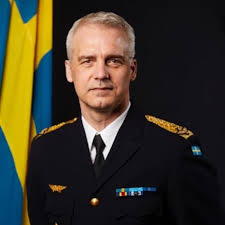 Maj Gen Jonas WikmanChief of Air Force, Swedish Air Force
Host
 Doug BirkeyExecutive Director, The Mitchell Institute for Aerospace Studies
Transcript
Doug Birkey: [00:00:00] Welcome to the Aerospace Advantage Podcast, sponsored by PenFed. I’m your host, Doug Birkey. Here on the Aerospace Advantage we speak with leaders from the Armed Forces, industry, and other subject matter exports to explore the intersection of strategy, operational concepts, technology and policy when it comes to air and space power.
This week, it’s our honor to welcome back Major General Jonas Wikman, commander of the Swedish Air Force. As NATO’s newest member solidifies its position in the alliance, this is a perfect time to catch up on the latest developments, challenges and opportunities. Plus, this year is the Swedish Air Force’s hundredth birthday.
So at that General Wikman, welcome back.
Maj. Gen. Jonas Wikman: Thank you. Thank you very much. It’s, so great to be back, for the podcast and also for the great conversations we have on the side. It really nice. Thank you.
Doug Birkey: Thanks so much for making time and also joining us for today’s conversation is Mitchell’s very own Lieutenant General Dave Deptula.
Sir, always a pleasure to have us.
Lt. Gen. David Deptula, USAF (Ret.): Well, it’s great to join General Wikman today. Welcome and looking forward to our discussion.
Doug Birkey: When we think about it, we’d mentioned on the intro, you guys are your century mark, [00:01:00] you know, a hundred years that’s quite an accomplishment. I always think these sort of markers are an excellent time to take stock of the professionalism, dedication, and service to the Swedish airmen that you’ve led to the services success. Are there any memories that you have from your own career? Or the Swedish Air Force history in general, more broadly that connect to that sense of legacy.
Maj. Gen. Jonas Wikman: I mean, you’re absolutely right. Celebrating 100 years makes you look back and to, to the future as well. Perfect timing for us to celebrate 100 years. And when I look back, I mean, I have a lot of memories. I started out my career trying the J 35 Draken, which was you know, previous generation aircraft.
Doug Birkey: It’s an icon.
Maj. Gen. Jonas Wikman: Yes, it’s an icon that was really hard to fly and the orders were quite clear, start to the east bring your toothbrush and pijamas and we will see where you will end up. That was kind of natural to us, at that time. But now as a commander, I really realized the greatness of that kind of operations and that was connected to dispersed operations. All that complexity that we see today. I [00:02:00] didn’t, know about it. I didn’t think about it as a fighter pilot at that time. I just, you know, expecting the fuel truck to be there wherever I landed. But, today memories connects to the concept of our operations in a good way. And so it’s a perfect time to celebrate 100 years going into a new generation air force
Doug Birkey: It is incredible. And you guys are so iconic. We’ll talk about it later for those dispersed operations and really led the way in that. It’s incredible. So, General Deptula you’ve spent a lot of time in Europe. What’s your take on these sorts of markers in the context of broader European defense? I think we all have visions of those Cold War Viggen operating off country highways in Sweden. I mean, it’s incredible stuff.
Lt. Gen. David Deptula, USAF (Ret.): Doug, I think anniversaries like this matter because they remind us that credible air power is not built in a year or even a decade. It’s built through institutions, culture, training, and operational habits. And Sweden’s a great example of that. For decades of Swedish Air Force invested in resilience, dispersal readiness, and operating under pressure. [00:03:00] And so what looked unconventional to others during the Cold War, very interesting, now looks prescient. The broader European lesson is that heritage only matters if it informs current action. Sweden’s doing that right now. NATO gained not just another flag, but an air force with a serious operating concept, a strong industrial partner in Saab and a force posture that’s highly relevant to the Baltic and Arctic security environment.
Sweden’s NATO accession in 2024, it’s first enhanced air policing deployment in 2025 and the ongoing upgrades and operations of the Nordic Air Power concept show that this is a legacy translated into present day combat utility.
Doug Birkey: So General Wikman, as you look around the globe today, there are distinct challenges. Whether we’re talking about ongoing combat operations in Ukraine or Operations Midnight Hammer and Epic [00:04:00] Fury, what are the main lessons you’re taking away from these modern campaigns? If we think about the whole operation in Ukraine, that’s almost like World War I. And if we look at what’s going on against Iran, it’s a very modern style campaign that we would think about. How do you assess this?
Maj. Gen. Jonas Wikman: I mean they are operations with the different, very different characteristics of course. But same time the lessons learned, are fundamentally, mostly the same. I mean, first of all, control of the air that decides the conflict overall. And I think that is a kind of a lessons learned or we have, known that for a while, but I think we have talked about it too little. It’s up to us as commanders to highlight the necessity of control of the air what that means. I mean, other lessons, we can learn from both conflicts is, the need for deterrence, real deterrence in, deep strike possibilities and I think both Ukraine and Russia, for Ukraine, that has been the limitations that has decided the character of the conflict that, the control of the air and the capability or the [00:05:00] possibility to strike deep to deter.
I think that is a lessons that need to be learned as well
of course, multi-domain operations, cross-domain operations is a lesson learned for all of us. Maybe what we don’t see is the high level conflict, multi-domain operations with control of the air which in a prolonged fight, I mean, Ukraine is fighting for a long time.
Maybe the more, more advanced conflicts that we see now in the Middle East is not yet a prolonged conflict. And I think that, you know, sustaining that conflict will be a challenge for us. So there’s a lot of lessons learned, but also a lot of topics for us to discuss for our power in the future.
Doug Birkey: I’m really happy to hear you make those comments because it’s frustrating sometimes to have people that are less experienced with air power just observe something like Ukraine and just look at it on the surface and say “well, this is the way it is.” Instead of asking “why is it that way, and do we want to fight like that?” And it’s I think like you said, it is so important for people that are air minded and informed to really help the [00:06:00] rest of the decision makers understand those variables.
Maj. Gen. Jonas Wikman: Yeah. I think we can do a better job in informing decision makers and the population about, reason behind the conflicts characteristics.
Doug Birkey: Absolutely. So sir, given your close proximity to Russia, how do you really take these lessons learned and apply them to your own defense? Does it really think about your thinking as well when it comes to what an effective deterrence is? ‘Cause obviously nobody wants to get into an active fight. If we can, secure means other ways.
Maj. Gen. Jonas Wikman: I think for us it’s again, perfect timing, right now because, for 98 years, me and my predecessors had a quite, difficult task. I mean, we were to tasked from a Swedish perspective to defend ourself. We were tasked to do it alone. We were tasked to do it from Swedish territory. Which is kind of a challenge. I mean, if you, if you want to use air power, you wanna do it, together and you want to do it from a position outside your own borders. So we have had, we have been forced to be on a defensive because we were sizing up to, Soviet Union or Russia as the [00:07:00] main threat.
And now, now we have the possibility to add capabilities. So that kind of knowledge about the future fight came, come in the same time as we are adding capabilities and we try to adopt those challenges. Of course, going into multi-domain operations across domain or, or even if you talk about combine operations we are now investing in space, we’re investing in the Global Eye aircraft, airborne early warning control aircraft, which is purely built for multi-domain.
And we are adding the Gripen echo version, and we try to do that in harmony to make that kind of step into the multi-domain operations. And then when it comes to deep strike, another capability that we couldn’t afford. The offensive part the air defenses. The most, important part we could only be purely defensive right in our air defense, but now we’re adding the Taurus cap 3550 missile and both the space and the long distance missile, we have, we have pushed left on the [00:08:00] timeline for more than one year. So we’re really moving ahead on the multi-domain and deep strike, capabilities.
Doug Birkey: That’s so important. And then you think about what that means in the broader NATO context and that’s, it’s really important. General Deptula thoughts.
Lt. Gen. David Deptula, USAF (Ret.): Yeah for Sweden, deterrence has to start with making aggression look futile from the outset. And that means an adversary must see a force that can survive the opening salvo, keep fighting in a dispersed way, and then rapidly integrate with allies as General Wikman just discussed and this is where I think Sweden brings something unique. The Swedish model has long emphasized distributed basing rapid turnaround in operations from multiple locations that directly supports deterrence.
Because it complicates enemy targeting and reduces the chance that a first strike can achieve decisive effects. Deterrence also get stronger [00:09:00] when national capability plugs seamlessly into alliance capability. Sweden’s now moving deeper into NATO’s integrated air and missile defense architecture while the Nordic Air Power concept aims to let the Nordic Air Forces operate far more like a single combat team, and that increases both operational mass and political signal.
Doug Birkey: So tying into both conflicts, we’ve seen results of one-way attack, drones, various versions of the Shaheed of successfully attacked targets across Ukraine and throughout the Persian Gulf. And although Sweden isn’t, you know, directly bordering Russia, you’re certainly well within the range of these prolific weapons. The US has discussed the importance of agile combat support, or what we call ACE or short. But Sweden has practiced this kind of dispersed operations forever, as we’ve talked about. How do you see these sort of dispersed operations fitting into this evolving threat environment?
Maj. Gen. Jonas Wikman: I mean dispersed [00:10:00] operations is, part of our heritage. It’s in our DNA and that has been formed under pressure. It might have been a smart choice for us going under dispersed operations, but really it was the only way for us to survive the first attack from an opponent.
And we have continued on that track. We have reassessed it and we still think that is that is the way forward for us. We have the technical possibilities to do it, which is important, but also we have the organization and the conscript kind of construction, with delegated mandates to do it, which is really important.
And I think, looking forward there’s the same pressure. I mean we need to survive the attack to be able to defend and attack back. We also try to adapt to the future operations with ACE. I mean, we are really good at dispersing, maybe not as good as for example, the US to relocating our forces throughout Europe. That is added to our capability list. So we try to combine the disperse operations that we do like disappearing into the forest, with [00:11:00] ACE operations which is also being able to move forward forces over longer distances and sustain them.
But I also think we need to add active and passive protection from long distance, from drones, throughout the whole society and also for our forces. So we are adding, again, light footprint counter UAS capabilities that we can move together with our aircraft, wherever we go.
We use civilian airports, uh, road bases, but we also need to bring active and passive protection to those bases. So we need to move forward, as well. And, the pace in the development or the air threat with Shahed at this time but constantly evolving. It needs us also to change our concept and not to be fat cats about, a great dispersal operations concept.
Lt. Gen. David Deptula, USAF (Ret.): You spoke a little bit about it, but what about air and missile defense in general? Do you see a need to, to bolster that plus it up?
Maj. Gen. Jonas Wikman: Definitely I think on all levels in Sweden, and NATO of course, everybody see that our ground based or surface based air defense. We don’t have [00:12:00] assets enough to protect our high value assets. Throughout Europe with the distances that the weapons have, that is a problem. And that goes back to what I talked about earlier. The balance. We all know we need more defensive, capabilities than we have, but we also need to add offensive capabilities. And I think that is gonna be the big, challenge for us to have that discussion. Do we protect all our assets? Meaning that we maybe not can afford all the offensive assets that we need or do we protect enough to take the first hit and then be able to to strike deep? And that is also what I’m talking about, dispersed operations. That is why dispersed operations are so important, and that’s why it’s so important to have a first layer of protection for our also civil targets.
Lt. Gen. David Deptula, USAF (Ret.): Yeah, no, I think that’s an extraordinarily important point, particularly when those who are not vested in military planning, particularly air campaign planning, they tend to think about just [00:13:00] defense. Where in fact, history proves that off the best defense is a good offense, and instead of playing catcher’s mitt, waiting to catch all those missiles that are launched prevent from the adversary, from launching them in the first place. Which also means denying your adversary any sanctuary. I think that’s a big lesson that came outta Ukraine as well.
Let’s shift gears for a second and talk a little bit about the defense industrial base. One of the lessons that we’re taking away from Iran is the critical role the industrial base plays in sustaining these intensive operations? You alluded to it a bit earlier and frankly, we’re having some struggles. Sweden is a, has a very capable industrial base, but there’s still challenges when it comes to mass production. Everyone dialed back to small builds after the Cold War. Where have you identified strengths as well as some areas for improvement in this area?
Maj. Gen. Jonas Wikman: No, I think I think we all agree [00:14:00] that the level of production that we can reach right now is way too low. And we need to find better ways to create those kind of partnership or industrial setup with the political level, with the military level and with the industry. And I think overall we need to get closer. I go to conferences, now and then we all talk about how to get, partnership between academia, the political level, the military, and the industrial side.
But there is still improvement to go there. Production level, completely agree. We need to get a higher pace. We need to get our stock levels up, but also I think, we are talking about the pace of development as well. And I think that is where my focus is when I talk to the industry these days. Of course production levels and production pace, but also development pace. And I think, what I argue is that today we have procurement processes that are really not fit to develop equipment or tactics in the pace that we need to. We see this all the [00:15:00] time. and that goes for tactics as well.
You know, right now the processes are designed to develop tactics first and then procure the equipment we need for that kind of tactics. And I think when we get the equipment, we still need to develop tactics, look at Ukraine. So I think that also that is, its same recipe. Closer partnerships partnerships with that so what we more or less procure is the capability, not really the equipment.
So when the industry, for example, develops AI agents for aircraft or equipment, we need to be there to develop our tactics for ai. really now we develop tactics to not together with the industry, but we develop our tactics on our side and then we procure. So I think changing the process might be more important than shorten the process.
Doug Birkey: Yeah, appreciate that. So we focused a lot on current events, but I want to pivot to really your future plans for the Swedish Air Force. And there are no shortage of challenges facing all of our [00:16:00] Air Force is manned, unmanned teaming, long range kill chains, battle network, impact of artificial intelligence. Give us your take on some of these topics and how they apply to the Swedish Air Force, if you don’t mind.
Maj. Gen. Jonas Wikman: I mean we have, that is the constant discussion. So what is the pace of introduction of AI? What is the pace of introduction of unmanned? I think we have underestimated overall. I think the pace is just increasing and we need to adapt. And I think AI is doing, is new paradigm for us. I think it’s up to us to have the confidence to move forward. To implement that kind of support. I’m really happy that we are on the Swedish side right now are introducing AI to the Gripen echo version we have already flew with AI supported doing BBR battles, with the echo in control air space. We might be first out with that. It’s very promising. It didn’t take many sorties until the agent itself, were really supportive and made the pilot better. So we are moving forward, but I think all of us is moving forward a little [00:17:00] bit slower.
Doug Birkey: No, that’s really interesting.
Lt. Gen. David Deptula, USAF (Ret.): Now what about Sweden’s iconic Gripen? It’ll play a critical role for years to come. How do you see it evolving to meet, future national security demands? I think the ability to indigenously producer fighters really apprised capability and this one in particular is envied by many.
Maj. Gen. Jonas Wikman: Yeah, I think we in really good place right now for several reasons. I think it’s a good timing for us. We are right now introducing the Gripen Echo conversions is going really well. We have been flying it for less than a year, and we are already on a availability rate that is higher than our current fleet with the Charlie Delta versions. So I’m really happy about that.
Doug Birkey: What were the biggest developments going to the Echo model versus the other ones?
Maj. Gen. Jonas Wikman: The echo model is gonna be the two biggest areas is probably sensors sensor fusion. Very much like the F 35 kind of ability to be the node in the battle, for all domains. And the other one is probably the electronic warfare [00:18:00] suite, which is just world class. So that’s gonna be really good. We are continuing to develop the Delta version, but I think the most important part with the Echo version is that Saab has successfully managed to separate flight computer from the mission kind of computer.
Doug Birkey: It’s so important.
Maj. Gen. Jonas Wikman: Which is the reason that we could introduce the AI, which is also a reason that we can develop in a really fast pace. So right now together we saw, we’re looking into how fast can we develop the actual software in the aircraft. Right now the aim is to code the aircraft in the morning and flight in the afternoon. Not for months or years. That’s fantastic to be able to upgrade it. And I think that’s a, that’s the biggest advantages moving forward, the upgradeability, and that is probably one of the most important capability that we can procure. Upgradeability.
Doug Birkey: Oh, absolutely. What about integration with the rest of the NATO fleet? Has that been lessons learned with the Gripen?
Maj. Gen. Jonas Wikman: I think, integration overall [00:19:00] not just with the Gripen, but you know, that kind of information exchange that makes it possible for us to exchange data is more and more obvious. And it’s really tricky.
Doug Birkey: Yeah.
Maj. Gen. Jonas Wikman: Not only on a technical level, but also on a, you know, on a legal level on national restrictions from both parties. So I think we both wanna move, forward on that. Unlocking the possibility to transfer data between platforms. And I think that is also another really high demand when we’re looking forward to the next generation aircraft that we really use standards that everybody can, connect to.
Lt. Gen. David Deptula, USAF (Ret.): What about at the NATO level? Recent US policies indicated a desire for NATO to take on additional responsibilities with less reliance on the US. the impending NATO AWACs retirement leaves an important capability gap similar to one we’re facing here in the US. How do you see the evolution [00:20:00] of airborne domain awareness across the alliance?
Maj. Gen. Jonas Wikman: First of all, I’m glad that you bring the topic up ’cause it’s a common air domain awareness is to start. We need to have that on a multi-domain level. Not only air, but all domain awareness in the air battle. From Swedish perspective, we are in a really good place with the global eye aircraft. It has capabilities that we really need. Adding that is also the cooperation within NATO on unmanned ISR platforms which is also really moving forward. So I agree that we are not in a position that we have the awareness that we need or the capabilities enough that we need overall. But I see NATO moving forward and of course I’m hoping that the global eye will be NATO’s choice for future airborn and running control because that brings the multi-domain to a new level and that unlocks new concepts, new organizations to take the fight across the main for real.
Doug Birkey: No, I totally agree. And I mean we certainly saw those pressure points [00:21:00] with Operation Epic Fury where, with AWACs really being down in capacity, we were struggling and so it’s so important you guys bring that to the fight. Along the lines of command and control, during your last visit to Mitchell, you mentioned Nordic air power concept. Just wanna learn more about that, who’s involved with the initiative? How’s the integration going along? You know, what can you share?
Maj. Gen. Jonas Wikman: I think we are, you know, moving along in a good pace. we’re still ambitious among the Nordic nations to create the possibilities to fight together and fight together from day zero.
And that means, training together peace time, that means teaching our students together, having the same education and the same cultural mindset to be able to do that for real. And I think the geography and makes it quite natural with all five or nations have quite small geographical area. So the air fight is real from day one. Already crossing borders. So we need to move in that direction. So right now we are aligning our national defense [00:22:00] plan on the Nordic level. But I have to emphasize that the Nordic air power concept is really integrated in a NATO concept and NATO plans. So there is no national plan, purely national plan. There is no Nordic plan. There is only one plan, just a different level. We are ready to fight as a nation, as a Nordic, community and also within NATO. So right now we are introducing the CAOC within the NATO C2 structure.
That is also the Norwegian National CAOC. That is also where we are basing our Nordic corporation, which really emphasizes that we see the national perspective, the Nordic perspective, and the NATO perspective as one integrated, idea.
Lt. Gen. David Deptula, USAF (Ret.): Now general, some of the Nordic partners have been providing critical Baltic air policing. A mission of increasing importance given the ongoing Russian aggression. How are these air patrols impacting the security environment across [00:23:00] Europe?
Maj. Gen. Jonas Wikman: No, I think, we are really moving in the right direction when it comes to synchronizing operations together with the air policing operations and also connected to the about, eastern century and the arctic century.
I think we have all realized that this is a kind of a ongoing conflict if you will, that need that we need to be present at all time. We don’t have assets enough to just do kind of operations in one direction and training in another directions. So I think Eastern sentry and the arctic sentry is kind of an umbrella for us to harmonize training, education, and operations in the same area.
On a multinational level, that really means that we are present and we are doing operations together in a good way. And I think we are really adapting to this. We have been really important for us to be security provider to allies and partners on a bilateral and on a ally level.
[00:24:00] So we have done our third NATO deployment in just nine months with with fighters. And we’re looking to do a fourth one really soon, which is a lot for us. That means that we have, a substantial part of our Air Force on operations three or four times in a year.
Doug Birkey: Sir NATO’s divided into three regional commands. Each of ’em report up to General Grynkewich Supreme Allied Commander, SACEUR. So Sweden falls under the joint force command Norfolk, which is led by US Vice Admiral and then JFC Norfolk is responsible for the Atlantic up through the Arctic. As part of the Nordic Air Power concept, new NATO Arctic Air Operation Center located in Norway, which you mentioned it’s a key component to integration. How is it coming along? Can you flush that out a little bit more?
Maj. Gen. Jonas Wikman: Yeah, I think, we are setting up or Norway is setting up the capability and the pace that matches the NATO processes. So and I’m glad to see, and I think that is a symptom of the situation that we are in.
So, nations are helping out and we are really moving [00:25:00] forward on the CAOC Bodø and I think that is connected supporting, NATO C2 overall. We often discuss areas and regions, and I think it’s a combination. Of course air power is, theater wide. So in one sense the three CAOCs in the future in NATO will be one CAOC on three locations, and that is really important for us.
We will be able to control air power in the southern part of Europe or whatever in the NATO territory. From any CAOC, but of course also the different regions brings, different perspectives. the planners in Bodø are the best planners ever to plant operations in Arctic and so goes for the other three COACs. So if we can combine regional expertise with a theater wide mindset, we are really onto something.
Lt. Gen. David Deptula, USAF (Ret.): Yeah, I think that’s absolutely key. And looking back my experience in organizing the original Desert Storm Air campaign, the problem is we were just at one location. Someone could walk by the planning room with a [00:26:00] satchel charge, and that would’ve been it. So you just mentioned how any one of the three Kiks could pick up the load. Now obviously given what we talked about earlier with the adversaries with access to precision gut munitions. Do you have backups to your backups? Because obviously they’re gonna target the known operation centers.
Maj. Gen. Jonas Wikman: One of the implied tasks for the CAOC Bodø , as we set up a new CAOC, is also to improve that kind of aspect, to find ways to develop our command and control. And we are really also moving forward on that. One is, of course to reinforce, protect, to be physical protection and active and passive defense of the CAOC.
But the other one is dispersed operations operations also for the CAOCs. So we will connect our national CAOCs to begin with. That means that the CAOC Bodø in turn will be supported or be connected to the Finnish, Danish and Swedish CAOC. And that means redundancy. And I think that is the way forward.
And that [00:27:00] also means that we can use the staff officers more, more efficient ’cause now it is not about moving from total peace to total war. It’s gonna be, we’re gonna be in a conflict for a long while and that means that we need to use the staff officers in every national CAOC to the best. Also within the alliance.
Lt. Gen. David Deptula, USAF (Ret.): Great to hear.
Doug Birkey: So I wanna talk about space power a little bit, sir. If we talk about domain awareness, the intelligence provided by space assets and space based communications, all those capabilities are so important these days for any sort of military operation. And Sweden obviously doesn’t have a separate space force, but you’ve obviously got really important interests up there. How are you looking to maintain those interests and advance ’em?
Maj. Gen. Jonas Wikman: No, I think. When I was here last time, I talk, talked about that we were really ambitious in space but we weren’t really. The development of the, of the space, and our awareness of the importance of space has increased and so has our ambitions.
So we have [00:28:00] now moved the timeline, left with several years and our acquiring satellites, to operate them, ourself, during this year, up to 10 satellites, only this year. So we are moving forward on that. In a really, really good pace. And I think the cooperation that we have within the alliance and bilaterally also in space is great.
And we also add another perspective. I think that is there strange that is our space, space port in Sweden. Investments are being made right now to have that as a launch site. That is also really important for us. Sweden has a really long culture in space, a long history in space, lot of knowledge, but not really on the military side.
And that is what we are developing in a really fast pace. So this year in just a few weeks or months, we will be. From Sweden operating our own satellites from the from military side. And looking forward to that. That’s the next step.
Doug Birkey: Does that affect how you’re evolving your personnel and your specialties?
Maj. Gen. Jonas Wikman: I mean, we are introducing not really a new [00:29:00] new service, but we’re more or less doing that. So that is gonna be a space department with the Space Operations Center. Also that means that we need to train not only the per, you know, the officers and soldiers and civilians within space area, but I think the, you know, we need to focus on training everybody on space.
Doug Birkey: Absolutely crucial. Sir, any thoughts?
Lt. Gen. David Deptula, USAF (Ret.): Yeah, I think the lesson from current conflicts is unmistakable in that space is no longer a luxury enabler. It’s absolutely part of the operational foundation. Space-based communications, timing, geospatial intelligence, missile warning and domain awareness, all shape how modern forces fight.
And Sweden’s recognized that. The government adopted its first defense and security space strategy in 2024 explicitly framing space as a defense and security issue. [00:30:00] So from my perspective, the right approach is not necessarily building a separate service, but ensuring that space capabilities are integrated into air joint and alliance planning from the start.
And for Sweden, that means focusing on resilient access to data, partnerships that we’ve talked about with allies in industry, stronger space domain awareness, and making sure space derived information is usable by operational commanders at speed. Saabs growing activity and space related defense capabilities also shows that Sweden has an industrial base that can also contribute meaningfully here.
Doug Birkey: Good deal. Well, sir, we’re at the end of our time block, but we cannot thank you enough and I will forever be jealous of the beautiful territory you get to fly over. You have one of the coolest countries and I always love going there.
Maj. Gen. Jonas Wikman: Thank you. And thank you again for for having me here. That was, that is on my wishlist when I [00:31:00] traveled to us to come here and have conversations on record and off record.
I do appreciate it.
Doug Birkey: Oh, appreciate it, sir.
Lt. Gen. David Deptula, USAF (Ret.): And, General Wikman, let me add my congratulations on a hundred years of the Swedish Air Force and on the momentum that Sweden’s bringing into the alliance. And Doug, great job as always. Thanks for the conversation.
Doug Birkey: Take care guys
with that, I’d like to extend a big thank you to our guests for joining in today’s discussion.
I’d also like to extend a big thank you to you, our listeners, for your continued support for tuning into today’s show. If you like what you heard, don’t forget to hit the like button and follow or subscribe to the Airspace Advantage. You can also leave a comment to let us know what you think about our show or areas that you’d like to see further exploration.
And as always, you can join in the conversation by following Mitchell Institute on X, Instagram, Facebook, or LinkedIn, and you can always find us@mitchellaerospacepower.org. Thanks again for joining us. We’ll see you next time.
Credits
Producer
Shane Thin
Executive Producer
Doug Birkey