In this episode, Heather “Lucky” Penney talks combat search and rescue (CSAR) with Col. Michael “Mongo” Kingry, Deputy Commander of the 31st Fighter Wing at Aviano Air Base. When two F-15E aircrew were shot down deep inside Iran during Operation Epic Fury, the Air Force paused an entire air campaign to bring them home and did so successfully. CSAR matters. It’s the product of decades of investment in unique technology, training, tactics, and people. Join us for a deep dive into how a rescue is executed and how the mission is evolving.
Guest
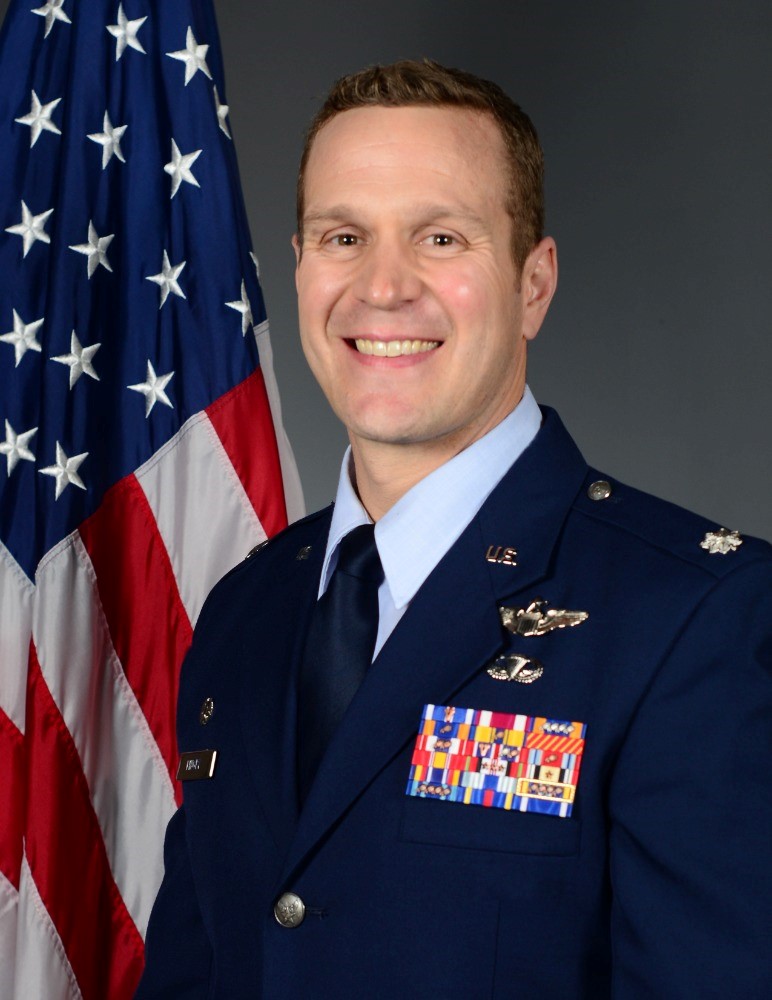 Col. Michael KingryDeputy Commander, 31st Fighter Wing
Host
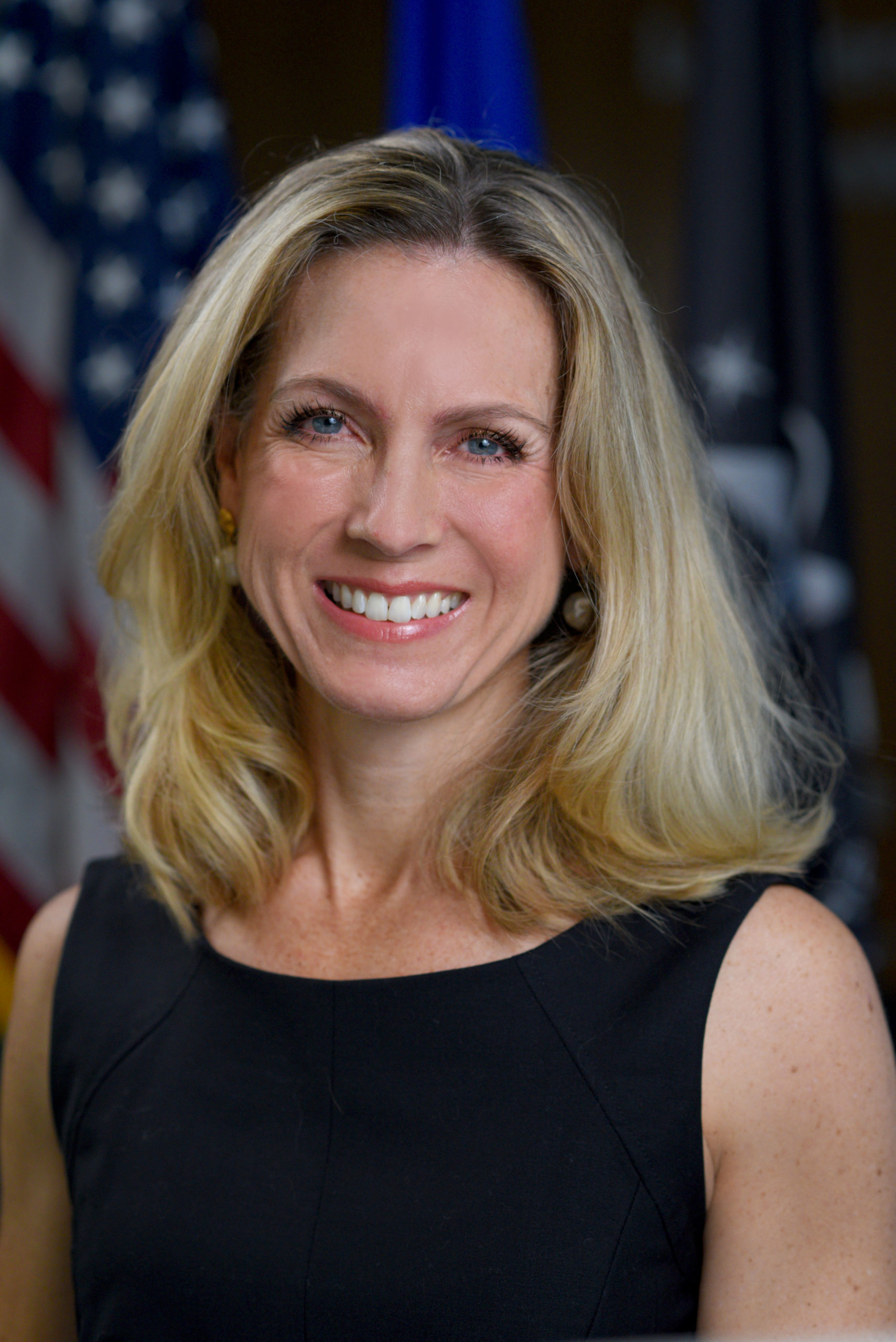 Heather PenneyDirector of Studies and Research, The Mitchell Institute for Aerospace Studies
Transcript
Heather “Lucky” Penney: [00:00:00] Welcome to the Aerospace Advantage podcast, brought to you by PenFed. I’m your host, Heather “Lucky” Penney. Here on the Aerospace Advantage, we speak with leaders in the armed forces, industry, and other subject matter experts to explore the intersection of strategy, operational concepts, technology, and policy when it comes to air and space power.
Combat search and rescue. It’s not just a mission, it’s a moral obligation to our fellow Airmen and their joint counterparts. Because if you’re shot down behind enemy lines, the Air Force will do everything possible to recover you. And the world learned about the bravery and the amazing skill of the Airmen who execute combat search and rescue during Operation Epic Fury. Commanders launched two separate missions to rescue an F-15E pilot and weapons system operator who were on the ground deep inside Iran. The challenges involved with executing these sorties are incredible, and in fact, what those Airmen and their joint counterparts accomplished during this mission was historic.
To put it in context, while there have been many impressive elements regarding how our [00:01:00]forces performed over Iran, I would argue that CSAR sorties were what truly distinguished the U.S. military. From training, tactics, procedures, and technologies perspective, I don’t think there’t another military on the planet who could have pulled off those deep penetration rescue missions.
And from a values vantage, those sorties showed how much we cherish the lives of our men and women in uniform. We’ll stop at nothing to get them home safe. With dozens of their fellow service members flying and fighting under circumstances that few of us could have imagined, this is really Hollywood-type stuff, except it’s real.
So to learn more about the combat search and rescue mission, or what we call CSAR for short, I’m super excited to have Colonel Mike “Mongo” Kingry with us. So Mongo is Deputy Commander of the 31st Fighter Wing, Aviano Air Base. And as you’ll recall, he also served a tour with Mitchell as an Air Force Fellow a few years ago, and he spent his career in the CSAR world.
Now, at Aviano, Mongo oversees the wing’s diverse mission sets, which include two F-16 fighter squadrons, an [00:02:00] MQ-9 expeditionary attack squadron, two combat search and rescue squadrons equipped with HH-60 Whiskey Jolly Green II and Guardian Angels. So you’ve got the pararescue, the CRO, and the TACP airmen. And the 31st also has USAFE’s only air control squadron, as well as agile combat support squadrons, medical squadrons, and several wing staff agencies.
So Mongo, super busy for you, but thank you so much. It’s great to have you back, and we appreciate you spending the time.
Michael “Mongo” Kingry: Thanks, Lucky. It’s a pleasure to be back here with the Mitchell family and with the Mitchell team, so I appreciate you guys having me on.
Heather “Lucky” Penney: Okay. So first and foremost congratulations to the entire Air Force CSAR community for what folks accomplished in Iran. It was truly amazing.
Michael “Mongo” Kingry: Yeah, I’ll absolutely agree with you. Before I talk about that, though, just a little bit, I want to make sure that I get a plug for Mitchell. As you guys know, I spent a year there fellow, and it was one of the most enriching years of my Air Force career. So to be surrounded by people who are unapologetic advocates of air power, you know, to include yourself, to include Doug Birkey and General Deptula, it was really [00:03:00] quite the education for me as an officer.
We appreciate the work here at the wing level for what you guys do to advocate for air power, and I think we see the story that you tell about what air power means to the nation is really resonating right now. So we’ve seen that happen in Operation Midnight Hammer. We’ve seen it happen in Operation Epic Fury.
And I’ll concur with you, I don’t think that was more evident than when we saw the recovery of Dude 44 Alpha and Dude 44 Bravo. So those were definitely, it was a red letter day, a red letter mission for Air Force Rescue. It’s something that I would put on par with any of the things that we accomplished in our heritage going back to the Vietnam War.
I was actually, this is a humble brag, but I was getting ready to get on a train from Naples to Pompeii when the rescue happened. I pulled out my phone and was looking on Twitter, and I see a HC-130, with two HH-60s on the refueling hose daytime over Iran, and I was like, “Is this artificial intelligence? Is this AI?” And I was glued to my phone for the the day. But really the nature of that mission, particularly the daytime mission of going feet dry into Iran daytime, is [00:04:00] something that’s truly impressive. I happen to know actually one of pilots who was on that mission. I deployed with him in Afghanistan, and he is the consummate rescue professional. So, humble, a very good friend of mine, and I think it really, spoke well to the entire CSAR mission that we do here in the Air Force.
Heather “Lucky” Penney: Yeah, I mean, that so others may live. I mean, that’s your credo, and basically says everything. I’ll tell you what, though, I don’t think those guys should have to buy a drink for the rest of their lives, right? What they have done, what’s fascinating is that what they did and what they accomplished is really just representative of the entire community, ’cause any one of the CSAR community could have gone out and done that mission.
They’re just really top rate. So you know, as we discussed when you were back at Mitchell, the Air Force’s CSAR mission is largely what inspired me to join the Air Force. My dad was a Sandy during Vietnam, and you mentioned, what they did with the Dude mission. That, I think, is actually, as you mentioned, exceeds anything that we did in Vietnam.
Even though, like my dad was on the Jackal 33 Bravo mission, which was just like 24 miles outside of Hanoi, the [00:05:00] air defenses that you guys had to endure and penetrate and survive and to bring those boys back was just phenomenal. You know, as a kid, I used to listen to my dad’s mission tapes, and to hear the voices of the downed Air Force pilots on the ground, the tension in their voices was unbelievable. But I also heard the professionalism and the confidence of the rescue teams. And even as a young girl, I got what it meant. It was a higher calling to stand by one another, and it’s an ethos that sets the US military apart from most others. Can you talk about that? You know, what the nation asks you and your fellow CSAR airmen to do is dangerous and demanding, but you all do it without hesitation or question.
Michael “Mongo” Kingry: You’re absolutely right, Lucky, and I can only imagine what it was like listening to your dad’s tapes from the Sandy Mission in Vietnam. I think everything we’ve done in the rescue community, that foundation really starts with what, those gentlemen did in Vietnam. Truly, truly impressive and humbling. You touched on it, but I don’t think there’s a better embodiment of the warrior ethos than what our armed forces do [00:06:00] when it comes to personnel recovery and combat search and rescue. And you spoke to it earlier, but it’s really the juxtaposition between what we do in the US military as opposed to our adversaries is pretty stark.
You know, we look at the open source reporting on Russian casualties in Ukraine, and we see that they are losing somewhere in the neighborhood of 30,000 troops in a month killed and wounded, and it is quite literally feeding Russian soldiers and draftees into a meat grinder in eastern Ukraine. And when you look at that compared to the US military, that will literally pause an entire air campaign and redirect it to get back a downed pilot and weapons systems officer, I think it speaks a lot to our values a service, as a joint force, and really country. You know, the fact that we place such a premium on the individual, you know, when you see that in juxtaposition to the collectivist, not to get too, you know, philosophical here, but I really do think it speaks to our values.
Heather “Lucky” Penney: Yeah. It speaks to our values. I think it speaks to the bravery and the confidence and the competence of the men and women who go do the [00:07:00] job. So to help folks level set, what it means to do CSAR, could you paint a basic picture of what that kind of CSAR operation looks like from the moment an airman ejects, what’s the basic flow of what happens?
Michael “Mongo” Kingry: Yeah, absolutely we can do that. So literally from the time that someone pulls the handle the handles and gets out of a jet, there is an entire architecture that’s activated to start this recovery process. we in the rescue community have tried to move our mindset more towards like a dynamic targeting type mindset.
So your traditional kind of F2T2EA, your find, fix, track, target, engage, and assess. Except now instead of looking for high-value individuals or targets, we’re looking to recover isolated personnel. So really it starts when someone pulls the handles, and we really start trying to get the notification process going.
So that’s anything from a wingman saying, “Hey, my buddy just bailed out,” to a missed roll call, to include some pretty exquisite assets that we have that can tell us that somebody got out of the, got out of the jet. Typically from there we’ll have an on-scene commander who will take over, so oftentimes [00:08:00] that’s the wingman who will take over, and immediately they start working on that process to try to find and fix where that person is, and to start leveraging and garnering the resources around them to protect that individual on the ground.
Concurrently, the CSARTF, so the Combat Search and Rescue Task Force, will be activated, and that really hasn’t changed all that much since Vietnam. So we see the Sandy element which, you know, you have a lot of history with, but typically four to six A-10s who are all Sandy qualified. The Sandy one and two are typically tasked with going out and immediately establishing custody with the survivor, and then Sandy three and four primarily do rescue escort with the HH-60s. With them we’ll have your HC-130s, so those are your King aircraft. I mean, we saw videos of them flying low-level over Iran looking for Dude 44 Alpha and Bravo, which to see a four-prop AC-130 raging around low-level in Iran.
Heather “Lucky” Penney: That was awesome.
Michael “Mongo” Kingry: Plus it was loud and pretty cool, so I mean, those guys typically don’t get a lot of love, but they were hanging out just as much as everybody else on that on that SAR task. But they’re the CSAR coordinators. They have a lot [00:09:00] of unique systems on the aircraft where they can find and fix an objective on the ground. They also kinda keep the running, total of what our 15 line looks like, which is what our execution kinda template is for recovering isolated personnel, and then they obviously, they do helicopter air-to-air refueling, which we also saw- in Iran.
Heather “Lucky” Penney: Also low-level. Pretty crazy.
Michael “Mongo” Kingry: Also low-level, an extremely vulnerable position with two aircraft on the refueling hoses.
Heather “Lucky” Penney: Which, yeah, like you said, makes them very vulnerable, but it’s also a high-risk operation even if you don’t have to take into account the threat environment that they were in. Truly, like, there are multiple levels of threat and risk and vulnerability in the kind of operation they did, but they executed flawlessly.
Michael “Mongo” Kingry: Absolutely. They did. The whole team did really. And, you know, besides HC-130s, you get your Jolly aircraft. Mm-hmm. So going back to the Vietnam legacy there, the HH-3s and the H53s. We use the HH-60 Whiskey now, which typically a two-ship of Jolly Green Giants, and then we’ll have the PJ team, the Guardian Angel team in the back as well. Typically a two to three-man team in each aircraft that I think if you press anybody [00:10:00] in the department about who are kind of the top-tier medics and rescue specialists, you know, across the joint force, they’ll typically come back with our PJs as being at the very top of that list. But as I mentioned, so that that whole task force will then also get paired with whatever assets are available, so to include, you know, rolling tankers that direction air-to-air, assets that direction. Any striker that has any sort of ordinance left and play time will get re-rolled to the- to the SAR task to start striking targets, and then we start filling out our 15 line, which is our execution checklist. It really centers around kinda four principles. We call it ATLC. So one is authentication, making sure we’re talking to the right person on the ground. And then we talk about threats. Those are threats to the survivor, threats to the Jolly aircraft and then threats to the package as a whole location, which when you’re looking for a single individual in, you know, the country the size of Iran or somewhere in the Western Pacific, that becomes pretty difficult to do. And then finally, condition, so what their medical condition is and how fast we need to get to them.
But all that’s kind of packaged together to make these things, to make these things happen. It’s interesting too that, you know, we possess a lot [00:11:00] of pretty- technologically advanced systems to find an objective. But regardless of what we have, like on the space side or advanced sensors, it really comes down to somebody on the helicopter crew getting eyes on that person, and two PJs getting out of the helicopter, taking physical custody of that person, and getting them in the aircraft and back home. So despite all that technology, it really comes down to a very, like a very human element of getting that person back in the helicopter and back home.
Heather “Lucky” Penney: Yeah. No, it, it does take the humans, it does take people, it does take the war fighter and the talent and the experience and expertise that they have.
But I wanna dig a little bit into the technology, ’cause you mentioned that, that technology really has progressed, and CSAR is far more sophisticated today than it was when my dad was flying Sandy. Back then, the way the Sandys found them is they’d have to go to the threat area to locate- … the survivor’s beacon, then come back to base, and at the time he was flying out of Karat, they had to plan the rescue, and then they had to lead the rescue package back to that area and they were making a bet that the survivor really hadn’t gone much further from where they had originally located the beacon. But [00:12:00] technology has progressed dramatically even from when I was flying. So the rescue forces might look somewhat similar, as you mentioned, but I bet they’re really different when you look at the details. We’re in a back to future moment in ma- many ways for CSAR.
Michael “Mongo” Kingry: No, I completely agree with you. I’m oftentimes really humbled and impressed by what the, our forefathers in Vietnam were able to do. With predating GPS and trying to find some of these flying off of nav aids, getting the objective bearing, primarily relying kind of on directional finding cuts or-
Heather “Lucky” Penney: Exactly. He described it as like an ADF, right? But it’s better nowadays. It is, yeah. What do you guys got?
Michael “Mongo” Kingry: It’s crazy. Which I think you’ll often see that some of those techniques still exist today of trying to get multiple direction finding cuts to find somebody on the ground if they’re voice only. But to your point, we have made some pretty large strides, and a lot of that comes in the find and fix phase with how we locate isolated personnel in a non-permissive environment. So everything from space-based assets to pretty unique sensors on the on the aircraft that can interrogate radios to the actual survival radio that the objective has in his hand is all pretty is all pretty [00:13:00] advanced advanced stuff.
We’ve also seen that the platforms themselves have advanced as well. So the HH-60 Whiskey is a perfect example of that. So the new combat search and rescue helicopter, we’ve gone from the Gulf to the Whiskey. What we really see with the Whiskey is, you know, upgraded engine performance, better weapons, better defensive suites.
It’s Link 16, so it’s, you know, better able to integrate with the entire air picture. It’s really not like a generational leap in technology, but it is an upgraded version of HH-60. I’ll kind of go back to the fact, though, that I think that despite the technological advancements, it remains really a human endeavor. It’s a dynamic environment that requires the ability to rapidly change to a lot of different variables. And, you know, with all due respect to our special operations brothers who do a lot of great preplanned work a lot of times CSAR is reactive. So it’s one of the few missions where the enemy really gets to set a lot of the conditions that we go into and it’s up to us as the CSAR task force to kind of beat those conditions, make them malleable, and something that we can go and recover these personnel. So highly complex and [00:14:00] executed in a pretty minimum amount of time.
Heather “Lucky” Penney: Yeah. No, it I really appreciate the fact that you highlighted how dynamic those operations are. And so it can’t be fully preplanned. You have to be reactive, you have to be responsive, you have to be able to improvise and adapt to the environment, and continue to shape that in a way that’s gonna allow you to achieve mission success. Yeah. And that’s going to take human cognition. It’s just gonna take people.
It’s gonna take people with experience to develop the expertise over years. And that’s another reason why … I mean, it, you’ve heard us say it, Mitchell, how supportive we are of maintaining the CSAR mission. If we let the equipment go, we lose the people. And if you lose the people, you lose the capability and the competence.
Michael “Mongo” Kingry: Yeah, that expertise will go pretty quickly.
Heather “Lucky” Penney: Oh, yeah. No, absolutely. So one thing I think that was really highlighted in Epic Fury, which is very different than what we saw over the last 20 years of the long war, is that now we’re having to execute CSAR in a high-threat environment. So we’re going back to a world where there are threats to our aircraft.
There’s, I mean, tremendous threats to, to our personnel, and we’re gonna have to operate in, whether or [00:15:00] not that’s gonna be small arms fire IR type MANPADS or other surface-to-air threats. And so now with those threats escalating, we’re looking at far more dangerous situations and those demanding operational circumstances.
Whether or not we’re talking about, what we just did in Iran or a China scenario, what Russia is doing in Europe how are those realities impacting your training and the overall preparation? Because we used to train for CSAR and high-threat environments during the Cold War, and your forefather certainly executed under fire in Vietnam, as we discussed. How are you capturing those lessons learned and making them real again today?
Michael “Mongo” Kingry: That’s a great question I would argue the CSAR community has really been focused on the peer fight since its inception, and kind of fundamental to the CSAR mission is penetrating denied, hostile enemy airspace to recover people, even going back to the Vietnam heritage. And really out of the joint force, the Air Force is really the leading service that’s keeping a dedicated group of airmen that are focused on that mission. So, doctrinally, each service, each [00:16:00]component is responsible for its own recovery of its own assets, but I really do think that Air Force CSAR is the kind of the keeper of the flame with how we’re recovering aircrew in a highly contested environments. You brought up, you know, our peer adversaries in the PRC, Russia, Iran, like, those are some daunting threats.
Heather “Lucky” Penney: Yeah.
Michael “Mongo” Kingry: I would argue that it’s not specialized just to CSAR, like it’s for the rest of the Air Force as well, and I think we’re kind of capturing or trying to formulate solutions just like the rest of the CAF, the Combat Air Forces are as well.
So through our training regimen, through force packaging, through layered effects, and then you see us practice this mission. So every weapon school integration phase will have either a pre- a preplanned or a immediate CSAR as one of their weapon school vols, and then you’ll see every Red Flag we do this we do this as well. I think it shows the importance the Air Force puts on the mission, and then how much they value the skill set that’s required to make it happen.
Heather “Lucky” Penney: Well, we have to protect the skill set because it is so specialized, and it takes such unique individuals with incredible talent [00:17:00] that we have to make sure that we focus on preserving that because we can’t just take anybody off the street and have them be competent.
I want to dig a little bit into what you mentioned regarding operating in new ways in that high-threat environment. And it goes beyond just having upgraded equipment like with the Whiskey. But we’re also seeing, for example, other things happen like the A-10 is sunsetting, and so we’ll need to have other types of aircraft execute the Sandy function. We’re also seeing remotely piloted aircraft at times, like the MQ-9 potentially being integrated. How are you seeing the evolution of this force package, of the entire mission package and how is it transforming your mission capabilities?
Michael “Mongo” Kingry: Yeah. There’s definitely a, an upgrade and a shift kind of going on in the CSAR mission right now. You mentioned the Whiskey’s kind of the latest example of that with some of the modifications I mentioned earlier. The A-10 sunset is on the horizon, although I feel like it’s been on the horizon for- a number of years.
Heather “Lucky” Penney: Pushed out to 2030. I mean, it, as it turns out, has proven to still be an incredibly relevant and capable platform and those guys are [00:18:00] awesome.
Michael “Mongo” Kingry: Absolutely. So we’ll see when that when that sunset actually happens. And I think people have kind of, forgotten the fact too that the HC-130s are a relatively new platform too, but they went to the J model when the rest of the C-130 fleet upgraded, also. Our GA teams, so our Guardian Angel teams have also done a great job in modernizing with the kit they had, the equipment they have, and then also with bringing on other capabilities, primarily with bringing in JTACs into their teams also.
So we’re seeing a little bit of a shift there. The MQ-9s, you guys probably heard the comments from the chief of staff about how much of an MVP the MQ-9 has been in Operation Epic Fury. It is an asset that’s very well-suited for CSAR, so the fact that it has the persistence, the fact that it can maintain custody of an objective for long periods of time, and the fact that it has the kinetics, you know, basically right there with it make it really well-postured for CSAR.
And they do a good job kind of filling in some of that sandy role as well, particularly with their loiter time. What we are also focused on in the community is that, you know, regardless of the asset, we want to make sure that we are continuing to [00:19:00] propagate that CSAR expertise throughout not only the Air Force but through the joint force.
Heather “Lucky” Penney: Talking about the MQ-9, it just reminds me of like it did not occur to me that some of the TTPs that you could have developed for for high value targets, for HVTs, that could have transferability towards survivors. And that just becomes even more important in showcasing how the persistence of the MQ-9, especially as you mentioned with the connects, to be able to lay down suppressing fires if necessary to protect the survivor, could be something, that’s really useful. So other elements like space can also help with survivor communication and geolocation, threat warning, et cetera. How is space playing?
Michael “Mongo” Kingry: Space is, I would say, absolutely fundamental to a successful CSAR task force. So you mentioned everything from initial notification, so how we get the initial word that something’s actually happened, finding and fixing isolated personnel through some very unique capabilities that we get from space, and then you’ve mentioned threat warning, like the ability to queue us onto threats to the survivor as well as to the task [00:20:00] force are all hugely important. So I don’t think I’m the first person to make the argument that we leverage space a lot, you know, b-beyond just the communications aspect too, and the precision navigation and timing. We obviously train to accomplish our missions without space, but given the opportunity, I would much rather have the space, honestly.
Heather “Lucky” Penney: Yes. Space makes us better … we can figure it out. But, you know, and what you just said there, space makes us better, but we also need to make sure that we have layered effects and layered capabilities, so we have the resilience in that kind of contested environment.
Michael “Mongo” Kingry: Absolutely.
Heather “Lucky” Penney: So range is a factor we hear increasingly discussed for the future of CSAR, and, like, this is all about the Pacific, right? How is your community thinking about that? Because, y-you guys went deep into Iran. That was clearly, maxing out that range, but the pacific is half the globe and there’s no, not a whole lot of stuff that can actually do the kind of unrefueled ranges that are gonna be required there. You mentioned also that you’re training with your joint counterparts. How might we see CSAR evolve in the [00:21:00] Pacific given the vast ranges of just open ocean?
Michael “Mongo” Kingry: Yeah, the range problem in the Pacific is definitely something that we factor into our analysis. You know, the HH-60 Whiskey it’s got some increased speed, some increased range but, you know, fundamentally it’s inherently still a helicopter that’s gonna be limited by speed and by range.
We can get around some of that, through doing helicopter-to-air refueling, but obviously that depends on the permissivity of the, environment. What we’re largely looking at for some of the problem set in the Western Pacific is kind of how we position forces and where we position them. So you kind of mentioned the joint force. That’s an option with some of our Navy brothers, but also I feel like the HH-60 and the associated Guardian Angel teams are assets that can truly do distributed ops and can truly do ACE.
You can find an atoll somewhere, or a soccer field, stick a two-ship HH-60s out there, field bladder, some MREs, and a radio, and they can truly operate in dispersed fashion. So I think that’s part of it. And then also kind of our, one of our keys is our Guardian Angel teams. So whether it be the SERE specialists that come with it, [00:22:00] whether it’s the actual PJs or combat rescue officers they are really a way for us to increase PR capacity. So if we stick them with special operators, we stick them with partnered forces we stick them with some other assets, we increase that PR capacity by having that expertise that’s readily, deployable, and it’s kind of platform agnostic.
So I’m very much an all of the above type mindset on this, so anything we can do to increase capacity, we will do. I’m not sure if we’re gonna see submarines, you know, surfacing like World War II, to pick people up. Very much an advocate of anything we can do to increase capacity we should absolutely do.
Heather “Lucky” Penney: Yeah. You know, and as we’ve mentioned, this is a moral obligation, so to me, it’s a no-brainer. To me, you just say, “Yes, we will do this, and we will do what it takes to make sure that we’ve got the rescue capacity and the talent necessary.” But one of the challenges is, you know, you’re already high-demand, low-density, so there’s already not enough of you, and recent decisions to reduce the HH-60 inventory are driving your numbers even smaller. How does being small [00:23:00]impact your community? Because the fighter community’s seeing it. It’s not easy. It’s burning the fighters out. It’s burning the air crew out. People are leaving the service because of that. I have to imagine that you’re experiencing similar stresses and tensions.
Michael “Mongo” Kingry: No, you’re you’re right, Lucky, and I know I’m preaching to the choir here talking about a a bigger Air Force. I can remember General Deptula talking about the, having the smallest Air Force, a number of years ago. So, the HH-60W buy was less than what was originally, planned, and then you kind of combine that with the fact that we have a lot of Guard and Reserve units who are currently going through the transition from the Gulf to the Whiskey, and what that means is there’s just not a lot of capacity to go around right now. There’s no really way to get around it. What that means is there’s gonna be a higher ops tempo for the units that are remaining and just less time at home. For me, though, that’s kind of been the story of the community since I joined to including we were in Iraq and Afghanistan.
It was, pretty regularly a one-to-one deployment to dual ratio that we were experiencing. Something that I kind of fear is I feel like that we in the rescue community or in the Air Force in general have a pretty short institutional memory. Mm-hmm. So I can remember [00:24:00] pretty distinctly the weapons school class in 2009 for the HH-60G. They shut down that class halfway through the class, sent all the instructors to Afghanistan because we as a joint force could not do medevac, CASEVAC in a pretty permissive environment to get, you know, wounded soldiers and Marines back. So sometimes I fear that our institutional memory’s pretty short and we don’t appreciate the investments that are needed to do these things even in a permissive environment.
Heather “Lucky” Penney: You know, that’s really fascinating ’cause it had not occurred to me that that the expertise in your career field would be essential to doing something that we thought of as, you know, at least I thought was fairly routine you know medevac during low-intensity combat operations, right?
So , that you would need to shut down a weapons school to be able to provide that expertise to train up and have the capacity to do those medevacs never even occurred to me. That’s part of the demand signal of needing to increase the manning of your career field because you’re gonna have to distribute, and your expertise is so applicable in many of these really urgent [00:25:00] situations.
Michael “Mongo” Kingry: Absolutely. And I mean, 17 years ago is not that long ago, and it was a very permissive environment. And I mean, I know the Air Force top line’s a set number, and when we talk about.
Heather “Lucky” Penney: Okay, for you guys it’s a set number. I’m just gonna push back. I will say, you know, it it’s shocking to me how little of reconciliation the Air Force has received, like, seriously, it we’ve done operations in the Gulf, Venezuela, Midnight Hammer, Epic Fury. The Air Force has been the predominance of forces in combat operations and delivered just incredible results, and we’ve got less of a percentage of reconciliation and TOA than than the other services in terms of the plus-up.
So I, given also that we’re facing an incredible recapitalization crisis and manning crisis. I would argue that it is the responsibility of our senior leaders to advocate for increased TOA so that we can maintain the health of the service. Because if we lose the airmen, if we lose the expertise, if we lose their experience and their knowledge, that institutional memory will become even shorter, and it risks mission success in the [00:26:00] future.
You mentioned something about, the transition from the Gulf to the Whiskey with the HH-60. is that really making those units unreachable, or is it differences changes, or are they having to sit down to really do a major recapitalization and transition across their bases?
Michael “Mongo” Kingry: There, it’s not so much a major recapitalization, but it is bringing a new weapon system. So it involves, you know, training new aircrew training all the maintainers, making sure that the parts and supplies are all there as well. It is a little bit of a humbling experience also. So I kind of, you know, I grew up flying the Gulf which was all s-steam gauges and and old school. I went to do my Whiskey transition, sat in the helicopter, and someone had to tell me, you know, how to set the altimeter because it’s all a glass- … a glass cockpit. So it’s it is a unique.
Heather “Lucky” Penney: But were you doing that on the flight line, or did you have to go back to the schoolhouse?
Michael “Mongo” Kingry: I actually went back to Moody Air Force Base, so I got a chance to go back there and re-qualify and transition over into the Whiskey.
Heather “Lucky” Penney: Okay. Yeah. I mean, sometimes when we do these major block upgrades to a weapons system, whether or not that’s your HH-60 from Gulf to Whiskey or, you know, you’re upgrading from an F-15 to an [00:27:00] F-15EX, that kind of modernization path can reduce the downtime for units. And so I was just curious about the impact, of readiness deployability.
We talk a lot about machines but as we’ve also said, it really comes down to the airmen. They are the real secret to how we execute all this. How are you developing the skills, and what does maintaining proficiency look like in your field? Do you have the availability to, to be able to provide that kind of readiness and training that they need on a day-to-day basis? ‘Cause when we need them. We can’t wait.
Michael “Mongo” Kingry: You’re absolutely right. Like, like, the human aspect of this is what is key. we in the Air Force, I think we tend to be pretty enamored with machines and technology and, you know, honestly, that’s that’s beneficial to the entire Joint Force.
The Air Force has always kind of been at the leading edge of innovation, but, you know, I will echo an old weapons school mantra, when you go fight, threats up in the Nellis training range that, you know, you defeat the operator and the machine. So, I think it’s very illustrative that the Dude 44 pickup, a lot of the elements of that search and rescue task force all came from the same base.
So they [00:28:00] had trained together. They’d been on the range together. They’d been in the airspace together. They had garnered the lessons learned over dozens and hundreds of sorties and, you know, it’s why we place such a premium on this mission when we do weapons school integration phase, when we do Red Flag bulls. We fight these sorties on the Nellis range, on the Goldwater range, so that we, you know, can perform when it come, when it’s go time you know, over, over Iran. And I think it’s something the community takes a lot of pride in, as well. So I would challenge you to find an A-10 pilot who does not think that the Sandy upgrade is the most coveted upgrade within that community.
Heather “Lucky” Penney: Amen. I would say that. Being in a Viper squadron, we had a couple folks upgrade to Sandy while we were in the F-16 and that truly demonstrated, like I never did it but that truly demonstrated to me how difficult and challenging and rewarding that mission was because of how dynamic how complex how complicated that mission was. It was far above and beyond anything that, that we did in our normal mission sets. So, I [00:29:00] really appreciate that. And that also goes to show, I mean, like CSAR is the pointy end of the spear. We’ve talked about your training, but how does that change the culture?
Michael “Mongo” Kingry: I think it’s a given in the rescue community that we’re going to push to come and find you regardless of the circumstances. I will say that our rescue mission commanders and our flight leads, they are so prudent in when they choose to employ, you know, how they force package, what their go, no-go criteria is. But as you know, the rescue community’s fairly small in the Air Force, and the Air Force is largely dominated by kind of the high fast flyers. I think it’s interesting when you talk about threats, and you see it in weapons school mission planning bowls all the time, where you get a big mission planning cell together, and everyone’s pretty fixated on the modern long-range SAMs or f- fixated on the air-to-air threat, and for good reason.
But when you live the life of a low, slow flyer- … you gotta be worried about those threats, and then also everything else that goes with that, you know?
Heather “Lucky” Penney: Yeah.
Michael “Mongo” Kingry: Fielded forces, MANPADS RPGs. So, you know, when you’re flying a high-fast flyer, you can outstick a lot of SAMs but the rotary wing guys, we gotta worry about, you know, what those assets are actually protecting to include [00:30:00] hundreds or thousands of fielded forces on the ground with RPGs, MANPADs. So you really had to kinda live in both worlds of the high-end kinda fast-flying Air Force and then also kinda put on the ground force commander hat as well and worry about both of those threats ’cause when it comes down to it, and we mentioned it earlier, but the end game of CSAR is putting a 20,000-pound-plus helicopter into a hover and sending a PJ on the hoist to pick somebody up off the side of a mountain, so you’ve got the full gambit of threats you gotta worry about.
Heather “Lucky” Penney: I’m glad you mentioned the complexity of the mission, that it’s not just the rescue mission, but you also have to be sort of thinking about what the ground picture is there. When I was listening to a lot of the tapes from my dad’s missions in Vietnam, the Sandys also sort of operated as facts, right? So, so 3 and 4 were not only doing suppressing fire to keep the Jolly Green and Sandy 1 and 2 safe and keep the survivor safe, and so they would bring in supporting fighters, like bring in Phantoms and do like forward air controlling and direct additional fighters on how to suppress the North Vietnamese or other adversaries that were coming in, [00:31:00] other bad guys that were coming in because they themselves didn’t have the ability to take care of all of it themselves.
And in a complex environment, that’s, I think, you know, part of what makes your mission so challenging and so important.
Michael “Mongo” Kingry: Yeah. It’s really impressive. You you read some of the reports from the Vietnam- era, and it’s dozens, if not hundreds, of aircraft that are involved in these multi-day, multi-day rescues.
Heather “Lucky” Penney: Oh, yeah.
Michael “Mongo” Kingry: Supporting the survivor on the ground. And like, and a certain aspect, I think we probably gotta get back to that mindset when we get to peer competition of what we, what it takes to force package and go get somebody in a contested environment like that. You know, you mentioned we’ve talked about this a little bit, but I want to dig into it more about distributing your guardian angels with other services other forces outside of the typical equipment that you train with.
Heather “Lucky” Penney: And you train your packages there. You mentioned Goldwater. You mentioned the Nellis ranges. How do you train this extended team across the other services? Like, how do you prepare for that kind of integration?
Michael “Mongo” Kingry: I think a lot of that integration takes place in kind of like the laboratories that [00:32:00] the Air Force has set up. So I mean, I keep kind of going back to the Red Flag, Nellis, weapons school, those high-end opportunities where you get to fly your first combat sorties in a peacetime environment is really where we make that, where we make that happen. In Italy it’s interesting because we rely so much on allies and partners here. You know, regardless of the size of the rescue force, I mean, we can make it very large, but there’s always gonna be the need for excess or for additional capacity. This year alone in the 31st Fighter Wing, so just in the rescue side we’ve worked personal recovery exercises with the Swedes, with the Croats, the Slovenians, and the Hungarians to help develop their programs.
So I would say the personal recovery and CSAR is also a very good wedge issue to get into working with different countries different services. So, supporting PR and with our allies and partners it comes with frankly fewer political hangups than if you are buying an F-35 or some sort of standoff weapons, and it helps us to gain some pretty unique access into some of these countries.
So a perfect anecdote, I think, is when I left here as a squadron commander of the 56th [00:33:00]Rescue Squadron, which is the helicopter squadron here in Aviano. After I left, they did some integration work with the Serbian Air Force, which, you know, you kind of look at it like the Serbians are, you know, Slavic people traditionally aligned with the USSR and with Russia. I mean, the people who shot down General Goldfein- and then like relatively, in a relatively short time horizon we were doing CSAR training with them just a couple decades later. So I think it really speaks to the kind of the universality of our mission and how short historical timelines can be, and it’s a great wedge issue to work with some of these allies and partners, you know, as, as well as other services.
Heather “Lucky” Penney: Yeah, begin to build those bridges and build those relationships.
Michael “Mongo” Kingry: Absolutely.
Heather “Lucky” Penney: Okay. So Mongo, you mentioned, you know, obviously you’re in Aviano, Italy. What unique factors, whether it’s training, personal protective gear, other mission factors, that differentiate CSAR forces based off of your geographic location? Like, so I imagine who we … you know, how you’re equipped and the kinds of things that you do and the kind of training that you do if you’re at Elmendorf is different than what you’re doing in, [00:34:00] Aviano. How specialized do the teams get, and then also does that limit your deployability and where you can go?
Michael “Mongo” Kingry: First of all, yeah, I am flying helicopters in Northern Italy, so you can thank me for my service. It’s a pretty rough job.
Heather “Lucky” Penney: You’re suffering, man.
Michael “Mongo” Kingry: I know, right? It’s a great question, though. I mean, particular to Aviano here, you can take off from this, air base, fly 30 minutes and be landing at 8,000 feet, snow-covered peak in the Dolomites, fly less than 30 minutes the other way, and you’re in the Adriatic doing water work in the, you know, on the, in the middle of the ocean. So it’s a pretty unique environment that y- I don’t think you see in a lot of different places. So, you know, obviously the geography of Europe is pretty varied, you know. And our guys not so much on the helicopter side, but you really see it a lot on the Guardian Angel side. They have kit that allows them to operate everywhere from the Arctic Circle into the Mediterranean.
So they’re really trying to work on.
Heather “Lucky” Penney: So they’re jack-of-all-trades when it comes to the environment and the, that they’re operating in.
Michael “Mongo” Kingry: Absolutely. And with the Arctic becoming such such a competitive space, like, we’re really trying to make sure that we [00:35:00] have capability up there. Just this year, so both our HH-60s and our Guardian Angels participated in Exercise Cold Response. So that was up in Bardufoss, Norway, so up near the Arctic Circle, where we got to work with a lot of our Scandinavian partners and get their expertise for how they operate in some of these, in some of these climates. So a lot of times you talk about allies and partners with, you know, the US kind of pouring out capability or instruction, but it’s a definitely a two-way street. When we get the chance to go talk to the Norwegians or the Swedes about how they operate in some of those climates like, we definitely receive a lot more than we get sometimes. So, hugely beneficial for us.
Heather “Lucky” Penney: Clearly you’ve got a lot of variety in the environments and, that you operate in. Are there other CSAR forces that are more specialized in terms of the regions they can operate in? Or are you basically everyone is globally deployable, and you have that kind of training and the equipment necessary to do what it takes no matter where the need is?
Michael “Mongo” Kingry: It’s pretty globally deployable regardless of the location of the unit. So we can pretty much send a rescue unit anywhere in the world, and they can operate. Now, if you’re gonna be smart, if you’re gonna go to places up in the Arctic, you might wanna give a call to your Alaska [00:36:00] Guard bros- and kind of ask them, you know, they accomplish things. baseline, yes, they’re all ready to deploy at any one of those climates or locations.
Heather “Lucky” Penney: Yeah. So peacetime operations, you still, do support to civil authorities for rescue operations. What are you guys doing when you’re not in bad guy land?
Michael “Mongo” Kingry: For us in Italy, we’ve really spent the last, you know, two years or so getting the transition done from the Gulf to the whiskey. You kind of hit the nail on the head there with the defense support to civil authorities as well. So the beauty of the CSAR mission is you get the combat side, but you also get the peacetime rescue as well. So I think it was just a couple weeks after Dude 44 the recovery happened, but the 920th Rescue Wing, so the guys out of Patrick Space Force Base were able to pick up 11, survivors from a aircraft crash off the coast of Florida.
That happened just weeks after Dude 44. If you’re a Guard member up in Alaska, those guys are constantly on the hook for civilian rescues there in Alaska up in the Great White North. And then our West Coast units, so the 129th Rescue out of California, as well as our units out of [00:37:00] Davis-Monthan, they’ll typically get tagged for missions way out in the Pacific, you know, multiple helicopter refuelings to get there.
Oftentimes they’ll drop the PJ element in advance to get to the survivor, and then the 60s will follow up afterwards to pick them up. And I think just in the past couple months so I think in December, the California guys had a rescue off the coast, about 100 miles off the coast in some pretty dense fog off a cruise ship, and then the Davis-Monthan rescue group had a pickup in February that was 340 miles off the coast of Mexico. So we bring some pretty unique capability on the peacetime front as well, particularly with the increased range the increased range and the effects we get from the HC-130 and being able to do air-to-air refueling.
Heather “Lucky” Penney: Yeah. I know you’re also doing a lot of rescues out of the national parks stranded hikers, and you mentioned Alaska with whether or not those are sportsmen or that those are down to aircraft. Lots of stuff that you guys are doing. And so I think it’s important to highlight how busy and in demand, your community is even when it’s not combat search and rescue. Everything you do for ordinary everyday civilians, and I say civilians, [00:38:00] not just Americans, because of the kinds of rescues that you’re doing offshore as well.
Michael “Mongo” Kingry: Absolutely. When I first came into the community I went to Moody Air Force Base. When I got there, the unit had just got back from Katrina, so like the entire squadron for Hurricane Katrina deployed down to New Orleans and was plucking people out of the, you know, out of New Orleans on the, you know.
Heather “Lucky” Penney: Yeah, plucking them off of roofs and out of trees, things like that. So where do you expect the CSAR force to be in 10 years? What major changes do you anticipate as we continue to really evolve and ready ourselves for this peer conflict environment?
Michael “Mongo” Kingry: That’s a great question. So I think in 10 years, I hope the community’s still kind of displaying some of the capabilities that we possess to the joint force.
I will say I truly hope that we avoid a peer conflict, but as you know, hope is not a tactic as the old saying goes.
Heather “Lucky” Penney: It’s not a strategy. Yes, that’s right.
Michael “Mongo” Kingry: I mean, I don’t wanna end on a down note here, but I think if we have a peer conflict, there will be shoot-downs, and I think it’s something we need to prepare for as a service and something we need to prepare for as a nation. And in a very pragmatic sense, we’re gonna need those pilots and those [00:39:00] crews back. I know you guys have talked about it. We no longer have the luxury of creating thousands of pilots through a pipeline like we did in World War II and preparing the aircraft that were relatively easy to train, to fly.
So I mean, each pilot, each aircrew member that we produce is a multi-year, multi-million dollar investment that the country has made in those people, and we’re gonna want them back. We’re gonna want them back. We’re gonna want them reintegrated and back into the fight. And besides the pragmatic piece, on a moral note, we owe it to them, you know, as to have a professional, dedicated force that is trained to recover them. It’s the pledge that we made as a service. It’s the pledge that we made as a nation, and I think it’s one of the things that so starkly separates us from our authoritarian rivals. The Air Force though is, I think the service that’s really maintaining that dedicated cadre of professionals for that mission.
So, the Dude 44 pickup was impressive. The daytime one was impressive. The nighttime recovery was also equally as impressive, but those didn’t happen by happenstance. Those are the results of investment [00:40:00] from the services and those capabilities.
I kind of shudder to think, but in the modern conflict, if we, the position that we would be in now if Dude 44 Alpha and 44 Bravo were captured by the IRGC and in a cage right now, you know, what that would mean towards our diplomatic and military position. So besides the pragmatic lens, besides the moral lens, I think there’s also a very strategic lens here of getting our personnel back.
Heather “Lucky” Penney: Yeah, I mean, all it takes is to think about, you know, how the North Vietnamese used the POWs as a way to be able to manipulate the American public and limit our diplomatic and strategic options as a nation.
And so you think about, you know, had they been in cages being paraded down the streets of Tehran, it just goes to show not only the moral obligation that we have that your community executes, but also how crucial you are to maintaining those strategic options for a national leadership.
Michael “Mongo” Kingry: Yeah, absolutely. And now you, have so perfect reference for the Vietnam conflict. Those prisoners became a huge sticking point in the negotiations between the administration and [00:41:00] the North Vietnamese government, you know, for a long time, so.
Heather “Lucky” Penney: Yeah.
Michael “Mongo” Kingry: So absolutely yeah.
Heather “Lucky” Penney: Well, I think really this is kind of like the mic drop moment.
I mean, I think anyone who listens up to this episode should come away understanding how crucial your community is and how absolutely essential it is that we support not only continued modernization, but actually the growth of your career field if we want to be able to have a viable military capable supporting us as a superpower. I mean, really- No … it’s your linchpin.
Michael “Mongo” Kingry: Absolutely agree, and I thank you for yeah, for the opportunity to come on here and talk about it a little bit, and it’s good to be have spent a little time back with the Mitchell family.
Heather “Lucky” Penney: Mongo, it’s great to see you, so thanks so much.
Michael “Mongo” Kingry: Thank you.
Heather “Lucky” Penney: And with that, I’d like to extend a big thank you to our guest for joining in today’s conversation.
I’d also like to extend a big thank you to you, our listeners, for your continued support and for tuning in to today’s show. If you like what you heard today, don’t forget to hit that like button or follow or subscribe to the Aerospace Advantage. You can also leave a comment to let us know what you think about our show or areas that you would like us to explore [00:42:00] further.
As always, you can join in on the conversation by following the Mitchell Institute on X, Instagram, Facebook, or LinkedIn, and you can always find us at mitchellaerospacepower.org. Thanks again for joining us, and have a great aerospace power kind of day. See you next time.
Credits
Producer
Shane Thin
Executive Producer
Doug Birkey