China, Russia, and other adversaries can strike the U.S. through a range of air and missile technologies. In this episode, we discuss solutions with former NORTHCOM-NORAD commander Gen. Glen VanHerck, USAF (Ret.) and former USAFE commander Gen. Jeff “Cobra” Harrigian, USAF (Ret.); along with Mitchell Institute senior fellows Brig. Gen. Houston Cantwell, USAF (Ret); Charles Galbreath; and host Heather Penney.
This is especially important as the nation considers programs like Golden Dome. Air and missile defense is a deadly serious business. Competent defenses are not something that can be assembled on the fly as part of a “pick-up game.” It takes a smart strategy, thoughtful concept of operations, command and control, plus the right technologies to mount an effective defense. Above all, the real goal should be peace through strength—deterring hostile actions by our adversaries against our homeland.
Guests
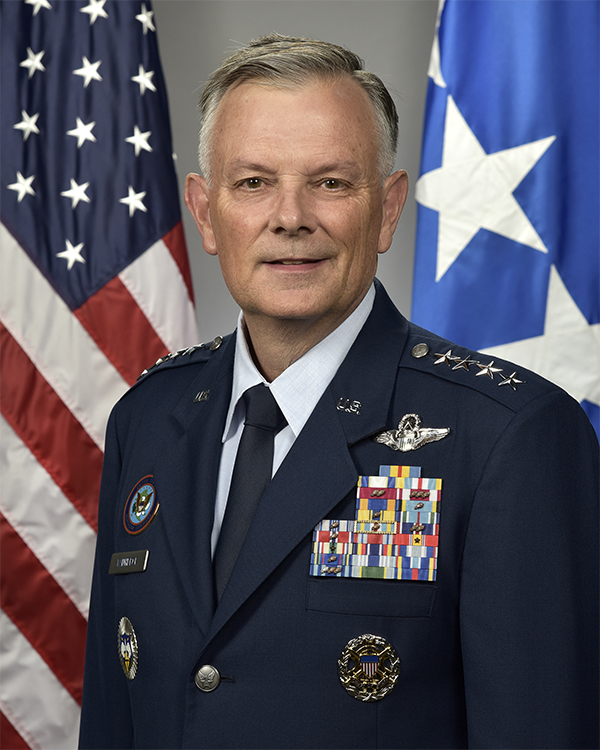 Gen Glen D. VanHerck, USAF (Ret.)Former Commander, United States Northern Command and North American Aerospace Defense Command
 Gen Jeffrey L. Harrigian, USAF (Ret.)Former Commander of U.S. Air Forces in Europe and U.S. Air Forces Africa
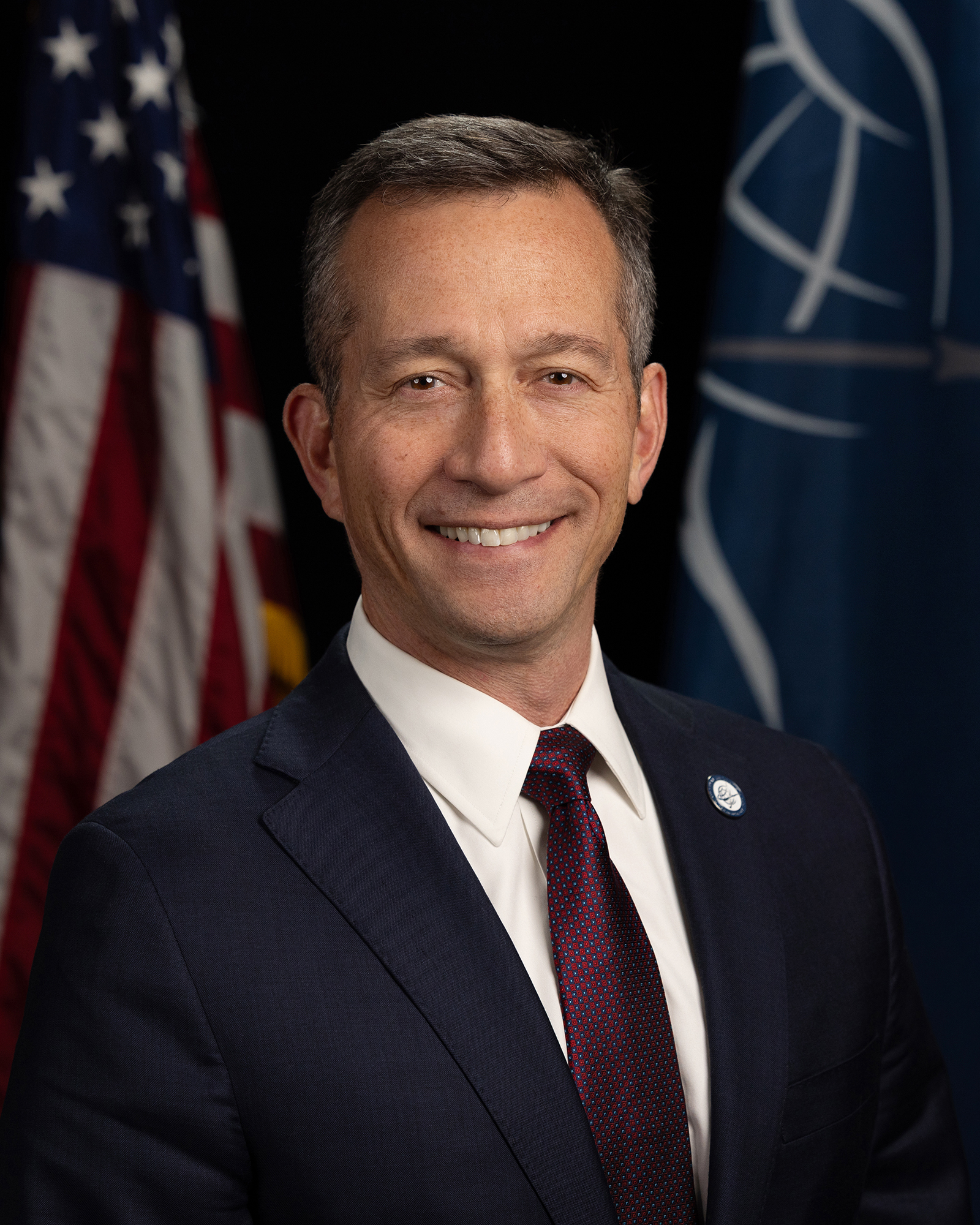 Brig Gen Houston Cantwell, USAF (Ret.)Senior Resident Fellow for Airpower Studies, Mitchell Institute
 Charles GalbreathSenior Resident Fellow for Spacepower Studies, The Mitchell Institute Spacepower Advantage Center of Excellence
Host
 Heather PenneyDirector of Research, The Mitchell Institute for Aerospace Studies
Transcript
Heather “Lucky” Penney: [00:00:00] Welcome to the Aerospace Advantage Podcast, brought to you by PenFed. I’m your host, Heather “Lucky” Penney. Here on the Aerospace Advantage, we speak with leaders in the DOD industry and other subject matter experts to explore the intersection of strategy, operational concepts, technology and policy when it comes to air and space power.
So welcome to the third of a three-part series, exploring Air and Missile Defense for the Homeland. In our past episodes, we’ve been joined by a broad array of top experts to help define the current threats facing the homeland and lessons that history provides for us as we look at better understanding our current position.
Today we’re gonna talk about solutions. This is especially important as the nation considers programs like Golden Dome. Routine Air and missile attacks by Russia and Ukraine. Similar offensive actions by Iran into Israel, and the Houthis routine bombardment of ships in the Red Sea make it incredibly clear that air and missile defense is a deadly serious business.
Competent defenses are not something that can be [00:01:00] assembled on the fly as part of a pickup game. It takes smart strategy, thoughtful concepts of operations, command and control, plus the right technologies to mount an effective defense. Above all, the real goal should be peace through strength, deterring hostile actions by our adversaries against our homeland.
To dig into these issues today, we’ve got a banner set of guests. First and foremost, we’re pleased to welcome back General VanHerck. Thank you.
Gen. Glen VanHerck, USAF (Ret.): Great to be back with you, Heather. I look forward to the discussion.
Heather “Lucky” Penney: We do too. You have great insights and for our listeners, as you know, General VanHerck was former commander of Northcom, the combatant command charged with Homeland Defense Mission and North American Aerospace Defense Command, NORAD.
Next, we also have General Jeff “Cobra” Harrigian, who last served as commander of the US forces in Europe, a tour that included Russia launching its invasion of Ukraine. General Harrigian thank you for joining us.
Gen. Jeffrey Harrigian, USAF (Ret.): Hey Heather, great to be here. Look forward to the discussion.
Heather “Lucky” Penney: And finally, we’ve got Brig Gen Houston “Slider” Cantwell and Charles “Socks” Galbreath of our [00:02:00] team. Slider. Just finished a report on this topic, so Slider. Great to have your insights.
Brig. Gen. Houston Cantwell, USAF (Ret.): Thanks Heather
Heather “Lucky” Penney: And Socks is well versed in space-based threats and missile warning enterprise.
Charles Galbreath: Thanks, Heather. Great to be with you.
Heather “Lucky” Penney: And gotta show us a picture of your socks later on.
Charles Galbreath: They’re moon socks today.
Heather “Lucky” Penney: Moon socks. Got it. Alright, so General VanHerck, we’re gonna begin with you. Would you mind baselining our audience on the threat? We spent the first episode on this, but is this a good opportunity to bring everyone up to speed regarding why arid missile defense for the homeland is really such a big deal.
Gen. Glen VanHerck, USAF (Ret.): Yeah. Thanks Heather. Appreciate the opportunity to talk about it. Threats to the homeland have vastly changed over the last five to 10 years, and today they span across all domains. 10 years ago, most people thought that we had, Atlantic and Pacific oceans, friendly nations north and south.
And we were pretty much safe here in the homeland. But today, threats to our homeland emanate from space to undersea and all domains in between, including the cyber domain. We’re [00:03:00] specifically gonna talk about the, air and missile defense. There’s a large variety of threats in the air and missile defense arena as well. Threats from, group one through group five UAS to today, military drones that can fly thousands of kilometers or miles, with various capabilities from ISR to kinetic capability and also the potential to infuse cyber effects, and certainly cruise missiles. Cruise missiles today, thousands of miles, legs with low radar cross-section, and all of these threats can emanate from airborne platforms from land-based platforms, from sea-based platforms, and some of them from under sea platforms. And most people think about that coming from outside of our country. Today, what we saw in Spiderweb these can emanate from within our country. And so we should think about threats from outside, but also inside, such as, [00:04:00] drones from group one and two all the way up to group five.
So the threat is real, it’s continuing to grow, and the intent of potential adversaries is to delay and disrupt our force flow and destroy the will of our American people. So we are, limited on our power projection capability from our homeland.
Heather “Lucky” Penney: Sir, thank you very much. How you were able to boil down what is actually a very complex threat picture is super useful.
So General Harrigian, the threat isn’t academic and as I did my best to explain the opener for example, Russia pummeled Ukraine with air and strikes and we saw this Iran do the same to Israel. And the Houthi attacks against ships in the Red Sea have been a huge problem. But you also saw, important, trends in Syria and Iraq when you were a commander as part of inherent resolve.
So how do you see this impacting how we should approach Homeland Defense? Because we sure have seen a lot of airstrikes, missile attacks, and now the heavy use of attack drones and cruise missiles, as well [00:05:00] as that sort of complex insider Spider Web type threat.
Gen. Jeffrey Harrigian, USAF (Ret.): Yeah. Thanks for that, Heather. And I thought, General Vanherck did a really good job of laying out the threat and what’s happened over the last several years and as I reflect on my time in particular in the Middle East, where arguably it was, the beginning of I would call the adversaries journey and learning about these type of capabilities, particularly from the small end drone perspective, where you may recall we were battling handfuls of drones that ISIS was using.
The, group one, group two size. But as the time progressed, even over the course of the OIR fight, we began to see Iran using Shaheeds, launching them at the ranges that, General Vanherck was referencing and fundamentally change in the game. And as we look at that and reflect on those trends to what we’ve now been talking [00:06:00] about from the Russian invasion and the way the Ukrainians have leveraged drones to, achieve objectives at the strategic level, I think as we as a nation step back and look at all those things that are fundamental to defending the homeland, it’s important to go back to what I would call some of the basics of indications and warnings. How we build out our layered defense and fundamentally I would argue invest in the right things that fill the key gaps that start I would say at the far left end of the kill chain from, ensuring that, collectively our intel entities across all domains are able to simplify the information in a way that combatant commanders and then even all the way up to the appropriate political levels, have the right information to determine the appropriate gaps to put money into.
I’d argue that trying to fix it all at once is gonna be really challenging and [00:07:00] as the threat continues to learn, not only from a capabilities perspective, but also tactics, techniques and procedures perspective, we’re gonna have to get after those key areas that we have gaps. And General VanHerck had done an incredibly good job of explaining that to some senior leaders.
Yet we’ve had trouble, moving the needle on some of that. There has been progress, but I think it’s important to acknowledge that those trends aren’t gonna change and they’re gonna keep learning. And so we’ve got to and I know the intent is to talk Golden Dome later, but really look in leveraging the appropriate analysis to get into the details of the kill chains that we wanna defend against that.
We think are the most likely going forward because there will be plenty of lessons and I think the key here will be to learn the right lessons and then take those to shape our investments in those gaps that we’re gonna fill.
Heather “Lucky” Penney: I really like how you identify gaps in analyzing that kill chain because if you look at [00:08:00] that, I mean, the indications and warning that you mentioned, as well as attribution and characterization of the threat, I mean, that gets us left of launch, which is ultimately where we always want to be able to keep those threats. But we have to be flexible and not only develop towards filling those gaps, but how can we use current capabilities that we have today in different ways to be able to address a threat.
Slider, i’m gonna pivot over to you because you wrote a lot about the indications, warnings, and really the ISR and the command and control piece in your latest report, and we’ll have a copy of that in the show notes.
Can you explain the command architecture responsible for the Homeland Defense mission? So we sort of map out where we’re at today and get to some of those gaps that General Harrigian was talking about?
Brig. Gen. Houston Cantwell, USAF (Ret.): Yeah, sure Will Lucky. You’ve got US NORTHCOM versus North American Air Defense Command, NORAD.
We’re gonna focus on air defense, so the threats coming through the air that’s NORAD. And as a reminder, NORAD is a binational command. This is led by an American commander of which general fan herk [00:09:00] was. and then they have a Canadian deputy. It’s divided into three sub regions. You got the continental United States. Got Alaska and then you got Canada. Each region has their own commander, but most importantly, each region also has their own regional air operations center. And so these AOCs, they each receive data feeds they got multiple sources, multiple external organizations are gonna feed into these AOCs.
And certainly the North Warning system, which I talk about a lot in my report, is an important piece to this. But you’ve also got inputs from the Space Force. They’ve got early warning missile capabilities. The federal aviation, so FAA has got inputs and then you also have the ability to incorporate US Air Force and then Royal Canadian Air Force assets can input into this. I would say the most critical component to continental Defense is the joint surveillance system. This is the system that’s primarily supports the continental region, but it’s comprised of ground-based radars across the United States. These primarily are [00:10:00] gonna detect, track, identify aircraft, but also the JSS takes inputs from civilian and military radars. It’s architecture has not been updated in a, in quite a while. So I’d say there’s certainly room for improvement as we look forward on the JSS.
Heather “Lucky” Penney: Okay. So, General Vanherck, you commanded what Houston just described, and you went into it in detail in our earlier episodes. But I’d like for you, if you don’t mind, just describe what your experience was at this level and what worked well with the enterprise as well as what reforms might have assisted you in being more effective. Because so much of the system dates from the Cold War, yet the threat in the environment it just has changed a lot.
Gen. Glen VanHerck, USAF (Ret.): Yeah, thanks. Lucky. So the enterprise works well the way it’s set up from a command and control perspective. The challenge is you have a lack of domain awareness to be able to generate the effects and the time you need. I needed to be able to see further over the [00:11:00] horizon rather than be limited to a couple hundred miles due to the curvature of the earth. It would be nice to be able to see a thousand, 2000 miles and across multiple domains. So over the horizon radar is something that both the Canadian government and the US government are working to put in place. But I would also say that it’s not just about radars. We need to incorporate space-based technologies and capabilities to be able to detect track globally, threats that may emanate towards the homeland.
I would also tell you that homeland defense does not start in the homeland. It starts with our network of allies and partners and fellow combatant commanders around the globe who all have domain awareness as well. And so we need to share that domain awareness into a common data layer to give us a global picture, not just a picture for North America. So the enterprise does work well. The challenge is, first I described domain awareness, but it’s also access to the forces needed to defend the [00:12:00] homeland in a timely manner, in the seventies, NORAD had more than 1500 fighters. Today a small number, and I’m not sure you need a large number on a day-to-day basis, but you need access to them in a timely manner. When crisis evolves, that today will be a challenge, just capacity wise alone, but also other combatant commands have their fingers on those same assets. So there will need to be some changes made or some decisions made. And then infrastructure fighting from within and from our homeland is something we don’t practice, we haven’t thought about. We’re not set up to do candidly. And fighting from under attack in your homeland, whether it’s cyber based, kinetic, non-kinetic effects is something that we need to practice, we need to think about and move forward. But let me just step up a level to kind of the strategic level, Heather. This is a whole of nation challenge.
And when I talk about, defense and especially air and missile defense, you have to divide this up and so certainly. You [00:13:00] have cruise missiles, you have potential air threats, but how about those UAS threats that are group one and two or even some of the three threats? Those are primarily homeland security or other agencies such as justice to include secret service and capital police.
We need to think more broadly as a whole of nation. I would argue that critical infrastructure of which 80% is outside of federal jurisdiction or control to project power from a homeland, that 80% is crucial. Whether that’s seaports, airports, rail, or other infrastructure to produce energy, whether that’s petroleum, whether that’s electrical grids, those are all critical infrastructure to power, projection and survival of our homeland.
I would argue they’re gonna have to defend themselves from group one and two and potentially some three UAS. So it’s a whole of nation problem as we look forward. And I’m glad that the Secretary of War now has stood up a joint interagency task force [00:14:00] led by an army one star to look at this problem.
Heather “Lucky” Penney: Sir, I’m glad you mentioned the whole of nation. I mean, we, recently had some individuals from Ukraine come and visit us and talk to us about what they’re having to do to be able to defend their homeland. And interestingly enough, one of the things that was coming up was that some of the infrastructure, civilian infrastructure and factories, they are no kidding, they are defending themselves.
And so they have electronic warfare jammers defend themselves against the drone strikes coming from Russia. So that’s an example where you might have private industry or equities defending their own infrastructure, simply because maybe that might not be something that the federal government or homeland defense has been able to step up to just yet.
And then also I thought it was very interesting what you said about the number of fighters that Air Defense Commander that NORAD had at their disposal. Certainly, we don’t have that kind of capacity today, and so there would be a major tension, I think, in trying to activate and assigns those forces for the Homeland Defense mission, [00:15:00] especially if we’re seeing hotspots pop up around the world.
So, if we don’t have the ability to be able to effectively defend our homeland we don’t have the capacity to push our combat air forces out towards those regions. We might actually incentivize adversaries to strike our homeland.
But finally, you mentioned the need to be able to share information and awareness across all of our allies. And this gets to NATO ’cause they’re really key in our homeland defense equation, especially given a lot of the attack vectors as we look at the poles. So General Harrigian pivoting back to you.
I’d really appreciate your thoughts and insights as a combat commander given your time in the Middle East and Europe.
Gen. Jeffrey Harrigian, USAF (Ret.): Yeah, thanks, Lucky. So, let me first, Kind of pile onto your last point from an information sharing perspective in that I would tell you that, while it was in the Middle East, we were generally making progress on information sharing with our allies and partners.
But, fundamentally it was challenging. And when you think about [00:16:00] it from an operational perspective in terms of just how you’re getting everything from the top secret level to the secret level to what you’re gonna share with your allies and how you do that at the operational level. Not only does that provide challenges to the staff and the collective team and how we get that out, but there’s also a little bit of A team B team that happens there that frankly is, not helpful.
I’ll say, fortunately, I gathered a lot of lessons from that and how we would internally buy risk to share the information, which then facilitated what I think and General Walters really set the framework for this was how we shared information as we began to see the Russians posturing for the potential invasion of Ukraine.
And I would describe that at least in my 37 years of working in the Air Force as the best I’ve ever seen it. We were able to provide our allies, and frankly, what I did is each week I was updating the [00:17:00] air chiefs from the NATO nations on what I was receiving. And then what we were planning, what was getting executed so that we had a shared understanding, not only at our level, but also that facilitated their ability to feed it up to their political leadership.
And that was fundamental in getting buy-in with respect to what we were trying to not only do from how we postured our forces, but more broadly how we were setting up the plan and preparing ourselves, number one, to try to deter Russia from penetrating the NATO Eastern flank. But also ensuring that collectively we had all the way down to the tactical level an appropriate understanding of how we were gonna manage whatever the Russians would do to try to penetrate the NATO airspace. Now, having said all that, I think there’s also a key discussion that General Vanherck brings up with how we take information we’re learning, and this is more to the strategic level across Europe and [00:18:00] ensure that is shared if you will, from EUCOM to Northcom.
And, we had talked about some global type exercises that often occurred at the higher levels. And I think there was progress made there. General Vanherck can probably comment on that. General Dunford was working hard to try to move the needle on that. And I think there was progress made, but importantly two things.
One, we can’t remember, fail to remember what we learned from the importance of information sharing. It just can’t be when we think the war’s gonna start. I think this is a habit pattern we’ve gotta continue and build muscle memory in. And then two, we got to continue to find ways to train at both the operational and strategic level so that collectively, as we turn over leadership the threat continues to evolve.
We have those relationships built and processes in place that facilitate our ability to quickly and [00:19:00] rapidly make decisions relative to what we’re seeing with the threat ’cause if we don’t do that, we’re gonna get caught behind and we’ll be in a defensive posture. And, potentially, set ourselves up for some activities that won’t be helpful to where we’re trying to, move forward. Particularly from a homeland defense perspective.
Heather “Lucky” Penney: It’s really interesting because if you don’t institutionalize that through policy procedures, standard operations, and importantly the technology piece to be able to integrate and fuse that information, I mean, we can’t wait for a crisis if it’s personality dependent.
We’re not gonna be effective. We’re not gonna be rehearsed, we’re not gonna be practiced. We really can’t wait for a crisis. I’m glad you brought that up. So as you break down that enterprise, the biggest function with this mission ties to situational awareness as you’ve been describing.
And we also need to understand what our adversaries are doing at that strategic, operational and tactical level. So General VanHerck, could you share with us the challenges and opportunities that you see here because back in the day, we had [00:20:00] the pine tree line, the Canada line, the dew line radar networks.
We had a large airborne early warning aircraft inventory. We had a massive air defense command with forces on alert. And as you mentioned, it’s just a fraction of that now. And we don’t have the range that we need over the horizon to be able to give us the time to respond. So what are the biggest enhancements that you would recommend when it comes to boosting situational awareness and this ability to find fixed track and target a threat?
Gen. Glen VanHerck, USAF (Ret.): It starts with sharing of data and information. As General Harrigian and I have both already talked about.
Heather “Lucky” Penney: I’m seeing a theme emerge here.
Gen. Glen VanHerck, USAF (Ret.): Yeah, it’s, there’s a lot of domain awareness out there, Lucky. And our allies and partners have a lot of it. My fellow combatant commanders had a lot of it. Various agencies across our government have a lot of it, and we don’t share it. That’s the biggest challenge, and it doesn’t require a vast amount of new capabilities when you share data. It’s amazing what you can see [00:21:00] and learn. And I gave the example previously of the gyro copter that landed on the Capitol lawn. And nobody saw that in 2015 until we took the raw data. We actually shared it from DoD, FAA, Capital Police, Secret Service, everybody. And magically you could see it when you shared the data. So I think that’s first. But we do have to get capabilities such as over the horizon radars. We have to get space-based capabilities.
We should fuse the picture of all Aegis class radars that are floating around the globe into a common picture. These are simple things that don’t require new technology except for an over the horizon radar. those are the things that, that I would do, right away that I think would enhance, greatly.
I do think we need to go down a path with an airborne platform that’s rapidly deployable mobile to where we need it, and that would be the E 7 right now or future, technologies. So those are a few [00:22:00] enhancements, Lucky.
Heather “Lucky” Penney: No, thank you for that. and I think it’s actually very interesting that we have so much data that we have already being collected. It’s the integration piece that can give us a step function in situational awareness that we, I think that’s a low hanging fruit. So General Harrigian you live this, um, given your combat command role in the Middle East and Europe. And so I’m curious what your recommendations regarding a smart solution vector is based off of your experience. ‘Cause you had a lot of on the job training given Russia.
Gen. Jeffrey Harrigian, USAF (Ret.): Yeah, unfortunately I did. Smart solutions. So I’ll kind of, I’ll begin with the basics and at least try to quantify some of the challenges in that. I think you both highlighted there’s a lot of data out there and in, to my mind it was how do we filter to get the right data? To get the operators the information they need. And you know, if you start with a common operational [00:23:00] picture that often sounds easy, but I think we all know there’s a huge amount of challenges there. And so, the efforts that, fundamentally we took in the Middle East, and you guys may remember some of this is as we were looking at how we were gonna update the Air Op center and Big Air Force had ideas, it was inevitably top down driven. And yet I argued we really needed to start by understanding the challenges that the operators had, get with the operators, and then feed that uphill with specific capabilities they needed to fix. And I’ll just give you one example. When we used to do time sensitive targeting in the Middle East, they would have 14 applications open.
People are talking about machine learning, AI. I was like, Hey we have some very fundamental problems that we need to fix for our operators, and you need to get in there with the smart software people. Start at that level, fix those problems and let [00:24:00] those bubble up, and then fill the gaps that, we’ve been talking about.
And I’ll just say, we had some fundamental challenges in how you take that mentality and then port it to the broader air force where it doesn’t turn into a big bureaucracy and then hard to move the needle on capabilities to those folks that need the information. Now, there were things that made progress there and, we were able to move that in certain areas, but as I look at it from a NATO perspective, I would argue it was amplified even more because now you had, it’s now 32 nations.
Each of which had different capabilities. And, you know, General Vanherck said it, lots of radars, lots of information out there. But not only did we have to figure out how to share that information, but we also had to break through the barriers of cross domain solutions to get, I would call it our exquisite information, broken down to a point that we could share it.
And technically this is all feasible, [00:25:00] but the demand signal had to come from the war fighters back to, in some cases, the policy makers to facilitate how that information was shared and then presented to those that needed the data. And that discussion resonated with people. But I worry that as we go far forward, we forget some of that because what I would share with you is when the Ukrainian War started we had some airmen, sailors, and Army guys come up with some really unique. Ways of taking all domain data, and I won’t get into all the details, but leveraging that to inside the policy rules that we had, share that information with the Ukrainians. And I think both General Walters and I would tell you, it was key to, helping the Ukrainians understand what the Russians were doing, how they were gonna maneuver and arguably saving lives.
And so I think those types of and I’ll just use kind of the broad term of bottom up [00:26:00] understanding of what’s actually happening in the trenches and taking, the PowerPoint slides, pushing to the side, get in there and figure out what’s actually going on to get after the problems that ultimately make its way up to the operational and strategic level.
Sorry for the long answer, but this has you. This is complex.
Heather “Lucky” Penney: No, it’s very complex and I appreciate that answer because I don’t think we’ve really emphasized enough the need to be able to remove the friction out of the war fighters efforts to pursue their kill chain, right? I mean, we’ve really been looking at this from a command perspective and situational perspective.
But if you don’t take that down to the application, and when I say application, I really mean the, let’s get into effects. We have to start with battle management and then be able to provide that to an effector, something with a pointy nose or some other kind of kinetic or non kinetic capability to be able to close that kill chain.
If we can’t do that, then all the situational awareness is not gonna do us any good. 14 windows, my God! I don’t even know how they began to [00:27:00] manage that effectively and in a timely fashion.
Gen. Jeffrey Harrigian, USAF (Ret.): You know, I’m sure General Vanherck would say same. We got some amazing people out there that they go, Hey, we got what we got. We’re gonna figure it out. And so I applauded them for doing that. But at the commander level, I felt it was our job to go fix it for them and get ’em the right tools. And that’s part of, I, I think the path we’re continuing.
Heather “Lucky” Penney: No, absolutely. I mean, we have phenomenal airmen and they’re gonna make it work, but we can make their jobs easier and therefore they can be more effective. So Socks, given your space power expertise and your time working on the missile warning mission, what are your thoughts on enhanced situational awareness, but also this piece that General Harrigian just brought up regarding let’s remove the friction from, from the operator’s level?
Charles Galbreath: Yeah, absolutely. So we, we have outstanding airmen. We also have outstanding Guardians doing this mission and they’ve been doing it for a long time. When we think about situational awareness and what we can provide from space, you know, General Vanherck talked about, needing [00:28:00] to see over the horizon and needing to see the threats wherever they’re emanating from. And that’s really where space can come in particularly helpful. We’ve had for generations space-based infrared monitoring for the detection of launch. And as we’re moving to include the proliferated warfighting space architecture in low earth orbit, not just in geo now, but also in in lower earth orbit.
We’re gonna enhance that capability as well. But there’s some other aspects that we’re seeing on the horizon. Ground moving target indication from space, air moving target indication from space. These will all be very helpful in fusing together the picture of what’s happening both, in the air exo atmospheric, as well as potentially what’s happening on the ground that could result in a threat.
The idea of moving as far left of launch really drives us to tracking mobile ICBM launchers or mobile threats wherever they are, and understanding that we don’t have to wait for the ignition of the missile to understand where that threat might be coming from. So I think there’s a lot of potential improvements that that we can provide [00:29:00] from space in the near future.
Heather “Lucky” Penney: Slider, what are your thoughts to add, because you bring a lot to the equation given your time with RPAs.
Brig. Gen. Houston Cantwell, USAF (Ret.): Yeah, so multi-domain is gonna be critical when you’re looking at a problem as extensive as defending North America. Air is always gonna play a very important role. It’s flexibility, the capability that exists on the on current airplanes. But I wanna comment on RPAs, because they have such a potential to play an important role. They’re absolutely ideally suited. They fly at high altitude, they’ve got long endurance, and they’re cheap to operate per hour when you look at other large aircraft. But I wanna be clear, existing RPA platforms just do not have the sensors that are required to accomplish this current air domain awareness mission set. Frankly, the current RPAs lack the power, they lack the electrical output of say an E 7. Which has a Boeing 737 with two huge motors. Got some great generators. They put out a lot of electricity.
So that’s [00:30:00] fantastic. So calling all vendors out there, we really need an unmanned platform that either puts out more electricity.
Or we need sensors that don’t require as much power as say, an E 7 RF antenna. And if you can get these two capabilities together, it’s gonna be a match made in heaven.
Heather “Lucky” Penney: Yeah, well when you’re talking about trying to get that range with a radar, power matters. So there’s a point where you’re, you can’t scale that down because when you begin to scale down, you simply don’t get the range. Yeah, absolutely. But I will say being airborne, that’s a heck of an over the horizon.
Charles Galbreath: Yeah. It’s not as good as it is from space, but it’s good.
Heather “Lucky” Penney: Yeah. But we still need to be able to, it’s gonna ultimately be a layered answer.
Charles Galbreath: Absolutely.
Heather “Lucky” Penney: Right? ‘Cause there are things from space that you get attributes, capabilities that you can’t get from the air. And there’s stuff that you get from the air that you can’t get from space.
Charles Galbreath: And as we’ve talked about in previous podcasts, having that layered capability really makes the challenge that much harder for our adversaries. And that’s what we should be focusing on, is making the job as hard as possible for them.
Heather “Lucky” Penney: And also we don’t want to [00:31:00] incentivize them to target one or the other, as we’ve talked about. Right? If we move all of our sensing to space, that incentivizes our adversaries to target space, especially if they’re not as independent as we are. So General VanHerck, a lot of threats we face demand increased early warning. And we’ve talked about getting left a launch and I’d argue this brings NATO into the mix, especially with the countries in the high North. I really appreciate both your and General Harrigian’s thoughts on what that might look like.
Gen. Glen VanHerck, USAF (Ret.): Sure. So let me just take a second to talk about the space piece we just talked about, Heather.
Heather “Lucky” Penney: Yeah. Yeah.
Gen. Glen VanHerck, USAF (Ret.): I think it’s critically important, everything Charles said, I agree with. But too often, we have information that sits on a satellite not downloaded in a timely manner or not analyzed by a human. Artificial intelligence and machine learning are gonna have to be put on orbit and utilize more within the community to process this data and information, sooner, in some of the space applications. And [00:32:00] resilience of all of that infrastructure and architecture is gonna be crucial to maintain the ability to have it during times of crisis. So, we may need small micro nuclear reactors on orbit, or we may need them in various locations or mobile to ensure that in times of crisis we maintain these capabilities. And the RPA thing that, slider talked about, that they would be great in the Arctic and in many ways that we can utilize.
Now going back to bringing NATO in, what does that look like? I think it looks like layered domain awareness first. That can start forward with NATO. It could start in the Pacific as well. It certainly, extends into the Arctic, as I just talked about. But not only layered domain awareness, layered defense and partnering to create challenges for any potential threats.
And that could be in the air domain, it can be in the maritime domain, which can turn into an air threat for the homeland as well. NATO brings unique capabilities and they bring unique authorities that we should consider for defense of our [00:33:00] homeland. I think putting, Greenland, when you look at it from a military dimension.
In the NORTHCOM AOR was the right move to do because that terrain is crucial for, defense of North America and our homeland. So that’s the next point I would bring up. NATO and the partnerships they bring terrain. Canada is crucial to, to defending our homeland. Greenland will be crucial to that.
And as you get further forward and you extend that layered defense and domain awareness forward, that is crucial. From a defense perspective, I, I think NATO brings great technology and innovation, academia institutions that can help us solve many of these problems if we’ll trust and rely. It goes back to the comment General Harrigian made before is oftentimes we don’t share and partner because of the sharing of information we over classify.
So I think there’s much, work to be done there. Very important aspect. They bring capacity that we don’t have today as we look at [00:34:00] projecting power around the globe. So, in a crisis with China, for example, we will hold up much of our capacity to go that way and defend our homeland. NATO would bring capacity to help us defend our homeland on the Eastern flank from a potential opportunistic threat such as Russia.
And the final thing I would say, I think our asymmetric advantage is our network of allies and partners. They bring collaboration, they bring diplomacy and messaging, and that alone has a strategic effect that we can’t overlook.
Heather “Lucky” Penney: Amen. General Harrigian as a former USAFE commander i’d really appreciate what you have to add to this.
Gen. Jeffrey Harrigian, USAF (Ret.): Yep. Well, I’m not gonna miss the opportunity to talk a little bit about Air Space integration first, so give me, gimme, just be two things.
Heather “Lucky” Penney: You bet.
Gen. Jeffrey Harrigian, USAF (Ret.): Just two things. One is, I think, and Charles, I’m hoping would agree with me, part of this, there’s physics involved when we talk about space and over flying with LEO even in the MEO things that we need to ensure to, I think everybody’s [00:35:00] saying the same thing.
We have resiliency as we, we layer in the airborne piece, particularly when we talk about custody and moving targets. And that’s an area that I know we continue to refine and work at. But you know, to Slider’s point, having something that’s penetrating and persistent is gonna be important because that’s how we’re gonna keep custody.
And so we need to continue to work that. The second piece is authorities. I’ll just say that my challenge was I could ask, but I couldn’t task. And so that then gets after General VanHerck’s point was, Hey, there’s data up there that I need right now. And we need to keep working that I know, the new secretary’s keen to, to move this needle forward.
But I’m here to tell you that there’s gonna be a whole lot of work that needs to happen to get it to the war fighter at the timelines that we need. So I’ll stop there. Yeah. Okay. He doesn’t want to come back to me yet. You can come back and throw spears at me. But I think that’s an important part of, how we move forward to get [00:36:00] the most out of the capabilities that we have.
Relative to the high North couple things. They know that terrain better than anybody and I and you know, General VanHerck kind of hit on that and that, when it comes to understanding the threats up there and the challenges associated with just operating up there. I would tell you, I learned more things every time that I went up there engaged with them, that frankly, I thought I knew, but I didn’t fully understand it.
And so how we capture that and then share it in a manner that not only helps at the strategic level, but also then makes its way into the operational tactical level, will really be important to our ability to execute that, left of launch capability that, we’re striving for further. They have and General VanHerck kind of hit upon it, some really innovative ways of understanding what’s happening up there.
And, they understand the importance of space, but I’ll say there’s also [00:37:00] a human piece of this given they live up there and have, years and years of understanding, particularly the Russian threat, that we need to leverage. And with Sweden and Finland now on the NATO team that dramatically, not to say our Norwegian didn’t have a good sense of what was going on, but the three of ’em make a really powerful high north trinity that I think offers us really future potential to leverage everything, they’re thinking about, to help inform how we not only use their capacity, but also their intellectual thought on how we best understand what, what the Russians are doing and potentially the Chinese up there as well.
Given everything that’s happening right now in high North to help us better build our plans and develop, appropriate CONOPS and be prepared to execute should we be required to do that.
Brig. Gen. Houston Cantwell, USAF (Ret.): Yeah, sir. Couldn’t agree with you more. We just hosted an arctic defense workshop here at [00:38:00] Mitchell. The Norwegians and the Fins and the Swedes call Arctic Defense. They call it defense, because they operate in that area all, every day.
Heather “Lucky” Penney: Yeah. And so they do, they do bring a unique perspective. They bring just standard, normalized operational techniques that are well weathered and proven in that kind of combat environment that we think is special, but that they it’s their everyday environment, General Harrigian I really appreciate, what you said regarding “ask, but can’t task,” because as I look at the capabilities that space could bring and provide in that integrated air and space layer, one of the biggest concerns I continue to have is, will the combat commander have the ability to task space assets based off of what they need?
And in a time of crisis, could those space assets be pulled away to a National Command authority?
Charles Galbreath: Yeah, that’s a great point, Heather. And, I wasn’t planning to comment on that, but absolutely. This has been one of those ongoing struggles with space [00:39:00] capabilities. Do they belong in the hands of one combatant commander space command or do they get apportioned out to other combatant commands as needed and what we’re seeing for some other types of capabilities, like ground-based counter communication systems. Right? We’re seeing some of those at space command. We’re also seeing some of those in other combating commands. So I, it doesn’t hurt my head at all to think that if we have a global architecture, right? Of, of low earth orbit and medium earth orbit and geo sequence orbits satellites that are providing missile warning and air traffic air domain awareness. Why those wouldn’t be tasked by combatant commanders around the world to support their mission. They, I think they have to be.
Heather “Lucky” Penney: Yeah. So let’s say with this space thing, right? Yeah. So Charles fractional orbital bombardment threats, right? The FOBs. Rods from God. I mean, this system made major news, earlier this year when defense leaders explained that China’s pursuing this capability because they never signed that treaty that said, we won’t do it. Explain the system. Let’s talk about that for a moment.
Charles Galbreath: So, fractional orbital bombardment back in [00:40:00] 2021, China actually demonstrated this when they when they launched a hyper glide vehicle. And so it’s important to remember that when we say fractional orbital bombardment, those words actually have meaning.
So first orbital that means they have achieved a velocity that is sufficient to maintain an orbit. Fractional. I don’t have to go all the way around a complete orbital period in order to achieve my mission. I can go up for a portion and then reenter and target something. It could be a full orbital period, it could be multiple and then reenter. And this is, goes back to what, general Van Herk was saying. There are threats coming from every domain. So this is a potential where China or Russia could launch a vehicle into orbit, have it come down at an unworn time directly over its target. That is a huge concern. Obviously. What is, I think even more concerning is how do you detect and track that?
So we have to now treat almost every single space launch as if it is a [00:41:00] potential threat. And we need to be able to not just track the target, but we need to identify it and characterize it as either a satellite or a potential fractional orbital bombardment system. So there’s a lot to be done there.
I wanna circle back real quick on the whole, the physics based aspect and the integration of air and space because it’s also a multi-domain integration that has to happen. If we have a track from something in, from space absolutely. We need to be able to process that and hand it off to the next user as quickly as possible.
That may require AI and ML as General VanHerck talked about. But it could be tracking from space and then handed to another satellite. It could be handed to an aircraft, it could be handed to a ground-based system or a maritime based system to actually be the effector. So we really have to look at how we integrate this from a multi-domain approach to make sure that we deliver the necessary capabilities when and where needed.
Heather “Lucky” Penney: No thank you. And, and delivering those capabilities, that’s gonna be crucial. And so I’m gonna sort of bring this little bit open gentlemen for all of you. The reality is [00:42:00] that and General VanHerck mentioned this previously, the post Cold War Force structure, those made major cuts. We had further reductions taken this offsets to fund combat operations in Iraq and Afghanistan.
We’ve had additional belt tightening driven by sequestration in the Budget Control Act. And these have all had the net effect of reducing the effector part of the Homeland Defense mission. And so now today we’ve got fewer fighter aircraft, the state of air, the airborne command and control inventory is on very thin ice, ground-based surface to air missiles don’t exist like they did in the Cold War, and even interceptors to go against ballistic missiles are in high demand, low density assets.
So, I really appreciate sort of your conversation regarding what we need to do to rebuild our ability to defeat these threats against the homeland.
Gen. Glen VanHerck, USAF (Ret.): Okay, I’ll go first if you want me to go first.
Heather “Lucky” Penney: Please, sir.
Gen. Glen VanHerck, USAF (Ret.): Okay. So. First, you know, our nation’s too divided politically. We need to come together and see [00:43:00] threats to our homeland, a national security problem to force key policy discussions and law discussions where things limit us from being able to characterize threats today. What is our critical infrastructure that must be defended? Those are all policy discussions, but we’re not having those discussions because of the divide. Another one you see from a divide is gonna be budgets and CRs. So the government shut down. We’ve had CRS for 15 years. That does not help us move forward with delivering capability. Industry does not have predictability to invest long-term in their companies, which would help us produce capacity. Those are all things driven from a potentially divide, I would say we need to look differently at our acquisition process. Typically, our acquisition process has pitted, competitors or primes against each other.
The future to go forward is gonna have to have collaboration, especially for Golden Dome. This is [00:44:00] not a one prime, deliver this capability. This is gonna be all hands on deck. And we have to think about how do you get industry to collaborate, academia to collaborate, FFRDCs and UARS in the, in the department to think differently about fielding capabilities. I would think we need to bring in small and medium sized companies. There’s true innovation happening there. The problem is they can’t scale Lucky, so they’re gonna need primes to go after defending the homeland, but there’s truly the innovation happening with the small and medium sized businesses, and we have to figure out how to bring that in. The final thing I would say is we, we need to look at a mix of high end capabilities with potentially lower cost, attritable capabilities that give you a, a capability of its own. It’s called capacity. And capacity is something that the threat has to account for, and that’s going to, have a requirement for them to build a more capacity in its own.
So those are some things I think that [00:45:00] we should consider moving forward.
Heather “Lucky” Penney: Any other thoughts?
Brig. Gen. Houston Cantwell, USAF (Ret.): I’d like to pile on that. I wanna reinforce something that General VanHerck said about a mindset change. We, at Mitchell had the opportunity a few weeks ago to engage with a senior Israeli defense official, and he was telling us about some of their successful efforts against Iran.
And he started off his talking points with it’s always about balancing defensive capabilities with offensive capabilities. And I sat there and I said. Not in America because for so many years we focused so much on offensive capabilities. And so I’d been in the Air Force.
Heather “Lucky” Penney: Offense was the best defense. Right?
Brig. Gen. Houston Cantwell, USAF (Ret.): It was. And so I’d been in the Air Force for 20 years and then I got stationed in Japan and working with the Japanese self-defense force. That’s when I learned about things like defended asset lists because the Japanese take ballistic missile defense very seriously being right next to North Korea.
Heather “Lucky” Penney: Yeah.
Brig. Gen. Houston Cantwell, USAF (Ret.): And a country like that takes it seriously. We have to change our mindset here in America [00:46:00] that national defense is actually the number one priority.
Heather “Lucky” Penney: Yeah. I mean, we’ve been able to take our homeland security, our homeland defense, for granted because we have friendly neighbors to the north and south and we’ve got, massive oceans, but the world has shrunk.
Charles Galbreath: Yeah. You know, Heather, everything you’ve said about the need to rebuild capability from the Cold War absolutely true. For space it’s just build, it’s not rebuild. It’s just build. Because we don’t have that capacity or capability in some cases. New threats require new forms of defense. That’s just a fact. And we also know that the, what the Space Force has been given in terms of a budget does not match what it has been given in terms of a mission. And we absolutely have to increase this. The fact that we’ve had continuing CRs and shutdowns not helping at all.
Heather “Lucky” Penney: So the, you mentioned, you know, the Space Force has more mission than budget, and I’d like to continue on that thought process because if you remember we reduced our focus on Homeland Defense in the Cold War when the Soviets moved to more of a ballistic missile oriented threat [00:47:00] posture, right? I mean, we could detect Soviet bombers come over the poles, we could intercept them, but missiles, especially ballistic missiles, intercontinental, those speeds and altitudes a lot harder. So the Reagan administration tried to deal with the ballistic missile threat as part of SDI, right? The Strategic Defense Initiative or Star Wars for folks that remember that. But technologically that was out of reach. What has changed today that would enable us to deal with this?
Charles Galbreath: I am really interested to everybody’s, view on this, but in my view, technology has matured in the past 40 years.
Heather “Lucky” Penney: Yeah. But, but it’s still, it’s, it’s a really hard problem set. What specifically is making this possible? Right?
Charles Galbreath: So part of it is the ability to track the threats. That it starts there. And there has been great advancements in the sensitivity of our ability to track. The fact that we’re now moving into low earth orbit to track closer threats is also very helpful. And then when it comes time to actually intercept the threat now I am a big fan of the layered intercept as well. It all doesn’t have to be coming from space. That is a very [00:48:00] difficult challenge when you’re shooting bullets with bullets. That’s hard. Right? I’ve also am a big, bigger fan of directed energy. I think lasers are a great way to go. Anyway, technology has to mature there considerably, but we’ve seen just. The technology advancements in the ability to control, navigate, and control and to have fine pointing. So, I think there’s significant improvements that have been made to help us.
Heather “Lucky” Penney: They could make these space lasers more.
Charles Galbreath: Space-based interceptors in whatever form they, they will be, more effective than and possible, frankly.
Heather “Lucky” Penney: Okay, so then on the other end of the spectrum, we’ve seen, you know, combat actions in Europe and the Middle East suggest that slower, cheaper threats might actually be more likely. General VanHerck, this gets towards what you were talking regarding long distance, slower drones like the Shaheeds or even the smaller group one type drones that we saw with Spider Web. And so I’m actually thinking that in addition to this layered, you know, this layered defense where actually you could see a layered offense of both ballistic missiles, but also the number of drones and cruise [00:49:00] missiles coming into play.
And so when you put that together . You could actually see drones and cruise missiles being the preferred options for adversaries ’cause it wouldn’t have the escalation effect that ICBM might have.
Gen. Glen VanHerck, USAF (Ret.): Yeah, that’s exactly what our threats have done. They watched us in Desert Storm and have plugged the gap below the nuclear threshold to hold our homeland at risk thinking that won’t escalate to a nuclear response, that they want to delay and disrupt our force flow. So they developed all domain capabilities to do that, and they wanna destroy the will of the people, such as making sure you don’t get water and you can’t get gas, and you can’t get money outta your bank. So all of those things are happening. I couldn’t agree more with your statement.
Brig. Gen. Houston Cantwell, USAF (Ret.): Yeah, I’ll pile onto that Lucky. Precision guided conventional weapons are here to stay. Look at what’s going on in the skies of Ukraine. The Russian Shaheed drones have a range of over 1,500 miles, and they’re still evolving these [00:50:00] capabilities.
Heather “Lucky” Penney: Just to put that in perspective, 1500 nautical miles, that’s basically DC to Denver.
Brig. Gen. Houston Cantwell, USAF (Ret.): Yeah. I mean, that is tremendous capability and they have a precise ability to hit a specific target. And when we were engaging with the Ukrainians just earlier this week, one of the points they made was look, the Russians are using this combat operation in Ukraine to continue to develop capabilities.
Heather “Lucky” Penney: It’s a battle lab.
Brig. Gen. Houston Cantwell, USAF (Ret.): It’s a battle lab where they are refining these capabilities to be used wherever they need to.
Charles Galbreath: Not to oversimplify, but I think we need to make sure adversaries understand that attack against the US homeland is an attack against the US homeland. Right? Another statement of the blindingly obvious from Charles Galbreath here, but yeah.
Short of the nuclear threshold, absolutely. But if you’re attacking us, whether it’s a cyber attack or whether that’s a kinetic attack, it is attack against the United States and should be addressed accordingly.
Heather “Lucky” Penney: Yeah. But what does a, how does it complicate when when it’s a conventional ICBM, how do we understand, characterize that because you [00:51:00] say an attacking against the homeland is attacking against the homeland. But if we see an ICBM, how do we know?
Charles Galbreath: If we see an ICBM coming towards us, we’re gonna have to defend against that, regardless of it’s a nuclear warhead or not.
Gen. Glen VanHerck, USAF (Ret.): Yeah, lemme let me talk about that real quick. So, as a NORAD commander, I think my most strategic mission was threat warning and attack assessment. That’s exactly what you’re talking about. Lucky. It’s the characterization of threats inbound to our country, whether they’re a missile ballistic, missile hypersonic missile. Whether they’re a airborne threat, when you start launching ballistic missiles or hypersonic missiles, and now you don’t know whether they’re nuclear tipped or they’re conventional.
Now the strategic stability erodes significantly. When you have to make continuity of government decisions and survival of your nuclear forces, for assured second strike. And that’s the big concern with what you’re talking about. So I think that goes back to what has changed your question. The strategic environment has vastly changed. The threats to North America [00:52:00] and our homeland have vast, vastly changed. That requires us to vastly change how we defend ourselves to put strategic stability and deterrence back into the equation.
Heather “Lucky” Penney: No thank you sir. And for our listeners, go back to our previous episodes. We had an excellent and robust, very rich conversation regarding strategic deterrent stability with General VanHerck and General Chilton.
So, we’ll include that within our show notes. So gentlemen, what does all of this mean for Golden Dome? So if you were advising General Guetlein, what would you offer given everything that we’ve covered thus far?
Gen. Glen VanHerck, USAF (Ret.): I can attack first.
Charles Galbreath: Rank has it privileges here.
Gen. Glen VanHerck, USAF (Ret.): So I think, we’re in a delay right now ’cause there was a lot of questions coming back from industry, et cetera. That’s what they’re saying. I think there’s a lot of questions because we haven’t got the policy in place right now to go forward.
Capacity. How many space-based interceptors, how many hypersonics are we [00:53:00] gonna go against? What locations are we gonna defend? Many of these things that, we have to put in place before you can move forward. I would tell General Guetlein, the foundation of Golden Dome is gonna be that data layer. The information that’s gonna be crucial.
It’s not about space-based interceptors and effects right off the bat. It’s about getting the C2 architecture. Command and control capabilities and the ability to share across all domains critical is gonna be critical. We need an OV one. We need to speak in English terms, get the technology terms out of it so that the average lawmaker, the average decision maker, understands what we’re talking about.
Speak to ’em in the eighth grade level. No military jargon. I don’t think there’s a great understanding. Most people believe what we’re talking about is, space-based missiles flying around, going after space-based things when in reality space will be a portion of it, but it’s not the whole thing. And as Charles mentioned the other word our [00:54:00] earlier we’re talking about space effectors going after terrain things and vice versa.
And so that will be crucial that people understand this as we move forward. And the final thing that I would say is we’ve gotta go faster. We’ve gotta get away from bureaucratic policy and acquisition processes to meet the timeline, not only the president’s timeline before he leaves office, but most importantly, the threat timeline, which we’re already late to need.
Gen. Jeffrey Harrigian, USAF (Ret.): And lemme just pile on here quick. This is close to world hunger. This is a hard problem. And I’m gonna come up, you know, from the, kind of the operational level, which is go pick, pick a couple of key kill chains, most likely ones, and make the team prove they can do it. While General VanHerck is talking about the up and out, which is critically important to get the money and get the policies, there’s gonna be the down and in.
[00:55:00] And what can we actually do today and what can we fix in the next couple of years or else it becomes such a hard problem. That moving the needle will be in his timeline that he can actually impact will be challenging. I know that’s a slightly different perspective, but I think if we actually wanna deliver capability to the nation, it starts with getting capability to the war fighters who will then go solve the problem, and we gotta know what that problem is and make it something achievable in the near term or, the money will go away and it’ll get too hard. Over.
Heather “Lucky” Penney: No, thank you. That’s fantastic. I mean, when I put both of your comments together, the data layer and getting the command and control architecture, right? We’ve got to be able to fuse the information, make the most of what we’ve got, and if we build the C 2 architecture correctly, we can then adapt that based off of what the mission is and identifying the most probable kill chains, as well as most devastating kill chains are ways that we can prioritize what we [00:56:00] need to pursue first.
Charles Galbreath: Yeah, absolutely. Heather, and I was just gonna comment on, I’ve heard General Guetlein say this a hundred times, but I’ve heard him say it once and that was utilized what we have. Buy what we can and build only what we must. Right? That was a mantra within the space acquisition community. But what that means for Golden Dome is we have a lot of capabilities out there related to missile defense today.
They don’t all talk with one another. Right? And if we buy new capabilities or build something new, they all have to talk with one another. And integrating it from a command and control perspective, from a domain awareness perspective, from a threat tracking perspective, all lead to the ability to achieve the effect you need.
I absolutely agree with both of the generals and their comments about that integration piece.
Gen. Glen VanHerck, USAF (Ret.): I think it’s important our terminology and lingo and how we talk about this. I don’t think we want to say talk with or, or talk with one another. Or systems of systems. What we’re really talking about is taking existing systems and sharing their data [00:57:00] to make it available through a resilient, secure, safe data layer that’s likely geographically, distributed around the globe, and then having other applications pull down the data they need for either decision making or generating effects. But if we go down a path of connecting systems to systems or having each system talk to each other, that’s gonna be unachievable.
Heather “Lucky” Penney: I agree. Yeah, that’s, that’s super hard.
Gen. Glen VanHerck, USAF (Ret.): Google, amazon, they have figured out how to share data. And to General Harrigian’s point, he and I are aligned on this. You won’t deliver a space-based capability in the three and a half years that the Trump administration has left, but you can deliver a nascent capability with existing technology such as SM series missiles with terrestrial based capabilities to go after objects in space. The space piece is further out in the future, and that’s not where I would put the [00:58:00] emphasis right now. I would make sure that r and d’s happening, you fund that, but you can deliver a nascent capability right away if you get the policy and everything correct upfront.
Charles Galbreath: Yeah, this has gotta be viewed as what is the minimum viable product initially, and then continue to spiral additional capability as technology matures.
Heather “Lucky” Penney: I can’t, emphasize enough how important it was, what General VanHerck you said regarding this is not a system of systems. I mean, when we talk about this as an architecture, we can’t be thinking about how do we knit them together in an essential way. It needs to be more about that data link where you have a data layer of information, you know what you need to pull, you can go pull that and then fuse that at your own application layer, because otherwise it becomes, I think as you mentioned just unobtainium because it becomes such an inherently complex and thorny problem.
Charles Galbreath: This reminds me that It’s like a major military operation. That’s what we’re talking about here.
Heather “Lucky” Penney: Oh, Homeland Defense is.
Charles Galbreath: Homeland defense is absolutely a major military operation. And when we think about major military operations, we’ve [00:59:00] got air elements of several different flavors. We’ve got ground elements, also several different flavors. They don’t all talk with one another, but they are operated with within a specific unity of command and all towards a unity of effort. So that’s what I think you’re getting at. And, and I’ll agree with you that they don’t all have to talk with one another. They don’t all have to be completely integrated with one another, but they all have to be synchronized and they have to be able to achieve that unity of effort that we’re seeking.
Heather “Lucky” Penney: General VanHerck are we understanding you correctly? Are we getting, are we picking up what you’re laying down?
Gen. Glen VanHerck, USAF (Ret.): Yeah. I just think how you talk about it matters. And so I see senior leaders talk about, Hey, we need to connect all these systems. Absolutely. An engineer will go try to connect every system. We don’t need to connect every system, we need every system to share their data and information to make it available so that other systems or users can download that data. But it’s not the same problem depending on how you, use that in a terminology perspective to an [01:00:00] engineer.
Heather “Lucky” Penney: Okay. So, we’ve talked a lot about about the challenges, about sort of our paths forward. How do we avoid building imaginal line for homeland defense? Basically something that’s super high cost but can actually be easily out flanked by the adversary because we don’t want to be the victim of a self-driven, cost imposing strategy that could ultimately undermine not only our long-term viability for our own economy and our own homeland defense, but undermines our ability of our military to be a power projection force.
Charles Galbreath: I think it, it starts with realizing that there is no single Golden Dome answer that we achieve and we’re done. The threat’s gonna evolve. Our capabilities have to evolve and we have to make sure that we build in the flexibility of this multi-layered approach to achieve that effect as the threats continue to mature. It just has to be adaptable.
Gen. Jeffrey Harrigian, USAF (Ret.): I think there’s work being done in some of the new acquisitions with UCI and [01:01:00] open mission architectures and governance reference architecture. There’s a lot of goodness there. Ensuring that, and I agree completely with General Van Herk has this collaboration happens going forward.
There’s a couple baseline. I’ll call ’em rules of the road. That will be fundamental to where we go to the future, because it’ll have to be iterative, it’ll be incremental. But if we don’t get some of that right, you’re not gonna get what we’re talking about here is the right capabilities. Talking to the other ones that we really need to close the kill chain. And so, that may be oversimplifying it, but those types of words, which again, how we talk about this will be important because if you over-engineer it, we’re not gonna get there. And so, I’m kind of pounding on that ’cause I’ve seen too many PowerPoint slides that industry brings where I’m like, yeah, what in 50 years? Those underpinning I’ll call ’em mentalities and how things are put together will be important to [01:02:00] actually making progress.
Heather “Lucky” Penney: Well, and if it’s over-engineered, it ends up becoming brittle, it becomes hardened, and it becomes inflexible.
Gen. Glen VanHerck, USAF (Ret.): Here’s the way I’ve kind of been talking about this. What, what we have is sensors, and sensors can be everything from space-based to cyber and everything in between. Those sensors provide data in my mind by sharing to a layer that, what I call sense making. This is the new technology. This is where you have companies doing kill chain automation. AI prioritization, machine learning, that, that detect things that we used to not be able to do. And then the sense making, sharing to the effector or the decision maker.
That’s as simple as it is in my mind. It, when you think about this, but we tend to talk about it from a technological perspective with terms that, Congress and our, our nation’s leaders can’t understand, sense, make sense of what you’re sensing. Send it to an effector or decision maker. [01:03:00] That’s all we need to do. I want to add one thing, ’cause this is crucial and it was brought up earlier. We need to do more strategic level TTXs with the principles playing in the room.
So they’re forced to adjudicate the decisions that they’re gonna have to make in time of crisis. Right now, I don’t think they see the risk they are inheriting with the capacity and the readiness of the force that we have and the lack of capabilities. You know, you’re gonna have stratcom, NORTHCOM, INDOPACOM, EUCOM, all asking for the same forces, and they have planned for the same forces.
So if the principles don’t play, they don’t understand the risk they’re inherit, inheriting, and the timeline for the decisions that they need to make.
Heather “Lucky” Penney: Sir, I’m really glad that you mentioned the notion of having to exercise at the highest levels and not just the combatant commanders so that they can understand how their request for forces is going to compete with each other in a realization that we’re not gonna be able to do it [01:04:00] all, but frankly up to the National Command authorities and not only put them through the paces of having to make those decisions, but I really think that might be the only forcing function where they begin to realize that our military and specifically our Air Force and our space force is too small.
Gentlemen, thank you so much for a really rich conversation. As we get to the end of our time, before I let y’all go, I’d like to know where you think we should be in five and 10 years and how we should grade our homework. I mean, there’s clearly, we’ve talked a lot about near term investments. General VanHerck, you provided a very elegant way to be able to look at the problem set. Um, but how should we grade our work and understand if we’re moving in the direction that our nation’s defense requires?
General VanHerck, but you’ve been first every time so far, so you’re, you’re leading the pack.
Gen. Glen VanHerck, USAF (Ret.): Okay, happy to talk about it. So, in five years, I believe we should have, all the policy laws updated to reflect the strategic landscape that [01:05:00] we face today. From a golden dome perspective, we should have fielded a nascent capability to go after not only the ballistic missile, but a hypersonic capability and cruise missile capability.
We should have begun fielding over the rise in capability in its first stages. And in that five to 10 years, it should be delivered. We should field across the agency and within, the interagency and within our commercial entities that are designated as critical infrastructure, the capability for them to defend themselves in a UAS environment. I think those are all realistically, achievable.
We should put predictability from the department into industry and get rid of the current way we do business. Okay. We have to have more collaboration. We have to have, partnerships being developed across industry. And the final thing is we must preserve what I say is our [01:06:00] asymmetric advantage, and that’s our network of allies and partners and ensure they’re part of defending our homeland. As I said before, it doesn’t start here. It starts forward and we must include them.
Heather “Lucky” Penney: General Harrigian.
Gen. Jeffrey Harrigian, USAF (Ret.): Yeah, so look, I’m gonna kind of look at it a little more narrowly and and I’m gonna take the lens a little bit of reflecting on what the challenge has been in our air force. So forgive me for that.
But I think there’s another part of this that has to do with our readiness today and ability to execute the mission. And we need to do some investing in that while we walk down the path that General VanHerck’s doing because if we don’t do the readiness piece we will potentially find ourselves in a worse situation in five years than we are right now.
So I think that will be an important part of our, next five year journey. And then as we do that, I do believe as we continue to foster, the relationships with our allies and partners. We need to recognize that we [01:07:00] can’t leave them behind as we continue to work forward the technologies that will be so important to our homeland defense.
So, continuing to lean on the policies that facilitate not only just sharing information, but sharing technology that protects the, crown jewels, if you will, but also facilitates, the ability to leverage what we’re doing to help them and the technology that they’re developing to help us. I think if we do that all together, the deterrent value of that is something that I would suspect. We can’t always be sure that the enemy is gonna recognize, but that is the power of who we are and how we come together as like-minded nations to defend not only our homeland, but also their homeland as we go forward. Thanks.
Brig. Gen. Houston Cantwell, USAF (Ret.): Yeah, I’ll agree with what the general’s already laid out. And I just want to add, going back to the mindset that the United States [01:08:00] has to have, this has to become a whole of nation and has to be a national conversation where we actually embody the importance of Homeland Defense. Mm-hmm. And we allocate assets and budget against that mission set. If we’ve actually done that deliberately in the next five to 10 years, that’ll be a move in the right direction.
Heather “Lucky” Penney: And that also means that if we’re gonna prioritize Homeland Defense, we need to build up as General VanHerck said and as General Harrigian said, the capacity and readiness of our nation’s Air Force and Space Force.
Charles Galbreath: Yeah. And along those lines, and I, maybe it’s inherent in everything that was just said, and I agree with all of it, but we’ve gotta be able to demonstrate this capability. Part of strategic stability and nuclear deterrence, and I’ll just say just deterrence in general is, a demonstrate a capability and a perceived willingness. Well, we certainly will have the willingness to defend our homeland adversaries need to know that we’ve got that capability and it will work.
Heather “Lucky” Penney: Thank you so much. it has been a wonderful conversation and as always, generals, we appreciate your insights and perspectives.
Gen. Glen VanHerck, USAF (Ret.): Well, thanks. Lucky and your [01:09:00] team, I appreciate it. It’s an honor to be part of the discussion.
Gen. Jeffrey Harrigian, USAF (Ret.): Yeah, thanks. Lucky Slider and the Collective Mitchell Institute team. Thanks for what you guys do. The important part of this is really the educational piece that, you know, General VanHerck, and I like to think we’re adding value to it. I feel like we are, but is really important work that you all are doing. So thanks much for that.
Heather “Lucky” Penney: Thank you for supporting it. And, and, like you said, being here and, and sharing your perspective and both your insights, is a huge piece of spreading that awareness.
Charles Galbreath: Yeah, absolutely. Thanks for the great discussion. It was, uh, great to be a part of it. Thank you.
Brig. Gen. Houston Cantwell, USAF (Ret.): Thanks. Lucky important, uh, conversation on national security.
Heather “Lucky” Penney: And with that, I’d like to extend a big thank you to our guests for joining in today’s conversation. I’d also like to extend a big thank you to you, our listeners, for your continued support and for tuning into today’s show.
If you like what you heard today, don’t forget to hit that like button or follow or subscribe to the Aerospace Advantage. You can also leave a comment to let us know what you think about our show or areas that you would like us to explore further. [01:10:00] As always, you can join in on the conversation by following the Mitchell Institute on X, Instagram, Facebook, or LinkedIn, and you can always find us@mitchellaerospacepower.org.
Thanks again for joining us and have a great aerospace power kind of day. See you next time.
Credits
Producer
Shane Thin
Executive Producer
Douglas Birkey