When the Soviet Union gained atomic weapons technology in the early days of the Cold War, the idea of U.S. homeland defense took on existential proportions. The idea that Soviet bombers, and later ICBMs, could strike American targets demanded a response. Two primary pathways took shape: 1) strategic deterrence via the nuclear triad, and 2) an incredibly robust set of homeland air defense investments to defeat a hostile Soviet strike. With air and missile defense once returning as a major point of focus given mounting threats, it is important to explore America’s homeland air defense systems from the early Cold War. The paradigms they harnessed are still quite relevant to architecting a modern set of air and missile defense capabilities taking shape via the Golden Dome program.
Join us as we explore this critical issue with Mitchell Institute experts Brig. Gen. Houston “Slider” Cantwell, USAF (Ret.), Heather “Lucky” Penney, and Doug Birkey, along with Air Force air battle manager Lt. Col. Alex “Big Bobby” Wallis.
Guests
 Brig Gen Houston Cantwell, USAF (Ret.)Senior Resident Fellow for Airpower Studies, Mitchell Institute
 Doug BirkeyExecutive Director, The Mitchell Institute for Aerospace Studies
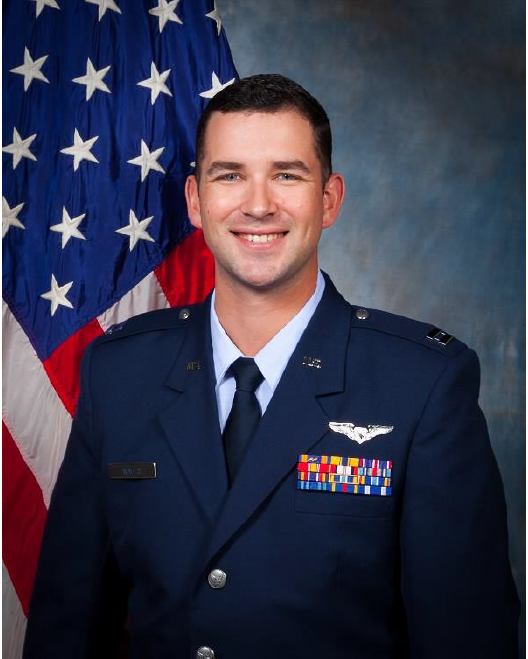 Lt. Col. Alex M. WallisAir Force Strategic Policy Fellow Alumni
Host
 Heather PenneyDirector of Research, The Mitchell Institute for Aerospace Studies
Transcript
Heather “Lucky” Penney: [00:00:00] Welcome to the Aerospace Advantage Podcast, brought to you by PenFed. I’m your host, Heather “Lucky” Penney. Here on the Aerospace Advantage. We speak with leaders in the DOD industry and other subject matter experts to explore the intersection of strategy, operational concepts, technology and policy when it comes to air and space power.
So welcome back for the second episode in our special series, exploring key concepts, driving the current focus on air and missile defense for the homeland. We spent last episode explaining why the threat is driving a lot of concern these days, and we see images of air and missile strikes on Ukraine and Israel often, but the US is similarly vulnerable. Given hostility displayed by China, Russia, North Korea, Iran, and their proxies, plus their advanced offensive. Technical means. These are not fanciable threats. We have to take them seriously. Building a competent set of defenses takes time, and that’s why we need to act now. Programs like Golden Dome and other forms of air and missile [00:01:00] defense, especially across our northern borders, are especially important in this regard.
And this isn’t a political thing, it’s straight up national interest. To better help us understand how we might want to architect these next generation air missile defenses, it’s really useful to consider the approaches that we adopted the last time our homeland was under this sort of threat, the Cold War.
Many of the concepts in overarching paradigms defense innovators, pioneered in those decades are now super relevant. We’re in a back to the future type of moment. To help us explore this history, I’ve asked a few members of our team to join us. First and foremost, our Air Missile Defense Project Lead Bridger General Houston Cantwell. Slider, welcome to the podcast.
Houston “Slider” Cantwell: Thanks. Lucky, great to be here.
Heather “Lucky” Penney: It’s great to have you back. And as we’ve explained, Slider, just finished a report on this very topic. It’s called Homeland Sanctuary Lost. You can find it on our website and we’ll also include a link in our show notes as well. And also with us is Lieutenant Colonel “Big Bobby” Wallis.
Now Big Bobby was an Air Force fellow a few years ago, and [00:02:00] once Mitchellier, always a Mitchellier. Bobby is an air battle manager who spent considerable portion of his career studying early air defense command concepts, and they are hugely reliant on the command and control, which is his specialty. So big bobby, great to have you with us.
Col Alex “Big Bobby” Wallis: Hey, thanks for having me again. Always talking about a subject I am deeply passionate about and that command and control and all things related to surveillance.
Heather “Lucky” Penney: Well, I’ll tell you what, big Bobby having you here as a fellow really turned all of us into hardcore believers, so we are part of that tribe. And lastly, we’ve also got Doug Birkey, but not least from our team. Doug has investigated the this history of air battle management, command and control, and homelands defense across a number of different projects. So we’re really happy to have him here.
Doug, welcome back to the podcast.
Doug Birkey: No thanks guys.
Heather “Lucky” Penney: Okay, so Doug, we’re gonna start with you. Can you help us set the scene? Why did Air Defense become such a big deal during the early days of the Cold War?
Doug Birkey: So there’s one date that really has to [00:03:00] play first and foremost in this equation, and that’s 29 August, 1949. That’s the day that the Soviet Union detonated their first atomic bomb. And from that point forward, nothing was the same for US Homeland Defense. I mean, you think about it, World War II, we watched news reels of Britain under attack and Europe devastated and things in Asia that were going on, but we never really had to think about it here because we were protected by the oceans.
A giant moat that really defended America. But during World War ii, there were B 29s that ended up diverting from raids on Japan due to mechanical issues and things like that into the Soviet Union, the very west of the Soviet Union. And the crews were just trying to not go in the drink and the Soviets impounded the aircraft and they actually, no kidding, reverse engineered ’em.
And they built exact copies. And those are made by Tupolev, the [00:04:00] Tu 4, what we call the Bolt. And they built about 847 of ’em. So you pair a B 29 range with an atomic bomb, and all of a sudden the US homeland is under existential threat. And it was something that absolutely was a mic drop moment changing the notion of defense and what it meant to really have to secure the homeland in ways we had never thought about to the founding of the country.
And so at that point in time, you really, it’s a back to the future moment where, well, what did Britain do when they were under attack? They created a set of sensors with radars and other means of gathering data. They process that information into actionable command and control inputs, and they piped it to the fighter units and vectored them in on attacks.
And that’s fundamentally what we worked on creating on steroids over the next several years with Air Defense Command [00:05:00] and NORAD and things like that. But we’re gonna explore more of that. So I’ll wrap it up here for this intro portion, but it’s all about the nuclear. Threat.
Heather “Lucky” Penney: Yeah. And the fact that there was the nuclear threat, which we had seen actually end the war in Japan, paired with that range, that those reverse engineered bombers that the Tu fours were able to provide, and they weren’t necessarily coming across the Pacific, they were coming across the poles.
And I think that’s also a really key point. Now, big Bobby, Doug outlined kind of the classic kill chain and what we would need to do to respond and protect the homeland in that we would need to be, we would need to find, so we need to first be able to detect those bombers. We’d need to be able to fix ’em and track them and then target and engage them. That’s a classic kill chain. Walk us through the macro components from your battle management perspective, because what we’re talking here is a pretty classic model that is enduring, it’s not just tied to specific technologies.
Col Alex “Big Bobby” Wallis: Yeah, absolutely. And I mean, thankfully during world War [00:06:00] II and when Britain was, at first defending itself and then pressing the offensive over into mainland Europe, there were a small group of professionals in the United States that were taking pretty close notes of the radar technology that developed the communication technology that was needed. And they’d really started thinking critically about homeland defense, especially as that Russian threat started to grow.
And as, Doug had mentioned with the detonation of their first nuclear device in the late 1940s. And so the challenge that we had was covering a huge space. And so I’ll walk us through a little bit about that. So in terms of air defense finding has always been one of the most perennial challenges. There’s just so much space to cover and in the United.
Heather “Lucky” Penney: Big Sky Theory.
Col Alex “Big Bobby” Wallis: What’s that?
Heather “Lucky” Penney: Big sky Theory, right?
Col Alex “Big Bobby” Wallis: Yeah. Big sky, so much space to cover. On our east and west coast as well as our northern border shared with Canada. And Canada had a concern with this as well. And, and not just the space, but the varying geography of that space. You know, we have mountains all the way up against the coast out west. We have relatively flat coast land and our coastal areas in the in the east. [00:07:00] And then going north it’s just a huge. Hard to access area. And there’s some really interesting histories on the construction of some of those radar sites.
But it’s always been a challenge to cover the space. And then, um, and then once you find something in that space, you can actually start to marshal resources towards it, which is where you get into the fixing phase. And so that is its own challenge, and you can redirect sensors to help identify the tracks and determine what those intentions were.
And depending on the speed of some of these threats, and it starting out with bombers, by the way, the threat continues today with modern missiles, is just figuring out where that threat’s going and when something comes over the poles that is a huge challenge, when it comes to finding out where you’re gonna point these limited resources that we have to defend.
Now, once you’ve got the, the finding and the fixing, kind of determined tracking is basically the maintenance of that target on our systems. And that started out early in, the chain home system with the Brits literally pushing pucks across a board. And evolved to plotting boards and things of that nature through early, rudimentary battle management systems.
But that tracking is [00:08:00] basically the ability to see where it is and continue to build information on it to, refine what its intentions are and get more details, because the details really start to matter at the tracking phase. And then once you get into the targeting phase this is where we’re gonna start executing some effect against it.
And then there’s actually a couple of components that are changing here, or there’s actually a couple of other components beyond the targeting, and that’s the engaging and assessing. Each of which brings their own challenges. But that’s kind of the fundamental way that is, is enduring and really that challenge and that process hasn’t changed even as the technology has evolved around it.
Heather “Lucky” Penney: It’s amazing how the Dowding system encapsulated that entire find, fix, track, target, engage and assess, and how what we’ve been doing ever since then has been following that broader model. Now Slider, talk to us about the scale and play for this challenge. Big Bobby talked about the big sky, the challenge of the geography. I mean, whether or not it’s the mountains that can provide the geographical shadowing or just the challenge of the weather that we have to be able to endure the magnetic variation and [00:09:00] so forth. I mean, there’s a lot involved with continental defense. So what challenges does that really bring to bear to this problem?
Houston “Slider” Cantwell: Yeah. Lucky there were a lot of challenges to overcome. I’d characterize them as extreme. So coming outta World War II, aviation technology was, it was accelerating.
Bombers were flying higher, they’re flying faster. And the smaller fighter aircraft were having a hard time to keep up. Jets you saw were making their debut. But they really weren’t widespread until the till the mid fifties. And most importantly, radar technology was also very new. They could see the high altitude aircraft, but it’s important to point out they couldn’t see low altitude stuff.
Heather “Lucky” Penney: Yeah.
Houston “Slider” Cantwell: And so you had some significant vulnerabilities and big Bobby mentioned, and in the mountains it got 10 times, 10 times worse.
Heather “Lucky” Penney: Over the horizon. I mean, lot, lots of problems there.
Houston “Slider” Cantwell: Yep. And so when the radars did see a contact. That’s what they saw. It was a blip on the screen. And so, you know, we’re used to modern radars where it tells you where the airplane is, how fast it’s going, the direction. Back then you didn’t [00:10:00] have the computers, so it took a very skilled operator to look at the screen and watch the radar come back every few seconds and figure out, alright, here’s the altitude of the plane, here’s the speed it’s going at, and here’s the direction it’s heading. And that was something that was all being designed in the fifties. Huge challenges to overcome. And then you talk about command and control systems. These also had to be designed from the ground up. There was no internet. Even commercial telephone was barely reliable.
So communication links had to be designed. They had to be acquired and installed between every node, headquarters, radar sites, air bases. And you knew that time was gonna be of the essence. So rapid command and control had to be part of this overall plan. And then you had your interceptor aircraft. They didn’t have long range air to air radars.
Heather “Lucky” Penney: No.
Houston “Slider” Cantwell: So they were completely relying on these radar operators that were on the ground. Talking to them through the radio and guiding them to where they needed to be.
Heather “Lucky” Penney: You know, they actually also had [00:11:00] data links back then, and this blows my mind. Link four.
Houston “Slider” Cantwell: Yeah.
Heather “Lucky” Penney: Was that early data link from the semi-automatic, ground environment. And so they were transmitting the information from the sage computer through the Link four data link to the cockpit. And did you know the F 1 0 6 actually allowed the radar operator to hand fly with a little baby joystick, the F 1 0 6 to the point of intercept where they could actually then see with their little tiny radars?
So F 1 0 6 could really only see about 10 miles of it when it was first fielded. So you had to actually have the radar operator on the ground and think of all the latency that’s involved. Think about the imperfections regarding the precision of the data and the rate. This is some really sophisticated stuff. They were very leading edge.
Houston “Slider” Cantwell: And so before things like data links you had people talking on the radio and by the time they’re even talking and telling the pilot where to go and what direction to head. That meant that information may be outdated. By the time they can get it out. And so a [00:12:00] lot of new skills are being developed as we’re coming up with this.
Heather “Lucky” Penney: Yeah. No. Just amazing.
Doug Birkey: Okay. Heather, you’re on deck here with this one. In the way back machine, you wrote a mother of all reports.
Heather “Lucky” Penney: I remember that.
Doug Birkey: That dealt with air Defense Command and Sage and all that. And you guys are tossed around terms, but I wanna level set people ’cause this is a really important build to understand the concepts in play and technology.
And so, you know, Houston talked about scale and we mentioned speed a lot. I mean, I mentioned B 29s, but pretty soon jet bombers come along and missiles come along. And so you’re talking about closure rates that are demanding, really precise intercepts. And so you were talking about things like data link to the F 1 0 6.
Zoom us back, take it up an altitude. Describe the various components, if you don’t mind, and kind of how it all fits in into pieces ’cause I know we have defense sectors ’cause of the scale and different technologies. There’s a lot to it, but it is so important.
Heather “Lucky” Penney: Yeah. So Doug, what you mentioned was, is [00:13:00] crucial, right? So we’ve got bombers that we anticipated would come over the pole because that was the shortest way for Russia, for the Soviet Union to be able to touch the US homeland was to come over that North Pole. So we’re dealing with extreme environments. It’s super cold very, very harsh weather, but we’ve got to be able to find them early again because there’s a lot of big sky out there.
But the closer we can get to the pole, the smaller that chunk of sky is. If you just imagine how that geography works. So way up north we had the Dew line, the distant early warning line of radar. And there’re, again, dudes out there maintaining the radars, you know, helping to operate the radars and ensuring that their communication links that are in the ground, uh, are able to stay healthy and get, get that information further back and pass that information off to the Canadian line, which as you can imagine, is in Canada.
And so again, we’re replicating this as we’re trying to have a positive pass off. So we [00:14:00] maintain constant contact and custody of the target when it goes from the Dew line to the Canadian line and then again to pine tree, which is essentially at the very top of the US border. And so as we’re doing this, it matters because maintaining that target custody allows us to be able to, identify, do that fixing, determine intent, where are they going to go so we can begin to anticipate what alert fighters we need to launch because we can’t anticipate where we think those bombers are going. So the Dew line, the Canadian line, the, uh, the pine tree line, they were all feeding their sensor information to defense sectors. These sectors got the, all the information across the line, partly because they didn’t know immediately where that bomber was gonna go, but also because it provided them resilience in case one of them did get bombed or did end up having a power outage.
So you end up having some resilience and each sector had the ability [00:15:00] to reach into the next sectors fighter bases to do those air defense launches. And then we talked about the air defense interceptors 101s , 102s, F 106s, for the time advanced, uh, and then supersonic aircraft because speed is in distance is time, right?
So the faster the aircraft is, the sooner it can get to that bomber, make that intercept, and the further away you can splash that bomber to prevent them from being able to reach their target inside the homeland. And as Slider was saying, this was very challenging. As Bobby was saying, this was very challenging from being able to understand where that bomber was because there’s a lot of error.
You’ve got a lot of uncertainty within the, the volume of space of where that target might potentially be. And so you’ve got to be able to get there as soon as possible. The slower the targets were going back when they were the Tu 4s, that was easier to be able to manage. But when they began to become supersonic, that was far more deadly.
Then when you start talking about [00:16:00] cruise missiles and then intercontinental ballistic missiles, which come later on, it complicates the problem set.
Doug Birkey: No, that’s really helpful. I appreciate that. And again, when we’re talking about this and we keep saying Northern Tier, it’s because we look at the map wrong normally. We look at this west, east on the standard projection. You gotta look at it top down. Those are the shortest routes. And that’s why this Northern Tier thing is such a big deal. And there’s another piece of scale that as you’re talking about, I just think it’s important to emphasize for people, you know, we, in the fifties we’d like to talk about strategic air command and you hear about tactical air command. Air defense command was just as big. There were dozens and dozens of squadrons of fighter units and the battle managers and all that. I mean, this was massive commitment of resources, and it was so important that we had our backs against the wall in several parts of the Korean conflict, and we refused to cut [00:17:00] air defense command fighters loose because we took this deadly seriously. And so it just cannot be overemphasized the level of, of seriousness and commitment resources here. And it was absolutely essential.
Heather “Lucky” Penney: Doug, can I jump in there for a minute? I mean, it was not uncommon for guys to live their entire career within Air Defense Command. It was the skill sets that they developed were highly specialized. There was a level of precision, just like strategic air command that I mean, if you didn’t get it right, it was a goner because they knew that threat was existential. And so, as you mentioned, this air defense command, ADC, was just as big as SAC or tac and was, if not as important, maybe even more important.
Doug Birkey: Yeah. And it’s a forgotten command, which I feel bad about. They shouldn’t be. They really worked hard and what they innovated was amazing. So, Bobby, I want to cut to you here really fast and I’ll give a stick back to Heather for mc in this thing. But you know, you’re an AWACs guy, J Stars guy, with your battle management experience and the roots [00:18:00] of those airborne battle management sensor tools really go back to this era, and it’s kind of a forgotten thing.
We think about those fixed radar lines up in the north, but there was another problem set, and that was how do we look at our coastal defense as well? And guess what? It’s a little tricky to put fixed radars out in the ocean. And so can you describe to us how those came to being as well? Because if there’s anything that’s been lasting in many regards, it’s these mobile sensor slash command and control platforms that are so important and mean.
Heck, we saw the fight over the E 7 this summer and whether we continue that, this is a pretty big deal. And if you could explain those roots, it could be helpful for the audience.
Col Alex “Big Bobby” Wallis: Yeah, absolutely. So, you know, the Northern Tier had, its, had its huge challenges with the dew line, the Canadian line, the pine tree line and everything.
Mostly because a lot of the places they put those radars were austere, no roads. Coastlines present a different challenge with the curvature of the earth and being able to detect low level aircraft. And [00:19:00] so, there were particularly places around our major populated areas like New York City, Boston, Washington, DC, where the ability to get warning in enough time if an aircraft were to come via that, route was pretty slim.
With Sage being a pretty integrated system I mean, we’re, I wouldn’t say we’re doing it a disservice, not talking about how huge it was, but I mean, Sage was a massive undertaking. That was very integrated to lots of different radars. Well, they still couldn’t plug that gap on the coast.
And so they started looking at a couple of different solutions. And it started with some fixed sites that looked, basically looked like overgrown oil rigs. They were called the Texas Towers. And they were, they were built out on some areas that, of the ocean that are traditionally terrible weather. And it was not uncommon for some of these fixed sites to just disappear.
Like they would bring a rotational crew out to the coordinates and that site would no longer be there, with no sign of it. And it was a big problem to build enough of them as well. With the construction requirements for deep and deep ocean, turbulent weather. I mean, these are, these are things that even oil companies haven’t cracked [00:20:00] the code on necessarily.
Heather “Lucky” Penney: And they had picket ships. And even the picket ships really couldn’t fill this gap either.
Col Alex “Big Bobby” Wallis: Yeah, and I was, I was just getting ready to get over to the picket ships now. And so the Navy really didn’t wanna do the picket ship, because it wasn’t directly tied to fleet operations. And so these ships that had rudimentary data links and radars on ’em were basically on endless type patrols, not directly tied with the fleet or what the Navy viewed as their, uh, traditional power projection.
And so the Air Force was looking at their solutions. And around the same point in time you had aircraft, basically a convergence of two different technologies. You had aircraft that were getting large enough and efficient enough to generate enough electrical power to run at the same time radar sets that were getting smaller.
And that’s where you see the EC 121 come along. So it was a variation off of a commercial airliner the Connie, designed by Howard Hughes and was put into service. And in around 1953, um, the US Air Force had bought a collection of these things and started out outfit with two different radars on ’em.
An AN/APS scanning radar on the bottom the traditional dome looking thing and a shark fin, elevation, [00:21:00] finding radar at the top. And they were to go out off the coasts far enough to detect aircraft with enough time and warning to scramble fighters to intercept. I’d like to emphasize though, that these were, this was not exactly pleasant duty, so we had bases on either, uh, on either Coast McClellan Air Force Base in California, and Otis, Air Force Base. And crews would’ve to fly between six and eight hours at relatively low altitudes in the way we talk about it, to give their radar the best look with the minimal with minimal clutter and basically rotating on and off shift.
For six to eight hours looking for these bombers. And over time you can imagine that thinned out. But they were a critical element to feeding information into sage and basically covering those coastal gaps around our major population centers.
Heather “Lucky” Penney: Yeah, and you know, one of the challenges with the picket ships wasn’t just cultural, that the Navy didn’t prioritize it, but it was also because it was challenging to integrate the information from the picket ships into Sage because it wasn’t a Navy program.
And that was another value of the EC 121 was not only was there a cultural integration in prioritization, but it also [00:22:00] made it easier to be able to integrate their, it also made it easier to integrate their sensors as well. But the development of the EC 121 is huge. And I’m glad you mentioned Bobby, that it was a convergence of both the aircraft not only having the legs and the duration and having the right airframe, but also the right, basically what we’d now call SWAPC to be able to manage the size, weight, power cooling, to be able to power the radars. As those radars came down, became much more portable, which was huge because now suddenly we have very powerful radars which are married up with real time air battle managers in the aircraft looking at the raw data, being able to process that and then be able to do battle management from that. And we took that advantage of that in Vietnam ’cause the EC 1 21 was a game changer in Vietnam and the beginnings of the modern day air battle manager.
Col Alex “Big Bobby” Wallis: Yeah. So, the Connie opened up a, a lot of different options that, as we started to get into Vietnam conflict that our war planner started to see. And at this point in time, it’s also important to note that the first [00:23:00] non homeland defense mission that weapons controllers on the Connie were assigned to is actually Operation Blue Straw, which was, clearing out atolls for nuclear tests.
And that was where a lot of a lot of folks started to see, wow, we can move this thing, it can operate independently and it could feed information into a system that isn’t directly tied to sage. We should start looking at this. And so the 552, airborne early warning and controlling was actually tasked, in 1965 to Formosa.
Now known as Taiwan to fly sorties over Vietnam. And then that’s where we really started to see were fighter pilots in really thinking expeditionary applications. Started to see the value of this early warning and control. And so yeah, they went out and they started, the pairing up. And ultimately I got a, I got a pretty interesting statistic that I found here.
Were through the course of Vietnam, the EC 1 21 and the controllers. They controlled over 4,713 sorties for a total of 48,000 combat hours while controlling 210,000 fighters against 700 migs. And so they had an advantage that [00:24:00] they gave was massive, and they actually ended up moving the EC 121s in 1967 to Thailand where they were actually based with the F 4 units that they were paired against.
And this led to this integrated debrief that would happen where controllers were actually starting to compare, and this is where we actually saw control crews get credited with assisting with kills. Where, you know, up until that point, only pilots and Rios had been given the assist, but they started including the controllers on it because of the advantage that they gave them.
And so it was a huge turning point. There was a lot of TTPs that were developed in this point in time, but unfortunately when the Vietnam War started drawing to a close some of these things, the value of it started to be questioned outside of Homeland Defense.
Heather “Lucky” Penney: Yeah, I’m glad you mentioned, the integration of the EC 121 with the F 4 crews. Fun fact, in terms of, being able to understand what information is important that a war fighter needs to listen to and pay attention to. When Robin Olds would be going through his mission preparation, he would reach out to the crew, [00:25:00] the EC 121 crew that would manage him and tell him what exactly he was looking for and they would call him by name to be able to get his attention airborne and then vector him towards a threat. And that’s one of the reasons why he was so successful. So, Slider let’s move to you and talk about being a fighter pilot. Right? Talk us through what it would like to be to launch as a fighter pilot in Air Defense Command. I mean, I sat my share of alert, but it was different back in ADC time. Why was the processing a mass data to actionable information so crucial?
Houston “Slider” Cantwell: Yeah. I gotta tell you that’s one mission set that I never got to fly here in the homeland. Did a lot of stuff overseas. But it must have been so exciting to be a part of this entire enterprise of Air Defense Command. Those missions were super risky. You had pilots pushing the edge of the technological envelope. Doug mentioned earlier, new aircraft, the 100 series, the Century series coming out. And so the air, the pilots are learning new aircraft every [00:26:00] few years and these aircraft.
Doug Birkey: And you got a new flight suit to go with it.
Houston “Slider” Cantwell: That’s right. That’s right. And these pilots are pushing the airframe boundaries as well as the engine boundaries. And so very little room for error as they’re maneuvering these aircraft. And then you throw on top of that the all-weather night challenge. Coming outta World War II, you did not have all-weather and night capable pilots. And so the aircraft had to be designed to be able to fly instruments and have anti-icing and all the things that we’re so used to and accustomed to these days, none of that stuff existed coming into the 1950s. So a lot of aircrew training was required. And then finally, the intercepts themselves. I can tell you as an F 16 pilot with a very advanced radar and locked onto a target at high altitude, running an intercept on that high altitude contact is extremely challenging. And that’s with an afterburner, and that’s with complete situational awareness of what that maneuvering target could be doing.
These pilots are being vectored by a [00:27:00] radar operator on the ground using communications, that are lagging, whatever’s actually happening up there in the air. And the pilots are doing the best they can to try to follow these directions and then they’re trying to get visual contact at 10 to 15 miles. But they don’t know exactly where that bomber is heading. They can’t tell exactly the nose position of that bomber at 10 to 15 miles. And it’s like, I always tell my kids like running an intercept. Imagine driving two cars at 60 miles an hour head to head, and then you try to intercept that car and end up right behind that car and you’re on a two-lane highway. It’s impossible. You can’t do it. You have to like square that corner and end up right behind that car at 60 miles an hour. You end up in what we call in the fighter world in lag. Where the car is pulling away from you and you’re just watching it, leave you in the dust.
Heather “Lucky” Penney: Yeah. Because if you think about the engine capability, and I’ve flown some of these vintage jets. I mean, you push it up into maximum [00:28:00] engine and you wait for 12 seconds for the thrust to kick in.
Houston “Slider” Cantwell: And that’s if it doesn’t cough.
Heather “Lucky” Penney: Yeah, that’s if it doesn’t cough. So as you mentioned, like you have to take lateral offset and you have to be pulling on the sticks. You’re burning off energy as you’re making that turn. You’re climbing ’cause they’re high ’cause they wanna be high for the.
Houston “Slider” Cantwell: But you can’t pull too hard because you bleed energy.
Heather “Lucky” Penney: Exactly.
Houston “Slider” Cantwell: And then the airplane start, the bomber starts walking away from you and there’s nothing you can do about it.
Heather “Lucky” Penney: And their missiles aren’t going to make up the distance. So yeah, this was really.
Houston “Slider” Cantwell: Super challenging.
Heather “Lucky” Penney: Yeah, super challenging. So Doug, at its peak in the 1960s this defense enterprise we’ve talked a lot about it from the aircraft and the technologies to the information systems, um, from the Air Battle manager. I mean, like, this is huge. Why did we de-emphasize the value of Air Defense Command and Homeland Security?
Doug Birkey: I think it’s a, a bunch of different events that were conflating. First and foremost, the Vietnam War was putting a lot of [00:29:00] budgetary pressure on United States military. We saw air Defense Command come off of manning surface air missiles in 1972. Um, the fact that so many of the offensive Soviet nuclear systems were going to missile technology, including ICBMs, which, you know, you’re not gonna intercept with an F 1 0 6 or an F 1 0 2 or anything like that.
Heather “Lucky” Penney: You can’t even see ’em.
Doug Birkey: Yeah. It, it saw our realistic ability to deal with that threat kind of go down. They still have bombers. I mean, we still had to deal with it to, it didn’t totally go away, but it came down a lot When you saw Soviet transition to the missile technology, it was harder to pull an intercept on. The FAA ended up taking over a lot of the sites. In the seventies that was sage and things like that. And then in 1979, Air Defense Command was effectively folded into tactical air command. And so the mission still executed. Folks were doing it, [00:30:00] but I think we could say there was probably a dilution of excellence and just total drive in this because, it was a PhD level, varsity sport in the fifties and sixties, but seventies, we just kind of come off a little bit.
And I mean, Heather, your life story you’re a part of that. You live the kind of the low point of what Air Defense Command was on 9/11 where we had nothing. And we had just given up on it and the TTPs were so radically out of date and just, we hadn’t even thought about it. We were just pulling off dusty Cold War playbooks in that morning and which is wrong for what those conditions were. And we really had just lost the art of imagination of what air defense would look like. And I think that’s something that, if you watch the news today, you cannot escape how absolutely important this stuff is right now, because we don’t wanna be Kyiv.
Heather “Lucky” Penney: Yeah, absolutely. I think it’s interesting how you were able to tie together [00:31:00] the different events, whether or not that was the focus on the Vietnam War, whether or not that was the development of the intercontinental ballistic missile. And so how the ICBM fundamentally shifted the value proposition, if you will, of traditional air defense fighters and the radar systems that we had built and including moving even over doctrinally the surface to air missiles over to the Army, how all of that came together.
And then the organizational element of that, uh, going over to tech de-emphasizing the importance of this. But, you know, the ICBM, that’s a really interesting point because although the problem set becomes very complicated and poses dilemmas to us, it wasn’t a reason to de-emphasize the importance of being able to defend against that.
So, Slider, Reagan sought to address that threat during his tenure through Star Wars.
Houston “Slider” Cantwell: Yeah, right, Lucky. So Reagan, he was very clear. Not a fan of the mutually assured destruction or the MAD strategy. So in 1983, he announced his intention. He wanted to build a missile defense [00:32:00] system and this was gonna defend the United States from ballistic nuclear missiles.
Heather “Lucky” Penney: Yeah.
Houston “Slider” Cantwell: He called it SDI or Strategic Defense Initiative, some called it Star Wars program, as it had a very elaborate space component. But he was very clear his desire was to make nuclear ballistic missiles obsolete. And so this meant all sorts of response. Some folks thought it was super, other folks thought this might destabilize things. With us and the USSR. but the vision was solid. Build a space-based system, a network that could sense, track, and engage ballistic missiles fired from the USSR and engage them before they threatened the United States. So lots of important programs were started.
They had advanced sensor programs visible light, ultraviolet, infrared radar energy. All tested to track missiles using space-based sensors. And you have to remember, computers were just becoming mainstream, I think at the time I owned an Apple two plus, you know, something like that. [00:33:00] And so, huge challenges when it comes to computing and assembling all this information, uh, across the arrays of sensors that were being proposed.
In the end, ultimately the technologist just wasn’t there especially in the directed energy department. and not for lack of trying. They pursued laser, directed energy, x-ray lasers, particle beams, all kinds of things that you would imagine, even mirrors in space demonstrated the ability to redirect directed energy from the surface of the earth.
So a lot of. A lot of proposals out there. But unfortunately it was a solid vision, clear guidance. The technology just wasn’t there at the time to bring it to reality.
Heather “Lucky” Penney: Yeah. Being too far ahead. But we were able to reap some of those, like SBIRS, a space-based infrared, uh, system is some of that, right?
Houston “Slider” Cantwell: Yep. Spinoff.
Heather “Lucky” Penney: Yeah, it’s a spinoff. So we did we’re able to mature some of those technologies, but not in the system in the way that SDI was originally envisioned. You know, so then the end of the Cold War happens. So [00:34:00] we actually don’t need to pursue the full vision of SDI, we sunset that and also nearly all the other elements of the air defense enterprise.
So all of those alert units gone. Right? And and so we had next to nothing in the years after the Cold War and even after 9/11 really it doesn’t even begin to approximate what we had in at ADC.. So we’re still really thin. Why is now a back to the future moment?
Houston “Slider” Cantwell: Yeah, so Lucky, I’d say we’re still definitely thin, but most importantly, I think we’ve gotta highlight how much the threats changed. We’re now in a multipolar world. You’ve got China, Russia, host of other countries that threaten our homeland, not just nuclear weapons, but as we’ve seen in Ukraine, you’ve got the precise conventional cruise missiles, one-way drones, hypersonic missiles. All of these types of missiles hold American military and civilian infrastructure at risk.
And we don’t have the means to detect, let alone intercept these threats. So I think the Golden Dome proposal is gonna bring a lot of these [00:35:00] issues to light. And then I think some important resourcing decisions are gonna have to be made. So similar to back in the 1950s, we can’t defend everything all the time. So a conversation’s gonna have to happen and it’s gonna have to, a conversation’s gonna have to happen, and we’re gonna have to require what’s, and we’re gonna have to determine what’s truly vital for national security and what’s less so.
Heather “Lucky” Penney: And not only is it that it’s multipolar, but I think after the end of the Cold War, we kind of thought, eh, we’re back to moats, you know, Atlantic Ocean, Pacific Ocean.
There’s really, in addition to being, becoming complacent regarding the threats after the end of the Cold War, we relied on our oceans again, and the fact we had friendly nations to the north, into the south. And so it’s not just that it’s multipolar, that it’s, we have actual adversaries now, but it’s also the technologies. And as you mentioned, those technologies are incredibly lethal. But they can reach out and they can touch us. So,
Doug Birkey: Heather, I just wanna jump in though. There’s a piece here where it is back to the future. We came off air Defense command concepts, like we talked [00:36:00] about largely ’cause of the high-end missiles, ICBMs, things like that. But look what’s going on in the world right now. If you look at what Iran is doing against Israel, I mentioned Kyiv with what Russia’s doing. You see things like cruise missiles and you see, drones, which are effectively another form of cruise missile. And that is bringing back airborne threats in ways in which we haven’t had to think about since the fifties. I mean, you’re kind of back to those B 29 speeds and altitudes again. And there’s another point that’s really important, and that’s called threshold of escalation. If China or Russia are to fire an ICBM against the United States, they’re gonna trigger an immediate response. And you’re gonna see nuclear war. Nobody, hopefully, wants that, but if they send over a couple dozen or a couple hundred cruise missiles at us. Bring a startup conflict and all, but does it escalate to nuclear exchange right away? I mean, there might actually be incentives for them to pursue lower ends of [00:37:00] an offensive power, because it’ll still net important results.
By that I mean holding back forces in the homeland for the defense mission, which means we have less power to project abroad, whether it be Taiwan Strait scenario or defending a, a region in Europe with NATO or something like that. And so I think in many ways it brings back a lot of the core elements that we saw with the ADC model being more relevant than ever. So this is, you know, at Mitchell, it’s why we’re a big fan of the E-7, why we fought hard for it this summer, because I think those radars can be more important than ever. It’s why, you know, Houston’s talked about RPAs have a lot to offer because they can do that. That persistent mission up there, we’ve gotta modernize the over the horizon radars. And so Golden Dome, they’re big on space, I applaud that. I think there’s a lot there. But this is an air and space mission, and I think there are a lot of lessons that we can’t forget because we’re in a zone where those might be the more useful tools for the, you know, Russians and Chinese to pursue.
Heather “Lucky” Penney: I [00:38:00] think that’s a really important point. The threshold of escalation and the fact that it’s gonna be air breathing threats and that fighters and all the traditional elements of Air Defense Command actually provide enhanced response capability against those types of threats than what we’re typically thinking of in Golden Dome, which is really thought about as like a ballistic missile shield.
So Bobby, swinging back to you talk about those macro elements of the Cold War enterprise that Doug just brought up that are especially relevant today.
Col Alex “Big Bobby” Wallis: Yeah. So, technology is always changing, you know, in these macro, in these, these macro elements. And each side is striving to build a better mousetrap, but the fundamentals really still say the same. We need effective detecting, we need technology assisted fixing and tracking, and we need weapons to effectively engage and assess. And if there was one thing that Homeland defense really hammers home and Doug alluded to this too, is it’s the need for the technology that acts as a force magnifier, making better use of the, costly advanced weapons that we’re investing in now. And this theory was, has been [00:39:00] proven, it’s been proven over and over again in the Battle of Britain, the Gulf War, and other conflicts that the good news is that these investments in Homeland Defense are readily applicable to various other conflicts and various other challenges that we may face in the national security arena. So, the elements are very much the same. You have a threat, you have people that are in this gray zone potentially looking to do something or leverage in effect to get a reaction from us. And our ability to credibly deter that is a huge part of our ability to maintain like our hold on the American way and American power.
Heather “Lucky” Penney: No, and I would also say that the E 7 and MQ 9s, I mean, because they’re airborne, they’re flexible, they can move around to the battle space to where we think those threats are gonna be coming from. Unlike a lot of radars, which are gonna be fixed sites, they’re gonna be networked through the ground. There’s a lot of surface attack area, and being a fixed site presents a huge liability. So those E 7s, MQ 9s, I think are gonna be a crucial element. So we have to have those in number. So Doug, what’s different about the threat this time?
You already alluded that it’s [00:40:00] more to it back to the future moment. You talked about the threshold of escalation and how cruise missiles and, and drones and those types of capabilities might be more attractive to an adversary.
Doug Birkey: What’s different is it’s way more complex. Before we just focused on the Soviet Union, now you’ve got Russia, you’ve got China, you’ve got North Korea, you’ve got Iran, and you have their proxies. And there is an arrogance with which they are currently acting right now that I, I think people were sobered coming out of World War II. Nations had just gone through hell in ways in which we can’t even get our heads around.
We read about it, but I don’t think you can understand it really, unless you’re there. We now see nations like China and Russia and the others throwing down in very aggressive, risky ways. And there’s a perception that America is not going to throw down and respond, and it might [00:41:00] not even have the means to respond.
we go back to how we got out of Afghanistan and how damaging that was. We look at the vacillations with Ukraine and are we gonna defend it or not? And, and weapons flows and all it, it is leading to tremendous strategic ambiguity about where does America stand, which I think leads to an even more aggressive adversary because they think they might get a shot at getting away with something right now.
And let’s face it, our budgets are not corresponding to where the threat is. I mean, you wanna know a difference. Look at the resources allocated to stand up Air Defense Command, NORAD in the fifties versus where we are today. And that’s why in Houston’s paper, we are big fans of repurposing things that we already have, like global hawks, like MQ 9s, like expanding how E 7 engages.
There are things that we’re already doing in space with space development agency and things like that. How can we repurpose these tools [00:42:00] to better net the effect, because realistically, the cash just is not following fast enough, but the threat is outta sight in some levels even more dangerous than what we experienced in the Cold War.
Certainly larger. But they’re cooperating. And I, like I said, I think there’s a level of arrogance where it’s, uh, it’s kind of the teenager. They think they can throw it down and get away with anything. And there’s that hubris and that’s a very dangerous time. And we need to reset that fast.
Heather “Lucky” Penney: Well, and I would foot stomp what you said about them cooperating. I don’t think that China and Russia and Iran and North Korea are just cooperating. I think they’re really developing. If you watch their actions a new axis, I mean they are, they are creating partnerships that are both formalized as well as informal, that really create problems for us from a global strategic perspective.
And I would argue it’s not just about strategic ambiguity, but our waffling and the way that we have behaved over the last 15 to 20 years is [00:43:00] actually an erosion of our strategic commitment to our allies, partners, and to our own homeland defense. And that’s gonna embolden them even more. So Slider and Big.
Bobby, what is different today about our means to respond? I mean, Doug talked about how much money and resources was put into Air Defense Command. Sage was on the magnitude of the Manhattan Project. People don’t realize really how far they pushed the boundaries of what was technologically. Capable both networks, processing sensors and how they built the whole thing.
I mean, right now we’ve gotta rebuild the Air Force writ large, and now we have to think about Homeland Defense as well?
Houston “Slider” Cantwell: Yeah, I’ll go ahead and start off here, Lucky. There’s gonna be some similarities to what we did back in the past. And so there’s gonna be a layered approach, but we’ve gotta get an upgraded layered approach. And as I mentioned earlier, our sensing grid needs major investment on the surface it’s over the horizon radars. In the air we need the E 7 wedge tail we talked about. More than ever. We need to couple those with the medium to high altitude UAVs, you’ve got [00:44:00] MQ nines, RQ fours. This is what these things were built for.
Long endurance, low threat environments. And something that not a lot of people are talking about are these new passive sensor technologies that give these long loiter aircraft tremendous value in the early warning mission. We’ve gotta get these sensors fielded and out there so we can get these these unmanned systems out on the front lines.
And then space sensing capabilities, they’re already noteworthy. Lots of missile launch capability in space. AMTI has been talked about for so long. Space radar needs continue to investment. Unknown how long this capability is gonna be before it really reveals itself. It’s nascent. It may be in five years, it may be longer. No one really knows.
Now, on the fighter side, the Air Force continues to, as we all say, divest to invest. And so we’re divesting all these fighter aircraft. But hold onto the fourth generation fighters don’t divest them because they can play a very important role here. Upgraded aircraft radars are gonna give them tremendous [00:45:00] capability in cruise missile intercepts. And over in the Middle East, we’ve seen strike Eagles carry the A-P-K-W-S. These are the air-to-air laser guided rockets. That can intercept at a very low cost per kill against non maneuvering targets, tremendous capability.
Heather “Lucky” Penney: So, Big Bobby Slider talked a lot about some of the technologies that we need, but we need to have the humans too. I mean, like I big battle manager fan, what else do you think we need to do for, to be able to respond to this threat?
Col Alex “Big Bobby” Wallis: Yeah, so, you know, he mentioned the Slider mentioned the sensor web, you know, it’s growing and it still has gaps. And one of the gaps that it has too is just in the data management of all the information, you know, the data that comes into the system.
And that’s where humans play a big role. And I’ll get to that the human part when we get to the key points at the end. But it’s also not just about the tech, but you know, the skills. We need to integrate the networks onto survivable platforms and facilities. And I’d also like to take a second here to break down like what survivability means.
You know, we talk a lot about that now we need [00:46:00] to get more survivable platforms. We need to, but space is survivable in many ways because it’s often physically out of reach. But it’s vulnerable in other ways with its networks. And it’s the same with aircraft. You know, aircraft are you know, considered to be less survivable in the geographic battle space, but in many ways more survivable from a network perspective because it has closer access to the effects.
And so this is something that we really need to think through as we invest in our different weapon systems is, hey, what does, what does survivability mean? Where do we need it to plug gaps? Where do we need it to be a full, a force multiplier? And, and really we need layers and elements of all of these things to be effective.
Heather “Lucky” Penney: Yeah. So let’s go around the table. What key considerations should leaders have as they harness historical lessons to inform our air and missile defense response today? So we’re gonna go around the, around the table. Slider, let’s start with you.
Houston “Slider” Cantwell: Okay. Standing up air defense command, huge lift. You had early radar technologies, you had new fighter aircraft. You had an [00:47:00] armada of Soviet nuclear bombers that could strike at any time. The experts agreed that if this massive attack were to occur, they’d be lucky to an intercept 20 to 30% of these threats. I’m not certain that the public knew how low that number was. But the point is that someone decided back then what’s the minimal level of defense that’s acceptable and define that. And then everyone was in agreement that would limit damage, assure the public that we’re here to defend you. And provide early warning to begin a response as soon as possible. That same mindset needs to be applied today, and to have those benefits of whatever this next system’s gonna be for our national defense.
Heather “Lucky” Penney: Oh, that’s a really good point. I mean, and a lot of folks don’t realize that, for example, in Israel, as they’re defending against the incoming cruise missiles and drones and ballistic missiles, that when they determined where the impact point would be, they said, eh, do we need to actually go intercept that?
And they [00:48:00] let a lot of stuff hit the ground where it was gonna cause minimal damage that they could prioritize defending against population centers, key critical infrastructure and so forth. So that’s a really crucial point. Big Bobby, what do you got?
Col Alex “Big Bobby” Wallis: Yeah. So I think variety and options are key and they’re key for homeland defense. They’re key for our combatant commanders. And, and we need all the advantages that ground-based fixed and mobile sites offer, as well as the air and space borne platforms that are out there. The different things that we invest in, you know, we can’t just look through a single lens, like an investment in a Homeland Defense system is also a semi lateral investment into our expeditionary capabilities.
And so it’s not just, it’s not just mutually exclusive. But the other major thing that we really need to invest in is the skills and our operators and the people that make this mission happen. Technology’s great and you know, as Doug and I talked about early on, the find fix, the kill chain, you know, there is many, many, many places that technology is going to aid in that.
But at the [00:49:00] end of the day, war is a human endeavor. You know, conflict is a human endeavor and investing in our people and the skills that they have to make better decisions, to be a better force magnifier, to better utilize these exquisite technologies that we have and we need to make the decision to let something hit the ground, to program that thing into the AI or the decision based on the conflict and the nature that we’re in.
That’s huge. And you know, right now, you know, on the battle management side, we’ve lost two thirds of our platforms with the retirement of the E 3 and the E 8 and our ground-based systems we’re just kind of getting to the point of maturing. And so where do we mature these operators? Where do we mature that team?
You know, where do we mature the fighter pilots, the controllers, the technology to be a credible deterrent in the Homeland Defense mission, and a viable expeditionary option.
Heather “Lucky” Penney: I am glad you really brought that up. And you know, the other part that worries me about retiring the airborne early warning in battle management is not simply that we’re losing the war fighters.
And, and that is true, right? We’re losing the experience, the knowledge, the wisdom to grow the next generation. But [00:50:00] also we’re losing the flexibility of where we put those humans in the system, right? The, those ground-based operation centers are not gonna be necessarily as nearly as flexible as forward edge of the battle space or as, as mobile as we might need them.
Doug, I’m gonna give you the last the last word, but before I pass it off, I’m gonna share what my, um, what my consideration would be is that when we took Homeland Defense seriously, we stood up Air Defense Command because we understood that we could not project power and play the away game and be an expeditionary force and still do homeland defense with the robustness that we needed to be able to do.
So we created a dedicated command to be able to do that. And today’s alert units do both, right? They have to sit alert and they have to go deploy to be the away game. And what that means is that not only are we burning them out fast, we’re burning the jets out, we’re burning out the people. But if we have to do a homeland holdback to defend the homeland in time of [00:51:00] war, we will not have the capacity, the war fighters, the aircraft, the weapons to be able to go play the away game.
So we really need to think about if we are serious about defending the homeland, what does that need to mean for our force structure? So Doug, you got the last word here.
Doug Birkey: And just to continue your thread, Heather, just before we get off that point of capacity being so important, extend to to space as well. We need sufficient numbers of guardians to man the necessary consoles. We need the constellations proliferated to give the right coverage on, you know, the northern axes and things like that. And so that build out of capacity has gotta extend to space that is vitally important because we have to do it all.
And if our, one of our key vulnerabilities is we’ll just get the United States to initiate a homeland holdback that gives the adversaries free reign in areas where we really cannot afford to pull punches. But the last point that I think brings us all together is political will. [00:52:00] You’re hearing about this more because President Trump decided to make Golden Dome thing.
My fear is that the second he is gone. At the end of his tenure, this is either gonna get written off as a Trump thing or they’re just gonna move on whatever new person’s priority. And when we think about Homeland Defense in the Cold War, it extended across parties, it extended across administrations.
It was fundamentally national imperative. Go back to the line, I said earlier, we can’t afford to be Kyiv, but unless we get real about this and run a marathon, not just to sprint and then decide to go have amnesia in three years it’s not gonna work. And so we need to really play a long game here.
And that means getting real about Congress’s commitment, DODs writ large commitment. And right now it’s still too much of a pickup game. You go to the Hill, you talk to the offices and all. They all kind of get it. It’s important. Yeah, sure. Whatever [00:53:00] president wants it. But I’m not seeing a visceral ownership that no kidding, this matters and we’ve gotta rise to the occasion. And we saw it before in history, we need to see it again. And maybe it’s that generation had lived through World War II. They saw what it was like to come up to the brink of possibly losing and losing in the biggest terms possible. And we cannot risk those cards again. I mean, we need to be smarter and play a deterrent game. And I think air defense and space defense and all of the homeland is a key part of that.
Heather “Lucky” Penney: Okay. Doug, so you just begged the question. This cannot be just a flash in the pan. We have to remain committed to this. So if we’re gonna do that, where should we be in five to 10 years?
Doug Birkey: For me, it’s that we’ve scaled capacity both on air and space. We have the training pipelines, and we had the appropriate allied relationships because these morning nets have got to begin further away than where we had him before. Just ’cause of the speeds involved.[00:54:00]
Heather “Lucky” Penney: Big Bobby. How are you gonna grade our homework?
Col Alex “Big Bobby” Wallis: I mean, in five to 10 years, one, have we invested in, like I said, the force magnifiers that are out there, that, that really make the technology we’ve created more lethal? And are we invested in the people deals that have matured these things and figured out where exactly they need to go? You know, we’re not fighting wars of mass as much anymore. I don’t think we want to go to those days. And so I think that the smarter we approach our investments in the technology and the people and the platforms, that’s, that the better off we’ll be. And in five to 10 years, I’ll let you know.
Heather “Lucky” Penney: Yeah. Well, you know, we might not wanna fight wars of mass, but mass is a way for adversaries to complicate our problem set, especially if we’re catching ’em in the homeland defense.
So, Slider, what kind of, uh, how would you rate.
Doug Birkey: Heather, you letting ’em off the, uh, hook here? 10 years. He’ll be a general officer. Be general Bobby.
Heather “Lucky” Penney: General, but General Big Bobby. And it’ll be his problem. You know, it’ll be his fault.
Col Alex “Big Bobby” Wallis: I’ll, I’ll be, I’ll be subject to my own homework.
Heather “Lucky” Penney: [00:55:00] Yeah. Alright. Slider, what do you got?
Houston “Slider” Cantwell: I want to reemphasize Doug’s last point when it came to, does this survive the next administration? Are we still talking about this homeland defense and the criticality of it? Because the threats continue to get more advanced, more precise, more persistent. We have to take Homeland Defense seriously, and it’s gotta become a multi-generational thing.
Heather “Lucky” Penney: And I would totally agree with you and follow the money. If the money’s there and it’s actually building out the capacity, maturing the technology programs, the record that are actually being procured, we have to buy them not just R&D them. That’s, I think, gonna make a big difference. And then follow that up with an organization that I think, I would almost argue do we need to reconsider ADC? Gentlemen, thank you so much. It’s been, it’s been great to have you here to talk about, frankly, what is a, an existential issue for us as a nation.
Houston “Slider” Cantwell: Thanks, Lucky, important conversation.
Col Alex “Big Bobby” Wallis: Appreciate it. Thank you.
Heather “Lucky” Penney: Big Bobby.
Doug Birkey: No thanks [00:56:00] guys.
Heather “Lucky” Penney: Yeah, thanks Doug. Alright.
And with that, I’d like to extend a big thank you to our guests for joining in today’s conversation. I’d also like to extend a big thank you to you, our listeners, for your continued support and for tuning into today’s show.
If you like what you heard today, don’t forget to hit that like button or follow or subscribe to the Airspace Advantage. You can also leave a comment to let us know what you think about our show or areas that you would like us to explore further. As always, you can join in on the conversation by following the Mitchell Institute on X, Instagram, Facebook, or LinkedIn, and you can always find us@mitchellaerospacepower.org.
Thanks again for joining us and have a great aerospace power kind of day. See you next time.
Credits
Producer
Shane Thin
Executive Producer
Doug Birkey