The air war over Vietnam in 1972 was incredibly intense, with campaigns like Linebacker I and II defining the fight. Join us as we chat with Ace Colonel Chuck DeBellevue, USAF (Ret.) as he recounts the bravery and unique abilities of Major Bob Lodge, a fighter pilot from the famed 555th Fighter Squadron who made the ultimate sacrifice over North Vietnam. Lodge’s contributions were legendary—developing cutting edge tactics, harnessing new technologies, and personally taking the fight to the enemy in ways that were truly above and beyond. This conversation stands as a special tribute.
Guest
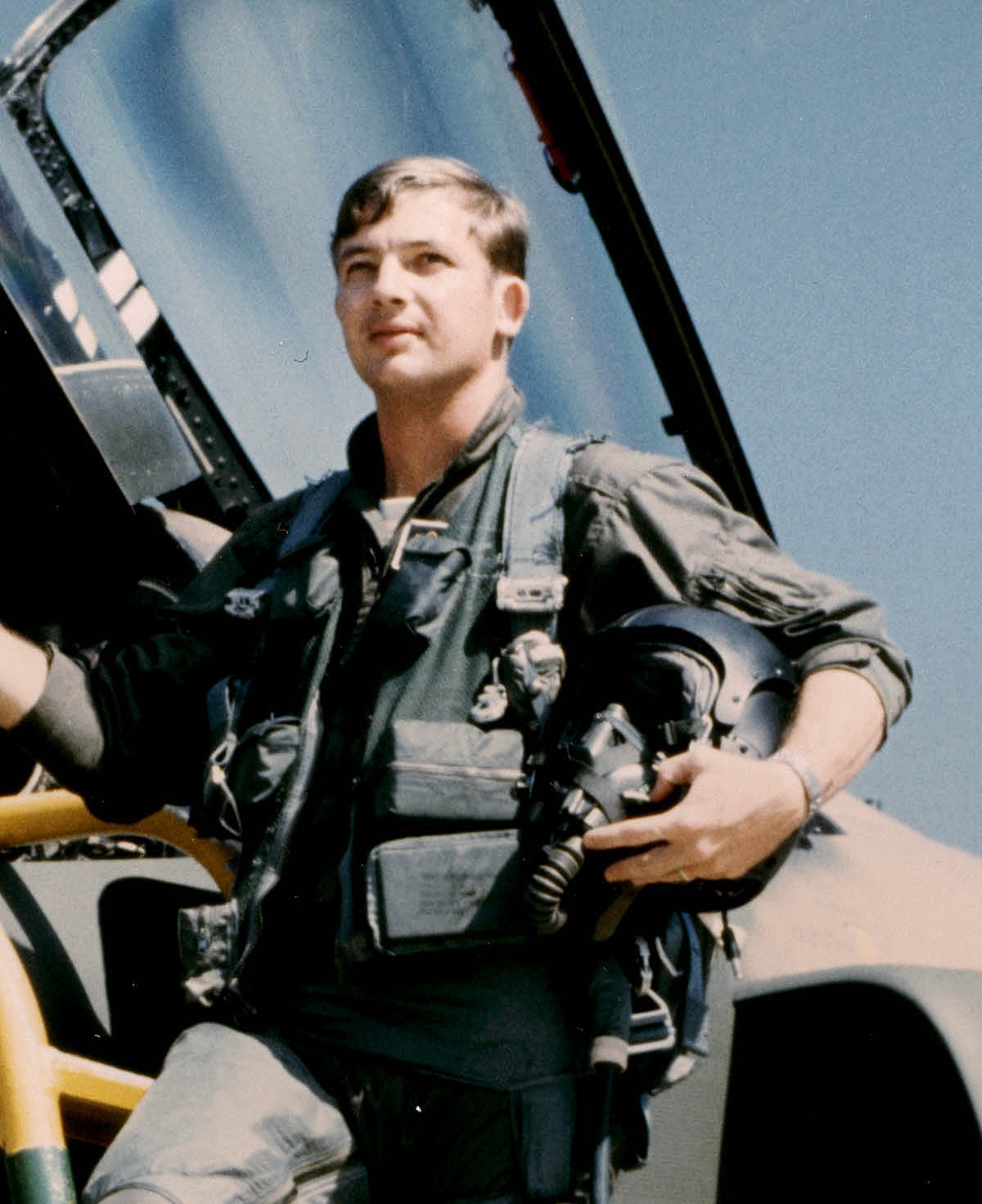 Col. Charles Barbin DeBellevue, USAF (Ret.)Flying Ace
Hosts
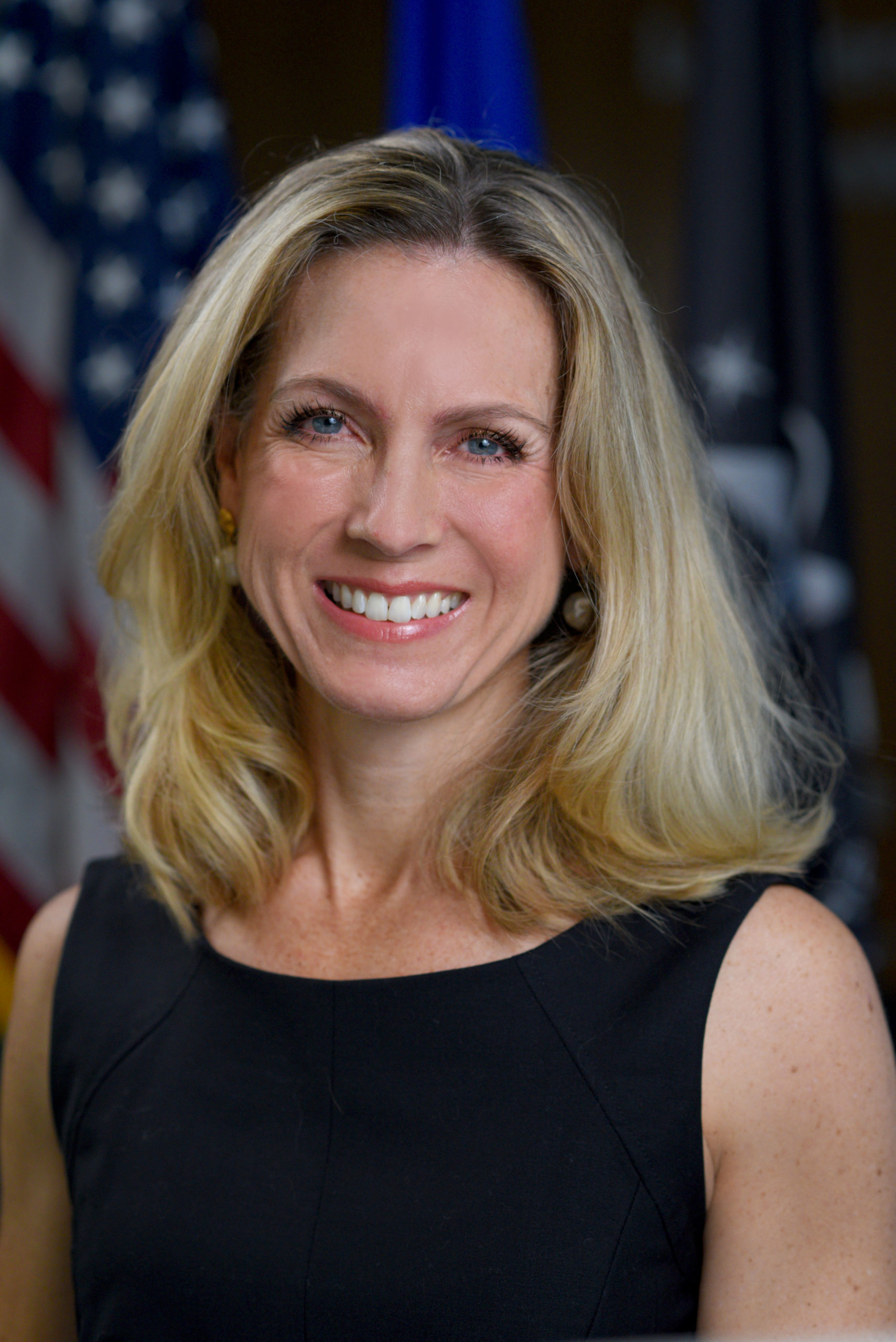 Heather PenneyDirector of Research, The Mitchell Institute for Aerospace Studies
 Tobias NaegeleEditor-in-chief, Air & Space Forces Magazine
Related Reading
Transcript
Heather “Lucky” Penney: [00:00:00] Welcome to the Aerospace Advantage Podcast, brought to you by PenFed. I’m your host, Heather “Lucky” Penney, here on the Aerospace Advantage we speak with leaders in the DOD industry and other subject matter experts to explore the intersection of strategy, operational concepts, technology and policy when it comes to air and space power.
If you think about air combat legends, few names command as much respect as Colonel Chuck DeBellevue. Colonel DeBellevue was a top air force ace in the Vietnam War with six confirmed MiG kills and he was also the first weapon system officer a WSO to reach ace status. Colonel DeBellevue’s combat career included some of the most intense air battles of Operation Linebacker, where every flight in North Vietnam carried extreme risk.
His story isn’t just about personal achievement though, it’s a testament to how the Air Force adapted, innovated, and fought for control of the skies. Colonel DeBellevue recently wrote a piece titled Bob Lodge and the Making of Air Force Vietnam aces, [00:01:00] published in Air Space Forces Magazine. And we’ll link to that in the show notes.
And also for today’s conversation, Tobias Naegele editor-in-chief of the Air and Space Forces Magazine will be my stunt pilot. And I have to say I’m jealous that he was able to have this conversation. It’s a great one that I hope you enjoy listening to. Tobias, welcome.
Tobias Naegele: Thanks, Heather. Chuck, thanks for joining us today.
The story you’ve written pulls back the curtain a bit on squadron life more than half a century ago, but it’s also the really about the difference a young major can make on an entire war effort. It’s the story of Bob Lodge, but it’s also the story of a young captain, Chuck DeBellevue, showing up for combat at a crucial time in history toward the end of the Vietnam War. Chuck, set the scene for us and for the article that you’ve written.
Col. Charles “Chuck” DeBellevue, USAF (Ret.): It was a hard fought war. We were not trained for what we [00:02:00] were doing. I was not allowed to fly against another airplane, only against another F4. So we had to do a lot of OJT. I will tell you that the last thing you wanna do is do OJT in combat. So when I got to the squadron, I had 18 months flying at Seymour. My flight commander had written Joe Kittinger that I was a keeper. All my buddies were in the 13th squadron and they and Kittinger wouldn’t trade. So I started flying almost immediately. I got there the 30th of November, and actually.
Tobias Naegele: This is 30th, November, 1970.
Col. Charles “Chuck” DeBellevue, USAF (Ret.): 72. 30th, November 72, about 1:30 in the afternoon. And when I told the scheduler my experiences, he looked at his watch and said, damn, the afternoon goes have already stepped. You can’t fly today. Okay.
Tobias Naegele: He was hungry.
Col. Charles “Chuck” DeBellevue, USAF (Ret.): Yeah. [00:03:00] And uh, so I started flying pretty quick though. I didn’t fly that day. And, uh, since I had so much experience and most of the guys coming in, most of the backseaters coming in was second lieutenants out of, navs training and then the fighter training. And with no experience, nothing to fall back on. So I started flying the line immediately and by the end of January, or end of December, I had 27 combat missions, seven ’em in North Vietnam.
And we weren’t allowed to fly in the North Vietnam. So don’t ask. And you know, and the war was kind of, initially, it was almost like going to the gunnery range every day. Except, uh, every once in a while somebody got shot down and then at the end of December we lost four airplanes and it started getting serious.
Tobias Naegele: And what so let’s back up just a bit. I think it’s important to capture and understand that when you say you hadn’t been able to fly [00:04:00] against another airplane, you’re really talking about the training that you had been able to do. Prior.
Col. Charles “Chuck” DeBellevue, USAF (Ret.): Correct.
Tobias Naegele: To arriving in country.
Col. Charles “Chuck” DeBellevue, USAF (Ret.): Yes.
Tobias Naegele: And, but you also had quite a bit of flying experience much more than, than the typical lieutenant who was arriving.
Col. Charles “Chuck” DeBellevue, USAF (Ret.): Right.
Tobias Naegele: At that time. Why was that?
Col. Charles “Chuck” DeBellevue, USAF (Ret.): Well, I, when I got out of the training squadron at Davis-Monthan, I was supposed to go to Southeast Asia right then. This was February of 70. And instead I ended up going to Seymour and I spent 18 months with the 335th Squadron at Seymour flying everything that, doing all the missions we, that Air Force can do, but we were not allowed to fly to dog fight against another airplane, another type of airplane.
Tobias Naegele: So you’re really just dog fighting against your squad roommates?
Col. Charles “Chuck” DeBellevue, USAF (Ret.): Yes. So instead of flying against the other airplane, you’re flying just against the pilot. And now I’m better than you are and I’ll prove it. [00:05:00] And I don’t have to worry about the other airplane. We’re equal airplane wise. The Navy prior to 72 developed a Top gun program, so they would give their pilots going to the war, a top off program flying against an A4, a small single engine, light, very maneuver airplane that if you tried to stay with him, he would eat your lunch. They got that training.
Tobias Naegele: Dissimilar tactic.
Col. Charles “Chuck” DeBellevue, USAF (Ret.): Dissimilar combat actic tactics, and it taught ’em how to use the vertical. We didn’t get any of that and it was telling. Two of the airplanes that we lost in December ran outta gas. The gas gauges in the front seat, telling ’em to move and let you, I wanted to see the gas gauge. Two, the other two got shot down.
Tobias Naegele: Now this is another kind of point of interest, I think, is that you’re an ace and you were a [00:06:00] Backseater. You’re a weapon systems officer.
Col. Charles “Chuck” DeBellevue, USAF (Ret.): Correct.
Tobias Naegele: Tell us how you ended up becoming a weapon systems officer, and then how you and the pilots or the WSOs and the pilots work together.
Col. Charles “Chuck” DeBellevue, USAF (Ret.): Well, it started out I got my commission on the 28th of January, 68. And in February I went off to Craig Air Force Base in Selma, Alabama to start pilot turning. I am doing okay and I dunno what happened, but on Monday I was doing good and on Friday I was gone. And it took me a while to figure it out. The F4, the Air Force put two pilots in the airplane. To do that, they had to put a stick in the backseat. That was a good thing. The Navy puts a RIO back there, radar intercept officer. Marines did the same. There’s no stick in the back of a Marine or Navy F4. [00:07:00] So they finally decided, personnel decided that’s a waste of a pilot. So they took the pilots out, which meant the pilot turning squadrons, bases were overproducing. So I wash out, go to nav training, get they were put, starting to put navs in the backseat. So we got a, I think I, we got six F4s and I took one and end up down at Davis Monthan and we go see the class that we’re replacing. And it’s all my buddies from pilot training, they’re in the, they’re the last class of pilots going into the F4 and they were not happy.
Tobias Naegele: They were unhappy because they were backseaters.
Col. Charles “Chuck” DeBellevue, USAF (Ret.): Yep. They, they, in order to, they had to complete a tour in the backseat, then volunteer for Southeast Asia in order to go to a front seat program to go to Southeast Asia in the front seat.[00:08:00]
Tobias Naegele: So when you get to Vietnam and in December 72, you’ve got quite a bit of time. You had actually been helping to train up front seaters.
Col. Charles “Chuck” DeBellevue, USAF (Ret.): Yeah. Uh, in the squadron, you team up with another lieutenant and you take your mission ready check. I got to where I would take a guy to his check ride. As soon as he got his check ride I’d fall back, pick up another brand new lieutenant and take him through his check ride. Finally the CFEs, the standing val guys that were giving us a check ride. When I’d go to start to read, brief the route we were flying. They go, you shut up here. Gave the book to the pilots, said you briefed this.
Tobias Naegele: You were a little practice by then.
Col. Charles “Chuck” DeBellevue, USAF (Ret.): Yeah, we, I’ve heard you two times.
Tobias Naegele: Sometime after that December. Things started to change with the triple nickel.
Col. Charles “Chuck” DeBellevue, USAF (Ret.): Yes.
Tobias Naegele: What changed and how did it, how, how did that [00:09:00] unravel?
Col. Charles “Chuck” DeBellevue, USAF (Ret.): Bob Lodge was our weapons officer and then the wing weapons officer. He was the war planner for the Southeast Asia. For seventh Air Force. So they was always going down to Seventh Air Force to discuss tactics and missions.
Same thing happened during the Rolling Thunder. When Robert Olds got to Ubon, he had to. Come up with a new way of doing things ’cause they, they were losing too many people and they weren’t getting the kills they was supposed to get and it was affecting the guys carrying the bombs, which affects the mission success.
Bob Lodge would go down and start people thinking about what’s gonna happen in 72, because the peace talks weren’t going well. President Nixon was getting a lot of heat, so we figured he was gonna have to put us back into North Vietnam ’cause we we hadn’t flown in North Vietnam for three years.
Uh, Bob tried, started to get things done. The AIM-7 missiles that we used, the Navy wouldn’t use them. There are tube [00:10:00] missiles and when you slam it on the deck of a carrier, they start not working. So our missiles were bolt ons. We used two missiles in the aft missile bins for ballast.
And so we had to get newer missiles that could actually turn. The old missiles were made for bombers. So we started getting improved missiles and improved fusing, improved dog fight mode so they could turn and the missiles stayed on the airplane, 10 rides. If we didn’t use it, they went and took ’em off, took em to munitions, missile maintenance and tweak ’em up, put ’em back on my jet. They certified them so things started to get better.
We got in brand new, AIM-9s AIM-9Js. We used to have AIM-4s, AIM-4. It’s a nice missile if you’re going up against a non maneuvering bomber. But the [00:11:00] recipe to get the missile tuned, I mean you needed a master’s degree to do that. And then they had one that was logic and then they had one that was verse logic different and depending on what missile you had and then it, once you cool the missile to aim for, you had two minutes.
And they expected us to not cool the missile until we got into the fight ready to shoot. At that point, you’re not worried about that, so we got rid of the missiles and got aim, AIM-9Js. And.
Tobias Naegele: So there was a, there was a technology shift.
Col. Charles “Chuck” DeBellevue, USAF (Ret.): A technology shift. Also a policy shifts. It got to and then they brought in a lot of the technology was designed to help us defeat the MiGs. Colonel Bill Kirk, who had two kills with the, when he was with Olds set up T-ball. T-ball was a listening post. They would [00:12:00] listen to the actual GCI operators talking to the MiGs. And then do a real time translation to tell us where they were. We didn’t know what they would, who they were or anything.
They, this was very top secret. They had to read us in so that we would use them. And then they, and then Lodge brought down from Korea, 10 airplanes, 10 F4 Ds, that had a modification in order to read an IFF identification. Friend or foe, like FA does on the MiG 21. And if we got an active return, an any return and could guarantee there’s no other, no friendlies in around him, we could shoot him and never had to see him.
The unclassified code name combat tree was classified. That’s how tight this thing was. [00:13:00]
Tobias Naegele: In reading your article, I was really struck by how much Bob Lodge as a young major is making very significant.
Col. Charles “Chuck” DeBellevue, USAF (Ret.): Yes.
Tobias Naegele: Really strategic decisions. The kind of thing that you would expect that Big Air Force was going to take care of for you. How did that come about? That basically this young guy who’s not 30 yet, right? Is arranging for airplanes to come from different places.
Col. Charles “Chuck” DeBellevue, USAF (Ret.): We were very fortunate to have a wing commander named Charlie Gabriel.
Tobias Naegele: Future Chief of Staff.
Col. Charles “Chuck” DeBellevue, USAF (Ret.): Future Chief of Staff. Great guy. I, when I flew with him, I would’ve gone to hell with him. Not worried about how we were gonna get back. I know he’d try. So he was top cover for Bob. He’d go down to Seventh Air Force with Bob and make sure we were getting what we needed out of the headquarters. Bob got a [00:14:00] phone call from Seventh Air Force, some general at Seventh Air Force says, I wanna try something new.
And after listening to him, Bob says, nah, that’s gonna kill people. We’re not gonna do that. And they got into an argument. How many majors did you know will get in an argument with a brigadier or I guess he was a brigadier. And finally the guy, the general is so frustrated, he hang, hangs up and calls Gabriel.
And Gabriel says, if my captain says, Bob was still a captain at the time, said if my, I guess if my captain says that, that’s gonna kill people and we’re not gonna do it. We’re not doing it. Good day. Yeah. So we had the backing that we needed to get the job done. Gabriel would fly with with us every once in a while at uh.
In fact, when Steve got his second killed, I was in the states on r and r. And Gabriel was leading.
Tobias Naegele: Steve, being.
Col. Charles “Chuck” DeBellevue, USAF (Ret.): Richie.
Tobias Naegele: Steve Richie.
Col. Charles “Chuck” DeBellevue, USAF (Ret.): Yeah.
Tobias Naegele: Who was [00:15:00] who you usually flew with?
Col. Charles “Chuck” DeBellevue, USAF (Ret.): I usually flew with him and uh, I think Gabriel was leading and had a problem with the airplane, so he gave up the lead and Richie got a kill. And I got a lot of grief for missing it, but, my wife had a cabin in Lake Tahoe, and it was one June and it snowed. Tell me I was wrong.
Tobias Naegele: So you, you were in this environment, young guys and mostly in their twenties. Mm-hmm. Putting their life on the line every day. It was competitive. This is a testosterone fueled environment.
Col. Charles “Chuck” DeBellevue, USAF (Ret.): It was. It was. We had a four ship that we, four airplanes, eight people, four pilots, four navs and a spare. We handpicked them all. They flew with us. If you’re on the [00:16:00] wing, you’re on the wing. If you were the element lead, you were the element lead.
You hogged the fight, you made sure nobody got in behind us. It was not the best tactics, but it was the tactics we had to use to keep as many of us alive as could be. And we could trust them. The only time we replaced them was when either one of ’em went PCS back home or we lost somebody. And we never had to replace anybody ’cause we lost somebody.
Tobias Naegele: But your, your your tactics began to shift.
Col. Charles “Chuck” DeBellevue, USAF (Ret.): Began to shift.
Tobias Naegele: Began to now we, and we haven’t talked about, so we talked about the equipment. And we talked about the Navy’s different means of training. But I think one of the most creative things that Bob Lodge did was to get the Navy to help train you.
Col. Charles “Chuck” DeBellevue, USAF (Ret.): Yes. We brought three F 8s in. F 8 is their gunfighter. [00:17:00] And they will say that, that that airplane was the last of the Gunfighters. F 4 didn’t have gun on at the time. So they brought ’em in and they would use the vertical. They were beating us.
Tobias Naegele: And this is, I mean, you’re doing this over South Vietnam, so you’re. You’re, you’re doing it at the end of a mission.
Col. Charles “Chuck” DeBellevue, USAF (Ret.): And after about a couple of weeks, they were still beating us. And so I’m playing with John Madden. We’re going into Hanoi, we didn’t get engaged and the, we’d set it up. So if we didn’t get into a fight as we’re coming out, we’re gonna launch the f 8s and do a training mission. But because we didn’t get close to a fight, we still had our wing tanks.
We didn’t want that. So we got rid of ’em in North Vietnam. And, launch the f 8. I picked them up, I could tell it was the F 8 because I looked at the IFF return. It was, or I guess the radar return. It, it had, it had [00:18:00] suctions in it, like it was a three port code or whatever. And, uh, we were 500 feet coming over the crest of a hill. They were about 14, 15 miles from us. So I called, called the Contact, and they called tally ho. Fight was on, we’d come outta Southeast Asia, uh, out of North Vietnam. So we were all armed hot. Missiles were hot and we dog fighting and it’s very easy to forget that the missile is hot, so don’t squeeze the trigger.
I suspect their guns are hot too ’cause it’s a combat mission for ’em. And we beat ’em. We had, we had solved our training problem. Not totally, but enough to build our confidence up, to keep going into Hanoi. When we went in on the missions to Hanoi, there’s no rescue. The [00:19:00] helicopter cannot get in it. It wouldn’t even try. So if you, if you couldn’t get the airplane out to a safe area to eject, you were gonna be a prisoner.
Tobias Naegele: And being a prisoner was at least as frightening as being killed and shut down.
Col. Charles “Chuck” DeBellevue, USAF (Ret.): Probably more frightening. We had heard about the torture, we knew what they were getting the crap beat out of them. And we knew that they knew who was leading the flights in there. So killing us was a, would’ve helped their cause and we met two guys one day that had flown every day for a month to meet us. And we’re south of Hanoi, well between Hanoi and Yan Bai and our controllers the EC [00:20:00] 1 21 and Red Crown called emerged, which means in on their radars, the MiGs are so close to us they can’t.
Tobias Naegele: Can’t tell the difference.
Col. Charles “Chuck” DeBellevue, USAF (Ret.): Can’t tell the difference, and we don’t see ’em. And we headed northeast for about two minutes, and when we moved in the straight line, we weaved, just kept moving our engines around the exhausts. They couldn’t get behind us. And after about two minutes we, we changed heading to Southwest and I pick up a black fly speck on a white cloud. Fights on.
I signaled to the other three guys that were getting ready to fight was when Steve blew the tanks off the airplane, went to full afterburner and jumped out in front. And shortly thereafter we’re a line of breaths with a brand new shiny MIG 21 going opposite direction. He’s the bait. One of his problems was we’d read his book, we’d read the [00:21:00] Soviet tactics manual.
So this was the bait comes by close aboard, turns away. You turn behind him to get him, and the shooter comes in and shoots you down. It only works if you don’t know what he’s doing. Now the F 4 is not a nine G airplane. If you read the book, it’s an eight and a half G airplane. If you don’t read the book, it’s a 12 G airplane.
It’s all in the stick. And, you, if you roll the airplane to 135 degrees, and bank at 500 knots, stick in your lap. You’ll be going 500 knots the opposite direction in 17 seconds. So we rolled up and waited ’cause we knew there was two. They never flew singles and here comes the shooter. There’s nothing to shoot.
He turns away and follows his lead instead of turning into us, meaning that we’d have to go all the way around the circle to get him. He turns away from us and makes a level turn a delta wing airplane and a hard level turn, bleeds air speed. So he is slowing down. So instead of going all the way around the circle digging, [00:22:00] we cut the circle. Locked onto him.
Yeah. Once you lock on, it takes two seconds for the radar to have good data. Another two seconds. For the missiles to get programmed, you gotta wait four seconds, three and a half seconds. The missiles stupid. So as soon as we the, we had lock started counting a thousand, 1002, 1,003, and I screamed a thousand four. Now the close end fight, Richie is always outside the airplane. Once he gets his eyes on the MiG, he never takes ’em off of him. He needs information. I gave it to him. I gave him information before he needs it. Yeah, we phone together for a lot, so I know what he wants. And airspeed, altitude. Where’s three?
You know, where’s the formations? What’s going on? You know, six is clear. Just keep a running commentary to him so that he doesn’t have to look in. In fact, his front seat radar scope, he put a bullseye map on it. [00:23:00] He didn’t use the radar, didn’t need it. I gave him that.
Tobias Naegele: You doing the play by play?
Col. Charles “Chuck” DeBellevue, USAF (Ret.): Yeah.
Tobias Naegele: Now we talked about being maybe more afraid of being captured. Bob Lodge had developed the tactics. Found the new equipment, employed, the technology taught you guys how to employ it, and he made a decision. What was that?
Col. Charles “Chuck” DeBellevue, USAF (Ret.): When we were flying, there was no rescue the best you could hope for to get take the prisoner. Bob knew that they knew who he was. Bob knew that a good interrogator especially if you don’t have to follow the rules of engagement or the Geneva Convention rules would get information out of him. [00:24:00] To preclude that he figured he’s got to do the honorable thing and not allow them to capture him. And that meant he stayed in the airplane.
Tobias Naegele: And he told you guys that.
Col. Charles “Chuck” DeBellevue, USAF (Ret.): He told his sister that. They knew he was gonna stay in the airplane if he got shot down, and they could not guarantee rescue when he is flying with a Locher, Locher knew. In the F 4, the backseater has , if the front seater ejects, the backseater goes first. The backseater has the option of going by himself or setting it up so the pilot will follow him out if he’s fighting the airplane, that’s how you’d do it.
And Bob did not want that switch rotated. Even in a situation like they got into.
Tobias Naegele: So tell me about that, that mission, Bob Lodge’s last mission and which I think was also your first.
Col. Charles “Chuck” DeBellevue, USAF (Ret.): [00:25:00] My first kill. Your first kill. We’re heading into North Vietnam. We’ve just passed in by and we start picking up MiGs. As we are heading in the MIGS are setting up so that it’s kind of a nothing concrete. Then all of a sudden, the MiGs start heading into us. I had a combat tree airplane and Roger Locher, the Backseater with Lodge had a combat tree airplane. In other words, we could see their IFF systems. We got two, two returns. We figured there’s four airplanes. We’re lagging, as number three, we were lagging a little bit. The MiG was doing, the flight was doing the same. So the, the closest two ship lodge took one. Number two John Marco took the other, and they got two kills. Three or four [00:26:00] seconds later, our guys get in close enough, lock on, lock on at about 17 miles.
Very shortly thereafter, they start coming in range and you gotta start shooting because closing at 1200 knots, they go through the envelope pretty quick. So if I an AIM 7. One of the bad things about the AIM seven is it smokes bad. It leaves a, it’s a hydraulic gas grain generator that ports the exhaust overboard.
And, so it leaves a smoke trail. And the smoke trail climbed up and pointed at the MiG. He was, he was high enough to be leaving a con trail and the con trail did an omega. Why he was looking outta the airplane, I don’t know. So that missile’s gone. It can’t catch him. The wingman, the number of four guy goes by us.
We’re still supersonic. We turned behind him. Steve fired two missiles. One of ’em cut the [00:27:00] airplane to pieces, but, and we’re maybe 6,000 feet behind him and by the time we get up to the debris, he’s in a yellow, dirty yellow parachute. And we’re still supersonic, I think. So he may have had to go to the flight surgeon ’cause he, he’s eardrums, we’re giving him trouble.
And uh, so as soon as we went by him, we turned back. ’cause the two elements. Bob Lodge and his wingman. Us and our wingman gotten separated, so we turned back to the north and as we, we see that Lodge’s airplane, there’s a MiG behind it. There’s looks like smoke coming out of the guns, I guess. And two is yelling for him to break.
Didn’t hear anything, which is not surprising. ’cause once I got on a point and we in inbound to a, a merger and a kill, nothing outside the co cockpit was important. [00:28:00] I over drove the radios, I’m sure Roger did the same. And they had locked, they had gotten tagged up with another MIG 21. This would’ve been the fourth kill for the flight that day.
And Lodge’s and Locher’s fourth kill. And they were too close. To the MiG for the missiles, they had to back up to give the missile spacing.
Tobias Naegele: Backup being slow down.
Col. Charles “Chuck” DeBellevue, USAF (Ret.): Slow down. So when the missile comes off the airplane, it has to go out about a thousand feet or so in front of the airplane. It’s, I don’t know the exact number before the warhead arms.
And so you had to back up enough to let give the warhead a chance to function. And they had 2 MiG 19s teams that came outta the weeds after em popped up, started shooting, and their first indication, I think that they were in trouble, was in the right engine, blew up, took the left engines and rocks with it, and the airplane started flopping around.[00:29:00]
When it, went to the in with the wind and the flames hit, went behind the back canopy. It turned brown. The Locher is getting hot. The, uh, flight suits, we had had two vent holes in the armpit area and he had two burn holes, two, two scorch marks there and where his helmet didn’t meet the collar, uh, his back of his head I think had a scar burn mark on it.
And he says I think I gotta, it is getting hot back here, or something like that. And I think I gotta get outta here. Lodge looks over his shoulders, says, okay, why don’t you then, and shortly after Roger punched out and second or two later, the plane hit the ground and Lodge stayed in it.
Tobias Naegele: You watched the whole thing?
Col. Charles “Chuck” DeBellevue, USAF (Ret.): As much as we could. We weren’t very close to him, but close enough to see what was going on. I didn’t see any shoots. Two, two, who was with him? Didn’t see any shoots. He flipped over a ridge line. The airplane [00:30:00] crashed on the face of the ridge. He’s on the other side. And they’re looking for him in the wrong area.
And the in the seat kit is a, a beeper, a emergency beeper, and it’s tied to the side of the airplane with a lanyard. So when you punch out, it pulls the lanyard, the beepers start. We used to cut those. The lanyards and you go, why’d you do that? Because everybody that knew we weren’t coming home already knew. There’s no use to advertising that you’re been shot down in enemy territory.
Tobias Naegele: So you didn’t, you were really trying to avoid signaling the enemy.
Col. Charles “Chuck” DeBellevue, USAF (Ret.): Yes.
Yeah.
Tobias Naegele: So what became a Locher?
Col. Charles “Chuck” DeBellevue, USAF (Ret.): He had to, his idea was to walk in 45 days, about 90 miles. Nice plan. He walked down to the ridge line in three weeks and he was gonna die there.
Not necessarily die, [00:31:00] but he was gonna, that was gonna be it. He hadn’t eaten in three weeks. He had to drop down into the valley, across the Red River, which is very swift, which means he’d be floating down in front of everybody. They would’ve noticed him. And, he didn’t smell like they did. So he would’ve smelled differently.
It happened, kids were herding a water buffalo and he was undercover with next to the water buffalo. And the water buffalo wouldn’t move. It smelled something strange. And finally, the kids got the buffalo to move before the parents got there. If the parents had got showed up, he would’ve been captured. So he finally got down there, we started flying in the same area again, and he called up one day and said, Hey guys, where the hell have you guys been?
And nobody heard it, but in listening to a mission tape after the mission, he goes, oyster one bravo. [00:32:00] That was, that was his call sign. Bravo be in the backseater. Oyster one flight lead. And they heard him on the in the mission tape. So we sent a plane up there the next day to do a radio search, and he called up General Vaught, the four star running the Air War, canceled the JCS strikes for two days to get him out.
Some, somebody asked the general why he was wasting so much men and materials to get one guy out, and he said, because. When you scheduled us for Hanoi every day, there was nothing worse you could do to us. Court marshal me? I would’ve, I’ll be drunk in 20 minutes. I’m, we’re all always tired. And, so it took us two days to get the thing set up.
The helicopter had two minutes when it got to him, the PJ bringing him up the cable. He said, if, if he’s not American, if he’s not who he says he was. [00:33:00] They’re not putting him back down. They’re cutting the cable when they get him in the air. The helicopter, the PJ gave him, gave Locher a soup can big soup, can full of cookies.
That’s how the cookies came across the Pacific and he’s eating a few and putting the rest in his pocket and the guy says, why are you doing that? I said, you can’t guarantee we’re getting outta here. That’s his food supply. You and when they finally got him back to Udon, they gave him a beer and he promptly threw up and took him to the hospital.
Tobias Naegele: If you were to rewind the clock and say, where would you guys have been without Bob Lodge?
Col. Charles “Chuck” DeBellevue, USAF (Ret.): Well, without Bob Lodge, we would not have had airplanes that had the technology in them to identify targets beyond visual range so we could shoot without ever seeing them. We wouldn’t have had the missiles, the AIM 7 missiles [00:34:00] that had the dog fight modes in them to be able to go up and hassle with the MiG and actually shoot a missile at him and the missile outturn the MiG and hit him. They had improved fusing on him. We, we would still been using the old missiles that had been there for three years. Never, never peaked up, never used just ballast. The AIM 9s we were using, they were good. They were better than theirs, but they weren’t the best. We had things coming out of the pipeline that were another era above what the missiles we had were that could outturn the MiG and hit him. And it was the attitude, you know, if it in a team, if you think. You’re not doing a good job.
You know, it’s like a football team. That’s , we’re all good, positive attitude, but we just didn’t have the training to do what we had to [00:35:00] do. You’re gonna take losses and we did take some losses, but we were able to, with Lodge, we were able to overcome the training shortages that we had, the missile shortages, improved our missiles, improved our everything we had, improved the airplanes and gave us the wherewithal to understand that we could beat them.
The war would’ve turned out a lot different for us.
Tobias Naegele: And it really ties back. You indicated you had a great colonel. He had a great wing commander. But you had a great young officer who had fire in his belly and vision.
Col. Charles “Chuck” DeBellevue, USAF (Ret.): And tenacity and the courage to do what he had to do. Had he not died on the 10th of May, he’d have been chief of staff. I mean, he was that good. Well, maybe [00:36:00] not. He was that vocal too.
Tobias Naegele: Terminal major.
Col. Charles “Chuck” DeBellevue, USAF (Ret.): I doubt major, but maybe.
Tobias Naegele: Maybe terminal colonel.
Col. Charles “Chuck” DeBellevue, USAF (Ret.): Yeah. You know, it’s when you’re the ma main group that’s going into Hanoi leading the pack every day, you do what you gotta do. The rules are the rules, but you do what you gotta do, you know? And like we were talking earlier as a, as a NAV, a weapon systems officer, I wasn’t allowed to land the jet. I could land, I got taught how to land. The year I was there, six NAVs had to land the jets because the front seat has either got hit. One of ’em went crazy. He lost and he was trying to punch him out, and he had to talk him out of doing that and putting the gear down, I wasn’t allowed to refuel.
It’s easier from the backseat when I got in the front seat. Later on, [00:37:00] I was halfway across the pond at night before I saw the lights under the airplane that you’re supposed to use to tell you whether you, where you’re on, on the boom. I never used that. Flat close. I can fingertip. I never fell off the air lead airplane I was in. It’s attitude. And teamwork.
Tobias Naegele: And teamwork. And that I think from your, from your piece is the thing that comes through the most. This is a very tight knit mutually dependent group of men.
Col. Charles “Chuck” DeBellevue, USAF (Ret.): Later on in life I managed, I was a base commander at Misawa and then the installation commander at Edwards. I guarantee you, it’s a team sport. It’s not, you don’t get you, you get to command it all. You got young [00:38:00] airmen. If they don’t like what they’re doing, they’re not gonna be putting out a hundred percent. My job was to walk around. Make sure people were trained to do what they were supposed to do and make sure they were on the team. And when the ORI at Misawa hit it, I was in the middle of a house fire and they recalled the battle staff and I tell ’em, I told ’em, I’m Sunday, my deputy, I can’t, I’m in the middle, I’m busy right now. They go, no, we want all the principals. I said, no, I’m sending my deputy. I can’t get my car out. Anyway. And my job as an incident commander, fire chief, and I were equals. He’s doing a good job. My job was to swap out Scott air bottles on these firemen, young airman, coming outta the burning building with their outta air. It’s team sport.
Tobias Naegele: And leadership sometimes means getting out of the way.
Col. Charles “Chuck” DeBellevue, USAF (Ret.): Sometimes when he’s getting outta the way and they knew that I had their back, that if a [00:39:00] goodie something good came to the group that was a pass through. If it was an aw shit that was mine. I’d figure out what went wrong and fix it.
It’s a training issue.
Tobias Naegele: Did you learn that then? Vietnam or did you learn that over the course of.
Col. Charles “Chuck” DeBellevue, USAF (Ret.): Training started. Training comes in a lot of places. Flying combat. You learn, you do what you gotta do. ’cause when the missiles are coming up, you’ve got two seconds to figure out, well that’s your missile or your buddy’s missile. If it’s moving on your canopy, it’s not gonna hit you. But it sure is scary. If it’s not moving on your canopy, it’s yours. You gotta do something. And if you do it wrong, there’s no number two, you gotta out fly the missile. [00:40:00] And that’s not easy to do. The first time you see one ’cause you see that and you freeze. If you freeze, you dead. You’ve gotta keep your cool, unload the airplane, watch the missile as it commits down, you pull up.
If you do it too soon, it pulls up with you. If you pull up the missile goes under you and it’s gone. Now you look for number two missile ’cause they fire double bang.
Tobias Naegele: Very good. Chuck DeBellevue, America’s last Ace on active duty. Thank you so much.
Col. Charles “Chuck” DeBellevue, USAF (Ret.): Still kicking around.
Tobias Naegele: Keep on doing it. And back to you Heather.
Col. Charles “Chuck” DeBellevue, USAF (Ret.): Thanks Tobias.
And with that, I’d like to extend a big thank you to our guests for joining in today’s conversation. I’d also like to extend a big thank you to you, our listeners, for your continued support and for tuning into today’s show. If you like what you heard today, don’t forget to hit that like button or follow or subscribe to the Airspace Advantage.
You can also leave a comment to let us know what you [00:41:00] think about our show or areas that you would like us to explore further. As always, you can join in on the conversation by following the Mitchell Institute on X, Instagram, Facebook, or LinkedIn, and you can always find us@mitchellaerospacepower.org.
Thanks again for joining us and have a great aerospace power kind of day. See you next time.
Credits
Producer
Shane Thin
Executive Producer
Doug Birkey