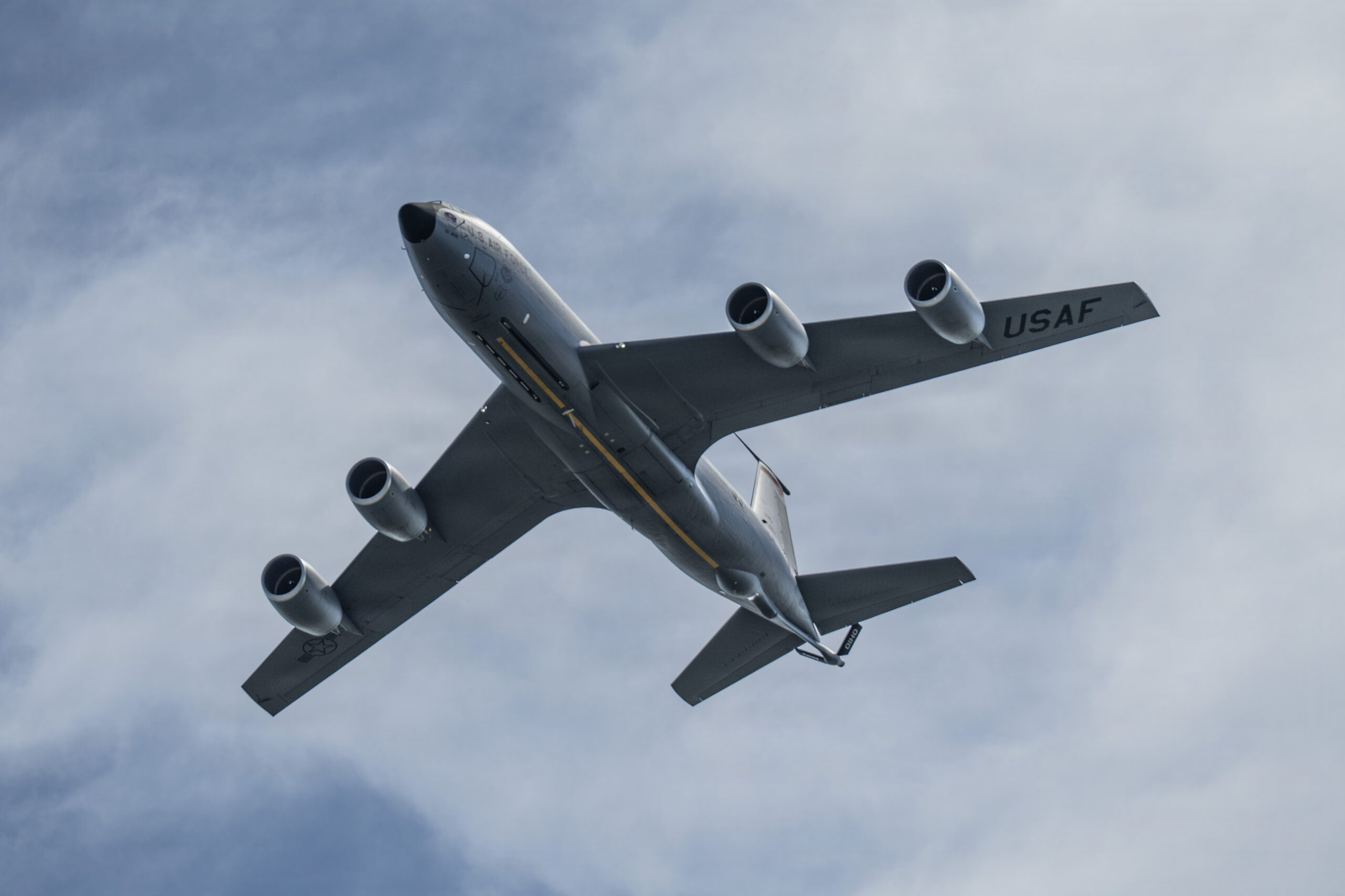
Today the demand signals placed on the Air Force are surging across every combat command. From ongoing combat operations in CENTCOM, to meeting the demand for airpower in other theaters, Airmen have never been busier. At the same time, the service is undergoing a generational modernization effort. At the center of all this action is Air Force Materiel Command. Join us for a conversation you won’t want to miss regarding how AFMC is executing major sustainment and modernization efforts across the force.
Watch
Listen
Speakers
 Lt. Gen. David A. Deptula USAF (Ret.)Dean, The Mitchell Institute for Aerospace Studies
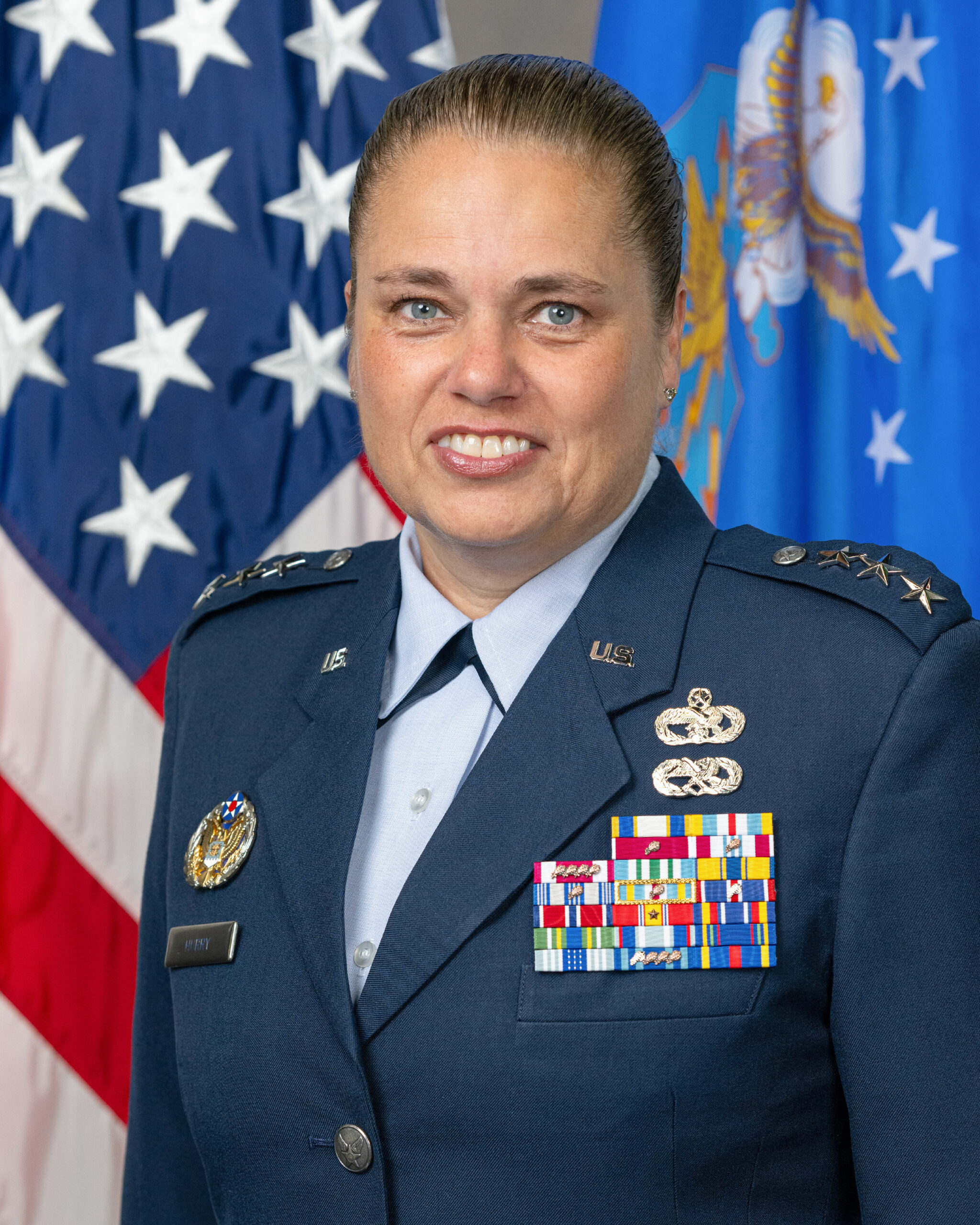 Lt. Gen. Linda S. HurryCommander, Air Force Materiel Command
Transcript
Lt. Gen. David A. Deptula, USAF (Ret.): [00:00:00] good afternoon ladies and gentlemen. I’m Dave Deptula, Dean of the Mitchell Institute for Aerospace Studies, and welcome back to Aerospace Nation. Today, the demand signals placed on the Air Force are surging from every combatant command. Airmen and the aircraft they operate are working harder than ever before. At the same time, the Air Force is actively modernizing across every major portfolio. Air Force Materiel Command is deeply involved in all of this. They oversee acquisition, sustainment, and modernization, and without them, the Air Force would be unable to fight tonight or build the force we need for tomorrow.
So to discuss this incredibly important work, it’s my pleasure to be joined today by Lieutenant General Linda Hurry, Commander of Air Force Materiel Command. General Hurry, welcome to the Mitchell Institute. It’s a real pleasure to have you with us today, and what I’d like to do is turn [00:01:00] it over to you for any opening remarks you might have before we jump into today’s discussion. You got it.
Lt. Gen. Linda S. Hurry, Commander, AFMC: Yeah. Thank you. Thank you so much to you and the entire Mitchell Institute for having me today, and to share a little bit of the story from AFMC. And I am so proud to brag on our team because they’re doing incredible work supporting warfighters all over the globe, and they’re just an amazing organization. And when you talk about operations globally, literally AFMC helps power all of it in some form or fashion, whether we’re talking research and development or sustainment or acquisition or test or the infrastructure. Our bases are a fighting platform, so we have a very significant role to play to literally help all of my brothers and sisters out there to be successful in what our nation has asked us to do.
And so I’m so honored to be able to represent the [00:02:00] 90,000 folks that we have on our team, and our team’s a little bit different than many of the others that are out there. Over 80,000, or 80% of our team are civilian Airmen, and I am very proud to say that they bleed as blue as everyone else, and we quite frankly could not get our mission done without them. And so I’m happy to share our story of what we’re doing for our Air Force so that our Air Force can be super successful.
Lt. Gen. David A. Deptula, USAF (Ret.): Thanks very much for that overview. So let’s explore some topics I’m sure folks would be interested in a little bit further. So, General Hurry, in his letter to the force General Wilsbach highlighted the need to boost readiness while at the same time pursuing modernization efforts across the force.
Could you help us understand a bit how you approach this charge and challenge from the Chief of Staff?
Lt. Gen. Linda S. Hurry, Commander, AFMC: Of course. So first and [00:03:00] foremost, I don’t see them as mutually exclusive. Quite frankly they’re equal. They’re both warfighting imperatives, and if we don’t get them right, both of them, our nation isn’t gonna be successful.
The backbone of being able to do this and trying to balance modernization and sustainment is really the partnership and the full integration of our six centers and the great relationship that we have between AFMC and AQ. We’ve got to have the team fully working together to enable these capabilities for the future fight. But if we fail to do and sustain the forces that we have today, we’re not gonna get to the future. And so it’s critically important that we work the handoffs, and we work together side by side, and that the platforms, no matter what they are, they’re absolutely fully integrated for the full life cycle.
And, I’m very proud to say that the team is doing a great job. There are some strains right [00:04:00] now in terms of current year readiness. We’ve been tasked globally. We’re working really hard to get after current year readiness, but at the same time, we cannot take our eye off the ball of getting after modernized weapon systems so that we can be successful in a future fight.
Lt. Gen. David A. Deptula, USAF (Ret.): Very good. Now, we often speak about the operational demand placed on our pilots, but the growing demand for airpower is also acutely felt by our maintainers. Could you talk a bit about how you and your team are stewarding this critical maintenance community?
Lt. Gen. Linda S. Hurry, Commander, AFMC: Of course. So I’ll take it from the lens of our depots right now and then I’ll touch a little bit on what General Bell and the A4 team are doing from the blue suit maintainers.
But from a depot perspective, for our three depots at Warner Robins, at Tinker, and Hill, obviously our depot artisans are the backbone of that [00:05:00] operation. And honestly, our focus right now is trying to take care of them, make sure they have the tools that they need, make sure we have the right manpower at the right places and then trying to make sure that we are as efficient as we possibly can with their time.
So back with our depots. So one of the things that we’re really focused on right now is hiring our depot artisans and our maintainers there. Right now, our Sustainment Center’s about 2,600 billets short, but we’re hyper-focused, not only at the depot but throughout AFMC on our hiring activities. Holistically, AFMC’s got about 8,200 vacant billets right now. That’s maintainers, that’s engineers, that’s contracting professionals, you name it. And so what we’re trying to do is do more targeted hiring activities and streamlined hiring activities. And what I mean by that is, [00:06:00] what if we could actually have an hiring activity and have all the professionals in place that we can actually give them a temporary job officer, offer, excuse me, right there on the spot. That has seen a tremendous benefit for our hiring activities, such that we’re actually able to get our folks hired on average down to about 35 days from the start to onboarding, which is a huge improvement, and we’re able to bring folks in. The other thing that we’re looking at doing right now is how do we get after specific group retention benefits, targeted incentives so that some of the critical skillsets, we can bring them into our Air Force team to make sure we’ve got the right artisans to care for some of these airframes that are older than probably most of us on the line.
Lt. Gen. David A. Deptula, USAF (Ret.): That’s really fascinating. The other thing I wanted to, it’s a bit of a follow-up, but [00:07:00] how are you seeing maintainer retention play out given that the civilian world’s also experiencing a severe aircraft maintenance shortfall?
Lt. Gen. Linda S. Hurry, Commander, AFMC: Yeah, I think there is a global need for maintainers. There’s a global need for engineers. Again, one of the things that we’re really focusing on are our group retentions, some of the targeted incentives, and then just creating the sense of purpose and the fan- sense of care for the team.
You can’t beat the mission that we have here. How many times do you get to say you’ve gone out and generated a B1, or that you were able to recover a B2 or an F-35 or pick an airframe? Or to say that, “Hey, we just took a KC-135 and tore it down to its ribs to build it back up again to send it back into the fight.”
The sense of purpose, the sense of mission, that is absolutely critical. Now, don’t get me wrong, last year was pretty tough. We [00:08:00] started the year with a shutdown, we went into the furloughs that we had to do. That was tough, but what we’ve tried to do is combat that to make sure our airmen know that they are valued, that they contribute to the mission.
There is no more important mission, and because of that, we’ve actually been able to see some pretty decent retention rates amongst our maintainers. We’ve got some work to do. We absolutely have some work to do. The other thing, the reason why I can say that we’re starting to see more in terms of retention, we’re building back that trust and confidence in our civilian workforce, is we’re giving them a voice in how we can streamline our operations.
And we talked a little bit about readiness and talked a little bit about modernization. In the past we would think of our depots as Tinker, Robins, and Hill, and we would just have a depot line. That doesn’t mean we can’t create a speed line for a new modernized program, and we can do that.
Those ideas are coming from our airmen. The other thing is you [00:09:00] think of our depots as those three locations. That doesn’t mean we can’t put the depot capability forward, and we’ve seen in recent operations that we actually take some of these maintainers, push them forward, and they can see what they’re doing with a direct impact to CENTCOM operations or operations around the globe, and it really, really makes a difference. The sense of pride, the sense of purpose, the sense of commitment to our mission has really helped some of our retention.
Lt. Gen. David A. Deptula, USAF (Ret.): No, that’s great very insightful. Now you’re working to rebuild readiness at the very same time we’ve seen combat operations grow. We were chatting about this before the official start here. And sustaining frontline ops is obviously the priority, but we still have to invest in a total enterprise. So w- how do you strike that balance?
Lt. Gen. Linda S. Hurry, Commander, AFMC: Yeah. I focus on both, and we try to… we don’t have a [00:10:00] choice. We absolutely have to balance the two, and because if we do not focus on current day readiness we’re not gonna be able to fight a future fight. And the future fight’s lost before it even begins. And so what I wanna make sure that we’re doing is that we’re really trying to balance both. So what I mean by that, okay, if we’re gonna build readiness today, where do we position our assets? How do we make sure we’re procuring the right types of things? We’re setting the figurative theaters. What’s our global positioning strategy? How do we push things closer to the point of need so that when our airmen go down range and they happen to need something, it’s close, and we don’t have to mitigate the distance challenge. It’s closer, we can turn jets faster, we can get them back up in the air, which is the safest place for them.
And yes we’re trying to do that. The other thing is we’re trying to change the entire focus of our command from a peacetime efficiency [00:11:00] perspective to a wartime effectiveness. In the past, we had to be efficient. We had certain dollars. It was, just-in-time logistics. That’s not gonna work in combat operations. Gone are the days where we can say, “Hey, I’m gonna buy 100 of these and put them on the shelf,” or excuse me, buy 100 and just hand them out one month at a time. That does nothing for our commercial industry. They need a constant demand signal, and we can’t just rely on just-in-time distribution to get things to the hands of our warfighters when they’re in combat operations.
So, we have got to be able to build our stockpiles, we’ve got to be able to position assets appropriately, and that’s really where a lot of our focus has been, in appropriately setting the theater and thinking differently about how we do logistics.
Lt. Gen. David A. Deptula, USAF (Ret.): I can’t tell you how happy I am to hear you say that. For so long the department [00:12:00] focused on commercial practices, if I may. And just-in-time delivery might work great for FedEx, but I recall back when I was a commander in the field, I didn’t want just-in-time delivery. I wanted mountains of munitions stockpiled so that I could grab them when I needed them, and I wouldn’t have to worry about running out. So back to your point on building up those stockpiles. It just extraordinarily important. And you’re emphasizing that its effectiveness that’s important in the military, of course you wanna do things the smartest way and efficiently, but its effectiveness at an endgame is most important and ultimately allow us to accomplish the mission.
Okay, enough editorial comment. Let me help you with the…Go ahead.
Lt. Gen. Linda S. Hurry, Commander, AFMC: Yeah. No, I was just gonna say I completely agree with you. The folks that are downrange that are jumping into the bunker, they don’t care how efficient something got there or how many pennies we saved to do something [00:13:00] like that. They wanna know that when they get out of that bunker they’re gonna have the parts so they can go turn the jet, and that they are gonna be safe.
Lt. Gen. David A. Deptula, USAF (Ret.): Amen.
Lt. Gen. Linda S. Hurry, Commander, AFMC: We’re changing the mindset. We’re literally changing the entire culture of AFMC right now to get into that warfighting mindset. One of the things that when I got, selected to be into this seat, the chief asked me, he goes, “We need you to operationalize the command.” How do you get on a wartime footing so that we’re the enablers? We literally provide capability to every other MAJCOM out there. If we aren’t on a wartime footing, we’re not, we’re doing a disservice to our teammates that we’re there to support.
And so we’re completely changing the mindset. The good news is it’s working and it’s great. And everybody can see themselves in the fight. And the other thing, when I talk to our airmen out there, I’m like, “Please do not put your particular value on how close you are to the pointy end of the spear.” Because everything we do in this command enables the [00:14:00] warfighter. Every part of the command, I don’t care whether you’re an acquirer, a tester, or a research and developer, you, your skillset provides capability so that when we send our airmen downrange, they come back home.
Lt. Gen. David A. Deptula, USAF (Ret.): Yep. Here’s a bit of a follow-up that.
Lt. Gen. Linda S. Hurry, Commander, AFMC: Okay.
Lt. Gen. David A. Deptula, USAF (Ret.): I apologize for how obvious the answer is, but, it’s always important to hear a leader like you reinforce it, and that’s how important is it that Congress pass the wartime supplemental, reconciliation, and pass a regular budget on time?
Lt. Gen. Linda S. Hurry, Commander, AFMC: Yes. Unbelievably critical. It’s paralyzing, quite frankly. We’ve gotta have predictable, we’ve gotta have on-time funding. Quite honestly, it’s the bedrock of readiness if we can’t, if we are continually operating under a continuing resolution. So yes, we needed, we need to put long-range contracts in place. We need to do our new program starts. We have got to do [00:15:00] long-term contracts, and a lot of that is really hard when we have unstable budgets. Yes. I don’t know how else to say it. And then actually, we’ve got a whole ton of industry partners on the line. It’s very difficult for our industry partners as well. If we don’t have stabilized budgets we’re creating whiplash. What’s your demand? Is it consistent? Is it not? It’s not fair to anyone. And then not only are we not effective, we’re not efficient either. Because if you think about it, if we lose budget and we’ve got contracts in place, but all of a sudden we can’t spend it, by the time we actually execute we’ve lost buying power because the cost may have escalated, or there may have been inflation, or some other event has happened.
So, consistent budgeting would be a dream come true.
Lt. Gen. David A. Deptula, USAF (Ret.): Thanks very much for that. Particularly the emphasis on just how important those things really are. On the subject of doing things smarter given the [00:16:00] demands that you’ve discussed that are placed on your team you have mentioned the need to do things smarter across your different competing portfolios. Could you elaborate on what right looks like in this regard, and how you and your team are devising, new ways of addressing these issues?
Lt. Gen. Linda S. Hurry, Commander, AFMC: Of course. Our kind of marching order is make better use of our airmen’s time. Make better use of every dollar that we have. Use technology to put in the hands of our airmen so that our airmen do only the things that our airmen can do.
And so we’ve got a couple of different things that I wanna share with you. Some are not new. First and foremost attacking our constraints. Most folks know about the concept of theory constraints. Everything we do in this command is a process. So if we can mitigate the constraint in some process, we increase the throughput of whatever it is.
And so the teams have been challenged. In fact, it’s one of our priorities [00:17:00] to apply theory of constraints principles to do things in a smarter way, to get the white space out of our processes. And if you think about with what we’re doing with acquisition transformation, a lot of those authorities get the white space, get the bureaucracy out of the processes so that we can do things faster, and we can deliver capabilities to the war fighters faster. Same sort of concept. So, application of theory of constraints.
Next one. I have the honor of leading the research lab. There’s 3,000 PhDs in there. We can capitalize their collective ingenuity to do things in a smarter way for our Air Force. Let me give you an example. LO maintenance. LO is a pain in the butt to maintain on any of our platforms. I bet you our scientists can come up with new and improved ways to help maintain our LO in a much better way. And so they [00:18:00] are in fact doing that. We also know that canopies are a problem. They’re also helping us with our canopies. And so the, the cool thing about that is giving our airmen the ability to drive change, to use their collective ingenuity to meet an Air Force mission.
Here’s another one for you. You’ve probably heard of Ultra. The low-cost ISR platform that’s out there. That was developed by our research lab and their team to meet a wartime requirement, and they’re like, “Hey, I think I can go fix that.” And so yeah, we’ve got it in our lab. But I will tell you, every airman out there has been charged and empowered to go after and do things smarter.
It was really cool. I got to go visit out to Langley Air Force Base last week to a supply chain ops group. And in the course of one of the presentations, one of the young airmen comes up to me and goes, “Hey, ma’am, let me show you this thing that I coded,” because in his spare time, he took up coding. [00:19:00] And it saved hours upon hours of the processes that he was doing to help run the collective supply chain and get parts wherever they needed to be.
But our airmen are taking it upon themselves to do things to make things better than yesterday, and quite frankly, it’s fun to watch. The other thing I will tell you we’ve got super intelligence. We’ve got quantum computing. In the past, we have been grossly inadequate, I’ll call that, at our ability to forecast.
We’ve got quantum computing capabilities, and if we do quantum optimization, we can actually figure out the best parts by repair for our entire supply chain. And we’re using that right now to make sure that we’re getting after the right parts for the right aircraft, and we can in- ingest or increase readiness as much as we possibly can, all through quantum computing.
Never before had we [00:20:00] ever thought about using those types of capabilities, but it’s working, very well all throughout all of our six centers.
Lt. Gen. David A. Deptula, USAF (Ret.): No, that’s fascinating. I was gonna ask you about how you’re leveraging new technologies like AI to help address some of the sustainment and readiness challenges that we face. You mentioned quantum computing. How about AI? How are you guys tapping into AI to, to help as well?
Lt. Gen. Linda S. Hurry, Commander, AFMC: Literally every single one of our centers is working on AI, and we’re working with our headquarters EN team to focus on AI. I’ll give you another example. There’s a system right now called PANDA out there. It’s called Predictive Analytics for Decision Analysis, I believe. Think it is an AI tool to get after predictive maintenance. It’s great. Everybody’s heard of CBM Plus, Condition-Based Maintenance Plus. If we can actually put this into a system and predict where the next [00:21:00] failure is going to be, and then link it with the supply chain so that the parts are actually available, we can optimize those precious hours of our maintainers.
We know our aircraft are getting older, but if we can use the PANDA system, and we are in fact using it, we can predict when do we have to take a jet down, and we can actually control our own destiny a little bit. And so that is but one example. Another example, the throughput of the depot. We’re using a super intelligent type of tools so that we can smooth flow operation or aircraft through the depot. We can smooth flow work. We can figure out where we can do concurrent work, just so that we can get the throughput going and we can get more jets out on the field. But literally every single center are using AI and super intelligent types of capability because we need to.
Lt. Gen. David A. Deptula, USAF (Ret.): That’s great to hear particularly the the predictive piece [00:22:00] ’cause that obviously precludes a potential catastrophe happening if you didn’t, if you didn’t catch it in time. Related topic, but we hear a lot about the industrial base straining to keep pace with new aircraft orders but we also need companies throughout the industrial base to produce spare parts at the speed of need, particularly for some of those older airplanes that we don’t have full up manufacturers anymore. So how are we doing on the spares front?
Lt. Gen. Linda S. Hurry, Commander, AFMC: Honestly we’ve got a lot of work to do with spares. Right now, if you just look at holistically the age of our aircraft, and I’m just gonna set the stage a little bit on the age of our aircraft and where our supply rates are right now. But as the, the big bombshell, we’ve got a $14 billion hole in spares.
So that, that’s kind of it in a nutshell. But why? On average, the average age of our fleet’s sitting just above 31 years old. Over 50% of [00:23:00] them are past their expected service life. The amount of supply, the supply rate over the past five years has increased about 80… 87%. And so the more we can put the parts on the shelf, the better use of the mechanic’s time we can have, the more readiness we’re gonna have.
And one, we have got to get money for spares, and then two, we’ve gotta get those spares on our shelves, and then out to where our mechanics actually need. Now, there’s a couple of different things we’re trying to do to get after that, because, if I just get a windfall of $14 billion, we don’t have the industrial base to catch that.
And so we’re gonna have to do it in an intelligent manner. And so there’s a couple different things we’re trying to do to get after that. First and foremost long-term contracts. Keep doing contracts one year at a time is in a highly inefficient way to do things, and it’s not helpful for [00:24:00] industry.
So how do we put long-term contracts in place? The other thing is we’re trying to work together to decouple modernization and regular depot. And so since we’re trying to spread those out a little bit, how do we get through so that we’ve got depot speed lines for modernization or and regular depot lines, and then we’re trying to get line-side delivery of the parts so that our mechanics can stay on the jet.
Hey, if I’m short mechanics, I need the best use of their time. I need them turning wrenches. So we need those parts, we need the investment, and we need them line-side delivery so that mechanics can be turning their wrenches, ’cause that’s the best place for them. And oh, by the way, that’s where they’re their happiest, and then they stay.
Lt. Gen. David A. Deptula, USAF (Ret.): Here’s a related question for you that there, obviously there have been many news stories that highlight F-35s mission [00:25:00] capable rates being pretty high for operation Epic Fury. Obviously those jets are prioritized for spare parts. And my question to you is, are there lessons we should take from this when it comes to investing more for spares for the entire enterprise?
Lt. Gen. Linda S. Hurry, Commander, AFMC: Yes, and that it’s a very clear indication that the FAD codes and the prioritization codes enable those parts to go forward into the operational theater. Because even though the rates and the readiness rates did great over in the theater, I gotta tell you the jets that were not there were not so hot. And we were struggling mightily in many of the different platforms with the collective S rates just because we haven’t had the ability to fund them the way they needed to be in the past. So, getting the right parts is critical, and it’s a direct correlation to your readiness. If we don’t have the parts, we don’t have ready aircraft, we don’t have the readiness our nation needs.[00:26:00]
Lt. Gen. David A. Deptula, USAF (Ret.): Spot on. We at Mitchell Institute here have been singing that song for a while, and we’ll keep doing so. Let me switch gears for a little bit, talk a bit about acquisition. There’s obviously a lot of change happening in the Air Force when it comes to modernization.
You talked about it a little bit earlier. In that regard, could you explain how the creation of Program Acquisition Executives, PAEs, and the Direct Reporting Program Managers, or DRPMs, have impacted Materiel Command’s role in fielding new aircraft and systems?
Lt. Gen. Linda S. Hurry, Commander, AFMC: Yeah. So it hasn’t really impacted us because we’re all in it together, so there’s no net change. The ultimate the ultimate reason for all of those changes was to see what we can do to deliver capability faster. We’re trying to get speed into the system, trying to get agility into the system, trying to make smart decisions and smart risk-taking. [00:27:00] But the way we’re trying to do it is, when I said we’re trying to get the white space and the bureaucracy out of the systems, what we’re trying to do is trying to give authorities to the lowest level so that they can make decisions faster, and then we can de- put capability in the hands of our war fighters that much faster, and that’s actually what we’re doing. With acquisition transformation there, there hasn’t been a significant organizational change for AFMC. Life Cycle Management Center, Nuke Weapons Center are still part of AFMC. Yes, they take their guidance from AQ, always have. The acquisition authority comes from AQ. They are also taking some guidance from an OT&E perspective, but we’re working side by side to fully integrate all six of the centers so that we can provide capability, ’cause it’s not any one center or another.
But what I can tell you, it when we’ve lowered some of the authorities… I’ll give you some examples with contracting authorities. We had contracting [00:28:00] authorities scattered from the PAE all the way up to SAF/AQC. And if we could take some of those authorities and move them closer to the PAE so that they can turn and make decisions faster, and we literally did that.
We literally lowered some of those authorities, about 80% of the authorities, down to the lowest level, and it’s been working great. And so some of the airworthiness authorities, some of them were coming to me. I don’t necessarily need to be the one to make the airworthiness authority. We can give that to General Voorheis.
If there’s a way that we can remove a layer and it makes sense Then let’s do that. And that’s exactly what acquisition transformation is all about, just delivering capability to the warfighter faster and us working all together. Where I’m trying to balance it is that when we put these rules in place, is that we learn from them, and maybe some of these rules can apply to the Sustainment Center or the lab or something like that. But we [00:29:00] need to make sure that it’s consistent across all six of the centers, because our Airmen, they’re interchangeable, and they move from one center to the other. And so we wanna make sure we’ve got great opportunities for all of our team to drive readiness
Lt. Gen. David A. Deptula, USAF (Ret.): No, that’s great. Now, let’s talk a little bit about modernizing the existing force, whether we’re talking about the B-52J or upgrades on the air mobility inventory. Obviously the Air Force is busy investing in its existing inventory. Are the organizational changes tied to acquisition affecting AFMC’s role in these efforts?
Lt. Gen. Linda S. Hurry, Commander, AFMC: No, not really, because our role is very, has been very consistent. We’ve got a role in modernization and current year readiness. And so we’re working hand-in-hand. If anything, we’ve emphasized more integration amongst all of the teams. So if there’s a modernization program in one of [00:30:00] the programs, making sure there’s good connective tissue with the Sustainment Center making sure that there’s good connective tissue with installation mission support, so we’ve got the facilities needed to be successful in the modernization effort.
Making sure test is fully on board with a full test plan, and they’re right there on the ground floor so that when we’re coming up the new test plan, we can deliver each of the capabilities at a speed of relevance. And so I don’t think acquisition transformation has hurt anything in any way, shape, or form. Counter to that I believe we’re delivering capability faster because of it.
Lt. Gen. David A. Deptula, USAF (Ret.): Very good. Let’s shift gears a bit and talk about operations while under attack. It’s been in the news, real world ops are showing that our forward deployed air bases really can’t be treated as sanctuaries anymore. What’s AFMC doing to adapt to this new operational reality?
Lt. Gen. Linda S. Hurry, Commander, AFMC: Yeah. So first I’m gonna start with [00:31:00] training our Airmen before they even go downrange. We own the combat support training ranges, so all the Airmen come through Air Force IMSC and go through combat skills training, go make sure we’re good with TCCC, readiness airman training, you name it. We’re helping make sure our Airmen are ready to go downrange. That is part of our responsibility through IMSC.
And then we also have capabilities that are successful that are important for downrange. Aircraft battle damage repair. Not a capability I wish we had to have but it was critically important during the first few months this year.
So coming up, making sure that I’ve got very skilled maintainers, very skilled engineers so that, God forbid, our aircraft get hit, we can patch them up, get them home, get them back into the fight. And so those are two types of things that we’re going after.
Another one, point defense. [00:32:00] Making sure that our installations can be protected. So our lab is coming up with various capabilities to test in terms of counter-SUADs. What can we do? What works? What doesn’t work? Our test organizations are running like battle of the drones to try to make sure that we have the ability of how to, how we could potentially take down these assets, and we’re doing that with our joint brothers and sisters.
And then how do we get that in partnership with Air Combat Command, who’s got the lead on point defense now, how do we get standardized TTPs written in place? And so there’s a couple of things that we’re doing there.
The other thing I will highlight is that we’re really looking at how we can harden our systems. What if an adversary gets into some of our systems? Right now, the supply system is on the low side. The distribution system is on the low [00:33:00] side. Some of our maintenance systems are on the low sides. So how do we look now to harden those systems to protect them from a future operation?
But the last thing I want to touch on is one of our big initiatives is we’re gonna stand up the Air Force Logistics Operations cell. So one of the lessons that we learned in CENTCOM operations in the spring was that we were doing a whole lot of things through what I like to call swivel chair operations and a whole lot of phone calls, and we can do better than that. We need to connect to Maven. We’ve got to connect to all these different systems so that we can better link the supply chain, the distribution networks, the folks that are downrange, so that we can provide capability forward faster. And so the team is really leaning in on all of that to make sure that we can help guide from a logistics and sustainment perspective and enable whatever operations, whether it’s combat [00:34:00] operations or humanitarian operations for that matter.
Lt. Gen. David A. Deptula, USAF (Ret.): No, that’s great. Related, what about logistics under attack? Flowing material to the force can no longer be treated as just a commercial just-in-time enterprise as we talked about earlier. Any comments on that?
Lt. Gen. Linda S. Hurry, Commander, AFMC: Yes. So that’s where… So we’ve got an entire effort where we’re looking to help set the theater, and it’s called GENUS, and we’re trying to put… so a global enterprise for universal sustainment. So building on the concept of our three depots don’t just have to be at Tinker, Robins, and Hill. What if we would take some of those capabilities and push them forward? We did just that in the spring. How do we mitigate the time-space-distance challenge, and how do we turn jets and get them up faster? Maybe we can do it by taking our maintainers and moving them forward. And so that’s some of what we did. We sent some capability to places like Mildenhall and [00:35:00] Lajes and other places so that we could put capability there, and we could get the jets, turn them, get them back into the fight. And doing that and thinking through it when folks aren’t shooting at us, that’s where we’re trying to lean into this.
The other thing is what does our surge capabilities look like writ large? And I would ask industry, what do your surge capabilities look like? Our Secretary of War is talking about our arsenal of freedom, and we cannot do what our nation needs us to do without industry having our back.
While we’re doing everything we possibly can from the organic industrial base, we need to make sure we’re building those capabilities in the defense industrial base as well, so that when we push capabilities forward, they’re at the point of need, and our Airmen aren’t wanting for something to be successful in whatever endeavor we have given them
Lt. Gen. David A. Deptula, USAF (Ret.): Awesome. Now we alluded to it earlier, but [00:36:00] funding is critical to solving our sustainment and readiness challenges. Here at Mitchell Institute, we’re really pleased to see that Congress is pushing for multi-year procurement of the F-35 and the F-15EX. Could you explain why this is so important, and whether multi-years like this should be expanded to things like spare parts or other key items?
Lt. Gen. Linda S. Hurry, Commander, AFMC: Yes, absolutely. So nobody wants an inconsistent demand signal. If you’re gonna come up with a production line, you don’t wanna produce five aircraft one year and 20 the next. It’s inefficient use of manpower, it’s inefficient use of your facilities. That’s the same thing for parts. You have got to build a consistent demand signal, putting things on contract for multi-year contracts, and then, oh, by the way, having multiple parts on the same contract, multiple planes on the same contract. It’s better, so it [00:37:00] reduces overhead. It, a lot of time, reduces the amount of over… costs for the particular parts because you’ve got a greater market basket on a particular set of contracts. And it works better for not only the customer, in our case, but definitely the supplier. It also helps with second and third-tier suppliers so that they can understand what their workload is gonna look like into the future.
The one thing I would say, though, is when we have all these different platforms and we go to potentially retire them, or if we do a multi-year contract for some of these bigger airframes, we have to make sure that it’s not just the airplane. We have to make sure that it encompasses the fully burdened cost of the platform. So it’s great that I get an airplane, but I need the support equipment, I need the maintenance, I need the spare parts, I need the tech data. I need everything else that goes along with [00:38:00] it not just the airplane.
And so I’m thankful for lots of airplanes, don’t get me wrong, but I need the rest of it too.
Lt. Gen. David A. Deptula, USAF (Ret.): I think we’re, just to use an example the audience might get. We’re seeing exactly what you said play out in action with the F-16 force, the small, very small F-16 force in Ukraine. They’ve had a dramatic impact because of the absence of the sustainment, the maintenance, everything that you’ve been talking about, and we certainly don’t wanna see that happen to us.
Now, as the Air Force is able to retire some of its older aircraft as newer ones are coming online are you seeing benefits to your O&M budget?
Lt. Gen. Linda S. Hurry, Commander, AFMC: So I’ll be honest it’s not a net benefit to the O&M budget until you actually get rid of the entire fleet. Because if I’ve got a fleet of 100 aircraft and they allow me to retire 50, I still have to have a [00:39:00] program office, I still have to have a depot, I still have to have a supply chain, I still have to have maintainers.
And oh, by the way, if that is while we’re bringing on another platform, my O&M requirements are actually higher because I’m maintaining the old fleet plus the new one. And so we’ve gotta be very careful in how we transition from one platform to the other so that we don’t overburden O&M and the maintainers and everyone else. And so we gotta be very careful about that. So didn’t totally answer your question, but we have to proceed with caution.
Lt. Gen. David A. Deptula, USAF (Ret.): No, actually it’s a great answer because people don’t really think about that. So the way, you describe that I think is very illustrative that it’s not that big of a benefit until you get rid of the whole fleet. So very good. Thank you for that.
Now the Air Force has been making a, as all the services have, making a major push for open mission systems to avoid vendor lock. Could you talk to us [00:40:00] a bit about how this will improve sustainment?
Lt. Gen. Linda S. Hurry, Commander, AFMC: So I think it’s gonna improve readiness, it’ll improve sustainment, it’ll improve all parts of a platform. One, because if you’ve got a system and it, and there’s an open architecture, and let’s just say one part of it fails. If you’ve got multiple options, multiple other sources of capability that can plug in, your readiness will increase. It also drives down the cost because you’ve got multiple vendors competing to do that.
From a pure readiness perspective, you always wanna have multiple capabilities on the shelf so that if I’ve got one piece of a system that breaks, I can just plug in another. And it’s almost I don’t wanna say Legos ’cause that’s gross oversimplification, but that’s essentially what we’re trying to do, such that each particular block, building block has a capability. If it fails or if it [00:41:00] gets compromised or if we just get something better, we plug it in and all the systems work.
The other thing that’s good about open system architecture is it generally can apply to multiple different platforms. And so it may not be specific for one airframe. You may be able to use them for two, three or four. And again, then you get the cost-benefit analysis of having cross support for multiple platforms.
Lt. Gen. David A. Deptula, USAF (Ret.): Great. Appreciate that insight. Now it, the recently conducted AFA conference here on Air, Space & Cyber, you mentioned that Air Force Materiel Command standing up the Air Force Logistics Operations Center. What were some of the motivating factors behind your decision, and what challenges will this new operations center help resolve?
Lt. Gen. Linda S. Hurry, Commander, AFMC: Yeah. One of the things is we wanted to have greater visibility of the risks in the system, greater visibility of the movement of assets and quite frankly, [00:42:00] literally connecting the entire logistics system, not just the Air Force side, but not just the Air Force portion of the supply chain, but connecting to DLA, connecting to the distribution systems with TRANSCOM, TACC, or the 618th AOC.
That is what we are trying to connect, and we don’t have a visualization tool, and we were not connected to some of the systems of record, and we have got to mitigate that. We did not have a good baseline for decision advantage. We got things done, make no mistake about it, but it was more because of the network and the relationship of our logistics community. But when you’re in the middle of a fight, that is no way to run a railroad. We have got to have sound systems in place. We’ve got to have authorities in place such that if we’ve got to move assets from one location to the other, it should be done in a more automated fashion or through a systematic fashion, not by a bunch of phone calls. And so that’s one thing when we are [00:43:00] in those CENTCOM operations. If we get into something else that might be bigger, we have got to do better in this space, and we’re gonna get after it.
The other thing is we’ve got all sorts of different classes of supply. We’re really good at managing one or two of them. We’ve got to get our arms around all of them because we should not–we should have standardized, repeatable processes, and right now we do not.
Lt. Gen. David A. Deptula, USAF (Ret.): General Hurry thanks so much for that discussion. I do wanna leave some time for questions from the audience, so that’s what we’re gonna do right now.
Those of you in the audience I think you know the drill by now. I’ll call on you and when I do, please unmute your mic, state your name, affiliation and then ask your question. You can also submit questions using the Q&A function. So we’ve got a couple hands up. Let me call first Jon Harper.
Jon?
Jon Harper: Great. Thank you for doing this. Here in the next few years, the Air Force is going to start fielding Collaborative [00:44:00] Combat Aircraft, and I was wondering to what extent you think that’s going to strain the Air Force’s sustainment enterprise, and what is AFMC doing to try to prepare for that and mitigate those potential challenges that might arise from a sustainment perspective?
Lt. Gen. Linda S. Hurry, Commander, AFMC: Honestly, we’re just starting to develop the sustainment framework for the CCAs. The good news is we’re starting very early, and we’re going to connect with the Sustainment Center, with our supply chain professionals, and the providers of our aircraft right now to make sure that we have a good solid understanding of what our LCSP might look like, the whole collective sustainment plan.
It is not fully fleshed out at this point. But like I said, the good news is we’re starting early to make sure that we understand where we’re going so that we can establish the right supply chain, the [inaudible] second and third order tier suppliers, to make sure they’re [00:45:00] all lined up so that if the Air Force chooses to buy a certain number of aircraft, we can be ready when that time comes.
Lt. Gen. David A. Deptula, USAF (Ret.): Okay, great. Let’s try Stephen Losey again.
Stephen Losey: Hi, can you hear me?
Lt. Gen. David A. Deptula, USAF (Ret.): Yeah, we got you.
Lt. Gen. Linda S. Hurry, Commander, AFMC: We can.
Stephen Losey: All right, great. Thanks for doing this, General. I appreciate it. We know of at least six KC-135s that sustained damage during Epic Fury, and some took quite a bit of frag damage. I was intrigued by your comment earlier about some of the one plane being torn down to the ribs and then built back up.
Can you tell us what the status of those six planes is right now, and perhaps elaborate a little bit more about what the process for repairing them looked like? And I have a follow-up question after that.
Lt. Gen. Linda S. Hurry, Commander, AFMC: Okay. Okay, you’re gonna have to bear with my memory, but I do know that we sent our aircraft battle damage repair team [00:46:00] over to the AOR. They were able to get a couple of them up. I have no idea the exact number. And so they were actually able to make repairs in theater to get them back into the fight. There were a couple, again, don’t quote me on the specific number, that they were able to patch up enough to get a one-time flight authorized back to the depot. They are actually in the depot. I know of at least two that they are going through the refurbishment process based on the amount of damage that is there. I don’t know the exact numbers of which ones we were able to fix there and back. I do know that there are at least two back at the depot that were, that received much more significant damage. But I gotta tell you, this team of maintainers that we have on the ABDR team, they are miracle workers. One had many holes in the [00:47:00] side, and they were able to patch it up and get the authority to have it with a one-time flight back to the depot, and was just phenomenal that they were able to actually save that aircraft.
Now they’re rebuilding it. I don’t know exactly the status of where it’s at right now. But the ABDR team and the engineers that went along with them are to be commended because they did an amazing job.
Stephen Losey: And my follow-up the one that you talked about being torn down to the ribs and then built back up, is that one of the two, at least two that are in the depot at the mo-
Lt. Gen. Linda S. Hurry, Commander, AFMC: No. Yeah no, that is standard procedure. When we send an aircraft through the depot, that was just my phraseology for when we’re gonna break down an aircraft on a routine basis it is amazing how far we break down the aircraft to build it back up again as part of the routine depot maintenance cycle.[00:48:00]
Lt. Gen. David A. Deptula, USAF (Ret.): Okay. Frank Wolfe
Frank Wolfe: Yeah. General, I appreciate you doing this. I just wanted to ask you on the new or fairly new, the Air Force fighter force study. It, just wondered if you basically had a comment on that because it could impact AFMC in terms of life cycle sustainment. For example, on F-35s where it’s supposed to go up the percentage of the total combat coded, total aircraft inventory from 30% F-35 up to 40%, I think, by 2035. And as if you’re saying, I think you were saying on the non-mission capable for supply rates, those those rates are at least in CONUS are not so great. So I just wondered how that accords because if you have this increase in F-35s, yet you can’t get the spares and that doesn’t seem like it would improve combat capability.
Lt. Gen. Linda S. Hurry, Commander, AFMC: Right now the Joint Program Office has got a very concerted effort to get after the [00:49:00] sustainment plan right now, and I do know that we’ve been able to inject some additional funds at the end of last year to help facilitate the supply of that particular platform. And then, the years coming in the future when we have the ability to grow the fleet, we just need the weapon system sustainment accounts to grow in a requisite manner so that we can green up some of those jets.
Oddly enough, I actually was just at the F-35 sustainment summit last week with General Spain, and we sat there with the leadership team of Lockheed Martin and others to figure out what can we do to green up more jets to make sure that we get the combat capability that we all need. So we’re working on it on a routine basis and General Masiello was sitting right there along with us, along with their product support manager in coming up with a plan on how do we green up more of those jets, how we build more resilience into that supply chain. [00:50:00] Because you’re right, that is gonna be our biggest our… a great fighter in the future, and it is continuing to grow, the fleet size is.
Lt. Gen. David A. Deptula, USAF (Ret.): Okay, Bryan Faulke
Bryan Faulke: General Hurry, thank you for doing this. My question is the Ultra that your R&D lab came up with do you think that could be a replacement for the future MQ whatever mission set? Because I know we’re looking at something different.
Lt. Gen. Linda S. Hurry, Commander, AFMC: So I’ll be honest, I am, I don’t wanna speculate on that in any way, shape, or form. I do know it’s a great capability that we’re testing out right now. I know that there’s a lot of things that we’ve learned by flying that but it is way too early and probably not in my area of expertise to figure out if that’s it or not.
Lt. Gen. David A. Deptula, USAF (Ret.): Okay, thanks for that. Let’s squeeze in another one from Vanessa Montalbano.
Vanessa Montalbano: Hi, can you hear me?
Lt. Gen. David A. Deptula, USAF (Ret.): Yep.
Lt. Gen. Linda S. Hurry, Commander, AFMC: I can. How are you?
Vanessa Montalbano: Hi, [00:51:00] doing well. Thank you so much for doing this. I wanted to ask you, because you mentioned there being a $14 billion hole in aircraft spares, can you maybe break that down or get a little bit more specific? Which aircraft are you seeing the highest risk in spares, and where would you spend like that first billion dollar or whatever, whenever you can get that money appropriated?
Lt. Gen. Linda S. Hurry, Commander, AFMC: Yeah. So I could actually get you a much more clear answer not off the top of my head. But what I can tell you, we are very concerted, making a very concerted effort on our F-35, as I highlighted that the Air Force and the Department of War has prioritized that particular platform. We are also trying to make sure that we’re getting funding for our B-52s, our KC-135s, and some of our other organically maintained platforms. But quite frankly, any penny is better than where we’re at right [00:52:00] now. I can give you a list, I just can’t give you a list off the top of my head.
Lt. Gen. David A. Deptula, USAF (Ret.): All right, thanks for that. We’re gonna squeeze in one more from the chat room. This one’s from Steven Jones. We often talk about the absorption crisis in the pilot community, but it also takes time and effort to absorb inexperienced maintainers as well. Can you please talk a bit about the ratio of inexperienced to experienced maintainers, and what healthy looks like in the maintainer community?
Lt. Gen. Linda S. Hurry, Commander, AFMC: Yeah. These are broad numbers here, but right now we’ve got about 10% of our maintainers that have more than 14 years of experience. We’d like to see that number a little bit higher. And right now, 59% of our maintainers, these are blue suit maintainers now, this is not depot level artisans. Blue suit maintainers have six years or less. We would like that number to be a little bit lower. I really need more of [00:53:00] a folks in the six to 14-year experience level, so we’ve got more experience on the flight line. So that’s ultimately where we would like to see some additional growth. The good news is we are starting to maintain some of these folks a little bit longer. We are doing some targeted incentives. We’re doing those types of things for our folks there. For our civilian depot level artisans, like I said, we’re targeting a lot of specialized critical capabilities like NDI techs that are very difficult to maintain. So we’ve been able to incentivize the hiring of some of those folks to try to keep them in place a little longer or entice them to join our Air Force family.
Lt. Gen. David A. Deptula, USAF (Ret.): Well, ladies and gentlemen, unfortunately we’ve come to the end of this Aerospace Nation. Lieutenant General Hurry, thanks again for taking the time to speak with us today, and from all of us here at the Mitchell Institute, have a great air and space power kind of [00:54:00] day.