For decades, adversaries like China have pressed hard to erase the spacepower advantage of the United States. This includes weapons to attack our space systems and technologies on orbit to hold U.S. forces in all domains at risk. Bottom line, space is more contested today than ever before. Our Mitchell Institute team explores these realities with Chief Master Sergeant Ron Lerch, Senior Enlisted Advisor to the Deputy of Chief of Space Operations. This is a crucial conversation you won’t want to miss.
Guests
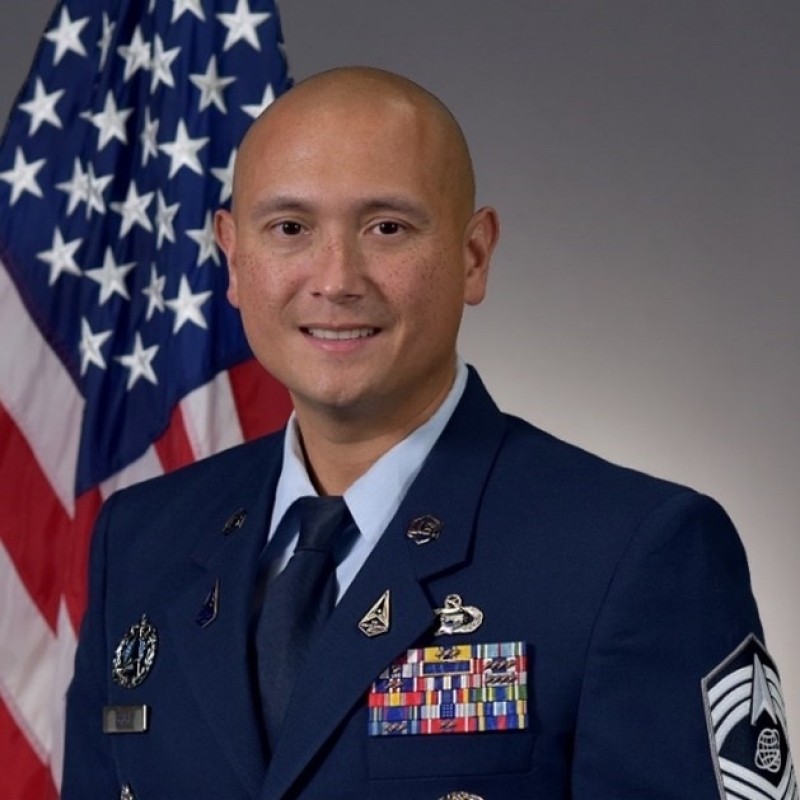 CMSgt Ron LerchSenior Enlisted Advisor to the Deputy Chief of Space Operations for Intelligence, USSF
 Charles GalbreathDirector and Senior Resident Fellow for Spacepower Studies, The Mitchell Institute Spacepower Advantage Center of Excellence
 Kyle PumroySenior Resident Fellow for Space Studies, MI-SPACE
Host
 Heather PenneyDirector of Studies and Research, The Mitchell Institute for Aerospace Studies
Transcript
Heather “Lucky” Penney: [00:00:00] Welcome to the Aerospace Advantage Podcast, brought to you by PenFed. I’m your host, Heather “Lucky” Penney.
Here on the Aerospace Advantage. We speak with leaders in the DOD, industry, and other subject matter experts to explore the intersection of strategy, operational concepts, technology and policy when it comes to air and space power.
This week we’re talking about threats to US and allied capabilities in space. Over the last 35 years, adversaries like China have worked tirelessly to close the capability gap in space with the United States. First and foremost is China. They’re developing a highly capable set of defensive and offensive capabilities in orbit.
Russia is another threat we need to take seriously. I mean, just look at how they targeted Western space capabilities in the beginning of their offensive in Ukraine. And we can’t forget about rogue states like Iran and North Korea where they’re actually attacking assets on orbit or going after the terrestrial and networked functions that comprise the space power enterprise.
They are all a risk that we need to track. Bottom line space is contested today more than [00:01:00] ever before, and few are as well-informed to articulate these challenges than Chief Master Sergeant Ron Lerch, senior enlisted advisor to the Deputy Chief of Space Operations for Intelligence. Chief, it’s great to have you here.
CMSgt. Ron Lerch: Yeah, thanks so much for having me today. And I wanted to extend gratitude from my boss, Major General Sidari, who values absolutely any opportunity that we have to be able to do these kind of podcasts or support in general with the Mitchell Institute, you know, he prioritizes our ability to be able to get out and communicate about everything that’s happening in the space domain, whether it’s in a vault or in it’s an open source environment. So again, it’s great to be here and very much wanna just express again his appreciation for allowing us to support.
Heather “Lucky” Penney: Well thank you so much and careful ’cause we’re definitely gonna take you up on that offer.
And we’re also delighted to have Charles “Socks” Galbreath with us.
Charles Galbreath: Lucky, great to be back with you. And Chief, thanks so much for joining us again.
Heather “Lucky” Penney: So I do have to make a plug if anyone wants to see your socks, they should [00:02:00] watch our America 250 ’cause you have been rocking it.
Charles Galbreath: Ah, thanks.
Heather “Lucky” Penney: And also joined by Kyle Puma Pumroy, one of our senior resident fellows for space power studies at the Mitchell Institute, Space Power Center of Excellence.
So Puma.
Kyle “Puma” Pumroy: Yeah, thanks Lucky. Happy to be here. Looking forward to the discussion. Chief Lerch, thanks for joining us today.
Charles Galbreath: So Puma’s got good looking socks too, by the way, so it’s-
Heather “Lucky” Penney: Oh?
Charles Galbreath: I haven’t cornered the market.
Heather “Lucky” Penney: But you rock ’em every single day. Alright, so chief back on topic. I tried to provide a sweeping overview of the threat environment space, but you’re really the expert and you gave us a phenomenal threat briefing unclassified to our last space workshop.
So could you give us a deeper dive and help people understand the severity of what we’re facing?
CMSgt. Ron Lerch: Yeah, certainly. So big picture, right? We are living in a world today where when we talk about the space domain, there are no longer any orbital sanctuaries. There is no orbital regime that is safe. We’ve seen demonstrations of direct ascent, asat, or anti-satellite systems. We’ve seen significant growth [00:03:00] in terms of the on orbit capabilities that we’re starting to see. And so again, there really is no part of space, especially when you’re talking about our gravity well that is safe today. Space has already been weaponized. That has been sort of a question about is that the direction that we’re going or is that sort of a future capability?
Like make no mistake about it. That’s already the case and it’s already something that we have to deal with. Also, you have to realize that this is more than just about what’s happening on orbit. There’s ground based systems that we have to deal with. You know, these are lasers that can degrade or actually even potentially destroy the optics of various types of satellites that are on orbit, especially those that are remote sensing.
And then we also have to worry about just robotic attack spacecraft that are now in orbit. So it really is a combination of just, not just the things that are happening on orbit and the developments that we’re seeing there, but also capabilities that are being developed on ground to be able to contest space.
And so in the grand [00:04:00] scheme of things, what I would want people to really walk away from the most when you just say, Hey, what is sort of the state of the domain today? And especially the impact of the military service. We live in times where the joint force is being held at risk like they’ve never had to worry about before.
Heather “Lucky” Penney: I’m glad you brought up the whole weaponization thing because it’s not as if we chose to weaponize or took the initiative there to weaponize in space. Our adversaries did. And if we decided, well, we’re gonna stay peaceful and we’re sort of gonna be the role model and maintain the high road with all of that, we would then become victimized by their behaviors.
CMSgt. Ron Lerch: Yeah, absolutely. And very recently the commander of CFC, Lieutenant General Gagnon, you know, he had just stated and talked greatly about the fact that we are at a point now where we can’t just worry about how do we have a passive behavior about space. We are encroaching a period of time where we gotta be able to turn around and punch back.
Charles Galbreath: Yeah, and CFC is combat forces command.
CMSgt. Ron Lerch: That’s correct.
Charles Galbreath: Yeah. Not combine federal campaign for those that might be familiar with that wonderful [00:05:00] activity.
CMSgt. Ron Lerch: So this is accurate. Yep. It is, as we know, the artist formerly known as SPOC or Space Operations Command.
Charles Galbreath: So Chief, you talked about the threat and how severe it is today, but this is a relatively new thing, right?
I mean, there were some threats to space capabilities back in the late nineties, and certainly China demonstrated the direct descent ASAT in the early 2000s, but how has it evolved in recent years?
CMSgt. Ron Lerch: Yeah, so just looking back a decade. Right? So if you look at 2015, just from then the on orbit number of spacecraft that the Chinese have today has grown 700%.
Charles Galbreath: Wow.
CMSgt. Ron Lerch: Which is a startling number for most. Right? And so just to give you more than just a percentage. Most recently, towards the end of last year, we had them at a little over 1300 satellites on orbit. So there’s been significant growth in terms of just the capability and just the sheer numbers and volume that the Chinese are putting on orbit.
When you talk about sort of beyond the numbers, right, because really the doubles and the details over half of [00:06:00] that is remote sensing, right? Over 500 of those satellites are designed to be able to survey the Earth. And just to put that in perspective, our service, the United States Space Force, we operate just a little over a hundred spacecraft.
And so we are again dealing with a potential adversary, but certainly a competitor who has five times as many spacecraft as a space force that are just designed to survey the earth.
Heather “Lucky” Penney: So I have to ask a question there because, you know, listeners might say, well, but that’s the Space Force operates a little over a hundred.
When you’re talking over 1300, that’s probably Chinese commercial as well. But China has a civil military fusion where really there is no distinction between their military capabilities and their civil capabilities.
CMSgt. Ron Lerch: Yeah, absolutely. And that’s driven from the top down. Right. That is some of the significant part of what we’ve seen over the course of the years.
You know, just to sort of hit a finer point on it, Xi Jinping made it a point back in 2013 to allow [00:07:00] private investment into space. ’cause they knew that to really innovate and to get after the capabilities that they wanted, they were gonna need to partner with commercial at the same time, in their own words, they’ve talked about military civil fusion as being sort of a central policy for the government.
And so we have to treat. You know, we have to listen and take them at value for the words that they’re using and what they’re telling us. And so when they’re telling us that they value something like military civil fusion, then you have to respect the fact that no matter what’s going on in orbit, there is the potential for that to be useful not just for civil services in China, but also for the PLA. Right? The military.
Heather “Lucky” Penney: Yeah. And unlike us, where we’ll have firewalls between the services contracts that the military has for China, for the PLA, for the CCP, it is tightly integrated, tightly woven.
Kyle “Puma” Pumroy: Yeah Chief, if you’re talking about the numbers increase and the numbers dominance they have right now and growth and capability.
But if we were having this conversation five years ago, how would you index China’s ability to hold our assets in space at risk back [00:08:00] then and then baseline that to what we’re seeing today And what are the biggest trend lines? going back to the standup of the Space Force around, you know, 2020 timeframe to today?
CMSgt. Ron Lerch: Yeah. So just more than the numbers, it’s the new type of technology that we’ve seen in the past five years. they’ve hit legitimate worlds first, right? So very recently, just in the fall of last year, they’re the first world that’s put a remote sensing capability at MEO, right? And so we have historically, when we talk about the space domain, it’s been low earth orbit and GEO that we talk about where the preponderance of assets are at.
There’s been sort of a gap at MEO where really when you talk about what’s in middle earth orbit, right, it’s really just been GPS. And so now that we’re starting to see remote sensing show up there again, that’s sort of not just new technology, but a new part of space that we have to sort of be concerned about.
You go back a little bit further in time, the Chinese were the first to put a synthetic aperture radar satellite known as the Ludi Tance at [00:09:00] Geo. So now you have this layered ISR or remote sensing sort of capability that’s really taken shape over the last five years where you have the persistent capability to do that from GEO.
You move down further and now you see a buildup that’s happening at MEO with some type of remote sensing capability that we’re just not quite sure of what exactly what phenomenology they’re using. But the satellites are named similarly to how previous remote sensing satellites have been named.
So that’s why we say these are gonna be remote sensing capabilities at, and then you have an extensive LEO based remote sensing capability where just their commercial provider known as the Jilin, they’ve got over 130 of those all over.
Heather “Lucky” Penney: So as we’re looking at the capabilities that China has in space on orbit and the other activities that they’re taking to continue to pursue space actions, how does this translate into China’s space power goals?
And where would you expect to see them in five years?
CMSgt. Ron Lerch: Yeah, so that’s a great question. When we look back at [00:10:00] their, broadly speaking about China, they operate under these five year plans. And so their 14th five year plan was the first time that they had to have a five year plan that had to account for this thing called the US Space Force.
And so it was interesting ’cause if you look at sort of the space specific goals of their 14th five year plan, it was very much about sort of how do they do research and development to start getting after certain technology. So they talked about we need to start figuring out. How to do a reusable launch, right?
Reusable launch is gonna be absolutely necessary when you wanna talk about being more efficient at how you access space. And so they already sort of charted the path and said, we need to be able to master this and start figuring this out. They talked about doing proliferated satellite constellations, right?
And starting to figure out those type of technologies. The important thing to note is that in this 14th five-year plan that ended in 2025, when you look back at those goals and what they wanted to accomplish. Overwhelmingly successful. They have started to do and figure [00:11:00] out reusable launch. They’ve been successful in doing what’s called a 12 kilometer hop test.
They haven’t completely mastered it and failed with one of their systems late in the fall. But again, it’s important to note that they’re still making those advancements and they’re progressing that program. When it comes to the LEO proliferated constellation, they’ve certainly started to make headway there.
They’ve got two competing systems, each with over a hundred satellites on orbit. The only bottleneck for why they probably don’t have more on orbit is again, the inability to do reusable launch. So they’re not as efficient as the U.S. but that’s certainly something that when we talk about the next five years, this 15th, five year plan. We have to expect that they are going to communicate that’s gonna be a goal of theirs, is to really master this reusable launch technology so that they can alleviate some of these bottlenecks and start putting significantly more satellites on orbit at various regimes.
And then broadly, more speaking than that, in the next five years, we’re fully expecting that they’re gonna master even more types of [00:12:00] phenomenology, better remote sensing and continue the development of novel capabilities on orbit.
Charles Galbreath: Novel capabilities. Is that a nice way to say weapons?
CMSgt. Ron Lerch: Well, when you look at the, for example, right, the Shijian 21. This was a system that in early 2022 out in geo effectively grabbed a derelict or defunct satellite of their own right.
It was a Chinese satellite, and then it moved it just against its will, and dumped it into the graveyard orbit, which is really the orbit, the space, if you would, that’s above 36,000 kilometers. Yes, a system like that certainly has a role that could be depicted as debris cleanup, but I don’t think it’s too far of a stretch of imagination to understand that there’s military applications for being able to go up to another satellite, grab it, and then moving it.
Heather “Lucky” Penney: Yeah. So Charles, how would you overlay what everything the chief has talked about with your broader assessment of how China’s pursuing its military buildup and its overarching policy objectives?
Charles Galbreath: Yeah, so Mike Dahm from the Mitchell Institute has done a phenomenal job of using [00:13:00] commercial imagery to assess where China is heading.
And, he provided this in a briefing at the Warfare Symposium recently. That was really eye watering.
Heather “Lucky” Penney: And we’ll put a link to that in the show notes. ’cause it is, it was an eye watering presentation.
Charles Galbreath: Yeah. It, it was startling as well. So, China’s buildup is significant, right?
And it’s not just in space, but in all domains. They’re increasing the size of their navy, they’re increasing the size of the air force. They’re increasing the scope and scale of the number of exercises that they are executing.
Heather “Lucky” Penney: And joint integration.
Charles Galbreath: And joint integration and all of that.
And, you know, on the launch side, they have five launch sites and we’ve talked about, that’s more than the United States. So, if they get a hold of this reusable technology, we can see launch rates from China that will outpace us. And we have been, setting new records each year in terms of our launch cadence from the United States.
But that is something that we expect China to be catching up to really fast. And, you know, it’s interesting they hear the perspective of, we’ve done pLEO, we’ve [00:14:00] done reusability, and China’s gonna do the same thing. They are a fast follower, but in many ways they are accelerating beyond where we are today in other capabilities.
And certainly when it comes to novel technologies and orbit they’re ahead of us.
CMSgt. Ron Lerch: Yeah. And to your point on the, just the topic about launch infrastructure. Something that sort of is often forgotten about or you don’t see much discussion about it, especially in the headlines, is the Chinese ability to do like quick reaction launches, right?
So they have a fleet of these KZ or KuaiZhou series launchers, and their sole purpose is to do quick reaction launches.
And if you look just sort of at any database that catalogs launches over the past five years, like they’ve done significantly, like well over a couple dozen launches with these particular launchers. The benefit to them is that because they’re solid fueled, their whole purpose is to be able to just sort of do launches or conduct launches with very minimal [00:15:00] indications and warnings. And so when you start asking or wondering, well, what’s the value of a capability like that? This really starts pulling the thread on a concern, or at least a perception that they need to have a solution for how to reconstitute spacecraft very quickly.
And so that’s an interesting part of sort of the launch infrastructure when we talk about China, is Yep, it’s growing. There’s more sites. They have a commercial, you know, new launchpad out there on a Hainan island. But we have to also recognize the fact that they’re launching from other places to include at sea.
And then again, with these mobile systems that are out there that are solid fueled.
Charles Galbreath: Yeah. So a rapid reconstitution capability or a rapid launch capability sounds like what we’re trying to do with Victus Nox and Victus Haze and that entire string of efforts. But we’re using liquid rockets for those, not like the solid rockets that we-
typically, our ICBMs use solid rocket motors so that they can launch at a moment’s notice. It sounds like China’s doing the same thing to do, but for space launch capabilities.
CMSgt. Ron Lerch: Yep, [00:16:00] that’s absolutely correct.
Charles Galbreath: Wow.
Heather “Lucky” Penney: But aren’t we, you know, to your point about the Victus series, I mean, are we pursuing our own responsive launch?
Can that meet the same timelines?
Charles Galbreath: We are pursuing our own rapid launch, but I don’t know that we’ll get to the same level of launch responsiveness that you can get from a solid rocket just basically standing on alert, ready to go, swap out the payload and go.
Heather “Lucky” Penney: So, okay, little science here. Why are we selecting liquid fuel as opposed to solid?
CMSgt. Ron Lerch: Well, I can tell you right now that like more, more importantly for the Chinese, they have viewed the successes that they’ve had with having missile programs in general that rely on solid fuel. Like it’s a diverse portfolio, right? You have liquid systems that are typically silo based, not very mobile.
The moment that you fuel ’em, you gotta shoot it, right? Because you don’t want to have to go through the process of defueling it. It’s very corrosive. These solid fueled systems, you don’t have that worry, right? Like you can actually just have the system come out of a tunnel. You can have it at a hindsight, it comes out launches ready to go. [00:17:00] Everything’s sort of stored there and you’re able to have that success. You have to remember though, that there’s not many environmental regulations that the Chinese have to worry about. I think everyone at this point has seen a lot of the videos that are out there on social media of rocket bodies just sort of randomly falling back near villages and highly populated areas.
And you can see that orange plume sort of emanating from the debris. That’s one thing that obviously here in the States with as much oversight and the regulations that we have to abide by, like that’s something that’s just more valuable for us. But also I think it’s just, it was a strategy for the Chinese that they are porting over from missile technology and being able to move rapidly to this.
Now they’ve just recognized they wanna be able to do that with the satellites as well.
Charles Galbreath: Yeah. And so we have used old minuteman boosters as part of our launch capability for certain things. But I think one of the differences between the United States and China when it comes to launching like this is, we’re trying to be precise with where we put things.
It sounds like China just [00:18:00] doesn’t necessarily care as much exactly where it goes. They just want it on orbit and then they’ll use it once it’s there. So I think there’s a quantity over quality aspect that we need to be looking at, but certainly quantity has its own quality.
Heather “Lucky” Penney: Yeah. another piece I’d like to bring up and this is sort of in the vein of the grabber satellite, but couple months ago we saw China dogfighting their satellites. Right now I know this gets into your skin.
Charles Galbreath: Yeah.
Heather “Lucky” Penney: It’s not real dog fighting, but they do have increasingly maneuverable satellites, which allows ’em to have more dynamic type operations. Chief, what’s that about and why is it a cause for concern for us?
CMSgt. Ron Lerch: Yeah. Maneuverable satellites, you know, this is one of the challenges with the space domain is when you talk about these sort of actions in any other domain, it’s very easy to find things that are just easily recognizable, even in the general public, right? When you see an F 22 reacting or intercepting a bear or a blackjack, doing an out of area patrol, it’s very mesmerizing when you see that footage and you just sort of are like awe inspired about how close these aircraft are to each other.
And it’s just [00:19:00] like, wow, this is incredible that we have these two high-end machines, this close to each other. The Navy, they have the similar things with how many times you see like freedom of navigation operations and in recent months, Chinese ships spraying and using water hoses. And you can see that visually space has a very difficult problem of how to communicate that in effective way because for us, when we talk about.
Maneuverability on orbit it’s not exactly the most inspiring thing to see two white dots slowly going closer to each other. And then the white dots become one white dot. And then everyone’s just supposed to take that as, oh my gosh, like what just happened? Right? Like, how did, why did the two dots become one?
And so one of the ways that I try to articulate this to maybe like help people understand what maneuverability looks like, if you took like an X and Y access chart, right? And on the Y access it was the months of the year, and on the X access, think of that as different lines of longitude. And if we’re talking about spacecraft that are [00:20:00] sitting at geo, meaning that they’re turning at the same rate as the earth spins.
Ideally, say a communication satellite satcom bird, it’s gonna look like a line that just goes straight down, right Throughout the entire year. It is hanging tight at the exact same longitude, because for SATCOM, you don’t exactly wanna be shifting and moving around. These experimental satcom spacecraft that the Chinese have put on orbit, they’re known as the TJS series of spacecraft.
If you were to look at sort of the pattern of life of what they look like on that same chart, it looks like a zigzag.
Charles Galbreath: Wow.
CMSgt. Ron Lerch: These things are moving all around the geo belt, they’re sliding around the belt. It is not a nice straight line like you would see with US SATCOM. That’s just holding tight at one particular, you know, longitude over the course of a year.
And so right out the gate you have to wonder and sort of appreciate what the Chinese are doing because clearly when they call it [00:21:00] experimental satcom, there’s other parts that they’re experimenting, not just satellite communications. They’re obviously invested in maneuverability, and we’ve seen that with several systems and how frequently they’re actually moving across the geo belt.
Kyle “Puma” Pumroy: And chief. We talked about trends earlier. I think that maneuverability is a trend we’ve seen over the past few years. We’re working on it, we know that Chinese are working on it. Another trend we’re seeing obviously is these mega constellation in low earth orbits and medium earth orbits. So how should we interpret China’s focus through a competitive lens as we both build up our mega constellations?
CMSgt. Ron Lerch: Yeah. So from a military specific perspective, I’ll tell you this, right, why go a proliferated route with satellites? And I’ll tell you that in our eyes, it’s a way to flip the cost curve, right? Because gone are the days of I have one super exquisite, large satellite and a potential adversary can use one or two direct ascent systems to be able to go after it.
And then now I’ve lost mission. I’ve lost a critical [00:22:00] sort of comm node for how we’re able to do combat operations. When you flip the cost curve of what I’m really referring to there is the fact that when you have proliferated now, instead of just one system doing that, it’s hundreds if not thousands, it forces and it potential adversary to play whack-a-mole, right?
I mean, you’re just constantly, trying to do something and go after. Hundreds and thousands of systems to the point where it’s empiric victory. I mean, there’s no gain outside of just attrition of your own systems to be able to go after something that you’re actually not gonna generate the effect that you’re looking for.
And so clearly other nations are starting to see the value of proliferated constellations, and they want to be able to have that same mentality when it comes to flipping the cost curve. Right? How does it become more complicated now for the US or potentially our allies to be able to do the same thing and generate some sort of effect or negative impact on their ability to shoot, communicate and move.
So that’s kind of what we’re seeing as an overall trend there. What I’ll also tell you is that this is gonna force sort of the 10 year, 20 year outlook of the [00:23:00] service. And just the domain I would say is that we’re gonna get to the point where we have to really start looking at how do we do one vs. many.
When it comes to being able to degrade another potential adversaries on orbit capability, and same for adversaries looking at us, right? What are those kind of technologies that they’re gonna look at that will allow them to do one vs. many, versus having to just use the precious resources of one or two potential missiles of direct ASAT type systems.
Heather “Lucky” Penney: So Puma, Chief just talked a lot about how we anticipate what China will do, and so we’ve gotta begin thinking about this. And you spent a lot of time during your career as an aggressor for space operations, basically Red Air. How did you factor these trends and how you helped emulate those threats and train U.S. forces?
Clearly a lot of it’s classified, but from a big picture perspective, how would you describe that?
Kyle “Puma” Pumroy: Yeah, I think on the red space side, your aggressors are key to bringing that credible training environment for our blue forces to train against. And it all starts [00:24:00] with a tight tie to intelligence, right?
We have to know real time what we’re seeing the adversary do, whether it’s Russia or China. And we kept a tight relationship with the National Space and Intelligence Center at Wright Pat Air Force Base. So as they saw things and were able to understand what the adversary was doing, we would incorporate that into our adversary tactics and understanding.
I always as described our aggressor squadrons as really intel squadrons disguised as operations squadrons. The aggressor mantra is Know, teach, replicate. That Know And teach are really intelligence functions. Right? And then we just take operators to then replicate those systems. And so on the space side, we had intelligence professionals operations.
Professionals all in the same squadron and actually held to the same standard for knowing and teaching systems and operating systems. So you had operators learning how to brief the systems and teach the systems, and you had intelligence professionals learning how to operate those systems. And so by having that blended mindset and that connection to real time intelligence, that’s how you [00:25:00] bring realism and relevance to the systems you bring forward.
And I’d say another important part of how we can bring that forward as a space force was not being tied to mission systems, right? We don’t need to procure F-16s or F-35s, like red air does for red space. We focused more on an O&M budget so that we can build what we need and then procure fundamental things like maybe satellite dishes or maybe small maneuver maneuverable satellites, but in ways that we can change in the future with aggressor satellites, change the software they’re doing or their profiles they’re doing, or their visual magnitude in different ways to incorporate them to again, follow what we see China doing so that blue can see it realistically in training.
And then finally holding the line on realistic and relevant is important for aggressors. I can tell you the number of times we went into planning events and an operations unit’s coming in, it’s like, we wanna see X, Y, and Z. And for the aggressors would have to say, well, that’s not realistic. We know what China does.
They’re not gonna attack that system in that way. [00:26:00] Say, well, but we have a learning objective we have to do. And it’s important for aggressors to say, you can do that learning objective on your own, but we are not gonna present it in this exercise because it wouldn’t hold true to what the adversary is doing.
We want to make you better. We don’t want you to just meet your objectives that exist in a vacuum. And so, yeah, again, it all starts with intelligence, but bringing the operational feel on the aggressor side so that our ready forces have credibility in the readiness.
Heather “Lucky” Penney: So what we’re actually seeing, trying to do on a day-to-day basis in this enduring competition is, treating this space.
It’s a contested domain, but they’re using gray zone operations. Right. So while adversaries can launch a really bold kinetic attack that could destroy one of our assets or destroy an orbit, that’s not what we’re seeing on a daily basis. And instead, they might be lazing a satellite chief, as you mentioned, jamming our communications jamming GPS, which is what we’ve seen in Ukraine and other areas.
Surveilling the terrestrial assets to gain situation awareness to later inform hostile [00:27:00] actions, et cetera. So it’s not as dramatic as an ASAT strike but this kinda stuff is a big deal and it can really yield serious effects. So I’d really appreciate your all’s take on this to help folks understand what these gray zone activities look like in space and the risk that they present to us today.
CMSgt. Ron Lerch: Yeah, I mean, I’ll start and just say that the problem that we have right now is we have an outer space treaty from 1967 that essentially says WMD on orbit, right? Don’t do that. Everything that we talked about at the very beginning of this isn’t WMD, right? This is not any of those kind of activities.
And so there is a little bit of gray zone in space is a little bit different because it’s a little bit of the wild, wild west right now where there’s nothing that holds people to any sort of accountability on what they can or can’t do in space. And so on orbit robotics, right? The ability to stalk and sort of shadow other satellites.
We don’t have the equivalent of, staying 12 [00:28:00] kilometers outside of another nation’s border. Right. And before, you know, you’re sort of within their periphery. We have nations that are attempting to guide that conversation. The Chinese publicly talk about that the international norm should be 10 kilometers, that spacecraft need to be 10 kilometers apart from each other.
But there’s nothing that actually says that. And so it’s interesting ’cause we are a little bit in a world right now where you are seeing a bit of a fight for who’s gonna actually establish those type of standards and international, norms, behavior. So the gray zone aspect of this is again, you know, there really is nothing to hold people accountable outside of WMD on orbit.
Charles Galbreath: Yeah. And I’m glad you brought up the. The distance, right? How, how close satellite should be. But if we did establish an international norm of 10 kilometers, there’s gotta be a mechanism in place to monitor that.
Heather “Lucky” Penney: Enforce it.
Charles Galbreath: And then enforce it, right? So there’s a whole, you know, infrastructure that we need to pursue, but the gray zone activity that we’re talking about is really why we did our latest workshop of conflict in [00:29:00] space.
Heather “Lucky” Penney: Yeah.
Charles Galbreath: And chief, thanks again for that really great threat briefing that helped kick us off. But understanding what types of actions can occur along the spectrum of conflict, all the way from competition through gray zone, all the way to threshold events and full on conflict, what those look like, how we respond to those and what the ramifications are of action and inaction.
So for example. We’ve talked about lazing and cyber and jamming events that China has conducted against the United States historically. And as far as I know, we have not had a public response that says, Hey, knock that off. Or, you know, we consider that an act of war or a hostile action or anything like that.
And that has left. The rising tide, if you will, of what we will tolerate. And that just increases the amount of flexibility that an adversary like China has in this gray zone. So, I look forward to getting that report out From that workshop, [00:30:00] but it was think time well spent.
Heather “Lucky” Penney: It sounds like China’s basically boiling the frog, right? I mean, the more that we tolerate, because we haven’t established what those red lines are, what constitutes an active warrant space, the more we tolerate that then becomes a standard because they’ve a set of precedence.
Charles Galbreath: Absolutely.
Kyle “Puma” Pumroy: Yeah, exactly. As Chief Lerch said, if we don’t have the equivalent to rules, then what we do is we respond after things happen and try to figure out what we’re gonna do as opposed to knowing what our standards are and if those standards are, violated, then we have legitimacy in imposing consequences in our response options back to what China does. And that’s especially strong if those kinda rules are agreed to broadly with commercial and with our allies so that hey we’ve already said this is unacceptable.
You’ve done something that’s unacceptable. Now there’s gonna be consequences for that. We don’t have that framework now. So now things happen and we just talk about what should we do? And what that does is talk about gray zone is incentivizes gray zone operations, right? Because China realizes [00:31:00] there will probably be no cost imposition or denying benefits of taking those actions.
And so they get away with it just like the boiling the frog analogy because that’s where the incentive is right now in terms of competing with us in space.
Heather “Lucky” Penney: Yeah. And so doesn’t that also create a problem for indications and warning? If we’re tolerating a lot of these gray zone operations, how do we know when China’s basically prepping the battle space?
Kyle “Puma” Pumroy: Right.
Heather “Lucky” Penney: In space.
Charles Galbreath: Yeah. It was like the little boy who cried wolf. You know, they keep testing and testing and we become accustomed to that next thing we know. Holy smokes. They’ve done that on multiple fronts simultaneously, and we just lost the first move.
Heather “Lucky” Penney: And that was another really interesting thing that we saw in your workshop, right?
I mean, when teams that were representing regions we’re dealing with operations in space. On their own, they didn’t necessarily constitute or cross that threshold that teams thought was a road to war, but when you knit the big picture together, it created something totally different.
Charles Galbreath: Absolutely. When you see the bigger picture, and this is why the [00:32:00] creation of US Space Command, I think was so essential because if we left this to regional combatant commands looking at little piece parts through their specific lenses, they may not see the bigger picture of how things are unfolding.
So space command I think is in a great position to see that bigger picture.
Heather “Lucky” Penney: So Chief, another reality that I think is important to understand is that threats to space capabilities are not just on orbit. Space powers an enterprise and I think a lot of folks don’t really realize that most of it is on earth, like down link stations, commanding control centers, connectivity, processing power, the launch facilities, protect production sites and more how do you think about that part of the threat? Today we live in a world where adversaries are, have highly capable reconnaissance, precision strike complexes with extreme range, and this could see our space power severely degraded without doing a single thing on orbit.
CMSgt. Ron Lerch: You know, that’s absolutely right.
And you know, one of the biggest areas here is cyber, right? With our power projection platforms being in the US in CONUS, one of the concerns that we have is sort [00:33:00] of the cascading effect of what happens to those power projection platforms if there were some sort of a cyber attack that occurred, and it doesn’t necessarily need to be, you know, a military target. We require a lot of power. If you start knocking off power grids, that’s gonna potentially have an effect on a military installation. And its ability to be able to do that, or at least sustain that for an extended period of time. Things just as maybe not as deliberate or direct as going after the power grid, but things that can sort of sow those seeds of chaos.
You know, being able to do attacks on just the telecommunications on something as simple as traffic lights, right? I mean, something that simple can just immediately delay the ability of, you know, a recall at a military installation when all of a sudden every light in Colorado Springs turns red simultaneously, or every light turns green, right?
That there’s just these things that we know, are susceptible and vulnerable when it comes to cyber that we have to be concerned about. [00:34:00] We are recognizing this as a service and we work very closely with the Air Force who provides so much of the installation support because that’s the value of it.
We need to be able to be thinking about not just the threats on orbit, but what are those asymmetric attacks that we have to be worried about that could destabilize our ability to project power from within the us.
Charles Galbreath: So that’s a really unique aspect of space warfare, if you will, that we do a lot of our operations from the continental United States and locations here at home, and therefore the infrastructure that we rely on at home.
Becomes a potential target and something that we have to secure.
Heather “Lucky” Penney: Absolutely. You know, what’s interesting about what you said is that it might, doesn’t necessarily have to be a dramatic Hollywood kinetic style attack, right? We really need to be conscientious about how we identify and characterize effects based operations from our adversaries.
And unless we’re able to do that, and I think we’ve done sort of as a military, a very poor job of articulating effects based type [00:35:00] operations across the Department of War that we need to be conscientious of that, especially if it might be an attack on civilian infrastructure, which could be interesting because if it’s an effect on civilian infrastructure, a we do need to have the ability to attribute it rather than just being bad luck-
Charles Galbreath: Absolutely.
Heather “Lucky” Penney: Or a natural disaster. But if we articulate that well, we might actually be able to use that as a deterrent because an attack on our civil population absolutely would be an act of war. So, Puma, Jen Reeves of our space team discussed a lot of that entire challenge in her latest paper about space needing to be a supported domain.
And a lot of that ties back to the notion that if terrestrial threats can hold space, power at risk, air power, sea power, land, power and cyber will be key in dealing with those challenges. And that requires the terrestrial forces to support space, which is an inversion of what we normally think of. We normally think of space as being the supporting domain.
How would you explain that?
Kyle “Puma” Pumroy: Yeah, I mean, I know to start with, I think it’s only an inversion for those who haven’t been paying attention. It’s a good chance the first shots in anywhere [00:36:00] we have, are gonna be in space. We just saw that with Epic Fury. What were our first actions? They were in space and cyber.
The chairman has come out and said, that’s where we started the fight. And we think that would probably scale, on a large scale and a fight with China. Not just including perhaps electronic warfare type things, but maneuvers directed energy, you name it, are gonna be effects we’re going to see against our space assets because.
We want to do to our adversaries, the same thing they wanna do to us before a fight starts. They wanna blind us, they want to deafen us, and they wanna make us dumb. If we can do that to China or they can do it to us, then they gain free reign on all their effects they want to produce terrestrially. And then the capacities to do that to our systems, if they wanna blind us, deafen us, make us dumb in space, are all gonna come from land capabilities, sea capabilities, air capabilities. And so if we’re gonna service those targets, that’s not gonna come from space, right? That’s gonna come from the Navy, that’s gonna come from the army, that’s gonna come from the Air Force, that’s gonna come from the Marine Corps to service targets in space. [00:37:00] At least for, you know, until we have rods from God, supporting our own space systems.
And so we have to see space superiority as an engagement that’s may happen full circle with a non-space asset. For instance, maybe a destroyer has lost satellite communications capability from a jamer within China. And then they service that target. With TLAM from that destroyer and then they gain their communications back.
And the only role that space is gonna play in that is say, yeah, it looks like purposeful interference and we think it’s coming from over there. Signals intelligence, say: “Here’s the target” and then they service that target themselves. We need to be thinking as a joint force that’s how we’re going to have to fight and it’s a space fight, but it may happen without any space capability other than supporting capabilities to gain and maintain space purity with systems that may be wholly navy to do so. And then as chief said, cyber, then obviously that’s a game changer if you have access because that gives you a great capability [00:38:00] to blind the adversary.
Definitely the adversary on on a much larger scale. If you can access command and control links or the data piece to that. Now I have effects on numerous satellites at once as opposed to just onesie twosies with direct effects.
Heather “Lucky” Penney: Chief, how are you seeing this evolve?
CMSgt. Ron Lerch: Yeah, you know, for us specifically in the Space Force, when we talk about the joint force and where.
Where can we sort of contribute best in terms of like a high-end fight. We are starting to look towards not just what I alluded to earlier in terms of well, how do we get after this sort of one vs. many problem that we have, but also what are the things that the service can uniquely go after that maybe there is no other capability to address that.
Heather “Lucky” Penney: Yes.
CMSgt. Ron Lerch: And so that’s one of the ways that we are sort of shifting and shaping our narrative in terms of how we’re communicating, how our service needs to be resourced. Is really becoming hyperfocused on talking about those very specific things that we as a service need, because no one else is gonna be [00:39:00] able to do anything about these particular threats.
And the threats have an absolute effect to the joint force. There’s not a single engagement over the past two years that we’ve had with either professional staff members, you know, PSMs on the hill, our elected officials, where our sort of bluff. Get off the stage, last comment is that these things have a direct impact on the joint force.
And so this is not about the service being able to just address service only threats, everything that we need to do, have something or mitigate on orbit or even terrestrially. There is an absolute effect of the joint force and that’s why we as a service need to be funded to be able to go after these things.
’cause no one else is gonna be able to do it.
Heather “Lucky” Penney: Amen. Amen to that because that’s core. If we’re not resourcing the Space Force to be able to do the things that only they can do, then we’re totally missing the boat. I’m gonna shift a little bit and talk about the return to the moon. ‘Cause I think that that is, I mean, it is an objective for US and China [00:40:00] but I’m really curious how this shapes your thinking about managing, evolving notions of threatened space because point blank throughout history, if you add the potential for economic gain, competition for resources and territory writ large competing nations, you almost always see conflict. And Chinese Taikonauts are military actors and traditionally are astronauts, whether NASA or civil.
They’re acting in a peaceful capacity. So does there come a tipping point where we need to begin thinking about putting properly trained, equipped, and legally empowered guardians in space to deter hostile activities on the moon and deal with the conflict should it arise? Puma, you’re wrapping up a paper on this topic, so let’s talk start off with you.
Kyle “Puma” Pumroy: Yeah. Lucky. And we had a panel on this during warfare symposium that I thought was excellent and I’ll go back to comments by Vice Chief of Space Operations general Sean Bratton, when he said, was asked kind of this question too, and he is like, you know, I don’t know if that time is 2030, 2040 or 2050, but we owe work on that.
And it’s acknowledged from a space force that there is a future in [00:41:00] which our economic interests are gonna have to be underpinned by hard power and the military’s ability to protect those interests. And then many believe that the moon holds a lot of economic gain. For whatever nation is able to establish that infrastructure to become back and forth from the moon in a routine way, and harvest its resources or do experiments or conduct science that brings economic benefits back to earth.
The Chinese are quickly gaining ground like we talked about earlier. They have put humans on orbit on the timeline they expected to. They had a space station on the timeline. They expected to, and we fully expect them to land on the moon in 2030 and have a research facility, a lunar research facility by 2035.
Now, it’s not about being first, whether they’re first or not, but we’re struggling. And it’ll be interesting whether or not who gets there first, but it’s really about establishing that logistical infrastructure that you can keep going back and forth without disruption. And if we fall too far behind the Chinese, [00:42:00] they’ll be able to easily disrupt our ability to get back and forth from the moon.
And then that interested economy in harvesting resources from the moon or doing manufacturing on the moon. Then leans towards China because they’ve got the infrastructure they can support and we lose that economic opportunity. And if we try to get our foot in the door, all their systems are dual use.
And so it’s really the military doing all that. And they can push out our commercial capabilities that would be interested in catching up to the Chinese so they can essentially entrench themselves in the infrastructure if we get too far behind and unable to compete. And that puts us as a, you know, second rate space fairing nation.
20, 30 years down the road, if we don’t have a hard power answer to Chinese dual use systems that are gonna get them to and from the moon and get into the lunar economy.
Heather “Lucky” Penney: Well, and I think the point to add there is that this is a capability we need to start investing in now. ’cause you can’t invent or manifest you know, guardians and space and the capabilities and the skill sets that they would need, but the Space Force is being asked to do so many [00:43:00] things.
Right. And so it, that might be an imperative, but it’s not like a near term urgent on fire kind of need. I mean, bottom line is the Space Force has been under resource since it’s inception. We need to increase the resourcing, the dollars.
Charles Galbreath: Yeah absolutely. And that underfunding leads to a harsh prioritization reality.
Heather “Lucky” Penney: Yeah.
Charles Galbreath: Right. And we have to deal with the threats that we have immediately today and that we see in the next year or two, and the threats and the possibility of the ramifications that Puma just outlined for Cis-Lunar and the moon. Those are significant and we have to be prepared to respond to those as they emerge.
But to your point, Heather, it doesn’t happen at the, at the, snapping of a fingers. You’ve gotta be able to build a pipeline and a training program and capabilities to enable us to have that effect. And we need to be looking not just at the fight tonight or tomorrow night, but also what might evolve 10, 15 years.
And I [00:44:00] know the Space Force is looking at this with the objective force. What we might need in 15 years. I haven’t seen it. I would suspect though that Cis-Lunar might not be one of the highest priorities, even in the 15 year plan for the Space Force, but it’s something they need to be keeping on their radar.
CMSgt. Ron Lerch: Yeah. I mean, at the end of the day, right, the executive order that came from the administration that talked about ensuring space superiority, which was really foundational, and the first time that we’ve seen anything on paper that says that we need to be concerned about just space beyond our own gravitation, our own gravity well was really articulated in there, right?
And so we are a little bit in sort of playing a pick a pickup game and catching up to sort of the need and the demand signal. But what I will tell you is that when it comes to just Cis-Lunar space, the moon, what’s that gonna look like? Who’s gonna be involved in that? There isn’t gonna be a single person that, that rose is gonna be pinned on, right?
That’s gonna be the service. That could be NASA, that could be commerce. There’s a lot of stakeholders in all involved in that. And so to be able to really, well, what can we do now? We’re sort of in this [00:45:00] collaborative space to help figure out what those lanes in the road look like. So much so that the irony of this conversation is myself and General Sidari are actually gonna be talking with the NASA administrator next week.
Charles Galbreath: Yeah.
CMSgt. Ron Lerch: To be able to start having some of these conversations about, not just what are we seeing from the service perspective about the threats and sort of the intentions and what this looks like through our lens. But then it’s a back and forth conversation really to start having those collaborative efforts and start driving some of that conversation.
Charles Galbreath: Yeah. Administrator Isaacman has publicly said we need to have greater relationships and ties with between the NASA and the DOD to get after these threats and to marshal our resources more effectively and efficiently. So I, I think that’s great. Good to hear.
Kyle “Puma” Pumroy: I think an important add there too is as you’ve shared Chief that you’re gonna have these engagements is, I think there’s a future in the near term where one or the other’s responsibilities are defined as supporting and supported.
I think right now we just think of NASA probably sees Space Force as the supporting agency because they give us astronauts. And [00:46:00] so, can we start defining, is there a future in the near term where NASA’s actually supporting the Space Force for their missions and needs and what that looks like?
CMSgt. Ron Lerch: Yeah, and I think a lot of that will be teased out as we start looking at force design as we start looking at how. You know, the fight up and beyond looks and as we start to really settle in on the implications of that EEO, I think that would absolutely be a great question and conversation to have with the 5-8 for the Space Force, because when it comes to how we’re gonna resource that and how we’re prioritizing that, that’s definitely their wheelhouse and they would have a great answer for you probably in the near future.
Heather “Lucky” Penney: Yeah, I mean, I think it’s clear that China wants to dominate all of the space domain, including, you know, the lunar surface, how we traverse back and forth to that. And you can see some analogs to that in their, Belt and Road Initiative. ‘Cause not only will they prioritize their ability to effectively plant the flag first use their economic power, but they also are not afraid to use force.
And we’ve seen this, for example, in the South [00:47:00] China Sea, how they’ve been engaging with Philippines, how they’re building up their own sand islands, coral reef islands. And I can see them easily extrapolating these activities to space.
Charles Galbreath: Yeah, absolutely. And this is something that we’ve talked about before.
A couple years ago we did a paper on cis lunar. And, highlighted the fact that China’s lead for lunar exploration said the moon is like the Deiwoo Islands, right? And we need to get there and if we don’t, our, generations behind us won’t be able to and they will hold us accountable. They view this as an opportunity to exert where they have influence and control, and then potentially force the rest of the world to meet them on their terms rather than mutually agreed to peaceful terms. So this is just something that we have to be mindful of. And we also need to remember that the moon is a waypoint, but so is low Earth orbit and there’s operations between low earth orbit and the moon that we need to be mindful of as well. And [00:48:00] China already has with their space station three military members.
Heather “Lucky” Penney: Taikonauts.
Charles Galbreath: Yeah. Taikonauts constantly in orbit. Right. And so we need to be mindful of that as we move forward.
Heather “Lucky” Penney: Yeah. And getting there first allows them to be able to define what the norms are to set the rules of the road, if you will. And so we can’t allow them to continue to do that because China dominating space is not, doesn’t have to be inevitable. We are in a new space race, and as a contest, I believe that America needs to win. So, taken in that light, what is the Space Force doing today to stay ahead of China in this race?
CMSgt. Ron Lerch: Yeah, so certainly the one angle that I’ll gladly take on this is really talking about, well, what is the Intel enterprise in the Space Force, what they’re doing. Right? So, major General Sidari just very recently rolled out sort of his priorities for what we’re gonna be doing and then sort of some of the subsequent lines of effort that are gonna support that.
And so those three things look like readiness, really the fight tonight part of this, you know, how are we maintaining that? What [00:49:00] units are sort of. Involved in that process institutional forces versus the forces that we’re gonna have to be able to support , right? How do we balance the joint requirements of deployments?
And then really truly, what does intel readiness look like is gonna be something that is a priority, building the force. So we are actively involved and how we’re looking at force design. And almost weekly, I would say our folks that are involved in policy are meeting with the appropriate stakeholders over at the Pentagon to discuss it’s not just about the widgets, it’s not just about the different capabilities, but what does the intel support to that look like?
And so that’s a priority of understanding and really determining what building the forest looks like and supporting any, an effort that’s involved in that. And then really establishing enterprise activities you know, the S2 for the service. A lot of folks forget that we’re a member of the intelligence community, and so he wears about four different hats on a daily basis.
And he’s gotta quickly pivot from wearing the defense intel head to being, you know, the service [00:50:00] SIO or senior Intel officer. It’s a lot of different hats that General Sidari has to wear, but how do we flush out those activities and so that we have interagency efficiency? And so that we are having the right conversations with not just folks on the DOW side of this, but then also within the IC.
And I will tell you very specifically, just one of the lines of effort that we are gonna be laser focused on over the next two years is targeting, targeting, targeting. Like how do we professionalize targeting in the Space force? What does the curriculum for that look like? What does our service commitment look like for that, in terms of how many folks we need to be able to do that?
What is the right model for how we’re gonna actually do that? And I will tell you that on the Air Force side, the 363rd and sort of having that federated approach, but having a central hub. A powerful hundreds of people back in conus that provide that kind of support through various phases of targeting like that has been identified as a sort of best athlete in the current you know, world dynamics we’ll say.
And [00:51:00] so I think that’s gonna be an important conversation that we’re gonna be having, of figuring that out for the service and what that looks like and what the best model is for our service and the unique requirements that come with that.
Heather “Lucky” Penney: And just to be clear, when you’re talking about the targeting enterprise, it’s a totally different conversation than AMTI and GMTI.
CMSgt. Ron Lerch: Absolutely.
Heather “Lucky” Penney: Totally different.
CMSgt. Ron Lerch: Yep. This is a, you know, look at the joint targeting cycle. Think about how do you do. Advance, you know, automatic target recognition. How do you do BDH? I mean, this is a completely different conversation that has a lot of intricacies in it, but a lot of it is just the professionalization of that.
Charles Galbreath: Yeah. So when you’re talking targeting for the space force, it’s not just on orbit right there because there’s terrestrial and maritime and airborne space assets that other countries have that might need to be targeted as well, right? So there’s overlap?
CMSgt. Ron Lerch: Yeah. Well, yeah. I would say that the majority of what we are gonna be concerned about is the effects that you’re gonna generate on orbit, but also like looking at the EM spectrum, right? Like how do you, how do you target and look at this from a non-kinetic perspective.,
Heather “Lucky” Penney: Oh my [00:52:00] gosh! That’s so exciting. Thinking about how do you do, like how do you JMEM, how do you JMEM spectrum,
CMSgt. Ron Lerch: right?
Kyle “Puma” Pumroy: I’ve been working on it for 20 years and haven’t figured it out. But yeah, Chief that’s exactly like there’s gonna be Dim Vs that are gonna be serviced for space superiority effects, but we know how to do that, right? What we don’t know how to do is what about this frequency band on this satellite or this piece of a satellite that does 10 different things.
That becomes complicated and we get in our own way From a targeting perspective to produce the effects we want to do on the space force.
CMSgt. Ron Lerch: Right? And what is clear to us is that how this takes shape and what this looks like. One thing is important and very clear, and it’s sort of a rolling lesson learned from everything that’s been happening really over the course of the past two years, is that we need a standard.
For how we do this can’t be right. Well, one organization or one component does it this way, these guys do it differently. Like, whatever this looks like, which is why it’s a priority for us. It needs to be a standard way of business, and it’s something that can be replicated across different components.
Kyle “Puma” Pumroy: And to work quickly. That’s been our struggle in the past. I think as [00:53:00] you know, Chief is, and we want to do this thing and the targeting cycle and it’s a target of opportunity and the targeting cycle is so slow that by the time it gets approved or it’s approved with some caveats, it’s too late. The war’s already over.
Right. And so it’s a, not only do we need a system, we need a system that’s responsive to the threat and can spin the OODA loop faster than the adversary.
Heather “Lucky” Penney: And I’m sure classification has a lot to do with that as well.
Kyle “Puma” Pumroy: Well, I think-
Heather “Lucky” Penney: Or is it just the intel process?
Kyle “Puma” Pumroy: I’d say the majority of the intel world sees targeting as a thing to blow up. Right? A point on the ground to service. And so when you start saying, well, this thing is moving and it’s electromagnetic energy and et cetera, et cetera, it’s just- we have too much institutional inertia to work against because they wanna put everything in a kinetic mindset when it’s not a kine mindset.
Cyber gives us, I think, some exemplars that we can pull from, but in my experience was a lot of old heads that says, well, no, it’s not cyber. It doesn’t work like that. It’s a satellite, it’s a physical thing, so therefore we have to use a kinetic. [00:54:00] Process and you go round and round and do absolutely nothing.
Heather “Lucky” Penney: Well, again, we need to be effects based minded.
Kyle “Puma” Pumroy: Yes.
Charles Galbreath: Right.
Heather “Lucky” Penney: Yeah. So, you know, with every other domain, it’s our goal to secure objective without overt conflict, and that demands credible deterrence and the ability to proactively shape activities. And you can see this thread through our entire conversation.
Chief, what does that look like in modern space operations combined with joint collaboration?
CMSgt. Ron Lerch: Yeah. So the problem that we have is that when it comes to how do you have credible deterrence, it’s, well, how does the adversary know how you’re gonna hold them at risk? Right. And that you were talking about security classification issues earlier, that is one thing that’s gonna continue to haunt us.
And probably won’t be something that is easily remedied here in the near term because the credible deterrence part of it’s tricky, right? Because you have to sort of balance, well, do I want to, what do I conceal? What do I reveal?
But what I will say is that how we’re getting after being a credible force is when you look at the various statements that you’re hearing about guardians and their [00:55:00] involvement from everything from Midnight Hammer to Absolute Resolve to Epic Fury, right?
Our leaders, not just in the service but beyond and the chairman, et cetera, have talked about the role that space has played in those things. And so we already have some credibility that you’re seeing from just ongoing conflicts. But then it’s also how do we exercise and how do we sort of get a lot of visibility on these large scale exercises that we’re doing as guardians and with the joint force.
Like these are the things that we can control and that are sort of in our sphere of influence to be able to help communicate and message that there is a credible deterrent there.
Kyle “Puma” Pumroy: Yeah. I’d second that. It’s about training effectively, credibly and observably. But regardless of the capabilities and the systems we have, sound tactics can make up for a lot of that.
And if our guardians are observed exercising their tactics, in credible ways that serves as a strong deterrent. Whereas China may think, Hey, that’s a soft underbelly and that is our asymmetrical way to attack. And they realize, oh, actually these guys are really good. And so I think that’s important to the Space Force to have that [00:56:00] attitude that we’re gonna be better than you and you’re gonna know it and make sure that they’re performing their task, performing their missions in ways that the Chinese or see it in ways that we wanna reveal. So they, that builds that credibility. And I think that’s that key component of deterrence.
Charles Galbreath: Yeah. Some of the messaging has evolved and I think that’s really interesting.
Over the past few years when the Space Force stood up, we were focusing on increasing the resilience of our architecture so that we could withstand and attack, operate through it and still provide the capability. So there was a denial of the benefit of them attacking us in the first place.
And I think more recently, we’re beginning to see, and we’ll be able to hold your capabilities at risk, whether that’s through, cross domain effects whether that’s through another service providing a capability or whether it’s something like what we’ve demonstrated in Epic Fury.
CMSgt. Ron Lerch: Yeah. And even, you know, beyond that, if you look at US SpaceCom and how they’re doing messaging these days, they have been very transparent about how we’re doing RPO with allies. Right? and demonstrating a capability like that. So it is important that we do the messaging part on top of the training, on top of the [00:57:00] exercises. And then on top of also always being mindful of what is really worth concealing and revealing.
Heather “Lucky” Penney: So Chief in the vein of messaging, I’d like to give you the last word. What’s your key message to the broad American public about the importance of maintaining our in space?
CMSgt. Ron Lerch: Yeah. I think what I would say is that this isn’t just about military conflict, right? That’s not something that we want.
It’s something that we’re prepared for because the freedom of space is ultimately why we exist as a service. And that extends potentially beyond just the gravity. Well, in one day could be cis lunar, right? We’ll have to see what sort of decisions the competitors wanna make about how that’s gonna look in the next 10, 20, 30 years.
But what I will tell you is that when we’re talking about just the domain today. Sometimes the easiest way to gain an appreciation for the urgency that comes with it is if you just follow the money, right? And so when you look at fiscal year 26, the service was gonna be sub $30 billion, and then through reconciliation, $14 billion more, right?
And [00:58:00] so we’re close to $40 billion. That sense of urgency and getting money. From Congress to be able to address the kind of things that we’re talking about that is not because, the state of the domain right now is just sleepy hollow, where we’re not seeing any advancements or potential adversaries aren’t doing anything that we’re worried about, right?
Like these kind of things that happen when, especially when you’re talking about budget, it happens because we’re clearly articulating not only just the threats and the concerns that we have about what we’re seeing today, but it’s also ensuring that we communicate a concise narrative about how we intend to get after it.
And so, over the past year and a half, it has been a phenomenal working relationship between us, the 5-8 and Senior Space Force leaders to be able to help carry the message and carry the water on talking about those things. and now we’re starting to see sort of the fruits of our labor coming, probably the best way that it could come, which is more money.
So and if I had to be a gambling man, I would say that I think that growth is something that, especially our service senior leaders have communicated very recently. We [00:59:00] expect to see that growth continue over the FYDP.
Heather “Lucky” Penney: Well, it certainly is needed. Chief, thank you so much for taking the time outta your busy day to come and chat with us and we look forward to having more conversations.
CMSgt. Ron Lerch: Yeah, it was a pleasure. Thanks so much.
Charles Galbreath: Chief. Thanks again. This was great.
Kyle “Puma” Pumroy: Thanks Chief. Great conversation. Look forward to seeing you soon.
CMSgt. Ron Lerch: Sounds great.
Heather “Lucky” Penney: And with that, I’d like to extend a big thank you to our guest for joining in today’s conversation. I’d also like to extend a big thank you to you, our listeners, for your continued support and for tuning into today’s show.
If you like what you heard today, don’t forget to hit that like button or follow or subscribe to the Aerospace Advantage. You can also leave a comment to let us know what you think about our show or areas that you would like us to explore further. As always, you can join in on the conversation by following the Mitchell Institute on X, Instagram, Facebook, or LinkedIn, and you can always find us at mitchellaerospacepower.org.
Thanks again for joining us and have a great aerospace power kind of day. See you next time.
And few are as well-informed to articulate these challenges [01:00:00] than Chief Master Sergeant Ron Lurch, senior listed advisor to the Deputy of Chief of Space Operations.
Credits
Producer
Shane Thin
Executive Producer
Doug Birkey