As the United States military works to ensure its forces can effectively employ military power in an increasingly dangerous threat environment, it is imperative that its command-and-control air battle management (C2ABM) enterprise is postured for success. The ability to ensure forces are positioned at the right time and place to best secure the desired effects, while avoiding undue risk, is crucial and will make the difference between winning and losing in future conflicts. Current C2ABM capabilities are too old, are increasingly fragile, lack sufficient capacity, and are too vulnerable. Heather “Lucky” Penney and Doug Birkey explore this topic with air battle managers Lt Col Alex “Big Bobby” Wallis and Lt Col Grant “SWAT” Georgulis . The time for change is now. U.S. forces must always retain a tactical decision advantage.
Guests
 Doug BirkeyExecutive Director, The Mitchell Institute for Aerospace Studies
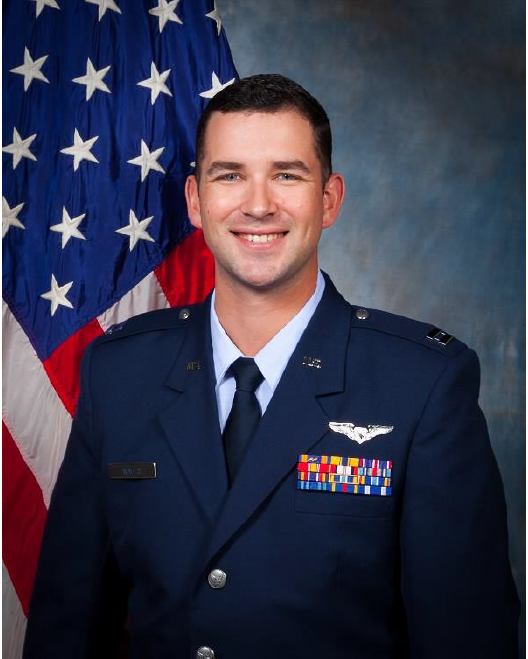 Lt Col Alex M. WallisAir Force Strategic Policy Fellow Alumni
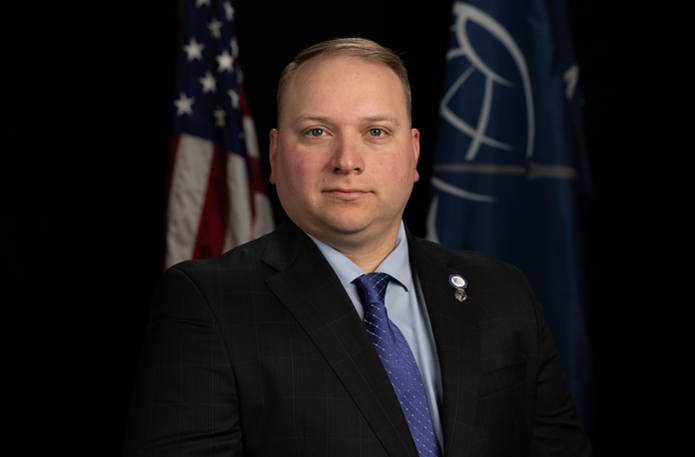 Lt Col Grant GeorgulisAir Force Senior Developmental Education Fellow Alumni
Host
 Heather PenneyDirector of Studies and Research, The Mitchell Institute for Aerospace Studies
Related Reading
Transcript
Heather “Lucky” Penney: [00:00:00] Welcome to the Aerospace Advantage Podcast, brought to you by PenFed. I’m your host, Heather “Lucky” Penney. Here on the Aerospace Advantage we speak with leaders in the DOD, industry, and other subject matter experts to explore the intersection of strategy, operational concepts, technology and policy when it comes to air and space power.
And just a note for our listeners, the views and comments from the Air Force active duty officers here on the Aerospace Advantage are their own and do not represent or reflect the views of the US Air Force or the Department of Defense.
So last year everyone watched a major debate play out in Washington DC regarding the future of the E-7. And as most of you know, this aircraft and its mission systems have been the program of record designed to replace the E-3 AWACS, the aircraft that executes the command and control air battle management function.
But really, this discussion was about a lot more than just a single airplane type. It touched upon core tenets regarding the future of air combat and what it means to secure effects through a multi-domain fashion. In [00:01:00] addition to the E-7, the Air Force and the Space Force have long contended that the C2ABM mission, command control, air battle management will also include space-based sensors.
In 2025, saw the Department of War try to kill the E-7 in favor of unilaterally pursuing the space sensor layer. Congress chose to fund the E-7, which we’re big fans of at Mitchell. And in fact, General Deptula helped orchestrate a letter supporting the program, which was signed by over 16 retired Air Force General Officers, including six former Chiefs of Staff.
It’s not that we’re anti-space for this mission, and in fact we think the domain holds tremendous potential for helping execute. It’s just that we think a combined air-space multi-domain approach will yield the best solution pathway because it’ll be layered and resilient. So it’s about harnessing the E-7 plus sensors in space.
That said, it looks like the Department of War’s position hasn’t changed on this issue, so we expect a similar debate to play out again this year. So that’s what we’re here to discuss today, the future of the C2ABM [00:02:00] mission. We’re on the cusp of releasing a new report on the topic written by Doug Birkey, Mitchell Institute’s Executive Director.
And we’ve got Doug with us. Doug, thank you for joining.
Douglas Birkey: Hey, always a pleasure. Thanks.
Heather “Lucky” Penney: And we’re also pleased to welcome back Lieutenant Colonel Grant “SWAT” Georgulis.
Lt. Col. Grant “SWAT” Georgulis: Hey Lucky, it’s great to be back and talking with the team again.
Heather “Lucky” Penney: No, always fabulous. And SWAT just wrapped up a tour with us as an Air Force Fellow this past year. And so he’s now in the NORAD NORTHCOM staff. He’s a long time air battle manager and he has time in command and as a Weapons School instructor. Alright, and y’all are gonna love having him back. Best for last Lieutenant Colonel “Big Bobby” Wallis is with us as well, Big Bobby.
Lt. Col. Alex “Big Bobby” Wallis: Hey, glad to be here. Thanks for having me.
Heather “Lucky” Penney: So also, you know, I gave you that like big old intro. You could have been a little bit more, “Hey”.
Lt. Col. Alex “Big Bobby” Wallis: Oh yeah, I should have gotten a little more, more bombastic.
Heather “Lucky” Penney: So, Big Bobby’s also a Mitchell Institute fellow, a highly experienced air battle manager, and he’s got time on both the E-3 and the E-8 plus as a graduate of Weapons School and is now Commander of the 728th Battle [00:03:00] Management Control Squadron.
So gentlemen, we’re gonna start with you. You’re the command and control air battle manager, experts. Help us understand the mission, what you do, and why it matters.
Lt. Col. Grant “SWAT” Georgulis: Yeah, great. Again, Lucky, really appreciate the time to, to talk about what I think is a very important topic for our Air Force, especially as the fragility of our long lasting peace post-World War II is starting to kind of be seen at the seams in both Europe as well as in the Indo-Pacific.
I also really appreciate the use of the command and control air battle manager lexicon, as most of all services have come forth say they do battle management, which they do, right in their own domain specifically, but for the Air Force, we are the only service that has air battle managers focused on air superiority. And so, really appreciate the language there and the specificity. But, as of right now, the desired effects, I like to bend those into four basic mission functions. And that’s gonna be executing your continuum of control, your surveillance and identification and early warning, it’s gonna be force management, it’s gonna be information management. And I think that is what, as an Air Force Air Battle Manager, that is what we [00:04:00] bring to the, not only to the fight as an Air Force pursuing air superiority, but providing that air superiority to the joint force. S o very important mission sets there, that I think, important that we talk about right now in the current moment.
Lt. Col. Alex “Big Bobby” Wallis: Yeah. And so, Heather, just like, SWAT went through the different mission sets, there’s all these different pieces that we’ve had as a part of what was referred to as the Legacy Theater Air Control System or the Legacy Tax, and that was the E-3, the E-8, the CRC and on the Homeland Defense side, and traditionally in the guard, the BCC or Battle Control Center. And in the past those things all really worked together. They had a certain set of assumptions and we’re seeing a lot of those things being reimagined right now into what is being referred to as the Evolved Tax and the new system and how are we going to take what traditionally had been set and fixed and associated with MDSs based mostly on geography and energy and the ability to generate power to run these radars and to run these radios and what we’re seeing now, that could be a lot more disaggregated, but this evolution hasn’t necessarily taken [00:05:00] away some of the great things that those other systems had and some of the survivability characteristics that they had as well.
And so we’re seeing these mission effects that SWAT described still being very relevant to today’s fight in the air, space, land, and the sea domains, and we’re seeing how are we evolving these legacy pieces into what they should be in the future? What parts should we keep, what parts need to change and what parts need to change about them?
Heather “Lucky” Penney: Thank you for that and we will get more detailed into both, the current system as well as where your vision for the future and what the Air Force’s vision for the future is and what potentials that will be. But I’d like to kind of go back in time, Doug, about the genesis and the evolution of command control air battle management.
Douglas Birkey: Okay. Well first off, I feel like a poser here talking about this with, SWAT and Big Bobby ’cause they’re the real experts. So, and they’ve really been the mentors to us as we’ve learned this mission area over the years and so can’t thank them enough.
When I think about command and control and air battle management. Especially [00:06:00] in and purely the air domain, I actually like to go back to World War I because that’s actually the example where it didn’t exist. You literally had to throw large numbers of fighters into the air and it’s dawn patrol, they would literally patrol around hoping to run into the enemy. They didn’t really know where they were. And so you had to flood the sky with the aircraft hoping you’d have a chance encounter. And it’s very inefficient. And if you don’t have large force structure, you can’t do that. It doesn’t work.
And so the next example that’s really important to discuss here is the Battle Britain because here were the, was the Royal Air Force. Britain is up against the wall. The a far larger Luftwaffe is attacking. They’re playing for keeps. And we’re talking about a Royal Air Force that had a very small number of the famed Hurricanes and Spitfires, defending the country. So they had to focus on the key [00:07:00] that in my mind, is the essence of command and control air battle management, and that is, how do you put your assets in the right time and place to net the desired effect, while also avoiding points of undue danger. And so they would track these bombers coming across the English Channel using radar and observers and things like that. They would funnel that information to command and control plotters, literally trained personnel working over these tabletop maps with little pucks showing, you know who is where, and enemy and friendlies and all that. And when it looked like it was time to make a prudent intercept, they would then call out to the fighter squadrons and scramble them, and then they would launch for a given time and place for the intercept. It was a massively more efficient, effective system. That, I mean, it’s famous today. We still talk about it. It’s kinda the gold standard in history.
So fast forward to the Cold War. In many [00:08:00] ways we really reinvented that kind of capability in the United States ’cause we’re now a victim to a nuclear weapons powered Soviet Union. And we were very concerned about bombers coming across the poles attacking the United States. And guess what? It’s a way bigger challenge than just the United Kingdom because the United States is huge, the borders and everything. And so, we all know the 1950s Air Force was way bigger than what we’ve got today and it wasn’t big enough to just throw up airplanes everywhere in the dawn patrol style.
So we created a layer of radars and processing capabilities. We made early computer powers. But these radar layers were up in the high north in Canada. There are three of them: Pinetree Line, DEW Line, Mid-Canada line, and then they pipe back into this massively, for then, powerful computer system called SAGE. And they would do the, detection and then they would help guide intercepts and believe it or not, it was so [00:09:00] sophisticated that the ground controllers could actually hand fly over remote links some of these fighter aircraft, like F-106s which is pretty mind blowing.
The next major stage it’s important to think about is Vietnam. We took capabilities we had as part of the Homeland defense mission with command and control air battle management, and we put them on board mobile systems and namely the EC-121. The Connie, like the airliner, except this one had massively powerful radars on it and command and control professionals on board. That was meant to actually in the United States project over the coast. ’cause we could have the radars in high North in Canada. But if you’re talking about West coast, east Coast, it’s just ocean. So you would need to have those aircraft fly out over the water to do the detection, to allow the time and speed to respond.
But when Vietnam came along. We were having trouble finding the migs that were pulling intercepts and air forces and all that. Sent the EC-121s over and they helped paint a picture of the [00:10:00] battle space real time and told our fighter aircraft how to engage and where the threat was, how to prudently engage it, and where to avoid points of danger.
It was an absolute game changer, and that laid forth the model that we saw that’s very famous now with AWACS and JSTARS, E-3 and E-8 respectively, and those came out at the end of the Cold War. The E-3 was air focused and the E-8 was really kind of like an E-3 flipped upside down where the radar was actually looking at the ground and they help forces in the ground monitor enemy positions and was very, very successful.
Now we’re at this juncture where we’re in the information age, and so the ability to have sensors processing power, command and control expertise, all the main functions that you saw in the Battle of Britain, they still exist, but we’re looking at it and stacking it very differently because we can now disaggregate things, connect them across huge geographic distances and it all kinda works real time.
But [00:11:00] how we do that is, very much in play and that’s kinda what we’re here to talk about, but the core tenets, whether it’s Battle Britain, Cold War, Vietnam, whatever the main things hold true and they’re very important.
Heather “Lucky” Penney: Thank you for that overview. ’cause it’s really interesting how we’re building the tenets of being able to detect, enemy aircraft or what’s going on on the ground.
But all of that is evolving based off of how the technology arrives and what the technology allows. Because like the EC-121 wouldn’t have been possible with the earlier technology because the radars weren’t powerful enough and you didn’t have enough electrical generation as well. So it’s really interesting how we execute that evolves along with the technology.
But I’d like to look at the E-3 and the E-8 because over the last 20 years, SWAT, we flew those aircraft over places like Iraq and Afghanistan, and y’all provided C2ABM support in what were essentially very permissive environments. Talk to us about the tactical and operational assumptions this helped [00:12:00] drive.
Lt. Col. Grant “SWAT” Georgulis: I mean, the reality is that the United States hasn’t fought, an adversary that actually had an Air Force since Desert Storm and, that air campaign that of course was executed and planned by, you know, the Dean of the Mitchell Institute there, Lieutenant General Deptula.
And so, once that conflict was over, fast forward until after 9/11 and we start sending these capabilities back out to the Middle East. We’re operating in permissive environments. There’s no threats necessarily to our aircraft that we have to worry about. And when you do that for 20 to 25 years, which is now, if you add in the time it’s been since we, had Operation Desert Storm, you’re talking about almost 30 years since there’s been any type of air war.
And so something I’ve, called this is essentially there’s an air power amnesia that’s kind of beset our Air Force in the fact that we won, we haven’t had to fight an air war. And so the capabilities, that would enable the achievement of that air superiority hasn’t really been tested. And so you had the E-3 and the E-8 conducting operations over Afghanistan and all of that was really good. We had great professionals that built up a lot of experience and expertise in the career [00:13:00] field, with regards to the COIN fight. Got a lot of hours, but as you start fast forwarding and looking at the current state of affairs and the geopolitical situation, that is not gonna be the reality that we face, likely in the next fight. And so, very important that the recapitalization of these efforts so that we can get this capability, you know, into the places that we need it. You mentioned layered approach, as an air battle manager, like I definitely want sourcing from the space layer, but I also need the flexibility that having an airplane and having a capability on the ground provides, to fuse that information and go out and execute, the JOB. And so, the demand has not decreased. You know, unfortunately the, Big Bobby will, we can have a little candlelight vigil for the retirement of the E-8, but, you know, that capability is now gone, not recapitalize, that we’ve cut the E-3 fleet in half.
And, the amount of taskings that are being asked for the E-3 side hasn’t changed at all. The CRC footprint has also decreased over the years. And so there’s only, you know, a handful of four CRC squadrons left in the US inventory. And so, the demand has not decreased. In fact, it’s increased, I would argue, all combatant [00:14:00] commands want the effect. But our footprint and our manning has decreased. And so it’s getting increasingly difficult and we’re having to, yeah, there you go. Big Bobby’s got the match going there for you, if you could see the video, but the way in which we’re approaching the problem set, it’s difficult with the lack of recapitalization.
Heather “Lucky” Penney: Big Bobby, the Air Force is long known that they’ve had to recapitalize the C2ABM infrastructure. What happened?
Lt. Col. Alex “Big Bobby” Wallis: Well, I mean, we talked about the adversary and when, the Cold War and the Berlin Wall came down and that threat of that war went away and we were kind of reaping a peace dividend at that point in time and doing some of these smaller scale operations.
I mean, I don’t wanna say the Middle East was a small scale operation, but it was lacking a major air threat. And I’ll just say that the assumptions have changed too. I mean, we have changed like a lot of the assumptions that have changed about the next generation fight. E-3s, E-8s CRCs to a certain extent, but not as much.
We’re all kind of around the same idea of we’ve got hard battle lines, we’ve got sanctuary areas we’ve can support along logistics chain. I mean, one of the things we haven’t mentioned with the E-3 or the E-8 was they have huge [00:15:00] logistics tales to get all the things they need to operate, from their forward operating locations.
I mean, they have range, but they don’t have the kind of range that you’re gonna need in other places, and then they need part support. And those things started aging out. And we’ve seen that with other platforms in the Air Force that we’ve recapitalized over time. We recapitalize the engines on the KC-135.
We recapitalize the engines on these other older airframes that are doing, tons of missions and we’ve recapitalized parts to make them more, survivable and dynamic environments. But we did not really do that with the C2 fleet, and now we’re starting to see where that’s costing. And we’ve seen it with the divestment of the E-8 and it’s going away.
We’ve seen it with the divestment of most of the E-3 fleet now, or half the E-3 fleet. And then with, a question mark on what to do next. But what has not changed? Well, and then I’ll go back to the ground tax and the CRC being reinvented. They really have done some different things with that weapon system, but they haven’t really focused on redoing all of it until somewhat recently.
And then you bring in the BCC which was, like I said, traditionally relegated to the Homeland [00:16:00] Defense mission because, well, in the old Sage system now we’re starting to see that there’s a lot more viability there and it’s just how are we going to evolve this? And it just got kind of left behind and there was a lot of focus on other platforms that were at the pointy end of the stick.
Well, now we’re starting to see that we can’t afford all of those things that we want, and that C2 is a major force multiplier that makes those things more lethal. And maybe it’s time to shift those investments over to magnify the effects of our fight or fleet and other things that are out there.
Heather “Lucky” Penney: Yeah, I mean, having been in the fighter world, I couldn’t imagine doing my job without air battle management. Doug didn’t the Air Force try to recapitalize with the E-10? What was that about? What happened and why did that not happen?
Douglas Birkey: Yeah. And that’s kinda one of the challenges and Big Bobby alluded to it, the E 10 was a platform that sought to combine a lot of the C2ISR capabilities.
Both E-8, E-3 on a single airplane, 767 based and a [00:17:00] grew in cost and was eventually canceled. There are also attempts where we were going to recapitalize the E-8 JSTARS with a new business jet type aircraft with the aperture on it below. That was canceled. And, you mentioned I did a report on this, and I went back and interviewed a bunch of the leaders that were involved in that time. And each time the kill was made for a pretty similar reason and that was budget. And there were just different competing priorities. And the C2ABM priority just took a backseat each time. But now we’re to a point where the existing fleet is literally structurally failing and we’re caught short. I mean, that’s why there is a gap on E-8 moving from the air to space. Space will have great capability someday, but it’s not operational today and that’s a problem.
Heather “Lucky” Penney: Yeah, we talk a lot about the hardware when we talk about the C2ABM mission, but the piece of the career field, I think that really matters is that the mission demands [00:18:00] tremendously experienced people.
So gentlemen, talk to us. Why are air battle managers unique? What is special about them and why do we need to be very cautious and careful about how we husband this career field?
Lt. Col. Alex “Big Bobby” Wallis: We talk about, you know, there’s all these different specialties in the pilot world, and they get to know their weapon system, how to employ it, how to employ it well. And they spend their careers becoming experts in those things. And in the C2 world, we spend our careers and how those pieces should fit together.
And a lot of the times I use the analogy on the football side, where you’ve got an offensive coordinator and you’ve got a quarterback and they call plays, and they make sure all the different pieces and all those different experts work effectively together. And that’s, what we are.
We started out as tactical controllers. We started out as something very small at giving headings and cutoff vectors to speed intercepts for Homeland Defense. And then we saw how that evolved into Vietnam and everything else. And I wrote a really long history about how this career field has evolved over time since the end of World War II.
And Doug talked a little bit about how those operators in World War II and before really helped [00:19:00] capitalize on a smaller fleet. And we’ve just spent our career specializing in that. And there’s this myth kind of sorts out there that technology will soon make all those decisions go away, or we won’t need that because we’ll be able to pipe it into a cockpit. But war is a human endeavor and the battle’s going to change. And those machines are only as good as the inputs that they’re getting. And the battle manager is always going to be needed out there to help evaluate that entirety of an environment and see where the pieces need to be fitting together as the enemy continues to vote, as we know they will. How’s the old analogy go that we’re a hundred percent ineffective in predicting what the next war will look like when we think we’ve got it?
Heather “Lucky” Penney: Yeah.
Lt. Col. Alex “Big Bobby” Wallis: And so, what we do know is, is that this career field, and the experts that we have generated have helped make that more efficient and use those resources more effectively.
And the other part too is. We’re trained to see past the initial intercept. We’re trained to see past the initial tank of gas in the first wave of fighters and what’s next. And that’s going to be [00:20:00] increasingly important as geographic distances start to play into other theaters of war when we’re going to have to be launching assets for the second wave, before the first wave has even started to do their job. That’s where we’re evolving out of that tactical intercept and we’re starting to look beyond that. And you’re always going to need people that have spent their careers specializing in that expertise.
Lt. Col. Grant “SWAT” Georgulis: Yeah. And if we just even just take a look at the recently released, NSS and NDS, the focus that is coming out from our, political leadership, is that we know we need to be focused on the Homeland.
And then, we still are, need to be very focused on the Indo-Pacific. And if you take a look at both of those AORs, they’re very expansive. And so, you need people that have the ability to make decisions across time and space with sometimes limited information based on commander’s intent.
And I think the authorities piece of that, that’s really where the C2 portion of the command and control air bottle management comes in, right? Command and Control is executing authorities that are delegated down from leadership. And in this case, what we’re [00:21:00] talking about on the air side is of course, either a combined forces Air Component Commander or a joint forces Air Component Commander, depending on the, environment that we’re operating in.
And so having, professionals that are trained in how to execute delegated authorities and then using air battle management functions, the four that we discuss of the opening to be able to go and then move around the pieces. Big Bobby referenced the offensive coordinator at the same time performing defensive coordinator, duties as well when you think about the Homeland Defense mission. The age in which some of these ground-based radars are, established back in the fifties and sixties, you need platform that can extend your look with the increased threat capabilities that have been fielded. And of course, listening to JDAM’s recent podcast about the PRC, you can get a good idea about some of those capabilities and the need to have humans that can take that information and affect decision space, a lot sooner to get the assets that we need out there.
The career field itself, of course, is also hurt by MC, at least on the air side, hurt by some of the MC rates that we have. The fleet reduction, somewhat has helped that in a way, like you have, because there’s less assets, you had to trim the people down.
And so you’re not trying to service as many [00:22:00] humans, but that doesn’t fix the huge maintenance problem that, that our maintenance professionals are doing a good job dealing with. It’s just you’re running into part supply issues. You’re running into engines that are starting to. come to the end of their service life with no replacement out there.
And so, that is also the criticality of, getting to a next generation airborne early warning control platform. If the E-7 is that, which, that’s the closest thing that we could get, I hope, that’s what the Air Force does, and it seems to be that Congress at leases moving down that path, but to not recapitalize that, platform and that mission set would create a huge gap in our air Force and joint forces ability to execute tactical missions in the air domain.
Heather “Lucky” Penney: Well, SWAT, you know, there’s, a point where, can shrink the force and say, oh, well, because we’ve got fewer airplanes, that means fewer people. So the fewer people we can fly them at the rate that they need. It’s really perverse logic to me, because really we need to be careful about growing our C2ABM human capital because you are the expertise. You know, another point that you brought up, or two points that you brought up that I think are [00:23:00] really important is, one is the authorities that are delegated for command and control.
I don’t want a machine doing those authority type decisions. I want a human that fully understands and is able to take responsibility for making those decisions. Because the other piece that those air battle managers are doing is making decisions through the fog and the friction of war, through uncertainty, through ambiguity, through lack of information, through deliberate deception.
And without humans making those decisions, I think we’re moving in the wrong direction. And so I’m very worried, and I know that we’ve talked about this before on podcasts about not having enough of the air battle managers remaining in the pipeline because your career field requires that experience, requires that wisdom, requires that judgment and you can’t invent that in one or two years, it’s something that you have to cultivate over time.
Lt. Col. Grant “SWAT” Georgulis: And I think this is a perfect subject that you, Heather and some of the other team there at the Mitchell Institute have been hammering home. Is [00:24:00] the model that the Air Force has to recapitalize right now is divest to invest. Well, when you do that, there are manning actions that are associated with the divestment that you automatically don’t have the humans left once the investment happens with the experience level to be able to continue moving the ball forward. You know, they have to then rebuild expertise and after the training. So to your point I couldn’t agree more. maybe this is just one of the downsides of, having, which I love the Democratic way of life, but this is not something that, you know, our adversaries that are in autocratic regimes that can simply move money around and make things happen very fast.
Like this is not issues that they worry about. Now, are they good at employing the platform? Maybe, we’ll find out. Us, we have issues with how we onboard new a kit while maintaining the human expertise based on humans being tied to the kit that is divested.
Lt. Col. Alex “Big Bobby” Wallis: Well, and I’ve gotta say on the human capital side, the Air Force actually did something different in the divestment of the E-3 fleet than what they did in the early 2010s when there was just the threat of retiring the E-3. This time around, we at least made some policy changes that allowed us to keep a lot of the experts and, bank them [00:25:00] and utilize them in other C2 capacities, specifically within AOCs.
And I know that some of the folks that work, those policy changes, and that was huge. That was very helpful because, what we’ve seen and what I’ve seen on the ground floor down here is the demand signal for C2 professionals is through the roof. I mean, just in the last, few months of me being down here, I don’t think I’ve seen nearly, I don’t think I’ve seen the volume of people asking that instead of a platform, when I was at Tinker, when I was on the E-8, you’re always getting COCOMs asking for that thing.
You know, I want the E-3, I want the E-8. What I’m seeing right now is, hey, we want these battle managers to go do this. We want these C2 professionals, even on the enlisted side to go do this. And those, taskings are coming down and, which is incredible. So we actually have for the first time with the reduction of platform and some of these folks out there is this insatiable need of sorts, especially with the Homeland Defense mission coming online.
But what we don’t have, as we’ve already alluded to, is where are the training floors to get these people the experience they need? Where is the access to the appropriate environments to give them those [00:26:00] reps to go and be what we’re gonna need them to be when the balloon goes up?
Heather “Lucky” Penney: So Doug, where does space enter the equation in this whole modernization discussion?
because we know the Air Force and Space Forces has championed air and space, but now the conversation is air versus space. I mean, is that productive? What’s going on here?
Douglas Birkey: Yeah, and I wanna be very, very clear. At Mitchell, we are huge fans of the capabilities and capacity that can be brought through space.
But it’s just like what you said it should be air and space, not air versus space. That air versus space is being driven by budget shortfalls. And as we know, the Air Force has been underfunded for way too long. And so it’s, kind of eaten its own right now. But when you look at this and why do you want both?
It’s because you want collaborative capabilities that yield a stronger whole than individual parts separately, I mean. How do you get two and two to equal five? And so space, it can cover tremendous geography, it can go over heavily [00:27:00] defended regions obviously, but there are times when you need a certain aperture size, a heck of a lot of power driving that aperture.
You need certain sensor density to get really high fidelity targeting, tracks and all that. The air can do that a little bit better at times. And the air assets, they’re dynamic. An E-7, for example, can change its look angle, very, very easily. It can fly different tracks at different times that you don’t, you know, the enemy can’t anticipate.
And, it’s just you combine these things and you yield something that is far harder for the enemy to defend against. And you give something that gives combatant commands a lot more options. And as one professional in this domain explained to me. They said look, when it comes to jamming and other forms of degrading this mission, it’s one thing to try to undermine one leg of the stool, but to have to go after all of them concurrently, that’s too [00:28:00] hard.
It imposes a tremendous challenge upon them, and that’s where we’ve gotta go. How do we offer more different, scenarios and utility to COCOMs in complicating the adversaries picture, if that makes sense.
Heather “Lucky” Penney: Yeah. So SWAT and Bobby, you’ve both written about this extensively. Why do you prefer the multi-domain approach?
Lt. Col. Grant “SWAT” Georgulis: Yeah, I mean the biggest thing that comes down to is resiliency. And Doug was just kind of touching on that a little bit, right? Like any type of conflict in the future that the US is gonna be involved in if the game plan, is to bin a capability into one domain, we are approaching that very shortsighted. And to think that our adversaries don’t have the situational awareness of the way in which the US has fought after watching us for the last 30 years. I think it, again, very shortsighted. And so, to Doug’s point, like I want a space sensor that can provide data and sensor information that could be pumped into my airplane and to the ground that perhaps would, I don’t know, maybe I can now go passive, on those two mediums and have a source of information that doesn’t necessarily reveal position with active [00:29:00] sensors.
I can then use my sensor if the space domain is degraded for whatever reason, or the ground domain is degraded. They work interchangeably and it should be a synthesis of information that allows the air battle manager then to conduct those air battle management functions, or provide command and control effects for the commander.
Lt. Col. Alex “Big Bobby” Wallis: And, if you recall, when I was back there as a fellow that time I spent developing like a C2 thought model, that was connected together where you had, your sensor node, you had your actor node, and then you had your decision maker node out there. And then they were connected through these lines of communication and we scaled that model up and down.
And you could say that would apply inside a fighter, but you could also apply it to a larger C2 system. And the closer those nodes are to each other and the fewer lines of communication they have between them, the less risk you have of them failing and the less access points you have for an adversary to action in. However, you may be constraining yourself geographically or in other ways, that doesn’t make that optimal for every situation.
And so as you expand and contract those nodes together and relative to each other, you basically manage [00:30:00] your risk and your nodes in there. And if you look in the space domain, like we’re not writing on that thing and we’re not directly plugged in to our headsets onto it. And so we’ve introduced some risk in the line of communication that goes from wherever that sensor is, how it’s piping its data, and then how we’re talking about that data to the actors that are going to effectively do something about it.
Well, when you consolidate something into an E-7 or a TOC-L kit or something of that nature that’s a lot closer to its sensors, then you mitigate risk and you could potentially move it in places faster than you need. However, your trade off there might be survivability. And so what you want and why you want a multi-domain approach is it gives your combatant commanders options.
It gives them resiliency, it gives them an ability to put something where they need right when they need it. And if you look at some of our sister services, they’ve been investing in these types of things. I mean, the Marines have been investing in this type of thing for their forward operations. The Navy’s made investments in these types of things for their carrier strike group protection and power projection. And so it’s only [00:31:00] natural that we should be making similar investments for the application of air power.
Heather “Lucky” Penney: I really like how you both described, the virtues, the values and the benefits of multi-domain and, Bobby especially how you have a attack surface area as a result of those links that you want to be able to control, whether you compress that, through, physical line of sight, or you can expand that and how you get the resilience through those multiple nodes.
It was interesting, I was, talking with our space folks and they brought up the concern that, like, for example, if all of our, sensing move to space that could actually incentivize adversaries like China to be a first mover in attacking space and spoiling those orbits because we know that the PLA does also use a multi-domain.
Layered approach. And they’re not nearly as dependent. And we know that Russia is not nearly as dependent on space as we plan to be. And so that would give them a very easy targeting set and reward them because although [00:32:00] they would have to accept their own degradation space, that’s not their only, or even their, primary node. So, Doug, as we move to this more disaggregated approach, regardless of an aerospace based approach, what are the key things we need to track to ensure mission success?
Douglas Birkey: Yeah, in many ways just think about how we live our daily lives. Connectivity is everything. So as we go more desegregated with cloud computing or what we have our devices or all that. If you’re connected, you’re powerful. It’s great. If you’re off the net and your wireless goes down or whatever, you’re kind of up a creek. Same way with a highly desegregated system, whether it be air or space, you have to have assured connectivity. And obviously we know the adversary has been studying a lot of our data links for years, and there’s certain that are more mature, that are probably more easily defeated.
There are others that are newer, more sophisticated, probably harder to jam, but there are, challenges over how big are those pipes? The [00:33:00] bigger the pipe, quite often the more vulnerable it is, the more discreet it is, might be easier to ensure survival. But are you gonna get the mass flow through?
But bottom line, you gotta stitch this thing together with a real time, very robust set of connectivity capabilities. Next, we’re talking about massive levels of data. I mean, there are gonna be so many apertures. You have got to have the processing power and the fusion capability to take all that raw data and make actionable information and do so incredibly rapidly, so it is in a near real time format.
Otherwise, we’re talking about targeting here, knowing where something is a few feet or to the left or the right, that really matters a lot. It’s difference between success or failure. We also need the ability to pull in other related assets. I mean, think how many AESA radars could be in a battle space domain, and we’re gonna want to, you know, harness those to help compliment our [00:34:00] picture. I mean, you think about a, a B 21 or an F 47 That over bad guy land. It’d be nice to tap into that potentially if that’s possible. The other thing and Big Bobby and SWAT did a good job hammering this, but command and control, this is a human endeavor.
There are efforts to bring in AI and that’s great and I applaud that. However, fundamentally, there is judgment, there’s operational experience, there are insights that you need human command and control. I don’t care whether it’s in space or whether it’s in air. We just can’t focus on the things. You gotta focus on the actual human talent that brings it all to bear.
And then redundancy, and I forgot to say this earlier but. We talk about the air layer being so vulnerable, you know, you can shoot down the, E-7s an E-3 or whatever. They’re all gonna be, flaming and falling outta the sky. Well, guys, you can also target systems in space and you can jam their links.
It’s not invulnerable. If [00:35:00] you’re in orbit, the strength comes down to having both options. It drives so much complexity. So I just, people need to be careful to think that it’s not a complete sanctuary in orbit. There are challenges that are very difficult in both, so you want different pathways.
That’s a quick hit list. SWAT? Bobby, what else did I miss?
Lt. Col. Grant “SWAT” Georgulis: Well, something to add on the connectivity piece. You know, I think one of the things that, our nation has an asymmetric advantage in, is the amount of, civilian companies that can aid, the war fighter in their job.
And what I mean by that specifically for the C2ABM mission is, when you start talking about the need to be able to pipe in a lot of data and you need bandwidth to do that. And I travel a lot with my current job and, lot of the local regional United flights now I get on and I sit down in my seat.
And I connect to starlink and I can do all these things and all these people on this airplane can do all these things very quickly, download a bunch of information. We’re all streaming different data. Man, I would love to have something like that in a platform where we’re [00:36:00] not connected to the ground and have that kind of infrastructure that can give you increased speed.
There are things that I think that these civilian companies partnered with the US military, and I know starlink is, but these are the types of capabilities that we need to be thinking about when we’re approaching the Indo-Pacific problem, where you have vast distances that you need to, be considered, concerned with and be able to have that bandwidth, that can be somewhat resilient based on the footprint of that satellite architecture.
It’s something from a connectivity piece that, should be explored, for our current platforms. I mean, that’s something you could put on the E-3 today. You don’t have to wait for an E-7.
Lt. Col. Alex “Big Bobby” Wallis: Yeah, and I mean, just to add on to the, benefits of having multiple things in different domains.
I mean, if we were to put everything in one domain, we’d be building the equivalent of the C2 Maginot Line and all this faith of like, look, we’ll build this and nobody can get around it. It’s gonna be awesome. And then you go around it and when-
Douglas Birkey: Trade mark that Bobby. TM C2 Maginot line.
Lt. Col. Alex “Big Bobby” Wallis: Yeah. Okay, I’ll leave that to you guys to do.
But yeah, like if you do that, then you’re introducing yourself to a whole set of different risks and you’re gonna fall [00:37:00] into that trap of, well I feel like I’ve got the silver bullet. And then when that thing gets defeated, now what? And that’s what you get around when you start investing in multiple domains, multiple platforms that connect to each other and you make the, you complicate that targeting set, which is exactly what we’ve been trying to do with cloud-based things that you guys have researched and provided reports on.
Heather “Lucky” Penney: Okay. But one thing that we’re not talking about in this whole space-based C2ABM discussion is another complicating reality. The involvement of the intelligence community, the IC. Why does that matter?
Douglas Birkey: Okay, so I’m gonna jump into this one because we have feelings. Everybody’s a great American. Put that up front. People in the IC are trying to get, do good things. People in the military are trying to do good things, okay? First and foremost, however, go back in history a little bit in the olden days. The intelligence community had assets that were very much focused on what we would call national level threats. And in many ways it was dominated by missile [00:38:00] warning, and other macro things that they were looking at during the Cold War where the Soviets moving certain forces around, things like that.
And that was basically feeding leaders in DC, the President’s daily briefing book, you name it, I mean, but it was very top level stuff accessed by very, very few. And as that went on, that was one track. The other track was far more operational and tactical, and that was, you know, an RF-4.
The photo recon conversion goes out, runs a sortie over some points of interest that, the. CAOC had and brings back the film. They process, it feeds the operation of tactical level decision making and that’s great. you kind of had these two parallel worlds where you had tactical, operational level intelligence, and then you had the strategic national level intelligence.
And that strategic national level was controlled by what we call Title 50, the intelligence community for the most part. And the tactical stuff and operational, that was [00:39:00] Title 10, which is the military’s jurisdiction. Come Desert Storm, all of a sudden, if you talk to General Deptula, for example and other leaders, it was very helpful if the folks in the Title 10 Land could gain access to some of the Title 50 assets, because it was really useful to see what we could see from space where the Iraqis were and where they’re doing, you know, picking bombing targets and things like that. But they couldn’t get it. The authorities were too difficult, it was too slow to work things, and there was extreme frustration.
Fast forward, you talk to commanders in Afghanistan, in Iraq with OEF and OAF, and again, similar frustrations where it was very hard bureaucratically because the President’s daily briefing book will always rank higher than, what somebody wants in a CAOC. So there are frustrations.
We’re now in a world where the replacement for the E-8 space-based GMTI ground moving target indicator sensors to actually [00:40:00] being developed in cooperation between the National Reconnaissance Office and which is the Intel community and then the Space Force. And so there’s concern over who controls those sensors and what they’ll be looking at and how they’ll be tasked.
If it’s the old school deal where the Title 10 guys always take second seat because the national command authorities are getting prioritized. That won’t work if there are enough sensors where you can meet all customer needs all the time. And the CAOC and the tactical and operational level folks aren’t taking a back seat.
Fine, that’s great, but we have to be very, very careful that we are designing a system that can meet both needs. They’re both legitimate, they’re both extremely important. But we can’t be in a zone where somebody who, they’re in bad guy land and they need to have decision quality information in seconds or minutes, their life hangs in the balance on that.
They can’t just get a busy signal effectively because [00:41:00] a higher level of authority is taking tasking authority on it. We had this deconflicted before because the E-3 and E-8, those belong to the CAOC for its asking authorities and all of that, but. We’re gonna lose that with the systems going to space because the Intel community is involved in constructing these things.
So it’s messy, it’s political, but how we create those concepts of operation and think through these things, it cannot emphasize how important that is to get it right at the get go because we cannot leave our war fighters hanging.
Heather “Lucky” Penney: Yeah. No. And Doug, I would say it’s not even a matter of minutes, it can be a matter of milliseconds, especially as we’re looking to, for space to take , not just the GMTI mission, which could be used to guide, missiles or weapons to a ground moving target, but also the AMTI mission.
And so it’s not just about detecting it, it’s about also weapons guidance, especially as we look at potential long range kill chains. And so this becomes far more crucial because as you [00:42:00] pointed out, what the National Command Authority is interested in looking at isn’t always what the military the folks on the front line need to be looking at.
So, SWAT and Bobby, what’s your experience on this front suggest?
Lt. Col. Alex “Big Bobby” Wallis: Yeah, so I actually spent a large part of my early tactical career trying to figure out a good bridge between, intel and battle managers and what we do, and wrote my own weapon school paper actually on the time value of intelligence and how, battle managers use information and how Intel communities uses information.
And I’ve summed it up basically to say that, you know, Intel builds products and provides analysis and battle managers provide a service. And we provide a service off that data. And that’s kind of how I’ve summarized it. But I think it would be interesting as we talk about space and we talk about the Title 10 and the different assets and how they’re used and who uses them.
I think it’d be interesting to examine what assumptions that we had in place when those titles were there and what drove it and what has changed. And I know that security is part of that. I know that the exquisiteness of the capability was being protected and therefore it was in, in a certain place.
And it might be time as we [00:43:00] look at using that domain in a more tactical manner. Because one, the fidelity of it now is available and in volume, if you think about how space it was used as an intelligence, platform or an intelligence gathering thing before there was a very limited window. It could do high fidelity.
It was very limited, and your opportunities were small, therefore, it needed to be reserved at the highest levels. Well, that fundamental assumption has changed significantly. And that could potentially talk about reexamining how that information goes and flows. And I’ll say, and I’ve said before that intel and battle management and the tactical operator, they are not mutually exclusive when they use data. I mean, and right now we, there are pathways for this data to flow for the intel operators to provide the analysis that they need to answer commander’s critical information requests. And at the same time for battle managers and war fighters to be using that data to drive tactical problems.
And it used to drive me crazy when I was on the E-3, I got my tactical start as an electronic combat officer. And that’s very an intel type discipline and not very much a tactical [00:44:00] controller discipline. And it used to drive me crazy when I’d say, why don’t we bridge this?
Well, no, that’s an Intel job and we don’t do intel things. I don’t understand. Like, these things can work together and this platform demonstrates that they can. And I think we’re at a critical point now, especially at some of the new platforms that are coming out where maybe we examined some of those underlying assumptions and maybe we talk about the TTPs that’ll let us use those things more effectively.
Heather “Lucky” Penney: Would this require some kind of like title reform? Kinda like roles and missions, that kind of, that seems like a bridge too far. Is there a better way for us to be able to merge? Because I agree with you, there’s a lot of overlap and a lot of sharing and, benefits that could come from that.
Lt. Col. Alex “Big Bobby” Wallis: I’m not an expert in title reform, so
Heather “Lucky” Penney: Okay.
Lt. Col. Alex “Big Bobby” Wallis: I’ll leave that to those experts, but I will say that like, I think that we need to look at what assumptions why was that the case from before? Has that changed? And can we potentially look at how those apertures get shared in today’s new environment, new connected environment with higher volume.
Heather “Lucky” Penney: Yeah. And then how do we bridge those [00:45:00] classification because it’s not in the means and methods we need, it’s just the data. SWAT, what’s your experience?
Lt. Col. Grant “SWAT” Georgulis: Yeah, I’d say my, you know, from, what, Doug and Big Bobby just talked about. I think one of the things that always comes to my mind is, you know, again, going back to last time the US has fought a major war, we argue Desert Storm the last time we fought a multi theater front war, if you will perhaps back to World War II. And so what I get concerned about with the space side of this, and again, I am not a space expert and I know that there are space expert out there thinking about this.
But my hope is, is that if we’re going to start funneling some of these capabilities to the space domain, which I want we have to be sure that from a demand perspective, that multiple entities, i.e. multiple combatant commands have the ability at the same time to use that data and task those assets without conflicting with any other type of, intelligence agency or any other type of entity that is also trying to use that data. And I think that, is a lesson that we need to be, careful of. ’cause we’ve seen in the past, [00:46:00] where, you try to get some type of product or some type of capability and it’s like, Hey, sorry, that’s not available to you right now.
It’s being used by this theater instead.
Heather “Lucky” Penney: So Doug, in your report, which by the way we will have in the show notes, you suggest that a major surge in RPA growth during the two thousands and 2010s might have some lessons for us.
Douglas Birkey: Yeah, and I hit on this earlier and it’s this notion that we’re gonna have so many apertures involved in this, that we have to be very, very careful.
We do not drown in data to the point that we have paralysis trying to get actionable information out of it or we really are losing things on the cutting room floor. So when you looked at the number of RPAs that were over Iraq in Afghanistan, it was significant and they’re generating so much full motion video and other sensor data that we didn’t have automated processing capabilities.
So we’re literally trying to get through it with humans and the system kind of melted down. And so we need to be careful as we develop this new enterprise that there are decision aids that really help process that [00:47:00] data so that we’re able to maximize all of it, but not, literally drown in the meantime.
Heather “Lucky” Penney: Yeah. And we’ve also gotta make sure that we’ve got the bandwidth and the speed of the data links so that we’re piping it to the right people. We can pipe the information they need at the pace and the fidelity that they need. So we’re not losing richness, and we’re not being victim of latency.
So, Bobby, SWAT, what does all this mean for the future of the air battle manager?
Lt. Col. Grant “SWAT” Georgulis: Yeah. One thing I’d like to add to what Doug was just talking about. You know, I am sure you guys, Mitchell saw this as well, but the ability for, what the Australians are able to do working with their F-18s, E-7, and their, CCAs, that is something that I think is a model that, we should be paying very close attention to as we develop this technology. You wanna talk about reducing, risk and, increasing survivability. I mean, there’s applications that you can do with RPAs and even CCAs that can, perhaps extend, effects of an airborne early warning and control platform.
And then also increasing lethality and survivability of our pointy nose, brothers and sisters, [00:48:00] through the use of that E-7 to, to work with those CCAs in certain situations. And so, I think that would be a paradigm shift in the United States Air Force, of how we employ tactically.
But it’s something that we should absolutely take a look at, as we start looking at the cost effectiveness of being able to put up a CCA compared to, some of these other exquisite platforms and then increase lethality and potentially, increase the number of adversary aircraft that we can, take out of the sky.
Lt. Col. Alex “Big Bobby” Wallis: Yeah, I think it’s a huge growth area. I mean, I think, as the RPAs have come along, and especially we saw this growth of sensor information availability in these permissive environments, I think that they’re getting better at surviving in increasingly non permissive environments.
And absolutely we’re going to have to look at ways to automate the information that’s coming through, to automatically filter some of this, diffuse this information. I think the one thing that the RPA world is this increase in sensors is definitely gonna help with that we’ve traditionally had problems with, and that’s continuous tracking, and that’s something that we don’t talk about a lot.
We like to make this assumption. We found it, we [00:49:00] fixed it. We track it. Well that track T is really difficult to maintain, especially when you start talking about identifications and holding identifications over a long period of time to allow you to employ against them. That was especially true in the GMTI world, on the E-8.
And I think now with RPAs and the more looks you have in different places and that continuous tracking, you start to find ways, if we’re able to harness that automated processing to maintain that at a risk that’s acceptable to employ weapons. And that’s a huge efficiency boost in time of employment from finding and fixing if we can continue it.
So, I think we need to keep pressing with it and I think we need to keep working with that community to bring that information in.
Heather “Lucky” Penney: Yeah, I, no, that’s really an important point that multis static look that you can have through connecting all these different platforms together and using CCAs can allow you to have a better chain of custody, of target identity. So Doug, that’s also-
Lt. Col. Grant “SWAT” Georgulis: Sorry, Heather, real quick ahead. That’s also gonna allow, the vastness of the Pacific. We talk about, during my time at Mitchell, the forum paper that I put out with regards to air bottle management, one of the things I talked [00:50:00] about in there is, to your point about we need to make sure that we’re growing the community, have the professionals in place you start talking about all these island out placements that we have in the Pacific. They are, natural and should be viewed as important and strategic hubs that you can put some capability, whether that be space sourced, from a sensor standpoint. Or some type of organic sensor on that island that you can have a C2 air battle management professional there to be able to not only manage the defense of that island, but then plug into that greater network of, working, through a larger, theater employment from an air battle management perspective.
Heather “Lucky” Penney: No, that’s a really good point SWAT, I also like to talk. I mean, physics and geometry matters, right? Because you can put somebody on an island, but they have a limited line of sight just simply because they’re at zero AGL, where being at 35,000 feet AGL gives you a much larger reach line of sight, and line of sight matters in an MSO contested environment, right?
Lt. Col. Grant “SWAT” Georgulis: Very true. And what I mean by putting someone on the island is they’re part of that architecture. You have someone that is, in an [00:51:00] airplane that has connectivity to the person on the ground who can then be working some of those rear echelon C2 and air battle management functions.
And so I think it’s gonna take all three of those things. We’re gonna have to use that key terrain that we acquired during World War II and we’re in the process of recapitalizing if we’re gonna be successful in any type of Pacific endeavor.
Heather “Lucky” Penney: Yeah. So Doug, I had mentioned, and by the way, we’ll also put your forum paper in the show notes.
So Doug, I mentioned the E-7 advocacy letter that was signed by so many retired general officers. What motivated them to engage like that? Because a broad level of engagement like that is really rare.
Douglas Birkey: Bottom line, they know how critical capability is. They really understand the need to have multiple solution pathways and they know that technology takes time to mature.
And while the space systems, I think are gonna be great, it’s gonna take time to get there. And we shouldn’t have a single point of success or failure. We need to have multiple solution pathways with different levels of maturity to ensure we get the job done. And these [00:52:00] guys they signed on their own free will.
I mean, this was a very sincere feeling and it was quite a statement.
Heather “Lucky” Penney: Yeah. So SWAT, based on that, there are some folks that say that, E-7 air battle managers and the other established models as old think and it’s negative for the mission. What would you say to them?
Lt. Col. Grant “SWAT” Georgulis: Yeah, I’d say the air domain is still arguably the, key domain in ensuring victory, in any conflict.
And to suggest that we can simply abdicate the air domain because of air quote threats. and that we could, make up for that capability with a either space-based, sea-based or land-based capability. And that we’d be fine. I think, again, extremely shortsighted. The Air Force, has been iterating on its technology and its tactics and needs and procedures, since we became a service in 1947.
And I think you have to trust that the professionals that are operating these weapon systems to execute their mission in accordance with the acceptable level of risk that’s, levied upon them by the combatant commander. And so, do we all hope for a day that we can eliminate the risk to human life [00:53:00] and use robots to potentially go and fight our nation’s wars? Maybe, that’s definitely not today.
And, for us to be able to be successful, in any type of future fight we have to capitalize on the air effects and the core missions of the Air Force, which I would argue, command and control is absolutely one. And air battle management, being critical to the achievement of our superiority, we need the E-7 and or an airborne early warning platform.
Again, it could be whatever, but the E-7 is the closest thing that we could get, that platform, is absolutely critical in our success moving forward. And ensuring that we acquire the appropriate numbers of that platform so that we can, perform those missions on a multi theatre level.
Heather “Lucky” Penney: Yeah, I mean, we always need to be looking towards the future, but the fact of the matter is that roles, there are core missions of the Air Force that will be enduring, and there are elements of how we execute those missions that will also be enduring. And so there’s a risk of getting too acute and trying to lean too far out, especially if you haven’t had that technology matured where you haven’t been able to test it in a battle hardened kind of way.
You haven’t fully developed all of the enterprise from the [00:54:00] people to the TTPs, et cetera. So Big Bobby, you’re leading a squadron right now that’ll play a large role in the future of the command and control air battle management. And so you will be the central fusion point for these space-based sensors and feeds from other domains.
What is that vision?
Lt. Col. Alex “Big Bobby” Wallis: I’ll just quick back on that old think in the tech, um, you know, I, yeah, go for it. I think, when ICBMs were invented, did that negate the role of bombers? And the answer was no. When CCA started coming out and doing what that did. Did that negate the role of pilots in the air and it didn’t.
And it won’t. And so why would we apply that same logic over to the air battle management, the E-7 tech? Like those things will evolve and there’s a place and we need to improve and we do need to evolve. But evolving doesn’t mean full up elimination on the other side of that. And so, that’s when I hear those arguments, I like to just turn it right back around and in so many ways because when those things came around, we didn’t think that way.
I would say we’ve been better for it. So now to get back to your original question that you asked, yeah. What we’ve got going on down here is not new from the [00:55:00] standpoint of, BCCs have been around for a long time. And what we are doing, is it really has its roots in sage.
We did it in Europe in a very similar way post World War II. We had a sagelike system that was in Europe that was, doing a lot of the air defense over Germany. A lot of our allies over there sensing and bringing in information using the first types of computers. for those of you that have, read up on your stage history and what a massive technological undertaking that was. We are an evolution of that.
But what is different about us now and what we’re doing down here is that we are expeditionary minded. So I might be based here, but I’m thinking about how do we use this capability? How do we tap into sensors? How do we provide an effect from an environment. Physical security of sorts, and how do we, leverage a C2 effect in other places?
And I really think that a weapon system like we’re developing down here is one of those things that, that has a place in the continuum and the scope and scale of war and how that ebbs and flows, and it isn’t constantly static. And we’re exploring how to bring these things in, [00:56:00] what technology needs to be out there.
I’ve got a sister squadron, my sister squadron’s out at Beale Air Force Base. You know, they’re working on it from a different angle. And it’s one of those things where, it’s not new, but it is new because there is that expeditionary mentality. And we’ve got new connections, we’ve got new data feeds.
We’ve got, like you mentioned before, the cross domain problem. How do we solve that? how do we get past some of the contracting that we’ve put in place where many of the data pipes are proprietary? How do we get those proprietary data things to talk to each other and go under a system that we can then leverage it?
And those are all problems that we’re tackling where we’re at. And it is a very interesting one. I think it’s gonna play a huge role in future war on how well we can one, defend the homeland like our weapon system has traditionally done. But two, as we start to push that fight out, or if we start the fight out, how do we apply something from a position of relative safety and then use weapon systems like the E-7 smartly to one, do the mission they need to do and then feed it back into a like basically into a BCC or a fixed ground site like A CRC or the [00:57:00] TOC-L so they can manage those effects and maybe use that information differently. So we are we’re at the very nascent stage of that right now. It’s still very young. There’s a lot of work left to do, but the demand signal is huge and we are seeing that.
Heather “Lucky” Penney: Well, I’m glad to hear that you are doing that kind of development experimentation, in a way that is walking towards the future and will mature that technology.
So where do you see this debate going in 2026?
Douglas Birkey: I think that it’s gonna be interesting. You know, we’ve heard conversation about a large defense budget. Hopefully that allows the department to buy back into the air capabilities. Congress clearly kept it alive last year. And so I hope that we get back to a common sense, multi-domain airspace approach.
But if that isn’t the case, I would expect Congress would continue to hold the line on wanting multi-domain. They were pretty adamant about this time around.
Heather “Lucky” Penney: Well, Doug, thank you for that thoughts. I know that we will be, continue to be monitoring this issue [00:58:00] and these important capabilities and technologies.
So Big Bobby and SWAT, thanks again so much for joining us. Doug, great paper.
Douglas Birkey: Take care guys.
Lt. Col. Grant “SWAT” Georgulis: Thanks, Heather and Doug for us again. Just wanna also say, C2 Air Bottle Management is, definitely a passion of mine I know is of Big Bobby’s as well. And, a friend of mine, another fellow weapons officer, Opie folk, we started a website called c2core.com.
Go check that out if you’re interested in the topic and look to learn some more.
Heather “Lucky” Penney: Awesome. We’ll keep that in the show notes then.
Lt. Col. Alex “Big Bobby” Wallis: Glad to be here. Happy to talk C2 and look forward to doing it again in the future.
Heather “Lucky” Penney: See ya.
With that, I’d like to extend a big thank you to our guests for joining in today’s conversation.
I’d also like to extend a big thank you to you, our listeners, for your continued support and for tuning into today’s show. If you like what you heard today, don’t forget to hit that like button or follow or subscribe to the Aerospace Advantage. You can also leave a comment to let us know what you think about our show or areas that you would like us to explore further.
As always, you can join in on the conversation by following the Mitchell Institute on X, [00:59:00] Instagram, Facebook, or LinkedIn, and you can always find us mitchellaerospacepower.org. Thanks again for joining us and have a great air and space power kind of day. See you next time.
Credits
Producer
Shane Thin
Executive Producer
Doug Birkey