In this episode, our team explores the top defense issues in Washington, D.C. and beyond. What are the pros and cons with the new National Security Strategy? What’s up with Air Mobility Command’s new airlift recap plan, plus what are the biggest priorities for the new STRATCOM commander? CCAs take a big step forward with a new design unveiled and a live fire test. We also explore what the biggest take aways were for 2025 and what we predict will shape defense in 2026.
Guests
 Lt. Gen. David A. Deptula, USAF (Ret.)Dean, The Mitchell Institute for Aerospace Studies
 Anthony “Lazer” LazarskiPrincipal, Cornerstone Government Affairs
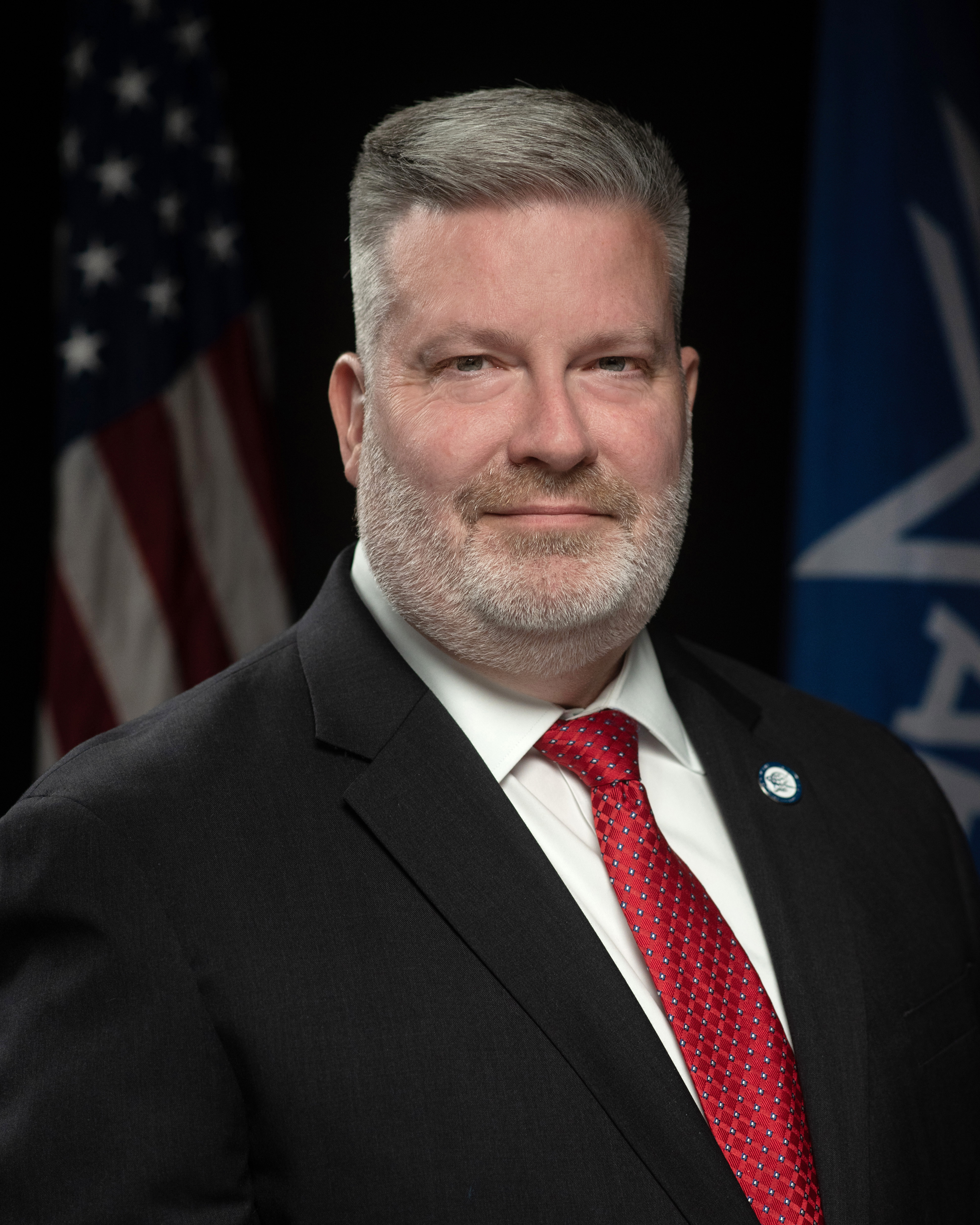 J. Michael DahmSenior Fellow for Aerospace and China Studies, The Mitchell Institute for Aerospace Studies
 Mark GunzingerDirector of Future Concepts and Capability Assessments, The Mitchell Institute for Aerospace Studies
 Kyle PumroySenior Resident Fellow for Space Studies, MI-SPACE
 Doug BirkeyExecutive Director, The Mitchell Institute for Aerospace Studies
Host
 Heather PenneyDirector of Research, The Mitchell Institute for Aerospace Studies
Transcript
Heather “Lucky” Penney: [00:00:00] Welcome to the Aerospace Advantage Podcast, brought to you by PenFed. I’m your host, Heather “Lucky” Penney. Here on the Aerospace Advantage, we speak with leaders in the DOD, industry, and other subject matter experts to explore the intersection of strategy, operational concepts, technology and policy when it comes to air and space power.
It’s so hard to believe, but 2025 is in the rear view mirror. And to say the least, it’s been a year I did not see South American Venezuela on my bingo card for 25, but here we are, as we always do for the first episode of each month is time for the rendezvous. Our monthly look at what’s happening in Washington DC when it comes to aerospace power, plus important national security trends we should be watching around the globe.
We’re recording this crazy early for this rendezvous ’cause it’s Tuesday, December 16th. Given the holiday break, that’s how the schedule played out. So if world events have happened since then, we’ll catch that on the next episode or provide a special. So with that let’s welcome the regular gang Lazer Lazarski. Great to have you.
Anthony “Lazer” Lazarski: Great to be back in an [00:01:00] early happy holidays to everybody.
Heather “Lucky” Penney: Thank you. And Lieutenant General, Dave Deptula. Sir.
Lt. Gen. David Deptula, USAF (Ret.): Happy Air Power Holidays.
Heather “Lucky” Penney: Gonzo.
Mark “Gonzo” Gunzinger: And Happy New Year.
Heather “Lucky” Penney: Uh, Kyle Puma Pumroy from our space team.
Kyle “Puma” Pumroy: Yeah, great to be here. Happy holidays and Merry Christmas and happy New Year.
Heather “Lucky” Penney: And for all you Dahmies, we got JDAM on board. Mike Dahm.
Michael “JDAM” Dahm: Happy. Well, not quite Chinese New Year.
Heather “Lucky” Penney: Yeah. It’s gonna be a little while. Right? So it’s, it’s gonna be a year of the fire horse. Right?
Michael “JDAM” Dahm: Are we already back around to the fire horse?
Heather “Lucky” Penney: And so we also have Doug Birkey. Executive director of the Mitchell team.
Everyone welcome.
Anthony “Lazer” Lazarski: Who has failed to have a good background, but that’s okay.
Heather “Lucky” Penney: We’ll get to that later. Alright, so Lazer, let’s start with you as usual. Let’s begin with the congressional update. Where do the defense bill stand and what should we be tracking? Because I know the NDAA is about wrapped up, so what are the main provisions that we should all be tracking? And give us an update on defense Aprops.
Anthony “Lazer” Lazarski: Yeah, so by the time this podcast [00:02:00] airs the Senate should have passed the FY 26 NDAA and the President should have signed it into the law. And as you said, it is ki they’re working it right now. There’s an issue, and I know that, you know, whoever’s been watching, there’s an issue that popped up about our rotary wing aircraft. You know, conducting training operations in high traffic areas. So, um, and that language is in the final bill of the NDAA, Senator Cruz, senator Cantwell oppose it. And Senate Majority Leader Thune is working to resolve it, but it’s not gonna be done in the NDAA because it’s already passed on the house.
They just want to get a pass in the Senate. Senator Thune said he’ll go work that with the next bill that gets passed, and it could be an appropriations bill that we do January next year, and we think that’s got it resolved. But bottom line, it’s not gonna tank the, NDAA. So the house passed, the NDAA on the 10th last week.
Senate is supposed to pass it tomorrow. Which is the 17th. And then, like I said, the President will have it signed before [00:03:00] the 31st, which is important ’cause we have all the authorizations that expire at the end of the year. The top line’s $901. That’s about 8 billion above the president’s budget, which is great, wasn’t as high as the Senate was trying to get, but that’s what was negotiated. And the good thing about that is that number was not just negotiated on the authorizers, but the appropriators were involved, leadership was involved, the White House was involved. So while I don’t know what the final Defense appropriations top line is gonna be, I expect it probably it’ll be around 8 billion above the president’s budget.
And then this bill, it’s 3000 pages long because we also include the State Department, Intel and Coast Guard authorizations in the bill. So it is, it’s a monster bill, but it is a good bill. And, we talked a lot about it, but there is a lot of great language for Air Force on aircraft, you know, be it A10s, B 21s, F 47s. Overall good Bill, good authorization.
And I think they did a good job with increasing the budget. [00:04:00] Looking at the Aprops side there’s the Senate, well, the bottom line is they’re still trying to work aprops bills. We won’t get ’em done till January of next year. But the Senate’s trying to work a five bill, mini bus. Just to get it passed over on the house side.
But there’s no consent on how they move that forward. The house appropriators who are trying to do a smaller package and they’re, I think they’re gonna run outta time. So ultimately what they’re looking at is trying to get the, these last nine bills, trying to get them passed out in January. The one thing that we need to watch is the main issue that they’re working is, a healthcare subsidy extension increase some changes, guidelines.
Obviously that’s not defense related, but that labor healthcare bill is tied to the defense bill when we finally do get it passed. So the, I don’t, again, I’m gonna be optimistic, you know, and Sledge isn’t here, but I’ll be optimistic that we don’t shut down. But we [00:05:00] could, I mean, there is a possibility that we could shut down next year if we cannot come to an agreement.
I say we, Congress can’t come into an agreement between Republican, Democrats, house and Senate on what’s gonna happen with these healthcare subsidies because it’s, that bill’s going to get tied to defense. But if everything works out, they’re hoping to get, you know, another nine, maybe 10 bills pass ultimately. Have only probably homeland security, and then may maybe state and foreign ops are not gonna be able to get on a bill.
So there’ll be a year long cr I do not think defense will be on a year long cr but we’ll just keep our fingers crossed. The only other thing, there’s a reconciliation bill that we’ve seen out there. Tranche two and three are supposed to be coming out soon, and we’re hearing, tranche three is gonna be tied to Golden Dome and Golden Dome associated efforts.
And then the other last thing that’s gonna happen just for everybody, and it’s important to us in defense is there’s an en block package of 97 nominees [00:06:00] and in there are 20 Pentagon nominees, plus an additional two nominees that are gonna get two, maybe four nominees that’ll get individual votes. One of them is an NASA administrator, but those should be done also tomorrow night.
You know, either before or after the NDAA is complete. And that’ll just leave a handful of, uh, national security nominees left on the executive calendar. And typically they have to, they’ll get kicked back and have to get renominated. So getting the seven, uh, 97 through is great. And then for everybody that’s listening, since it’s gonna be playing later, Congress comes back. Senate is back in session on the 5th of January and on the 6th of January, house is back. And the big date we’re looking at is 30 January when this continuing resolution ends.
Heather “Lucky” Penney: Stay buckled up ’cause I bet it’s still gonna be a rough ride coming January 30th. So, General Deptula, Gonzo, the administration issued a new national security strategy. It’s raised some eyebrows. Thoughts on the new NSS and [00:07:00] what you might expect out of the NDS as a result, the National Defense Strategy?
Lt. Gen. David Deptula, USAF (Ret.): Yeah. Well, obviously Heather, it’s a question that everybody and their brother has an opinion about. And whenever a new national security strategy comes out the first thing to understand is what problem is it trying to solve? And in this case, the administration is clearly reacting to a world that no longer behaves the way earlier US strategies assumed it would. So let’s take a look backwards for a minute here.
For roughly three decades American National Security Strategy was built around global engagement. Alliances, institutions, trade in the idea that US leadership could shape a more peaceful and stable international order. Now, that approach delivered real benefits, but it [00:08:00] also rested on assumptions that have been modified since it was first put in place. It assumed that adversaries would eventually converge toward cooperation. That economic integration would moderate behavior, and that US commitments could remain open-ended without consequences.
The new strategy starts from a much harder edge premise. That the world is competitive, coercive, and transactional. That power matters more than norms, leverage more than consensus and sovereignty, more than institutions. In a sense it’s a corrective. It’s clear-eyed about great power competition, even though they don’t like using that term anymore. Tougher on free riding by allies, skeptical of endless military commitments, and much more [00:09:00] willing to use economic tools such as trade sanctions, supply chains, as the instruments of national security. Now, those are, those are some valid strengths and frankly, overdue in some areas, but where it raises eyebrows is in the risks that it introduces. The strategy leans heavily on conditionality. On the idea that US commitments depend on reciprocal behavior that can drive burden sharing, but it can also blur credibility. Deterrence works not just because the US has power, but because allies and adversaries believe that the US will use it even when it’s costly. If commitments look negotiable, however, allies hedge and adversaries will test. We see that going on with Russia testing us in [00:10:00] NATO almost every day. There’s also a trade-off between short-term leverage and long-term influence. Transactional approaches can extract concessions quickly, but alliances, institutions, and credibility or forms of strategic capital that compound over time.
If they erode, competitors don’t need to defeat the US. They just need to wait. So my bottom line is this. The new strategy is approaching the problem a bit differently than United States has in the past. Engagement without reciprocity failed in key places. Power competition is real and strength matters. The question is execution and balance. If leverage comes at the expense of trust and predictability, the strategy could weaken the very system that [00:11:00] has amplified American power for decades. Now, on the other hand, if it blends realism with durable alliances and credibility, it could recalibrate US leadership rather than diminish it.
But the fact of the matter is time will tell.
Heather “Lucky” Penney: That’s excellent. I mean, those alliances and that kind of credibility I think is gonna be hugely important because the world that we built post World War II, that global order we paid for in blood, and we can’t easily reconstruct that. And so I think we, we have to be conscientious as not take that for granted.
Gonzo, I’d love to hear your perspective.
Mark “Gonzo” Gunzinger: Yeah. That, those are some great points and I’ll add a few. You’re right, everyone has an opinion on this document, but I think a nonpartisan assessment of it will reveal that it has much in common with previous national security strategies. For instance, the strategy’s, foundational principles include halting regional conflicts before they spiral into global [00:12:00] wars.
Maintaining a strong US National Defense Establishment establishment, and that is the best deterrent. And it says very clearly that we must work with our allies to maintain regional balances of power and counter aspiring hegemons. I don’t think we can disagree with any of those. Now, I would also challenge claims that this strategy’s regional priorities are vastly different than the last of administration strategy. In order they are the Western hemisphere, Asia, Europe, Middle East, and Africa.
And defense of the US homeland has always been the top priority of our national security strategy. And the 2025 strategy is very clear on the growing threat to our homeland. And that clarity is needed because there are still some who believe that America is protected by its geography. One member of Congress recently posted online just a few days ago from this taping that “America has [00:13:00] two massive oceans to the east of the west that are natural protective barriers from the old world. And it’s a barrier that can help keep us safe if we let it.”
In an era of long range ballistic missiles, cruise missiles.
Lt. Gen. David Deptula, USAF (Ret.): Is that, was that a quote from 1938?
Mark “Gonzo” Gunzinger: That’s actually how I respond to that, quote from three days ago. Hypersonic weapons, cyber threats, transnational terror groups, that’s, as you said, it’s simply not true. So declaring homeland and hemispheric security is the top party of your strategy is absolutely appropriate. Now for the Indo-Pacific. The strategy says that building alliances and partnerships must remain the foundation of the regional security and prosperity. It also calls for building a military capable of denying aggression anywhere in the first island chain, including against Taiwan.
And that also mirrors the previous and NSS, but I find it interesting the strategy says we must build a [00:14:00] military to deny aggression in the Indo-Pacific. The use of that word is really interesting, and I think it’s intentional, but hopefully it’ll lead to increasing the size of our air and naval forces since they’re going to provide preponderance of combat power for an Indo-Pacific conflict.
And that’s going to bring me to my last point, which is that’s gonna call for a larger national security budget, and that’s the ultimate test for any national security strategy. Will our administration back it up with resources to achieve its objectives? Our annual defense budgets average less than 3% of US GDP compared to the 6.4% on average we spent from 1961 to 1991 to deter the Soviet Union. Anything less than 5% of GDP will not be rebuild the military. It will not pace China and it will not achieve the strategies objectives. [00:15:00]
Heather “Lucky” Penney: You know, it’s interesting, Gonzo, you said, defense of the homeland and, you know, the hemispheric security. I would actually say defense of the homeland has long been really just kind of lip service.
Mark “Gonzo” Gunzinger: Yeah.
Heather “Lucky” Penney: Because we haven’t really truly invested in that and hemispheric security has not been our priority. That’s been the lesser included case of our ability to project power. And so one of my concerns is, are we shrinking our vision? Are we coming back to a Neo Monroe doctrine? Where we’re no longer truly projecting power, we’re really beginning to look at just what’s in our backyard.
Mark “Gonzo” Gunzinger: Or are we putting some weight behind our rhetoric?
Heather “Lucky” Penney: It’s gonna take the resources.
Mark “Gonzo” Gunzinger: Bingo.
Heather “Lucky” Penney: It’s gonna take those alliances, it’s gonna take those relationships. So JDAM, given your China expertise, what’s your take on this? How are the Chinese reading this and how, should we maybe be thinking about some of these nuances?
Michael “JDAM” Dahm: Well, I don’t know. I mean, I don’t wanna disagree with Gonzo and the boss, but come on. I mean, there, is so much about this national [00:16:00] security strategy and the direction that the administration is going.
Heather “Lucky” Penney: Well, you had brought up some really good points.
Michael “JDAM” Dahm: It strikes me, you know, a couple of things. First of all, Gonzo’s point about increasing air and maritime power in the Pacific. Read the national security strategy carefully. Air power is not mentioned at all. Naval power is mentioned. Maritime powers is mentioned especially as it relates to you know, to the situation in Taiwan and the South China to see want access point. We want access to ports and we want to interlink maritime security issues. I’m reading right from the document here in front of me. We will require, further investment in our military, especially naval capabilities. So air power is kind of, left out of the discussion. The only saving grace is that the Army is not specifically called out in the national security strategy either, but the Navy seems to be the clear winner.
Anthony “Lazer” Lazarski: I think it’s just they’re just assuming air power, crossing air.
Michael “JDAM” Dahm: Oh, they’re just, of course, air power is always assumed and that’s.
Heather “Lucky” Penney: But when it’s assumed it’s not resourced that’s the problem.
Mark “Gonzo” Gunzinger: [00:17:00] Bingo.
Lt. Gen. David Deptula, USAF (Ret.): Well, in all seriousness, there’s a lesson here that you bring up for the Air Force leadership. They have got to start articulating the needs for increased resources to stop the nose dive that the Department of the Air Force has been in.
Michael “JDAM” Dahm: Yeah, I mean, it, it fundamentally, I think there is a lesson learned here and we’ll see what happens in the National Defense Strategy, which I expect will be released before this podcast goes to air. We’ll, we’ll have to see. But my other point to some of the things Heather was just saying was, yeah homeland defense has always been foundational to the national security strategy. But during my time in uniform, starting over 30 years ago, the idea was fight ’em over there so we don’t have to fight ’em over here. The whole global war on terrorism was we don’t want terrorists to target the United States, and we put a whole lot of blood and treasure into taking the fight [00:18:00] to terrorism abroad so that we would not have to address those issues here in the United States.
This sea change and I think it’s very shortsighted, this idea that yeah, the forest may be on fire and the forest is all around our home, but as long as our little property’s good, we don’t have to worry about what’s going on, you know, anywhere else in the world and maybe we will rely on allies and partners to take care of that abroad. To answer your question, Heather, directly, I think China is seeing this as a win. I think it is clearly a win. I’m very concerned about what might come out in the National Defense Strategy.
I, referenced Secretary Hegseth’s remarks at the Reagan Defense Forum recently, where he says, ” we are going to respect the historic military buildup that China is undertaking.” I’m not entirely sure what he meant by respecting their military buildup, but it does sound like despite some of the rhetoric [00:19:00] in the national security strategy about opposing any kind of change to the status quo in the Taiwan Strait, we are acknowledging China’s rise as a great power and acknowledging that they’ve got this historic military buildup that, you read between the lines, some of the other comments about losing every war game that he has made other things that, China sees it, it has come into its own, and I think it’s gonna be emboldened to take more action.
The other thing that I’d point out, and this goes to the conversations that Heather and Doug and I were having before was I think the name of the game going forward, when you start talking about great power competition, it is not about a small island in the Western Pacific. It is not about, the South China Sea. Great power competition going forward is going to be about global resource competition. And right now, the only thing that’s keeping the [00:20:00] People’s Liberation Army from focusing on expeditionary capabilities, is its focus on Taiwan. And so in terms of, of buy-in time, so we can build up our air force, so we can build up our navy, so we can build up our military to deal with an expeditionary people’s liberation army, we need them to be focused on security in East Asia for as long as humanly possible. So again, there’s a lot of problems with the coherence of the, national security strategy, but to the extent it talks about holding the line along the first island chain, not allowing a change in the status quo in the Taiwan Strait, I think we have to keep the fight over there and keep the deterrence and forward posture over there in order to keep China focused on East Asia and not allowing them to turn their gaze farther afield because that will really jeopardize US national [00:21:00] security.
Heather “Lucky” Penney: I think you’re straight on point there. I mean, it’s very salient that we want to keep China and the PLA focused on Taiwan, so they’re not doing those kinds of expeditionary operations. And I think we also need to be conscientious that we don’t become so focused near shore, just like we want to keep them focused near shore.
Now, it’s another thing though in terms of looking at the Western hemisphere because we’ve seen China really engage in infrastructure projects financially, with a lot of their companies with their military civil fusion. We are seeing them do I think a soft invasion of South America as well as Africa and a lot of other areas.
So it might be relevant to reel elevate the Western Hemisphere in terms of security because of that, gray zone type of operations that, China is engaging in. But at the same time, we don’t wanna become so focused.
Michael “JDAM” Dahm: Yeah. But let me challenge you on that because I, first of all, I think you’re absolutely right, 100% yes.
And China is been very successful at pursuing an [00:22:00] economic strategy in South America. And so this gets to the age old question of like, look the US military is awesome and it could do a lot of great things and it can certainly buy you time. But I don’t know that a military strategy and a military engagement strategy is a strong counterweight to an economic, that kind of soft power invasion that you were talking about. I think you re you meet military force with military force. You could use the military to secure, you know, time and space to seek other solutions. But right now. You know, China’s just coming in with cheaper telecommunications networks, better investment, more investment, investment to frankly buy off votes in the United Nations in some of these small Caribbean countries.
Heather “Lucky” Penney: Which we certainly should be.
Michael “JDAM” Dahm: And the question really is can we, can, can the military balance that type of economic investment and our interests in South America?
Heather “Lucky” Penney: Well, remember, this is a national security strategy, so that [00:23:00] should encompass all of the instruments of power, national power that we have. And we haven’t seen the NDS come out. But I think what you bring up is a really good point, that if we want to keep China contained by keeping their focus on Taiwan, we need to ensure that our interests and security activities are not contained by focusing on the Gulf. We need to maintain that global vision and global presence. We paid for that order in blood after World War II. And so I, I think it’ll be very interesting. We have yet to see what the NDS has to say. So Gonzo, STRATCOM has new boss, and we’d like your thoughts on what he’s gonna face because with the triad in the middle of the generational reset and our adversary’s pressing hard on nukes, China’s doing a nuke breakout. It’s a really pivotal area.
Mark “Gonzo” Gunzinger: Yeah. And it is pivotal time and Admiral Correll’s a great pick to lead Stratcom through it. Now, as most of our audience probably knows, he has an operational background as a submariner. By the way, a friend of mine.
Heather “Lucky” Penney: Submariner not submariner.
Mark “Gonzo” Gunzinger: Not submariner. That’s [00:24:00] exactly right. Careful how you pronounce it. ’cause a submariner implies that one is below a mariner. And so I like corral’s statement that deterrence must encompass all elements of national power. All of our military’s capabilities, including our space forces, not just the nuclear triad.
And his take on the need to deter a tech saturated operational environment includes AI and other information technologies. That’s spot on, but that’s it. Correll must continue to fight for the resources needed to rebuild every element of our nuclear deterrent, including nuclear command and control and communications infrastructure.
And that’s not gonna be an easy task given competing demands to rebuild our military. And simply recapitalizing our current triad, that’s not going to address the growth in a nuclear threat our nation. There is also a pressing need to grow our triad capacity because it’s now sized to deter a relatively benign [00:25:00] Russia of the 1990s, not a revisionist Russia that rattles the nuclear saber and a China, which is in the midst of unprecedented nuclear weapons buildup. Our triad must be sized and shaped to deter two nuclear peer adversaries. This called for by multiple national commissions. So Admiral Correll should be the leading advocate for building a more robust triad. And I’ll end by saying the most cost effective way of building that triad would be to fuel a larger force of dual capable bombers ’cause that’s going to enhance both nuclear and conventional deterrence. It would increase our capacity to conduct bomber task force operations day to day to assure our allies and assure adversaries that we have the will and capacity to respond globally within hours to deter any threat of aggression.
Heather “Lucky” Penney: And it’s crucial that Congress remain fully [00:26:00] committed to the Sentinel program.
Mark “Gonzo” Gunzinger: Absolutely.
Heather “Lucky” Penney: All of the above, right? I mean, we need to have every single leg of the triad, and I’m been thinking this for a while, but we need to have a standalone nuclear deterrence budget to commit to these recapitalization projects because we can’t have them detract from the conventional recapitalization priorities of the services.
Mark “Gonzo” Gunzinger: I would absolutely agree with that. It’s about time we do that much as the Navy, nuclear.
Lt. Gen. David Deptula, USAF (Ret.): Just to remind you all, it’s been a recommendation of ours for well over a year now.
Mark “Gonzo” Gunzinger: Yeah.
Lt. Gen. David Deptula, USAF (Ret.): We keep on bringing it up and nobody pays attention.
Heather “Lucky” Penney: Well, hopefully it starts this direction.
Lt. Gen. David Deptula, USAF (Ret.): Does it Gore’s? It, it gore the other services oxes. One in particular the army.
Heather “Lucky” Penney: Well, you know, the way the PLA has funded its incredible breakout from the nuclear to the rocket force to their air forces, to their navy has been that they have shrunk their army because they don’t view their the army, their ground forces nearly as relevant as their other capabilities. Their other services.
Mark “Gonzo” Gunzinger: Absolutely.
Lt. Gen. David Deptula, USAF (Ret.): Yeah. They actually, there are some things the Chinese do that are pretty smart. [00:27:00]
Heather “Lucky” Penney: All right, well keeping the conversation rolling. Doug, let’s bring you in because Northrop Grumman just revealed their new CCA design. So we had Lockheed with Victus is now we’ve got Northrop Grumman and Boeing, um, just recently netted a major accomplishment with a live weapons fire test on the, with their ghost bat down in Australia.
So I’d love to hear your thoughts on these developments and where the CCA program stands at large.
Doug Birkey: No, you’re totally right. Yeah northrop’s project, they just announced, it’s called Project Talon and what they emphasized was rapid construction versus some earlier designs they’ve been playing with. It’s a thousand pounds lighter, 50% fewer parts. They built it 30% faster than an earlier derivative. And this is something that was, I think made possible given their acquisition and internalization of scale composites, as you guys know, that was for Tan Shop out of Mojave. Um, really, really big with futuristic, fast moving designs.
And so bringing that on board allowed them, I think, [00:28:00] to really think about out of the box ways to approach the problem. And we all know we need mass fast. So it’s, it was an interesting approach. They said it took ’em 15 months from the time they came up with the concept to actually get this thing standing on its own gear in the factory and nine more months to fly. So they’re saying fall 26. So if they pull that off, that’s pretty impressive. We haven’t done something like that as a country in quite some time. They’re pretty clear. This is not for increment two. Thus far, at least how they’re seen it. Obviously people have said increment twos is a little soft than what the Air Force wants right now.
And, and people are waiting for clarification on that. So we’ll see where, where it plays. I think one of the biggest takeaways I look at with this is that right now as a nation. We’ve got Kratos, general Atomics, Anduril, Lockheed Martin, Boeing, and Northrop Grumman, all involved in designing, innovating, and producing new combat aircraft. We haven’t seen that much energy in [00:29:00] defense aerospace for years.
Heather “Lucky” Penney: 1950s. Yeah. I mean like.
Doug Birkey: And so what that means for design teams and everything else and reinvigorating those skill sets is absolutely incredible and crucial for the country for what we need. The one thing I would, would really put on the table here for all these designs is to do what? You know, do you want this thing to operate in the long ranges of the Pacific? Under what kind of threat environments? Doing air to air, air to ground, EW, you name it. And so the pictures of the, you know, what Northrop of just built looks really, really cool. But again, to do what? And, and that’s gonna be crucial to see where it falls in the space and, and under what assumptions, you know? Is this going to be able to, to function in a heavily comms degraded environment where it’s gonna have to rely more on the AI versus directions from crewed assets, things like that. So a lot of questions still on the table, but impressive what [00:30:00] they did. But like I said, I’m most excited by the energy we right now see in defense, aerospace, and the people that it’s bringing to the table.
It’s so important.
Heather “Lucky” Penney: Yeah, the design teams are really exciting. The fact that they’re really investing in, in innovating new designs, going through those iterations. This has been done for decades, and I would actually say from an airframe perspective really since the 1950s and sixties, when you’re developing new airframes, you’re developing jet engines. But the key for me is in addition to the four what, which implies a mission, task, and a geography. So that’s gonna be instantiated in the physicality of the airframe design. But frankly the autonomy.
Anthony “Lazer” Lazarski: Hey Lucky, it’s also, it’s also when. And that’s where I have an issue ’cause you got a 2027 date that’s magically out there. I mean, whether it is or not.
Heather “Lucky” Penney: It’s not so magically out there. It’s like, well, we got a, we got a year to that, to the Davidson window, right?
Anthony “Lazer” Lazarski: So where’s Mass? Doug, you were talking about mass, right? And I’m looking at a lot of these platforms and we’re looking at 29 or so. Where do [00:31:00] we get met? And I, I’ll say, where’s increment zero? The one that gets met. They’re not the perfect one. They don’t do all the bells and whistles. But if we had to go in 27, what assets do we bring in to overwhelm the Chinese?
Heather “Lucky” Penney: And frankly, is the economy gonna be ready? Yeah, sorry, go ahead.
Doug Birkey: Heather and I were talked about this the other day, and if you look at World War II, almost 99.9% of all the designs that we fought and won the war with were already in production or were right on the edge, right when Pearl Harbor was attacked. And so you fight with what you got. And that’s where what we can’t do is use future promises as a gap over current capability. And that’s what we need to do in full ’cause if you talk about with General Deptula, or Gonzo, or JDAM, we’re talking about with National Security Strategy. The answer is you gotta do it all. You do not have a choice. You have to defend the homeland. You have to be in Europe. You have to be in the Pacific. And so capacity is gonna be the key. Is that so no, totally.
Heather “Lucky” Penney: And we can’t wait to [00:32:00] surge production. So production needs to go forward on everything right now because if a lot of people don’t realize that surprise time horizon, however long it takes you to get on contract to buy the raw materials, then to produce, that’s gonna be how long it takes for you can actually feel the meaningful capability whether or not that’s CCA, a fighter, a bomber.
So if you want those numbers in any one of those, those mission areas, you need to start buying like yesterday. Because if the time horizon for production and fielding is five years and we know we’re gonna go to war in two, then you’re already three years too late.
Mark “Gonzo” Gunzinger: Yeah, it’s great to develop the best cutting edge AI and other uninhabited aircraft technologies, but if they’re not in the field, they don’t deter and they don’t fight and they don’t win.
Heather “Lucky” Penney: Yeah, okay, Doug. So we talked about the CCA in general, but we also had a really big deal. I mean, the ghost bat fired, its first live weapon. Talk about that.
Doug Birkey: What was significant there is that what you saw was teaming between the MQ 28 ghost bat and an Royal Australian Air Force FA [00:33:00] 18 Hornet, and then an E 7, and they all team to shoot down with an AIM 120 a target drone. And that was earlier in December. Why that’s so significant is if you want to keep the cost down on the CCA, you need to do teaming with other higher end platforms, which oftentimes be crewed to use their sensors, their processing capabilities, et cetera because if you put that on the UN crewed asset, guess what? You’re not breaking the cost curve, right? And so the fact that we could bring this all together real time into a successful shot was very, very challenging and significant. It also shows why aircraft like E 7 are still hugely important because to develop a weapons quality track, you can have zero latency meters, all about fine fixed track target.
And the power of that sensor, the lack of latency and all that is absolutely crucial. And it’s also a question where if we want all these systems to work and we [00:34:00] want the teaming to work, you cannot present the adversary with a singular problem set. You have to come at it from multiple directions, come to the point where if you have one thing, they can probably jam.
If you have many things coming in from, you know, different domains and all that, it’s gonna be very hard to deal with that. And so that’s why we want as many options on the table to close out a kill chain, not just one that, that they can block. And so I think it’s pretty impressive what they did with that, you know, that that test successfully. It was a joint effort with Australia and the US. It’s all goodness.
Heather “Lucky” Penney: Yeah and we need to keep up some of those joint efforts across our allies, especially in the CCA and autonomy space. So Puma, let’s bring you into the conversation. We haven’t really talked to you since the opener. Space Force announced a new SATCOM jammer and we all know that space control is a huge imperative, for the service.
What are your thoughts on this?
Kyle “Puma” Pumroy: Yeah, Lucky, speaking of the production discussion from just a moment ago. Space Force accepted its for production unit of Meadowlands electronic warfare system. This is a deployable ground-based SATCOM satellite communication jammer [00:35:00] used to disrupt adversary C2 and comm networks, any kind of data links.
And for those familiar space forces, CCS or counter communication system, this is the upgrade to that weapon system. So we haven’t used the terms, first gen, second gen, third gen, and space EW but this is the next gen system for that mission area. This is a huge improvement and step forward for the Space Force. New tech advancements have allowed L3 Harris and the developers to drive down the size of the hardware, which means it becomes even more mobile, compared to a CCS and something we would want in a China fight.
It can be operated remotely, which opens up operational maneuverability. They’ve also updated software and layered in an open architecture software system so that we can adapt to adversary activities to change the software on the system. So many of the elements we’ve been talking about, dynamics based operations apply here.
And so we know that the Space Force has actually been looking at this and using that concept to update their weapon systems as they come online. So as a former counter [00:36:00] communication system operator, I’m excited to see this. If I can give a back in my day, 15 years ago, although now it’s almost 20, there was no software, there was no computer screen.
We literally cabled everything together and punched buttons on the interface. So this, uh, system now that we’re bringing online is easier to operate, easier to move, easier to adapt, more effective against the adversary. We’re excited to see this and we’re excited that we’re talking about this because this is a mission area that historically we haven’t talked a lot about. And now we’re coming out saying these weapon systems are being produced, they’re being delivered, and we’re talking about foreign material sales of this weapon system, which is pretty amazing to think about. We’ll have a same baseline across our partners, which opens up interoperability, which opens up the ability to C2 multiple nations against this web using that weapon system.
So it’s really neat to see just from a capability standpoint, but the changes we’re seeing just almost administratively in terms of what we talk about and how we talk about it.
Heather “Lucky” Penney: No, I think it’s very exciting. That you are talking about it because for too long space has been in the black. People don’t know the capabilities that you’ve had for decades, that [00:37:00] you’ve been operating for decades. By talking about space force capabilities, especially Meadowlands. I think this gives, other war fighters ideas about what, how space integrates into the broader picture.
So we’re gonna come back to you talk about Space Force Association happening there in annual conference. But before we do that Lazer, you just came back from the Reagan Defense Forum and that that made some pretty big news. What were your main takeaways?
Anthony “Lazer” Lazarski: Yeah. Matter of fact, they discuss a lot of issues that we just finished discussing to include, some concerns that they had with the national security strategy of if any of the listeners ever has the opportunity to attend or if you can go next year, which should be four, five December, I strongly encourage it.
You’ve got Congress staff, the Pentagon and Industry press. I mean, it, it is a real great event. The theme for this year is restoring deterrence with peace through strength. And it opened up, there was a discussion the Reagan there was November 2025 Reagan National Defense Survey [00:38:00] that showed that Americans want the United States to lead globally.
They want to maintain a military strong enough to deter adversaries and they want us to stand by adversaries who are on the front line. And the other discussions, and I think it’s aligned with what was discussed today, was aligning the defense budget with global priorities.
There’s a novel idea. Revitalizing the industrial base, advancing artificial intelligence restoring confidence in the US military. And they really had a great talk on recruiting and retention. And the Marine Corps commandant was on that panel and he talked about how important it was to Marines to have their best people being recruiters. That’s how they get the right people. Something I don’t think any of the other services do. They talked about NATO, the future of Ukraine ensuring superiority in space, golden dome missile defense, congested logistics CENTCOM after midnight hammer. And then as we were discussing competition with China. The last panel I thought was [00:39:00] outstanding. Had General Jack Keane Secretary Leon Panetta.
And former National Security Advisor Alex Wong. And they looked at national security issues around the globe. The bottom line is that they said we need to maintain a credible force with the ability to deter and respond to potential multi theater conflicts. Something we hadn’t heard in a long time.
Not necessarily address industrial base, not just to exist, but to surge. And then you guys were talking about this earlier, it needs to provide forward presence with a force that is forward deployed and then it must burden share with allies. So I, it was a, it really was a great event. I think they echoed a lot of the things that you guys have been talking about today.
Heather “Lucky” Penney: No, thank you for that run down, you know, the burden sharing with allies. After World War II, we deliberately kept Europe weak and provided them that security umbrella because we didn’t want them to start World War III. But I think that times have changed and the investments that we’ve made in those relationships and those alliance structures now have come to a maturity where we [00:40:00] do need them to take some more of that burden. And I think the time is right.
Anthony “Lazer” Lazarski: But you know, go ahead and just jumping in on that one. You know, and Congress agrees at the same time, they don’t wanna seeing, pulling out of NATO, I mean.
Heather “Lucky” Penney: Agreed. Yes.
Anthony “Lazer” Lazarski: They don’t wanna see, I mean, there’s language in the NDAA that prevents DOD from doing what they were trying to do when they were pulling out Romania and other places that they cannot do that without, you know, coming back to Congress and letting ’em know.
Michael “JDAM” Dahm: Let me, let me chime in on that too, Heather, that, we just kind of throw this stuff out there. Well, we should reinvigorate the defense industrial base. Okay. Everybody thumbs up. Like, let’s, let’s get on with that. We ask more of our allies and I’m on board with that. Taiwan for its part is going through this huge sea change, raising their defense spending to something like 5% of GDP. Small problem with the, non diplomatically recognized island of Taiwan. They can only buy from [00:41:00] the United States. Maybe a few defense articles from the Europeans. But the problem fundamentally is where all these weapons gonna come from? Everybody’s gonna increase their defense budgets. But we’ve talked on the podcast before about how the defense industrial base is kind of tapped out. The big defense contractors don’t have excess production capability.
And we saw that come out. When Ukraine, we were expending all these weapons or we were giving ’em all these weapons to expend and we could not replace them fast enough. We shot all these AMRAAMs against Iran to defend Israel, and now we’re struggling to replace them. So, okay the, the allies are gonna. Increase their defense spending and many of them have, where are these weapons coming from?
Heather “Lucky” Penney: Well, that’s a last separate problem, right? I mean, because in the nineties we not only cut the services in half, the Air Force literally was chopped in half. But we also told industry, Hey, we’re gonna starve a bunch of you, [00:42:00] figure it out.
And even after 9/11, when we started the wars in Iraq and Afghanistan, we did not meaningfully reinvest in the industrial base. And so they did what they did. You know, they got small, they made their line super efficient and they scaled down. and the defense Department has been a terrible partner to industry when it comes to providing them a stable and predictable demand signal.
I mean, we saw that with the F 22, there’s supposed to be 750 of them. It got prematurely terminated, 187. So I think, you know, to answer your question, if the United States wants to reinvigorate the defense industrial base, it has to provide that long-term volume demand signal. And it can only do that through a multi-year procurement progress because multi-year procurements they provide you quantity at more affordable rates.
It gives a stable, predictable demand signal to industry. And it’s also a CR proof. So these are things that we need to do, but I, I’m really grateful you brought that up. Like, okay, we can’t, we don’t have the ability to surge and why? [00:43:00] Because we haven’t given a good demand signal and have not been good partners to industry.
Alright. So Puma follow up from, uh, the Reagan Defense Forum ’cause Space Force Association, just host of their conference. Um, and actually most of the MI space team was down there along with the AFA team. What were your main observations?
Kyle “Puma” Pumroy: Yeah. SFAs annual Space Power Conference took place last week. Huge event for Space Force, the guardians supporting industries. Lots of news coming out. So we had Secretary Meink talking about the acquisition strategy for AMTI capabilities. Airborne Moving Target Indication that’ll be an NRO and Space Force Partnership. So we know we’re going in that direction of that partnership and that the acquisition strategy is in development, but obviously it’s gonna take time.
They gotta put acquisition strategy before there’s an acquisition, before there’s a launch, before, et cetera, et cetera. So we know AMTI from Space is coming. We know it’s hard and we know it’s gonna take a while we, for us to be here, but we know the secretary’s talking about it and it’s gonna be a priority for the Space Force.
CSO Space Force here and [00:44:00] unveiled the terms of reference for space weapon systems, like how many, like how the Army names, tanks, Abrams tanks, how the Air Force names planes, although then the Air Force usually uses different names than what they’re officially named, but I won’t go through all of them.
But for orbital warfare systems, we’re they’re gonna be using Norse Pantheon names satellite communications, we’ll be using constellation names. Electronic warfare will be using snake names, so that Meadowlands we talked about earlier will have a different slithery name that they’ll take on. So a great ad for guardian culture.
And normalizing the war fighting as a service and just, and looking like the other services in terms of war fighting. From a real world threats perspective Chief Ron Lerch from Space Force S2 spoke publicly about Chinese and Russian advancements and low observable satellite technology. So as we talk about space being a war fighting domain, here’s another tangible example of the challenges and just what we’re talking about space being war fighting domain.
You know, on one hand it almost seems shocking that we’re talking publicly about stealth satellites that the adversary is putting in space, but also have to realize [00:45:00] all the data that he’s using to talk about these capabilities came from commercial space domain awareness providers. So this also shows that convergence of the weaponization of space and the commercialization of space all happening at the same time.
Also mentioned at the conference, they have the Space forces Guardian Arena competition culmination and award ceremony. So this is a space force event, service wide team competition. There’s nothing like it in any service. They’re combining problem solving space knowledge, and physical strength.
A lot of CrossFit type things going on as a team. There’s no individuals winning awards. These are all team awards. So relatively new advancement. This is the third one for the Space Force, and it evolves each year. But again, another kind of exciting element of the evolving guardian culture that we see coming outta the conference.
And last I want to give a congratulations to Hippie Wolf, the founder of SFA was announced there that he would be retiring after six years of standing up SFA and leading that. He’s a big space power and Space Force advocate. We have a lot here in Mitchell Institute but we, want to, I want to [00:46:00] congratulate him on what he’s done for the Space Force and what he’s done for Guardians through the Space Power Conference and bid him a fond farewell.
Heather “Lucky” Penney: Absolutely. Thank you for that because, you know, we really need to have as many advocates for the Space Force as possible, especially, you know, still somewhat of a nascent service, but we’ve got to continue to invest in building the Space Force, given the demand and the reliance and frankly the necessary and essential nature of what the Space Force provides, not only for the space domain, but for all of the military services within the DOD and frankly, how we all live as Americans.
Yeah. So thanks for that wrap up on space Force Association. Let’s do a round the table wrap up of 2025. What you think the biggest developments were. sir, do you wanna kick it off?
Lt. Gen. David Deptula, USAF (Ret.): Yeah, Heather, it’s a good question. Obviously going through a whole year and 60 seconds or less is tough, but I think the biggest changes that we saw in the Air Force was the transition from the previous administration to the new administration in the associated changes when it [00:47:00] came to a new secretary of the Air Force.
A new chief of staff of the Air Force and just announced today a new Vice Chief of staff of the Air Force General Lamontange at least as a nominee. And I think that with the new administration, you saw a significant change in many of the major reorganization initiatives most of the considerable ones have been set aside.
And the Air Force has come to the realization well, not that it didn’t have it, but it has fortunately become more vocal in terms of articulating the need to stop the decline in the size of the Air Force, both in terms of capacity, capability, and rebuild readiness, which was very evident in this Secretary of the Air Force’s initial remarks.
When he came on board describing his surprise at how poor a state air force [00:48:00] readiness is in and the new chief General Wilsbach also having readiness high on his priority list. So I think those are the top waves and we’ll see continued changes as a result of the refocus and the top leadership of the Air Force
Heather “Lucky” Penney: Lazer what you got for us?
Doug Birkey: Boss you just stole everybody’s points. You focus that a little bit more and just do like seriously there. There’s nothing left. It’s supposed around the table.
Lt. Gen. David Deptula, USAF (Ret.): Sorry.
Heather “Lucky” Penney: Just go Lazer.
Anthony “Lazer” Lazarski: I mean I took a little different look. You know, I agree with, you know just sort of, I guess in line with General Deptula. The refocus on war fighting, uh, you know, I know that, I mean that worry ethos readiness, training, speed capability, that’s something that we haven’t seen in a while.
Uh, good or bad. The, you know, the defense budget. We talked about it earlier, plus 8 billion, and then there’s 150 billion in reconciliation. Not the best that we wanted, but it’s better than nothing. Acquisition reform. Again, just starting, but it’s the first [00:49:00] time I’ve seen the Pentagon, Congress, and industry all working together to try to acquisition reform.
And then the big thing, and we’re looking at the Ukraine War, you got artificial intelligence across commercial military operations, drones. We have surface subsurface air drones, jamming electronic warfare. What we’re learning and seeing, and the development and proliferation of drones, as well as counter drone capability.
You talked about Midnight hammer then you talked about Southern Spear, the other one, REFORPAC. I mean, you know, being a European guy during the Cold War, you know, I’m always ready for REFORGER going over there. But now REFORPAC and then using, agile combat employment.
I mean, I, that really started exercising the system. So, you know, I really, what I saw over the last year is a movement more toward increasing our war fighting capability.
Heather “Lucky” Penney: Gonzo, what you got?
Mark “Gonzo” Gunzinger: Yeah, I agree with Operation Midnight Hammer. That’s a great example of why Dead wrong to say stealth is dead. That [00:50:00] includes some critics of stealth inside the Pentagon who tend to be any budget and s and t communities, not the operational world. Stealth isn’t dead. It’s a prerequisite for air operations and contested environments. And the same goes for critics of fifth generation, F 35s, which penetrated Iranian airspace to suppress air defenses.
Midnight Hammer is a reminder. As well that our nation needs a larger bomber force. It has the capacity to fly dozens. Of long range penetrating strike sorties per day in a full scale, a campaign, because we do not have that force today. And finally, just to circle back to our national security strategy discussion, I think, midnight Hammer illustrates that this administration is serious about halting regional conflicts before they can start, before they can spiral into broader wars.
Heather “Lucky” Penney: Puma?
Kyle “Puma” Pumroy: You know, Lazer talked about the focus on warfighting. I would just say that’s been the Space Force story since day one. And if I was gonna hit on anything not [00:51:00] exciting on the surface, but when you dig into it, in 2025, United States had roughly 160 successful launches into space. 2000 payloads put into orbit.
China 80 launches around 300 satellites put in an orbit. This is a hundred times increase over the early 2010s and a 10 times increase from just five years ago. So we project that five years from now and 10 years from now, we realize the capabilities that power our lives and our military are more and more moving to orbit.
And those consequences are profound. So we are on the cusp of huge changes militarily. And so we’re just seeing these things arrive and occur. And now in 2026, we’re gonna see them operationalize and become, been viable products all the way up to FOC over the coming years. So, just seeing that rapid advancement has been pretty incredible in 2025 focused on the war fighting side.
Heather “Lucky” Penney: No, thank you, Doug. I know General Dula stole your talking points. Uh, what do you got?
Doug Birkey: I think F 47 is so important from this year. You cannot [00:52:00] be a stand-in penetrating air Power Force without that aircraft. And it was always designed as a family of systems between that and B 21. And it was absolutely crucial that we preserved that.
Heather “Lucky” Penney: Amen.
Doug Birkey: So that long term is gonna be absolutely foundational for the next chapter of air power.
Heather “Lucky” Penney: Okay. JDAM
Michael “JDAM” Dahm: I think, it’s just like Gonzo was talking about that it, it’s not necessarily the event, but what the event says about, what’s going on in the world and what’s important. So I’d point to the the military parade back in September. You know, mark the 80th anniversary of the end of World War II, but having Xi Jinping hosting Vladimir Putin and Kim Jong-un, three guys who really would like to carve up the world into spheres of influence with all of that military hardware. We saw a whole bunch of things. We’re still looking at, still analyzing intercontinental ballistic missiles, hypersonic missiles, drones, new classes of weapons. And I think we’re probably gonna see more of those [00:53:00] reveals in 2026. On the space front I think, China or otherwise, one of the most dramatic stories for, for people who were watching was this November rescue of Chinese astronauts aboard the Tian Gong Space Station. Their return capsule failed to operate properly. The Chinese did a quick turn and, and launched a mission to, uh, with an UNC crewed spacecraft that retrieved the stranded crew. You know, it might not have been life or death, but I think the fact that last year we were talking about how, you know, US astronauts were having to stay on the International Space Station for several additional months over the over the holidays.
Yeah. ’cause we could not launch to get them back. And China was able to turn that around. And I think it just says volumes about sort of where China’s space program is and where it’s going. And if I got a second, four days ago, as of this recording, so I guess it was December 12th I was reading an article. There was a, uh, a [00:54:00] near. Let’s not call it a near miss. A near hit, between a recently launched Chinese satellite and a starlink satellite. I think they came within 200 meters of each other. So space is getting more crowded. Uh, just as Puma was saying, we’re seeing more and more launches, more and more potential for conjunctions and space debris. So hopefully we won’t see any, see anything like that in 2026.
Heather “Lucky” Penney: Okay, so lightning round, as we look for 2026, what are your predictions today? Where, where do you think we’re gonna stand when we’re, when we’re sitting here? Uh, next December, sir.
Lt. Gen. David Deptula, USAF (Ret.): Modernize or lose the air force’s make or break year.
Heather “Lucky” Penney: All right. Gonzo.
Mark “Gonzo” Gunzinger: Unfortunately, I absolutely agree with you, but I think we’re gonna see a status quo defense budget.
Heather “Lucky” Penney: Hmm. Lazer What do you got for us?
Anthony “Lazer” Lazarski: Yeah, I think, well, we’ll pass the 26 budget for defense. I think we’re gonna see essentially a flat budget and those budgets, because it’s an election year, we’re not gonna see anything get done till the end of the year.[00:55:00]
Heather “Lucky” Penney: Puma?
Kyle “Puma” Pumroy: I think we hope to see on the proliferated architecture side the transport layers, we’re building transition from experimental to warfighter usable. That’s a hope, but I think we’ll see it and if we see it, that’s becomes a game changer for joint kill chains.
Heather “Lucky” Penney: Okay. Excellent. JDAM
Michael “JDAM” Dahm: Yeah, I think, uh, I think China’s gonna push the envelope this, uh, this coming year. They’re going to test the waters with this new national security strategy and, maybe do something daring in and around Taiwan.
Heather “Lucky” Penney: Doug?
Doug Birkey: Better buy capacity and we better get the people that are required to operate the systems.
Lt. Gen. David Deptula, USAF (Ret.): I got one more. You’re gonna see the most awesome Air Power Air Force fly by on July 4th, 2026.
Heather “Lucky” Penney: So speaking of we will begin releasing special editions midweek to celebrate America’s 250th. These will be contributions by state in order of how they join the union regarding their unique air and [00:56:00] space power contributions. So if you’ve got suggestions, send them in, but we hope you enjoy the short series.
That’s all we got for now. Thanks for joining us, and we’ll see y’all later. Have a great aerospace power kind of day.
Mark “Gonzo” Gunzinger: See you later everyone.
Kyle “Puma” Pumroy: Bye.
Lt. Gen. David Deptula, USAF (Ret.): Take care, all. Merry Christmas.
Anthony “Lazer” Lazarski: Merry Christmas.
Michael “JDAM” Dahm: Happy holidays.
Heather “Lucky” Penney: And with that, I’d like to extend a big thank you to our guest for joining in today’s conversation.
I’d also like to extend a big thank you to you, our listeners, for your continued support and for tuning into today’s show. If you like what you heard today, don’t forget to hit that like button or follow or subscribe to the aspace Advantage. You can also leave a comment to let us know what you think about our show or areas that you would like us to explore further.
As always, you can join in on the conversation by following the Mitchell Institute on X, Instagram, Facebook, or LinkedIn, and you can always find us@mitchellaerospacepower.org. Thanks again for joining us and have a great aerospace power kind of day. See you next time.
Credits
Producer
Shane Thin
Executive Producer
Douglas Birkey