Now that space is a warfighting domain, the Space Force and Space Command must pursue capabilities and operational concepts that increase resilience and effectiveness. That’s where dynamic space operations comes into play. By evolving on-orbit capabilities and activities, ground operations, the link segments, and even launch operations, the U.S. space enterprise can be more flexible and adaptable to impose costs on potential adversaries. Join us as Mitchell Institute space experts Charles Galbreath, Jen Reeves, and Kyle Pumroy discuss this important topic.
Guests
 Charles GalbreathDirector and Senior Resident Fellow for Spacepower Studies, The Mitchell Institute Spacepower Advantage Center of Excellence
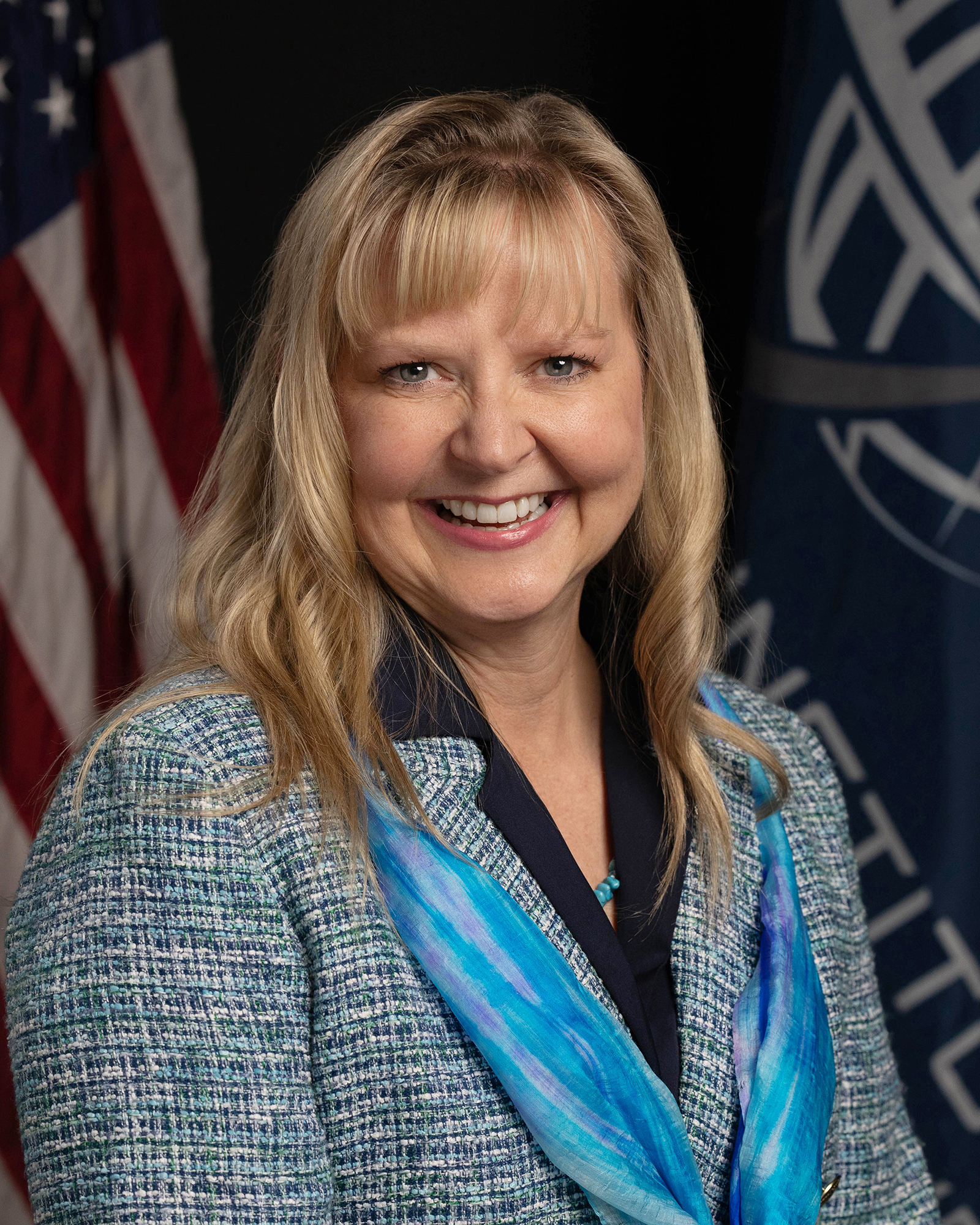 Jennifer ReevesSenior Resident Fellow for Spacepower Studies, The Mitchell Institute Spacepower Advantage Center of Excellence
 Kyle PumroySenior Resident Fellow for Space Studies, MI-SPACE
Host
 Heather PenneyDirector of Research, The Mitchell Institute for Aerospace Studies
Related Reading
Transcript
Heather “Lucky” Penney: [00:00:00] Welcome to the Aerospace Advantage Podcast, brought to you by PenFed. I’m your host, Heather “Lucky” Penney. Here on the Aerospace Advantage, we speak with leaders in the DOD industry and other subject matter experts to explore the intersection of strategy, operational concepts, technology and policy when it comes to error and space power.
So this week we’re talking about dynamic space operations, and earlier this month, the Mitchell Institute released the latest paper by Charles Galbreath, “Socks,” titled A broader look at Dynamic Space Operations, creating Multi-Dimensional Dilemmas for Adversaries. And this paper examines a variety of ways to increase the flexibility and adaptability of space operations and the adoption of principles of warfare such as surprise and maneuver to the space enterprise.
Since this is a big topic, we don’t just have Socks. We’re gonna have the whole Mitchell Space team, including Jen “Boots” Reeves. Boots, great to have you here.
Jennifer “Boots” Reeves: So glad to be here.
Heather “Lucky” Penney: Kyle “Puma” Pumroy. Puma.
Kyle “Puma” Pumroy: Happy to be [00:01:00] here. Thanks, Heather.
Heather “Lucky” Penney: And Socks, thanks again for this paper. I think it’s really a seminal piece on how we transition into real war fighting operations for space.
Charles Galbreath: Thanks. Lucky, great to be with you happy to dive deeper into this topic.
Heather “Lucky” Penney: Yeah. So let’s do that. Your paper’s a very comprehensive look at Dynamic Space Operations or DSO, you know, we love our acronyms, and you’re not just talking about on Orbit Maneuver. Why was this broader approach so important? Because it sounds like something out of science fiction. I mean, we talk often about multiple dilemmas, but not multi-dimensional dilemmas. What did you mean by that?
Charles Galbreath: Yeah, let me try to unpack a little bit of what I tried to do here. So, first I wanted to take a broad look at dynamic space Operations, not just the on orbit refueling and the maneuvering without regret, but all of the things that we could do on orbit. That could increase the versatility. And so there, there are ways that we could actually build spacecraft in orbit.
There are things that we could do to change their mission capabilities, as well and beyond that I wanted to make sure that we [00:02:00] also addressed what is often forgotten the terrestrial segments, the length segments, as well as launch, and how it, how all of those facets define the architecture we have and the way we operate our systems.
Heather “Lucky” Penney: Yeah, no, that was really fascinating to me. Through your paper was, looking at how the launch elements the command and control, all of the links, that was something that was part of being dynamic and operating in a dynamic way.
Charles Galbreath: Right. Today most of those systems are in place based on an assumption that space is not a war fighting domain. And as a result they’re fairly static and stationary and there’s a lot more that we could do to make them resilient. And each time we present a capability that is static, an adversary has an easier time of trying to attack it or counter its effectiveness. And so what I tried to do here was identify a lot of different dimensions of resilience, of versatility and adaptability, even surprise and [00:03:00] maneuver that we can use to present forces and confound adversary understanding of what we’re trying to do and what objectives we’re gonna achieve and how we’re gonna do that. And each one of those I see as a dimension of resilience or adaptability or mission effectiveness. So that’s what multidimensions really means.
Heather “Lucky” Penney: Boots, Puma, anything to add there?
Kyle “Puma” Pumroy: I’ll just, add, as Charles touched on, when you package these considerations together, this is really what the community’s meant by spaces of war fighting domain. In war fighting it, it’s the condition where you either adapt, maneuver, impose costs on adversaries, or you get killed. And we have to have a dynamic approach if we want our operations to survive. And, and these are kinda the responses and the considerations we have to have if we’re gonna succeed in a war fighting domain.
Jennifer “Boots” Reeves: I agree. I think DSO allows a way for our space operators to think about creating space effects in a more agile way, right? To be responsive to the [00:04:00] threats and then we can break that down further. Charles finished this paper. I’ve been working on another paper that ties some of the same concepts in where we think about the different segments of a space system and how we can have effects on those different segments to affect the larger system, right? And we need to protect those of our own, we can actually affect those of our adversaries. Trying to do that in a way that is more agile is exactly what we’re talking about here, and it’s really important and it’s really just, it’s the next iteration of how we do space operations.
Charles Galbreath: So Jen, really glad you brought up your paper because I see both of our papers is very complimentary and you’re talking about the different segments of the space architecture, and I’m looking at it from what can we do to make our more resilient and more effective? And you’re looking at it from what can we do to affect theirs and applying cross domain effects to achieve space superiority. So I, I think the two are very complimentary.
Jennifer “Boots” Reeves: Yeah, I think so [00:05:00] too. And one of the things that I’ve been thinking about is that what can space operators do? What can we do from a space side? And then also what can we do from a perspective of those owners and operators of other domains? Right? What can those who operate on the land domain, what can those who operate, in the maritime domain, what can they do to affect space systems, either in a protective way or in a, adversarial, combative way?
Heather “Lucky” Penney: You know, Boots. I’m glad that you jumped in here because like Socks, I see, I see your two papers as being very complimentary because what you’re talking about with cross domain operations is how can other services in their domains land, air, sea, what can they do to support space command in achieving and securing space superiority?
So for, for an air guy, this might be something as simple as adding an adversary ground control station to the target list and we just go bomb [00:06:00] that. But that does something really kinetic and valuable to securing space superiority because we’re damaging an adversary space system. But that, to get back to this. When we look at it in terms of how the predictability and static nature of space systems historically, how does that create fat juicy targets for us? We also have to examine ourselves. And Charles, this is what you’re getting at. And one of the reasons why it was really eyeopening to me, because when I think about space operations. Charles, as you mentioned in the very beginning, we normally think about it like maneuvering without regret. We think about the orbital segment, but it didn’t really occur to me that launch locations, launch schedules, where and how in the links that we use to control those satellites, that’s all part of the system and the architecture too.
So if we’re able to be able to access different orbits through different launch facilities, we can launch on a far more agile and [00:07:00] responsive type of way. We can use different types of communications and like even like laser comms, Boots, you’re looking at a laser comms, right? This would be an important piece as well.
Jennifer “Boots” Reeves: Yeah, absolutely. Laser comms this is totally the wave of the future. We really rung out what we can do with rf, radio frequency and not that we’ll likely ever do without radio frequency, but we really need to take it to the next level, which is laser communications, for getting, data in space back and forth to space assets, as well as then getting huge amounts of data down to the ground, right? It ends up being much faster than RF communications in it. It also ends up being far more secure. And then the big thing is that just 40, 50, times the amount of data, can come down in laser comms. It’s a really big deal and, we’ve got lots of commercial industry partners out there who are figuring out how to make this happen, who are partnered with the Space Force [00:08:00] actually to figure out how to make this happen and then apply it in real world situations. And it’s gonna absolutely be part and parcel to dynamic space operations.
Charles Galbreath: Yeah. You know, Jen laser comms is something I, I’ve worked with in my career as well, back in 2010. So 15 years ago I was part of the team that was, uh, doing some experimentation with the near field infrared experiment satellite, so a low earth orbit satellite that had laser comms on it, and we were demonstrating then the huge bandwidth that’s capable from low earth orbit to the ground using laser communications. And since then, the technology has just continued to mature. And the proliferated war fighting space architecture done by the Space Development Agency, with many partners. Have demonstrated space to space to ground, and now space to aircraft connectivity.
And what this enables us to do is create not just a point A to point B solution for connecting satellites to the ground, but a web that is much harder for an adversary to track and interfere [00:09:00] with. And as you pointed out the intercept, because laser comps are so much more secure inherently than radio frequency.
Heather “Lucky” Penney: Yeah. And they’re faster and, they’ve also got so much more bandwidth too. Absolutely. Another piece of DSO that I wasn’t really thinking about, and this actually took up a tremendous amount of conversation during, our press lunch was your section on Guardians in Space. Basically what space astronauts, right? Only military. What was your intent with this section?
Charles Galbreath: Yeah, so it really, it was it’s a paragraph takes up less than half a page in an over 30 page paper.
Heather “Lucky” Penney: It took up a lot of discussion though.
Charles Galbreath: But it did take up a lot of discussion. In fact, I think we spent, 10 to 15 minutes discussing it with the, the media, the, during our press luncheon. The whole point of, of including that was basically to say, Hey there are ways that we do things today and there may be changes that we need to make. And that was, you know, the premise of this whole paper is there was gonna be changes in the way we’ve done things in the past. And we shouldn’t lose sight of the fact that there may come a time when we actually absolutely need guardians in space, to conduct [00:10:00] missions.
So let’s not rule that out as a possibility and let’s start identifying the things that we might need to start doing today to enable us to have a capability at some point in the future when we need it. And I pointed out, during the rollout that everything that we’re talking about doing, on orbit, uh, with dynamic space operations, refueling or changing out components that has all been demonstrated by NASA with crewed missions. And now we’re looking at doing it via autonomy. But hey, you know what? Maybe if the military had, guardians in space, they could do it today with hands on.
Kyle “Puma” Pumroy: Yeah, I’ve been looking at this subject because there’s so much interest in it and it generates a lot of, uh, discussion, and imagination.
But I think the important thing here is to talk about it and think about it in a pragmatic way. You know, as General Shaw said in the paper rollout, we should see this as an inevitability of we’re gonna have to have guardians or human military in space at some point in time, but that requirement, especially on a large scale, might be multiple decades [00:11:00] away. So on one hand, a high emphasis on military human space flight today could be an unhelpful distraction from the near term space war fighting requirements for gaining and maintaining space superiority for the space force. But on the other hand, if we ignore that future and don’t think about the foundational activities needed decades in advance, the near term operational wins could come at a long-term strategic cost.
So we gotta have a balance approach to this. And although it generates a lot of excitement and interest we gotta one on one hand, not let it distract us from the fight Yeah. In the near term, but we also can’t forget about it in the long term.
Heather “Lucky” Penney: Yeah, and I completely agree. And there is, especially when you look at the the scarce resourcing that has been allocated to the Space force. I mean, they are having to make hard choices. And with the scope of mission sets that they’ve been tasked with, growing into understand where you’re coming from with, having to make those kinds of hard choices. But we’re already seeing like China has Taikonauts up there in space, and these are not, civil science [00:12:00] oriented types of astronauts, their Taikonauts are, no kidding military, right?
Kyle “Puma” Pumroy: Correct. They’re military members. Their role in space is to conduct scientific experimentation and that may or may not be completely the case, well, we may never know, but at the same time, even if it is their dual use, ability to transition any of their space fairing capability into military activities becomes much easier than a nation that has those separated between civilian use, commercial use, and military use. And so, yeah their ability to transition is tied into that relationship they have on how they build their space program.
Heather “Lucky” Penney: Yeah, and they’re getting the reps and sets and like you said, you can’t invent, the ability to have a heartbeat in space instantaneously you need to have the training, the and the infrastructure and all of that. But I think that actually gets to the core issue here, is that space is a warfighting domain. So, China having Taikonauts up there or whether or not that’s [00:13:00] the, top priority, which I would argue is not for, the Space Force now, but this is not a competition.
This is, really a war fighting domain. And China is the primary threat. So what is China doing that’s driving the need for dynamic space operations in all of its forms? You know, all of the segments you know, launch control links the orbital segment, all of that. What is China doing and what are they doing for their own dynamic space operations?
Charles Galbreath: Yeah. So, you know, we’ve talked about it before, but China is really investing in weapons to counteract our space capabilities. Whether that’s ground-based lasers, ground-based direct ascent ASAT systems, jammers, cyber attacks. Or on orbit they have satellites that, are purported to have jamming capability as well as a known satellite with a grappler arm on it that could move a satellite into a different orbit. And they’ve demonstrated that capability. They’ve also recently demonstrated the ability to refuel that satellite so they, they get a lot more life and [00:14:00] utility out of that type of system. That is something that they are pursuing very aggressively and on top of that, we know that they’re also developing their own space capabilities for their own use and extending their kill web, and their anti access area denial capabilities. So all of this really creates space as fighting domain, that we have to respond to. And that’s exactly what the Space Force is trying to do.
And, and, General Saltzman talked about changing a merchant marine fleet into a combat Navy. Similar set of.
Heather “Lucky” Penney: Yeah, that was a great analogy.
Charles Galbreath: It is, but it’s very similar to what, they have to do now in space and make sure that they have capabilities, that can withstand attack and can actually deliver effects if need be to maintain their advantage in space. So, yeah it is a war finding domain and DSO is one of the ways, that we can increase our ability to win in that potential conflict.
Heather “Lucky” Penney: So with the combination of defensive and offensive attributes, I think dynamic space operations really has the potential to transform the space architecture and war [00:15:00] fighting.
Charles Galbreath: I think it does, I mean, there’s ways we can augment an existing capability so that it has offensive and defensive measures. There’s ways that we can add in, camouflage, concealment, deception such as decoys, so that when we’re moving satellites from one orbit to another or from one orbital slot to another, adversaries won’t know, which is the operational one, and they’ll have to, treat them all. He’ll have to respect all of them as viable means of potentially a power projection. And so I, I agree that there’s a lot of things that we can do through DSO, that confound the enemy, that can create dilemmas for the enemy across multiple dimensions, which is, the heart of this paper.
Kyle “Puma” Pumroy: I think when we go back to what is, what is China doing, if we take, at most simplest terms, they want us blind, deaf, and dumb in space. And really from our end, if we want to disrupt their kill chains, we want the same impact on them. So the harder we make it for them to attack us and the more ability we have to get inside their kill chain the better we’re going to fare and combat with China. And so again, all these [00:16:00] considerations are what give us the ability to not be blinded, to not go deaf, to not lose our ability to command control and space. And that’s why these are important considerations for this space force to add into our, constructs into our mission capabilities.
Heather “Lucky” Penney: Exactly. So, with recognizing space as a warfighting domain, we should be employing proven principles of warfare to it. And so that was one thing I really liked about your paper, was that you began to treat it as if, you know, space is that warfighting domain. And we can apply those principles of warfare because even though it doesn’t, uh, do standard Newtonian physics warfare still matters. So you focused on surprise and maneuver. So how does DSO enable implementation of those principles?
Charles Galbreath: Yeah, so the whole point of dynamic space operations is to increase flexibility and adaptability. And maneuver is just an inherent part of that, especially when you’re looking at the on orbit segment.
If we can refuel it we can maneuver those satellites in new ways and more dynamically [00:17:00] so we can deliver mass concentration of satellite forces, over a specific, theater or region or orbital slot. So that’s absolutely critical. What I found was surprise and maneuver often go hand in hand.
The delivery of forces at an unexpected time or place or distance can create surprise in the adversary. And, you know, there’s been a lot of discussion about. Avoiding operational surprise on our part. And so increasing our space domain awareness. But there are things that we can do to induce surprise.
And again, you know, I mentioned earlier about decoys that’s an element of it, but also maneuvering satellites in a way that maybe they didn’t suspect or having a system that operates in a different manner than they thought. You know, maybe you have a satellite that one day is broadcasting communication signals with a certain power level and a certain frequency.
And the next day they change their waveform and change their frequency slightly. And now they’re generating positioning, navigation and [00:18:00] timing signals. And maybe on a third day, because you’ve been able to up the power level of the transmission, they’re now sending jamming signals. So there’s a way that we can really create a lot of surprise in a potential adversaries understanding of what a space capability is intended to do and all of the effects that it can generate. So yes, surprise and maneuver were the two that I focused on, but there are a lot of other elements or principles of warfare that I think could also be applicable. And, you know, General Shaw mentioned that he thinks they should all be applied to space.
Heather “Lucky” Penney: Yeah. So let’s talk about those. Um, you know, the, the MOS mouse, right? Mass objective, simplicity, security maneuver, offensive unity of command, surprise, an economy of force. So like that’s the word salad for everybody. But when we think about those other principles, you know, how would you, how would you begin to move forward with that?
Kyle “Puma” Pumroy: Yeah, I would agree with General Shaw in terms of you could probably make a case for all of them and, but what I’d do is turn things around a little bit ’cause there are tensions between the principles of war and [00:19:00] I think if we were to point out to our DSO might diverge from the principle of war, it would be simplicity. You know, putting a big fat, juicy target out at geo with little or no defenses is simpler then being dynamic, right? But I say this as a reminder that as we move to more dynamic force construct, we have to keep simplicity in mind to ensure we don’t create a self-defeating architecture that’s, great and dynamic, but it’s also too complicated to plan quickly and execute missions quickly. And so while we identify the advantages through all the principles of war, we also wanna look at, hey, where might we, if we don’t pay attention to it, hinder ourselves by not complying with the principles of war.
Jennifer “Boots” Reeves: Okay. So, one of the things that I like is talking about economy of force, right? What we’re able to do with DSO is we can really get more out of what we’ve already bought, right? We’ve put these assets up there and if we can use them in a more agile way for more applications, make them [00:20:00] last longer, for example, because we can refuel them or we can move them and get them outta the way that speaks of a principle of war that’s gonna be quite useful for us.
Heather “Lucky” Penney: I completely agree. You know, in offensive, I’ve already talked about how I see DSO as not just being defensive, but it ultimately enables a space force to act in an offensive way, by exploiting those capabilities. And also, you know, one thing that we didn’t talk about was unity of command. And how some of the, elements, Charles, that you talk about in your paper can provide the resilience. And the situational awareness and the connectivity that the Space Force needs to have that kind of unity of command.
And of course, SpaceCom provides that as a combatant command, but you also then have to think about the, how’s you’re going to do that.
Charles Galbreath: Right. And we have to look at all of the different elements of the space enterprise. So ground terrestrial link on orbit as well as launch. And if we do have an on orbit logistics capability that [00:21:00] enables dynamic space operations, then those forces need to be part of the, unity of effort as well.
And so I think that’s another aspect that, will tie in the future so that we’re not just delivering a squadron of capabilities, but an entire architecture of capabilities Space C ommand can leverage very different ways.
Heather “Lucky” Penney: Yeah. And one of things that’s really, I think counterintuitive for those of us that don’t operate in the space domain is that because your engagement and interaction with your orbital capabilities is all virtual, that, that again, provides you the, if you have the types of networks that allow you to maneuver that connectivity and that command around that, that can be even more important.
Alright, we’ve talked about all the sexy stuff, but let’s talk about the real stuff, right? Because, professionals worry about logistics.
Charles Galbreath: Absolutely.
Heather “Lucky” Penney: I mean, and as we say in the air world no one kicks ass without tanker gas. And so our operational teeth need to have that logistical tail if we are to succeed. And Socks you took a reverse [00:22:00] look at this and you actually have a section about tail and tooth to describe logistics enabled space warfare. Can you walk us through that a little bit? Because, you know, that’s not something we typically think about when it comes to the orbital segment. We launch the satellite. It stays up there till its orbit degrades, and we put it into a graveyard orbit. We let it fall back to earth. But this is something different.
Charles Galbreath: Yeah. And so I wanted to flip it a little bit. ’cause you know, like you said, it is normally tooth and then tail, because you, you’re trying to deliver the effect. I reversed it because I wanted to identify some stepping stones that the space force could take in the delivery of a logistics enabled war fighting architecture. So it might start with something relatively simple like refueling. Refueling a satellite. Again, that’s been a proven, capability that we’ve done on orbit with the space shuttle in the past.
We’ve also done it, with Orbital Express back over close to 20 years ago now. So let’s put that into operations and that will. Increase the flexibility and utility [00:23:00] of our current architecture. But that’s the first step. A second step might be, okay, now that I can refuel it, well, maybe I can augment, some additional capabilities or maybe I can swap out some components of our spacecraft in order to add missions or to upgrade or enhance emission capability. And so there’s this extension of steps that we can be taking. And each one of those creates a new type of dilemma for our adversaries to have to confront. And it also creates and enables a whole new way of conducting warfare for us. Right now it’s, very positional.
It’s fairly static. Well, Okay, so now we start adding some capability to make us, a little more movable and and dynamic. And then we start. increasing our mission capability and now we’re, adding in decoys and we’ve completely changed the way that we operate our systems. And so it is really the logistics tail that’s gonna wag the operational teeth here.
Jennifer “Boots” Reeves: Yeah. And if I could pile onto that, ’cause I think it’s a, it’s such a [00:24:00] good conversation because it is so different what happened in space right now compared to what everybody else experiences in other domains. Right? And Heather, you brought it up, amateurs talk strategy while professional talk logistics.
I think that’s attributed to General Omar Bradley from way back when. But I think it’s really true and you have to think about the fact that for pretty much most of its existence, certainly for the unmanned space platforms, right? Logistics is all pre-launch. Everything happens pre-launch, so then you can’t change it once you’re on orbit.
But we have examples like Charles talked about where we have demonstrated that you can change it, and we also know what that does to the life of these assets and the applicability of these assets. I mean, I have some great experience. When I was a young operator, we moved, defense support program satellite way back when to better support Desert Storm.
And it literally, by using that fuel to move, it took [00:25:00] years off of its life. So, yeah, that’s a really big deal. But if we could plan to a, plan how much fuel we have on board with that in mind, that’s thing one. Then thing two would be, well, what if we could refuel? Well then maybe we wouldn’t have to take years off of its design life because we do actually have a way to recapitalize the existing life that’s left just by giving it more fuel. I think it, incredibly, fruitful conversation that we should be having.
Heather “Lucky” Penney: Yeah, no, I mean, it even opens up the opportunity to think about like tow trucks. Do you have satellites that are tow trucks that are refuelable, and so you can extend the life and create maneuverability for legacy systems that don’t have refuelable, capabilities. So I think there’s a lot of really interesting things. Puma, where are you thinking about in terms of logistics and constant position and all of this stuff that has to do with logistics?
Kyle “Puma” Pumroy: Yeah. When I think about really resupplying and moving within the battle space is fundamental to any [00:26:00] kind of combat where you’re trying to control terrain or control a domain. We just haven’t, until more recently, had to deal with a contested domain in space. So, to me, I think in a lot of ways, DSO for other domains is just “O” right? It’s just operations. If you’re talking about, you know, air, land or sea. So as we adapt to that contested domain, it means we have to compete or wage combat for control. And that makes things like logistics and maneuvers, critical enablers to win in space where they just weren’t before. I think that normalizes space as we’re fighting domain, just like other domains
Jennifer “Boots” Reeves: Well, and then if I wanna, can I add something else onto this, because we also have to think about other dimensions of this same issue. And you know, I mentioned that one satellite that was moved way back when and we took so many years off of its life because it did do that back in those days, and I’m actually not sure, maybe one of you guys knows, uh, the situation now, but back in those days. [00:27:00] We had this concept called satellite subpoint authority, and that was essentially what orbit is the satellite in and the person who got to decide to change that, right?
Like, hey, we’re gonna blow through a bunch of fuel to and we’re gonna sacrifice a bunch of fuel because for operational purposes, we need to move this satellite. Well, the person who had that authority back in those days was the four star general commander of the major command of Air Force Space Command.
I mean, it was, it was crazy, I mean, relevant and important, but it was such a big deal about using that kind of fuel, that that’s who had the authority to make those decisions. And so I think the flip side of us having the technology and the TTPs to be able to do this is we also have to decide, well, what does this mean for the actual resource itself, and then who should have the authority to make those decisions in real time? I think it’s a big [00:28:00] conversation to have.
Heather “Lucky” Penney: Well, I think that logically would end up in SpaceCom, right? Because SpaceCom would control the architecture, both as a supported combatant command and as a supporting combat command. But I think you’re right, Boots. I mean the, the ability to do that kind of refueling on orbit. Or tow trucking or even if we are dealing with a legacy asset that doesn’t have an immediate ability to move, do we use up that fuel and decrease the lifespan of that capability or delay that decision for a year or two before it falls out of orbit and remediate it then? But I think that’s all falls within, SpaceCom, right?
Jennifer “Boots” Reeves: Yeah, I think that’s probably right. The question is, is does it, you know, is every one of those decisions left at the four star level or do we get to lower that threshold down to younger commanders, younger operators, that kind of thing.
Heather “Lucky” Penney: Which might need to occur in order to be able to have the speed of responsiveness necessary to execute what’s going on and to be able to control that domain.[00:29:00]
So, we we’re talking a lot about the technology for the logistics but, Socks you talked about a lot more than just this piece of refueling and so forth in your DSO paper, is there a recognition that changes are required on the operational side too? ‘Cause Boots, you brought this up in terms of authorities, but also TTPs which we don’t necessarily have just yet. And all three of you were operators. So you’ve got a deep understanding of what it takes to deliver combat ready forces. Puma, boots, you both are also weapons school grads. So your space patches. How will DSO drive operational change and how will operational demands drive DSO? Puma, let’s give this one to you first.
Kyle “Puma” Pumroy: Yeah. I think one of the biggest changes from an operator perspective is the opportunities and the complexities in planning. So if you think over the past, 20 years an operator’s gone from, Hey, I have a fault, is there a command I can send to fix that fault? To, we’ve evolved to, Hey, there’s threats. I, I need to figure out how to get outta the way. And some of those considerations [00:30:00] boots has talked about in terms of your fuel expenditures, you can for the lifetime of the satellite. But the latter of that drives some complex planning consideration. But now we add planning factors of when do we refuel, where do we refuel, where do we service?
When do we do that? What’s the timing for that? What’s the tempo for that? What are the conditions that are gonna drive us to take those actions? It opens up a lot of opportunity where we don’t necessarily have mature concepts to take full advantage. So we’re gonna need TTP development. Really to understand our operations, to understand how we make decisions based on our, stimuli, and then develop that high-end realistic simulation training to, to figure that stuff out and then rehearse it. So it’s a good problem to have, but there’s a lot to think through as these technologies mature and become operationalized.
Jennifer “Boots” Reeves: Yeah, I agree. I don’t have much more than to pile on and put it in the context of my experience as a youngster when we would do things akin to [00:31:00] this, right?
Changing a subpoint of a satellite using any more than just a monthly station keeping amount of fuel, right? Those decisions were left to Four Star generals and I think that we’re gonna need almost a complete overhaul in how we plan. How we do risk analysis and risk acceptance. Who gets to make those decisions? But I’m on board with what Puma just said. What a great problem to have. I’m excited as we look forward to this.
Heather “Lucky” Penney: Yeah. I mean, in like for airmen, we talk about it in terms of air mindedness. We understand that every service, has their own culture and their own perspective of the world, and they think in ways that are very specific to their domain, to their, capabilities, to their technologies and just how they control their environment. And so sort of a space mindedness, I think is something that, will arise and evolve as a result of, DSO and the education to think about this more than just [00:32:00] like, boots as you said, checklists and station keeping to really employing the entire space architecture, in a war fighting way.
Charles Galbreath: Lucky I’m, glad you brought up air mindedness because there’s going to be, as Puma suggested, an iteration of technology and operational concepts and TTPs and then technology. So imagine and maybe recall what it was like for people in the Army back in the early 1900s when the aircraft came out and they said, okay, this is, there’s this great new thing.
How are we gonna use it? Well, we’re gonna use it exactly like forward observers, like people on a hill. Okay, maybe. But then it really took some visionary thinkers to examine what is the potential of aircraft and how could it be used. Right now we’re just scratching the surface on what we can do in space if we have dynamic space operations and it’s going to evolve just like air mindedness evolved.
Space mindedness is gonna [00:33:00] evolve, and our understanding and our utilization and our ability to leverage every ounce of goodness out of DSO is gonna evolve.
Heather “Lucky” Penney: You know what? I just heard you say Socks, X planes and guardian fighter pilots are next.
Charles Galbreath: Well, so we’re not far off, right? We have the geosynchronous space Situational Awareness Program, the GSAP satellite. That’s the one that flies around the most right now. Then the replacement for that RGXX. I guess to be determined later, but, reconnaissance in geo, that’s the next program and, we’ll see what those xxs turn out to be. But, yeah, we’re not far off from, some of that, space experimentation.
And there are programs out there like the. DOD space test program that have done multiple experiments like this, the Tetra series of satellites coming out of Space Systems Command that are demonstrating some new and advanced technologies. In fact, one of which Tetra five will demonstrate on orbit refueling in 2026. So yeah, absolutely XX planes are next for space.
Heather “Lucky” Penney: But you know, I think what’s really, um, [00:34:00] what’s interesting about what the, the technology, these, x satellites, if you will, and operations, there’s always that push pull. I mean, you do need to have the visionaries for how you can, employ and what is needed and what the, possibilities are within that domain. But the technology has to be close, right? I mean, those visions can drive the technological development, but you have to be close enough so that you can actually do the iterative deployment and, and TTP development. So there’s this push pull between technology and operations where they have to move forward together, in a synchronous manner where the technology, you get new technologies, you go, Ooh, what if we used it in this new different way?
And then when that operations catches up, and then you get the operations begin to say, Ooh, we’ve got this problem, we need this kind of technology. Yeah. And so that relationship is really important, which is why I’m, I’m gratified to hear about the X satellites. That, the Space Force is launching.
Charles Galbreath: And just a head smacking moment. I, can’t forget X 37, that’s out there, doing all sorts of, very interesting things [00:35:00] and advancing our understanding of different orbits and different technologies as well as maneuver.
Heather “Lucky” Penney: Yeah, very interesting things. So, but you know, today we’re not there yet. Once a satellite, you know, once a satellite is launched and today its hardware isn’t updated or modified again, and the hardware, that firmware matters because it, it limits what you can do with the software. So you get what you get to the very end of the mission. This is one of the interesting. So that you brought up in the paper was how DSO could change that with the possibility of modular satellites that we could upgrade as the technology matures, or we could even repair systems that are damaged.
How does the current approach impact operations and system design? And how could this change with DSO and with modularity?
Jennifer “Boots” Reeves: So I’ll pile on first. I’ll, I’ll throw some answers out here, real quickly. I think you’re right, lucky. Um, certainly in the past. And as well as today, their satellites are like time capsules, right? You freeze the technology [00:36:00] essentially a couple years before launch, and then that’s what we live with for the entire mission life of that asset on orbit. And so having some amount of modularity will allow us to to run the gamut of things. To this point, really all that we can do is we can, update software if the hardware will allow, but if we’re able to change hardware, not only can we, except additional software. I mean, everybody think about it. If you have an old computer or an old phone, eventually that hardware no longer accepts those new software updates. Right? And then you gotta get new tech. Same thing is gonna happen with the satellites, but if you’re able to swap out components, not only can you improve the software capability that you have on board, but who knows?
You could actually change out actual components and perhaps not only upgrade what you’re doing, like do it better, do it in a more modern way, but you may, but.
Heather “Lucky” Penney: Change it.
Jennifer “Boots” Reeves: Be able to, to change [00:37:00] the mission. Exactly. Or amend the mission or add something on. I really do think that, that this offers a limitless possibilities here. I mean, so much agility if we can get a handle on the tech and with a mind to expansion in the future.
Heather “Lucky” Penney: Yeah. The, the opportunity for tech insertion and mission change or aada adaptation is really amazing.
Kyle “Puma” Pumroy: Yeah, I would just say along the lines of opportunities, Boots is hitting on and these, modularity options are pretty fascinating. Where my mind goes is to threats and imagining a time in the future where high value assets or maybe there are defenders. Have things that are meant to counter threats. In the air world, we might use things like flares or jammers or chaff. Well, those equivalents in space, well, what happens if we realize, if it’s a flare, well, it burns out the wrong intensity. You have what you have, but if we’re modular, we can, okay, we’re going to have to change [00:38:00] that defensive capability with a new one that’s updated for what we now understand about the threat. Right? And so not just on top of mission capability, but the defensive capabilities and the way to counter threats, I think opens up a lot of opportunity to, that if we’re wrong, we can fix our mistakes on orbit rather than have to create a whole new defensive capability.
Charles Galbreath: That’s a great point, Puma. Thank you.
Heather “Lucky” Penney: So, all right, let’s, come back to earth a little bit. as we’ve talked throughout this whole episode, the space system consists of the orbital, the link, and the terrestrial segments. And Socks, you included launch in this, right? Yeah. So increasing the dynamic nature of the entire space architecture is crucial to prevent an adversary from targeting and exploiting any one of those weak elements because it is an architecture, they all work together. Looking first at the ground piece though, what does it look like today and what could it involve too?
Jennifer “Boots” Reeves: Okay, well, let me go first. Having spent so many years in those dark rooms [00:39:00] with blinking lights on screens, otherwise known as space operation centers in the, in the SOCs, right? Ton, ton of time there. And you know, you may actually think about it that our ground architecture could be considered kind of the least dynamic part of the whole enterprise, right? Everything is, they’re fixed ground stations by and large, big facilities. Our networks of our antennas are, they’re, they are where they are. They’re very predictable. The RF pathways that we have are well understood. They’re well-defined. And yeah, that is as part of an overarching space system. The ground network or the terrestrial network segment as we’re calling it, is yeah. Pretty non-changeable, if you will.
Heather “Lucky” Penney: Those space balls are huge. That looks like a fat, juicy target, right?
Jennifer “Boots” Reeves: They do. I mean, those are, I mean, I think the thing that’s saving us. Is that, you know, half of ’em seem to be in Denver and we’re not, you know, and no one’s bombing Denver right now, so that’s a [00:40:00] good thing. But yes, they’re very, very obvious, where they are and you know, with a hundred foot radomes.
And listen, our adversaries. Know exactly where all of that is. And they can be targeted with cyber, they can be targeted I mean, there can be some level of kinetic pressure a associated, I mean, that’s not outside the realm of the imaginable. Um, but here’s the deal. Having mobile and distributed ground entry points, that actually changes the game, right? So that you don’t know where the, entry point is. For that data, that adds an element of surprise. An element of not knowing to our adversary so that we can continue the mission. And I think that is just one aspect. And you know, we have some of those things that are already in play and have been for, several years, several decades actually having to do with NC3, nuclear command and control. And missile warning, right? Both Cold War missions that still continue and are vitally [00:41:00] important to this day. But back in the seventies and eighties it was already imagined how important that was because at the time the Soviet Union knew exactly where the rest of our ground stations were. And for redundancy’s sake, we needed to have, this mobile element to have that extra piece as well as keep ’em guessing. Who knows, we might be operating outta the mobile sites.
So I think it’s really important to continue thinking in that, way, to leverage new technology. Who knows what it could be? Perhaps if we’re having some sort of a internet based web-based, mixing it up, right? A net, a mesh. As opposed to these, bi-directional, singular pathways of our links, all sorts of different things that, could actually add to the agility, of our networks that are so important.
Yeah, I mean, I think it’s really important that I mean there’s two pieces there, right? I mean, one is the, is the ground control station. But the other part is that the, in the orbital segment [00:42:00] as a satellite is orbiting the earth. You only have currently right now when it’s in, in the vis the view of that control station.
But as we now have mesh networks and agile links, we can kind of go back to the, that mobile concept or even. In the way back machine for the error domain error, defense command. If one sector was no longer functional, another sector took over its control. And so when you begin to put together, I think the architectures of laser comms and mesh networks and mobile stations and so forth, we now might have the ability to move that around. I mean, Charles, what do you think about that?
Charles Galbreath: Yeah, yeah, absolutely. And so another facet of the current architecture is those ground stations, that are in the, space operation center, the SOCs, no relation. They are bespoke systems, right? So the system that operates GPS. Only operates GPS and the system that operates A EHF or space-based infrared system. Those are dedicated to [00:43:00] those mission systems. There’s a program that, we kicked off, oh boy, eight, nine years ago, when I was in the innovation and prototyping directorate called the Enterprise ground System.
And this was gonna be a way that we could have a single. Sort of software defined ground command and control capability, that we could use for multiple and in fact all satellite operations, so that you could, like you said Lucky, if a sector goes down, you can have it picked up by another sector.
And so if one SOC went down, you could have another one. Pick up the mission. And so EGS has evolved and the space, RCO, the Rapid capabilities office now has a rapid resilient command and control or R2C2, where they’re taking that EGS concept and applying it to some of the mission sets within, the Space Force portfolio. And so I’m really excited at, that prospect of employing that and then actually expanding it beyond that initial cadre.
Heather “Lucky” Penney: I’m just disappointed that they couldn’t, figure out how to make [00:44:00] R2C2, one letter down and make it R2D2.
Charles Galbreath: Well, it’s close.
Heather “Lucky” Penney: But, okay. So, so it sounds like there’s, elements of, dynamic space operations that we could fly apply to every segment of the space operations in every single space system. But that seems, like it could rapidly scale out of control when it comes to cost. How should the space force, and how should planners begin to look at how they can employ DSO in a way that’s right sized?
Charles Galbreath: So Yeah. Lucky you’re, you’re absolutely right. The cost factors here have got to be weighed against the missions being performed, the criticality and the threat, and so. What I outlined in this paper on DSO was a broad set of here’s everything you could do if you had the budget. And right now we know that the Space Force does not have the budget to do even the stuff that it’s currently assigned.
And so they do have to pick and choose and make sure that the applications are consistent with the mission, the criticality of that mission, as well as the threats being posed to it. [00:45:00] So not all satellites need to be maneuverable and in fact, in low earth orbit, maybe I don’t want all of my satellites to be, refuelable and, and maneuvering around ’cause if you have a proliferated architecture, that might be enough of a resilience factor already. But if you are looking at a. The modularity and the upgrade of capabilities, the further you get from Earth higher up, the gravity. Well, as General Shaw likes to say, out to geo those sorts of mission sets and, and that in, in that domain would be incredibly useful.
And we’ll add, not just the longevity. but also the adaptability and new mission sets that we’ve talked about. I did do a brief analysis of on orbit refueling versus on orbit replacement. And while there isn’t an initial cost associated with creating that infrastructure for on orbit logistics, after two iterations of either replacing them or refueling them, you more than make up for that lost cost of the initial, cost burden. And so if [00:46:00] you are applying dynamic operations on a more routine basis, the more you maneuver, the more you’re gonna have to refuel or replace. The quicker you’re going to realize the cost benefit of a refueling architecture, a logistics architecture, as opposed to a replacement architecture.
Kyle “Puma” Pumroy: So as Charles mentioned, you know, picking and choosing as a service, I’d say, you know, how the service determines how to implement DSO considerations has gotta be threat based. And look at where are we most mismatched when you compare the threat against our defensive or our offensive ability to counter that threat.
And then those mismatches have to be analyzed for why. Then when we see a lack of maneuverability or flexibility or logistics as the biggest or a big contributing factor, then that’s where we want to incorporate those requirements. So, like you said, it’s gonna be consideration across the board and it’d be different management of those considerations, but we gotta keep the threat in mind and making those decisions and not just, Hey, this is easy to apply to this capability. That might be great, but if it’s not threat based, [00:47:00] then those investments would be better served elsewhere.
Jennifer “Boots” Reeves: Yeah. And if I, and listen, I think you guys are making, both of you guys are making really awesome points and I think sort of to try and put a pin in it. You know, if we think about how we built architectures back during the Cold War, it was thought of with only the one threat. And from an adversary perspective it was the Soviet Union, but for what lives up in space, it was the environment. So we didn’t put defensive o defenses on there. We didn’t assume, we didn’t think that our actual adversary was going to be coming after us in space. And so now if we think if we take a longer view.
And don’t think that it’s always going to be like that. We take a longer view such that we can have more agility to react to status, and maybe not necessarily in that second, but over the long term of the [00:48:00] life of satellite systems. And our ability then to shape and react to the threat environment, react to new technology, react to whatever else might be happening.
That is where I think we get true sort of cost parody, if you will, right? Our investment for what we get out of it in terms of agility and the ability to meet the actual threat that’s happening in that time. So I think we have to do this and in the long run, again, we gotta play the long game. In the long run, we will actually come out ahead, both from an effects perspective and from a fiscal perspective.
Heather “Lucky” Penney: Yeah. And you know, we, we’ve been talking about how do we improve the agility of the command segment, which is, you know, it’s the ground control segment. How do we implement agility within the links so that you have the resilience and the security and all of that there. And, and laser comps is gonna be a huge portion of all of that. And, the modularity and the logistics and the refueling. But I think, [00:49:00] you know, the launch segment is something that we don’t really consider a whole lot. And this was a, an important eye-opener for me, Charles, as I was look reading through your paper, was how the launch can be an essential element of that and that kind of infrastructure investment.
As well as investment in the industrial base to ensure that they have the ability to rapidly build and then deliver satellites and payloads, I think will be an important piece of this too. I mean, there’s so much to talk about with this, and so I encourage our readers to go to the link in the show notes, read the paper because it is, I think an important piece of where the Space Force will be going.
Folks, stay tuned because as you heard boots is gonna be coming out with a cross-domain paper as well. And so that’s gonna be a nice tie in to Dynamic Space Operations. Again, thanks to the Space team, I really appreciate you all being here.
Charles Galbreath: Well, thanks, Lucky. Appreciate the opportunity to discuss this paper, in more detail. And, and, thanks to Puma and Boots for their expert, opinions, uh, in this discussion as well. It was a pleasure. [00:50:00]
Jennifer “Boots” Reeves: Thanks so much for having me.
Kyle “Puma” Pumroy: Yeah, thanks Charles. It was a great discussion.
Heather “Lucky” Penney: With that, I’d like to extend a big thank you to our guests for joining in today’s conversation. I’d also like to extend a big thank you to you, our listeners, for your continued support and for tuning into today’s show.
If you like what you heard today, don’t forget to hit that like button or follow or subscribe to the Aerospace Advantage. You can also leave a comment to let us know what you think about our show or areas that you would like us to explore further. As always, you can join in on the conversation by following the Mitchell Institute on X, Instagram, Facebook, or LinkedIn, and you can always find us@mitchellaerospacepower.org.
Thanks again for joining us and have a great aerospace power kind of day. See you next time.
Credits
Producer
Shane Thin
Executive Producer
Douglas Birkey